Kirjojen hintavertailu. Mukana 12 595 353 kirjaa ja 12 kauppaa.

Kirjailija

David Bates

Kirjat ja teokset yhdessä paikassa: 26 kirjaa, julkaisuja vuosilta 1998-2026, suosituimpien joukossa The Eolian (1848). Vertaile teosten hintoja ja tarkista saatavuus suomalaisista kirjakaupoista.

26 kirjaa

Kirjojen julkaisuhaarukka 1998-2026.

Plasticity and Pathology

Plasticity and Pathology

David Bates; Nima Bassiri

Fordham University Press
2016
sidottu
With the rise of cognitive science and the revolution in neuroscience, it is now commonplace to assume that the study of a human person—a thinking, feeling, acting subject—is ultimately the study of the human brain. In both Europe and the United States, massive state-funded research is focused on mapping the brain in all its remarkable complexity. The metaphors employed are largely technological: A wiring diagram of synaptic connectivity will lead to a better understanding of human behavior and perhaps insights into the breakdown of human personhood with diseases of the brain such as Alzheimer's. Alongside this technologized discourse of the brain as locus of human subjectivity we find another perspective, one that emphasizes its essential plasticity—in both the developmental sense and as a response to traumas such as strokes, tumors, or gunshot wounds. This collection of essays brings together a diverse range of scholars to investigate how the "neural subject" of the twenty-first century came to be. Taking approaches both historical and theoretical, they probe the possibilities and limits of neuroscientific understandings of human experience. Topics include landmark studies in the history of neuroscience, the relationship between neural and technological "pathologies," and analyses of contemporary concepts of plasticity and pathology in cognitive neuroscience. Central to the volume is a critical examination of the relationship between pathology and plasticity. Because pathology is often the occasion for neural reorganization and adaptation, it exists not in opposition to the brain's "normal" operation but instead as something intimately connected to our ways of being and understanding.

Plasticity and Pathology

Plasticity and Pathology

David Bates; Nima Bassiri

Fordham University Press
2016
pokkari
With the rise of cognitive science and the revolution in neuroscience, it is now commonplace to assume that the study of a human person—a thinking, feeling, acting subject—is ultimately the study of the human brain. In both Europe and the United States, massive state-funded research is focused on mapping the brain in all its remarkable complexity. The metaphors employed are largely technological: A wiring diagram of synaptic connectivity will lead to a better understanding of human behavior and perhaps insights into the breakdown of human personhood with diseases of the brain such as Alzheimer's. Alongside this technologized discourse of the brain as locus of human subjectivity we find another perspective, one that emphasizes its essential plasticity—in both the developmental sense and as a response to traumas such as strokes, tumors, or gunshot wounds. This collection of essays brings together a diverse range of scholars to investigate how the "neural subject" of the twenty-first century came to be. Taking approaches both historical and theoretical, they probe the possibilities and limits of neuroscientific understandings of human experience. Topics include landmark studies in the history of neuroscience, the relationship between neural and technological "pathologies," and analyses of contemporary concepts of plasticity and pathology in cognitive neuroscience. Central to the volume is a critical examination of the relationship between pathology and plasticity. Because pathology is often the occasion for neural reorganization and adaptation, it exists not in opposition to the brain's "normal" operation but instead as something intimately connected to our ways of being and understanding.
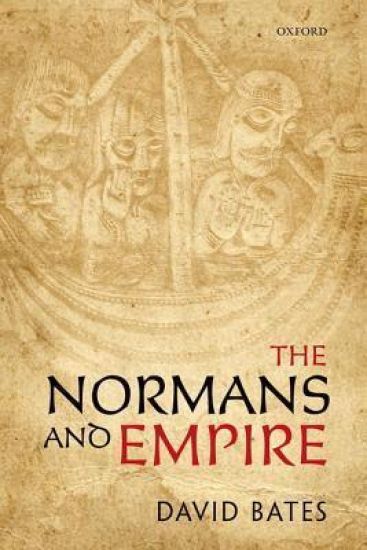
The Normans and Empire

The Normans and Empire

David Bates

Oxford University Press
2013
sidottu
In 2010, David Bates presented the Ford Lectures in British History at the University of Oxford, and The Normans and Empire is the book which was born from these lectures. It provides an interpretative analysis of the history of the cross-Channel empire created by William the Conqueror in 1066 to its end in 1204 when the duchy of Normandy was conquered by the French king, Philip Augustus, the so-called 'Loss of Normandy'. This volume emphasizes the cross-Channel and Continental dimensions of the subject, and uses modern approaches to suggest new interpretations. Bates proposes that historians of the Normans can learn from the methods of social scientists and historians of other periods of history - such as making use of such tools as life-stories and biographies - and he employs such methods to offer an interpretative history of the Normans, as well as a broader history of England, the British Isles, and Northern France in the eleventh and twelfth centuries.
States of War

States of War

David Bates

Columbia University Press
2011
pokkari
We fear that the growing threat of violent attack has upset the balance between existential concepts of political power, which emphasize security, and traditional notions of constitutional limits meant to protect civil liberties. We worry that constitutional states cannot, during a time of war, terror, and extreme crisis, maintain legality and preserve civil rights and freedoms. David Williams Bates allays these concerns by revisiting the theoretical origins of the modern constitutional state, which, he argues, recognized and made room for tensions among law, war, and the social order. We traditionally associate the Enlightenment with the taming of absolutist sovereign power through the establishment of a legal state based on the rights of individuals. In his critical rereading, Bates shows instead that Enlightenment thinkers conceived of political autonomy in a systematic, theoretical way. Focusing on the nature of foundational violence, war, and existential crises, eighteenth-century thinkers understood law and constitutional order not as constraints on political power but as the logical implication of that primordial force. Returning to the origin stories that informed the beginnings of political community, Bates reclaims the idea of law, warfare, and the social order as intertwining elements subject to complex historical development. Following an analysis of seminal works by seventeenth-century natural-law theorists, Bates reviews the major canonical thinkers of constitutional theory (Locke, Montesquieu, and Rousseau) from the perspective of existential security and sovereign power. Countering Carl Schmitt's influential notion of the autonomy of the political, Bates demonstrates that Enlightenment thinkers understood the autonomous political sphere as a space of law protecting individuals according to their political status, not as mere members of a historically contingent social order.
States of War

States of War

David Bates

Columbia University Press
2011
sidottu
We fear that the growing threat of violent attack has upset the balance between existential concepts of political power, which emphasize security, and traditional notions of constitutional limits meant to protect civil liberties. We worry that constitutional states cannot, during a time of war, terror, and extreme crisis, maintain legality and preserve civil rights and freedoms. David Williams Bates allays these concerns by revisiting the theoretical origins of the modern constitutional state, which, he argues, recognized and made room for tensions among law, war, and the social order. We traditionally associate the Enlightenment with the taming of absolutist sovereign power through the establishment of a legal state based on the rights of individuals. In his critical rereading, Bates shows instead that Enlightenment thinkers conceived of political autonomy in a systematic, theoretical way. Focusing on the nature of foundational violence, war, and existential crises, eighteenth-century thinkers understood law and constitutional order not as constraints on political power but as the logical implication of that primordial force. Returning to the origin stories that informed the beginnings of political community, Bates reclaims the idea of law, warfare, and the social order as intertwining elements subject to complex historical development. Following an analysis of seminal works by seventeenth-century natural-law theorists, Bates reviews the major canonical thinkers of constitutional theory (Locke, Montesquieu, and Rousseau) from the perspective of existential security and sovereign power. Countering Carl Schmitt's influential notion of the autonomy of the political, Bates demonstrates that Enlightenment thinkers understood the autonomous political sphere as a space of law protecting individuals according to their political status, not as mere members of a historically contingent social order.
William the Conqueror

William the Conqueror

David Bates

NPI Media Group
2001
nidottu
The only up-to-date biography, written by the world expert on William the Conqueror. Including clear evaluation of the key events that highlight William's reign including Battle of Hastings and making of the Domesday book