Kirjojen hintavertailu. Mukana 12 638 120 kirjaa ja 12 kauppaa.

Kirjailija

David Bebbington

Kirjat ja teokset yhdessä paikassa: 5 kirjaa, julkaisuja vuosilta 2004-2019, suosituimpien joukossa Communion with Christ and His People. Vertaile teosten hintoja ja tarkista saatavuus suomalaisista kirjakaupoista.

5 kirjaa

Kirjojen julkaisuhaarukka 2004-2019.

Interfaces Baptists and Others

Interfaces Baptists and Others

David Bebbington; Martin Sutherland

Paternoster Press
2013
nidottu
The book is a collection of twenty-one essays discussing how Baptists throughout the world have related to other Christians and to other institutions and movements over the centuries. The theme of this collection of twenty-one essays, 'Baptists and Others', includes relations with other Christians and with other institutions and movements. What, the authors ask, has been the Baptist experience of engaging with different groups and developments? The theme has been explored by means of case studies, some of which are very specific in time and place while others cover long periods and more than one country. In the first half the contents are arranged by period. The first section examines early Baptists, the second nineteenth-century Baptists in Britain and America and the third Baptists in the twentieth century. The second half turns to various parts of the world. There is a section on Australia, another on New Zealand and a third on Asia and Africa. The overall picture is one of a complicated series of relationships as Baptists defined themselves as different from other bodies and yet, especially in the twentieth century, tried to co-operate in mission and ecumenical endeavour. 'Baptists are often regarded as enthusiastic separatists and unenthusiastic ecumenists. These essays, based on hard evidence rather than passing impressions, are a necessary correction to superficial prejudices and show the reality to be much more complex and nuanced, as well as varied over time and place. The book is a smorgasbord of delights. Yet, readers should avoid the temptation to pick and choose from the menu, ensuring rather that each offering is digested so they enjoy a balance and nutritious meal.' Derek Tidball
Victorian Religious Revivals

Victorian Religious Revivals

David Bebbington

Oxford University Press
2012
sidottu
Revivals are outbursts of religious enthusiasm in which there are numerous conversions. In this book the phenomenon of revival is set in its broad historical and historiographical context. David Bebbington provides detailed case-studies of awakenings that took place between 1841 and 1880 in Britain, North America and Australia, showing that the distinctive features of particular revivals were the result less of national differences than of denominational variations. These revivals occurred in many places across the globe, but revealed the shared characteristics of evangelical Protestantism. Bebbington explores the preconditions of revival, giving attention to the cultural setting of each episode as well as the form of piety displayed by the participants. No single cause can be assigned to the awakenings, but one of the chief factors behind them was occupational structure and striking instances of death were often a precipitant. Ideas were far more involved in these events than historians have normally supposed, so that the case-studies demonstrate some of the main patterns in religious thought at a popular level during the Victorian period. Laymen and women played a disproportionate part in their promotion and converts were usually drawn in large numbers from the young. There was a trend over time away from traditional spontaneity towards more organised methods sometimes entailing interdenominational co-operation.
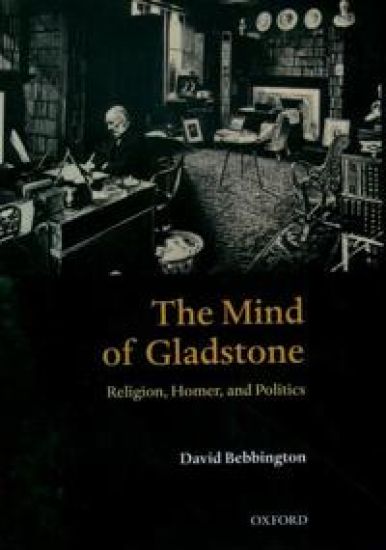
The Mind of Gladstone

The Mind of Gladstone

David Bebbington

Oxford University Press
2004
sidottu
Gladstone's ideas are far more accessible for analysis now that, following the publication of his diaries, a record of his reading is available. This book traces the evolution of what the diaries reveal as the statesman's central intellectual preoccupations, theology and classical scholarship, as well as the groundwork of his early Conservatism and his mature Liberalism. In particular it examines the ideological sources of Gladstone's youthful opposition to reform before scrutinizing his convictions in theology. These are shown to have passed through more stages than has previously been supposed: he moved from Evangelicalism to Orthodox High Churchmanship, on to Tractarianism and then further to a broader stance that eventually crystallized as a liberal Catholicism. His classical studies, focused primarily on Homer, also changed over time, from a version that was designed to defend a traditional worldview to an approach that exalted the depiction of human endeavour in the ancient Greek poet. An enduring principle of his thought about religion and antiquity was the importance of community, but a fresh axiom that arose from the modifications of his views was the centrality of all that was human. The twin values of community and humanity are shown to have conditioned Gladstone's rhetoric as Liberal leader, so making him, in terms of recent political thought, a communitarian rather than a liberal, but one with a distinctive humanitarian message. As a result of a thorough scrutiny of Gladstone's private papers, the Victorian statesman is shown to have derived a distinctive standpoint from the Christian and classical sources of his thinking and so to have left an enduring intellectual legacy. It becomes apparent that his religion, Homeric studies and political thought were interwoven in unexpected ways. The evolution of Gladstone's central intellectual preoccupations, with religion and Homer, is the theme of this book. It shows how the statesman developed from Evangelism to Orthodox High Churchmanship, on to Tractarianism and then further to a broader stance that eventually crystallized as a liberal Catholicism. It demonstrates also that his Homeric studies developed over time. Neither aspect of his thinking was kept apart from his politics. Gladstone's early conservatism emerged from a blend of classical and Christian themes focusing on the idea of community. While that motif persisted in his speeches as Liberal leader, the category of the human emerged from his religious and Homeric ideas to condition the presentation of his Liberalism. In Gladstone's mind there was an intertwining of theology, Homeric studies and political thought.