Kirjailija
David Bird
Kirjat ja teokset yhdessä paikassa: 96 kirjaa, julkaisuja vuosilta 2000-2026, suosituimpien joukossa The Canada Jay. Vertaile teosten hintoja ja tarkista saatavuus suomalaisista kirjakaupoista.
96 kirjaa
Kirjojen julkaisuhaarukka 2000-2026.
Whether you are just setting out to discover the wonderful game of bridge, or have played for some time, your success will be limited without a sound understanding of the basic techniques of cardplay.In this series, two of the game's top writers explain clearly the various cardplay skills that you will need. Every booklet contains six chapters - each ending with a short Quiz.The topics covered in this third book, on Drawing Trumps, are: Drawing trumps immediatelyWhen you need to take ruffsWhen you need to take discardsEstablishing a suit before drawing trumpsTechniques when drawing trumpsUsing entries in the trump suit
Whether you are just setting out to discover the wonderful game of bridge, or have played for some time, your success will be limited without a sound understanding of the basic techniques of cardplay.In this series, two of the game's top writers explain clearly the various cardplay skills that you will need. Every booklet contains six chapters - each ending with a short Quiz. The topics covered in this third book, on Discarding Losers, are: Discarding to reduce the loser totalShould I draw trumps immediately?Establishing discardsLoser on loser playCombining different chancesPlanning the necessary discards
Whether you are just setting out to discover the wonderful game of bridge, or have played for some time, your success will be limited without a sound understanding of the basic techniques of cardplay. In this series, two of the game's top writers explain clearly the various cardplay skills that you will need. Every booklet contains six chapters - each ending with a short Quiz.The topics covered in this second book, on Ruffing Losers, are: Ruffing in the short-trump handShould I draw trumps before the ruff?Preparing for the ruffShould I ruff high or low?When is it wrong to ruff?Planning the necessary ruffs
Whether you are just setting out to discover the wonderful game of bridge, or have played for some time, your success will be limited without a sound understanding of the basic techniques of cardplay. In this series, two of the game's top writers explain clearly the various cardplay skills that you will need. Every booklet contains six chapters - each ending with a short Quiz. The topics covered in this first book, on Finessing, are: Leading towards high cardsRepeating a finesseLeading the right card for a finesseDouble finessesOther types of finesseDeals with multiple finesses
Following on from their earlier book, Planning in Defense (January 2019; ISBN 978 177140 053 4), Seagram & Bird move on to more sophisticated aspects of defensive cardplay for advancing players. Using the same step-by-step approach, the authors guide the reader through the issues involved in communications, deception, trump promotions, discarding and avoiding the embarrassment of being endplayed.
Ten years after their award-winning Planning the Play of a Bridge Hand (August 2009, ISBN 978 1897106 51 8), Seagram & Bird tackle the hardest part of the game: defence. Using the same step-by-step approach, they guide the reader through the minefield of signalling, making a defensive plan and, above all, counting – points, tricks and distribution.
In this unusual book, David Bird and Larry Cohen combine to present cardplay instruction in a new way. 100 pairs of deals are shown ‒ one described by David and the other by Larry. The deals look similar (in some cases very similar) but an entirely different line of play is necessary to make each of the contracts. Only by clearly understanding the techniques involved will you be able to tackle such deals when you encounter them at the table.
The sequel to Practice Makes Perfect. You asked for it again! Following the runaway success of Practice Makes Perfect (April 2016, ISBN 978-177140-029-9), bridge teachers asked the authors to produce a similar companion book to 25 More Bridge Conventions You Should Know (December 2004, ISBN 978-189415-407-9). And here it is - a brief summary of each of those 25 more conventions, together with example hands that can be dealt out and used to apply your new knowledge.
This expertly presented book is a fabulous guide for players of all levels. It is a clear and effective tutorial for beginners, an essential sourcebook of reference points, sample games, tips and professional strategies for intermediate and high-level players, and a fascinating history of bridge and the great champions for enthusiasts of every kind. In the introduction, the principles of bridge and its continued evolution are discussed, and the first chapter goes on to detail the colourful history of the game. The practical heart of the book then focuses on how to play bridge and improve your game, from basic through to intermediate and advanced-level, both in bidding and cardplay. This teaching course is designed to develop skills and competence - the importance of good bidding, card play and defence, rules of the game, and strategies for successful play. With more than 700 superb photographs and artworks, the book combines a reference manual, a stunning history and a comprehensive course in one beautifully presented and expertly written volume. It details the amazing history of the World Bridge Championships, and the players that have popularised and developed the game we know today; it covers bridge on TV and video, as well as bridge computer programs and playing bridge with opponents accross the world via the internet; and includes anecdotes and tips from world famous players such as Ely Cuthbertson, Charles Goren, Rixi Markus and Benito Garozzo. Players of all levels are able to learn and improve their game, achieve their desired levels of skill and knowledge and, above all, increase their enjoyment by playing bridge to the fullness of their potential.
Teacher’s Guide 6B
David Bird; Linda Glithro; Paul Hodge; Jo Lees; Richard Perring; Paul Wrangles
Collins
2018
nidottu
The Shanghai Maths Project Teacher's Guide part B, along with part A, provides teachers with all the support they need to deliver the programme of study as part of a mastery approach. It takes teachers through each topic, explains mathematical contexts and provides teaching ideas and activities for whole-class, intervention and enrichment. The Shanghai Maths Project Teacher's Guide 6B, together with The Shanghai Maths Project Teacher's Guide 6A, provides teachers with all the support they need to deliver the Year 6 maths programme of study as part of a mastery approach to teaching. Contents include: • Comprehensive introduction, including guidance on mastery, variation theory, the concrete pictorial abstract (CPA) approach • Recommended teaching sequence and planning support • Units of teaching, with suggested activities for whole-class instruction, methods and suggested activities to provide same-day intervention and same-day enrichment (mastery with greater depth).
The Right First MoveA huge percentage of failing contracts go down because declarer did not play optimally on the first trick. Similarly, countless contracts are allowed to slip through because the defender in third seat made the wrong play.With 125 instructive deals, David Bird covers all aspects of the first card played from dummy, the first move by the defender in third seat and the card chosen by declarer from his hand.Parts I and II contain chapters on declarer play -- with topics such as Avoidance Play, Winning in the Right Hand, Blocking the Defenders' Suit, Setting up a Squeeze, Deceptive Play and Setting up an Endplay -- and defense -- with topics including Unblocking, Managing Defensive Entries, Deception, Signaling and Disrupting Declarer's Plan.Parts III and IV contain 44 problems, with each solution triggered by a necessary play at trick one.Perfect your cardplay at Trick One and you will be difficult to beat
Seagram and Bird's previous book Planning the Play of a Bridge Hand (ISBN 978 1897106 51 8; August 2009) was named Book of the Year in 2010 by the American Bridge Teachers' Association. It introduced the basic concepts of how to go about making a plan as declarer for beginning and improving players, and is a popular text for bridge teachers. This sequel extends the plan to more complex situations, and covers ideas such as safety plays, avoidance play, trump control, dummy reversal, and endplays. It will appeal to players who have a good grasp of the basics of declarer play, and are looking to improve from there.
The pompous and self-important Abbot returns from his heroics in the Chennai Bermuda Bowl to discover that his fellow monks have taken little interest in this adventure. It is no easy matter for him to once again endure the aggravating ups and downs, familiar to us all, of life as a bridge player. The Abbot plays matches and duplicate sessions against a range of colourful opponents. How can it be that a battle-hardened veteran of the Bermuda Bowl cannot always sweep such moderate opposition aside?Claude Yorke-Smith, his overbearing brother from Devon pays the monastery a visit. The Abbot spends a week in the Convent of Hilda's and is shocked by the severe attitude of the Mother of Discipline. In the final part of the book, the Abbot is visited by his partner from Chennai, the Parrot. How will the bridge players of Hampshire react to such a feathered and outspoken opponent?Other Abbot titles by David Bird: Miracles of Card Play; Unholy Tricks; Doubled and Venerable; Cardinal Sins; The Abbot's Great Sacrifice; Heavenly Contracts; Celestial Cardplay; The Abbot and the Sensational Squeeze; Divine Intervention; The Abbot, the Witchdoctor and the Disastrous Double; The Abbot, the Parrot and the Bermuda Bowl.
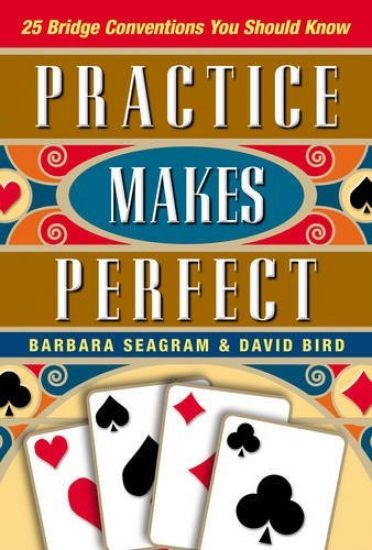
You asked for it! 25 Conventions You Should Know has sold more than 250,000 copies since it was first published, and continues to top the bridge bestseller lists. Over the years, readers have suggested that it would be an even better book if it offered some way to practice what they had learned. Well, here it is: a brief summary of each of those 25 conventions, together with example hands which can be dealt out and used to apply your new knowledge. Bridge teachers and students will find this book invaluable.