Kirjojen hintavertailu. Mukana 12 390 323 kirjaa ja 12 kauppaa.

Kirjailija

David Bordwell

Kirjat ja teokset yhdessä paikassa: 26 kirjaa, julkaisuja vuosilta 1987-2025, suosituimpien joukossa ISE Film History: An Introduction. Vertaile teosten hintoja ja tarkista saatavuus suomalaisista kirjakaupoista.

26 kirjaa

Kirjojen julkaisuhaarukka 1987-2025.

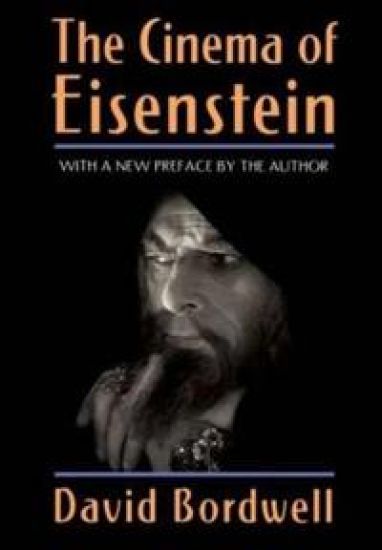
The Cinema of Eisenstein

The Cinema of Eisenstein

David Bordwell

Routledge
2005
nidottu
The Cinema of Eisenstein is David Bordwell's comprehensive analysis of the films of Sergei Eisenstein, arguably the key figure in the entire history of film. The director of such classics as Potemkin,Ivan the Terrible, October, Strike, and Alexander Nevsky, Eisenstein theorized montage, presented Soviet realism to the world, and mastered the concept of film epic. Comprehensive, authoritative, and illustrated throughout, this classic work deserves to be on the shelf of every serious student of cinema.
Figures Traced in Light

Figures Traced in Light

David Bordwell

University of California Press
2005
pokkari
A film tells its story not only through dialogue and actors' performances but also through the director's control of movement and shot design. Figures Traced in Light is a detailed consideration of how cinematic staging carries the story, expresses emotion, and beguiles the audience through pictorial composition. Ranging over the entire history of cinema, David Bordwell focuses on four filmmakers' unique contributions to the technique. In-depth chapters examine Louis Feuillade, master of the 1910s serial; Kenji Mizoguchi, the great Japanese director who worked from the 1920s to the 1950s; Theo Angelopoulos, who began his career as a political modernist in the late 1960s; and Hou Hsiao-hsien, the Taiwanese filmmaker who in the 1980s became the preeminent Asian director. For comparison, Bordwell draws on films by Howard Hawks, Michelangelo Antonioni, Yasujiro Ozu, Takeshi Kitano, and many other directors. Superbly illustrated with more than 500 frame enlargements and 16 color illustrations, Figures Traced in Light situates its close analysis of model sequences in the context of the technological, industrial, and cultural trends that shaped the directors' approaches to staging.
Post-theory

Post-theory

David Bordwell; Noel Carroll

University of Wisconsin Press
1996
nidottu
Since the 1970s, film scholars have been searching for a unified theory that will explain all types of film, their production and their reception; the field has been dominated by structuralist Marxism, varieties of cultural theory and the psychoanalytic ideas of Freud and Lacan. The authors of this text ask why not employ many theories tailored to specific goals, rather than search for a unified theory. They offer directions for understanding film, presenting essays by 27 scholars on topics as diverse as film scores, audience response and the national film industries of Russia, Scandinavia, the US and Japan. Using historical, philosophical, psychological and feminist methods, the book examines issues such as: what goes on when viewers perceive a film?; how do filmmakers exploit conventions?; how do movies create illusions?; and how does a film arouse emotion?
Making Meaning

Making Meaning

David Bordwell

Harvard University Press
1991
nidottu
David Bordwell’s new book is at once a history of film criticism, an analysis of how critics interpret film, and a proposal for an alternative program for film studies. It is an anatomy of film criticism meant to reset the agenda for film scholarship. As such Making Meaning should be a landmark book, a focus for debate from which future film study will evolve.Bordwell systematically maps different strategies for interpreting films and making meaning, illustrating his points with a vast array of examples from Western film criticism. Following an introductory chapter that sets out the terms and scope of the argument, Bordwell goes on to show how critical institutions constrain and contain the very practices they promote, and how the interpretation of texts has become a central preoccupation of the humanities. He gives lucid accounts of the development of film criticism in France, Britain, and the United States since World War II; analyzes this development through two important types of criticism, thematic-explicatory and symptomatic; and shows that both types, usually seen as antithetical, in fact have much in common. These diverse and even warring schools of criticism share conventional, rhetorical, and problem-solving techniques—a point that has broad-ranging implications for the way critics practice their art. The book concludes with a survey of the alternatives to criticism based on interpretation and, finally, with the proposal that a historical poetics of cinema offers the most fruitful framework for film analysis.
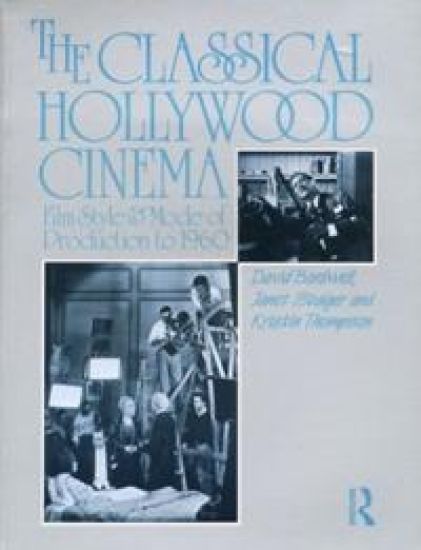
The Classical Hollywood Cinema

The Classical Hollywood Cinema

David Bordwell; Janet Staiger; Kristin Thompson

Routledge
1988
nidottu
'A dense, challenging and important book.' Philip French Observer'At the very least, this blockbuster is probably the best single volume history of Hollywood we're likely to get for a very long time.' Paul Kerr City Limits'Persuasively argued, the book is also packed with facts, figures and photographs.' Nigel Andrews Financial TimesAcclaimed for their breakthrough approach, Bordwell, Staiger and Thompson analyze the basic conditions of American film-making as a historical institution and consider to what extent Hollywood film production constitutes a systematic enterprise, in both its style and its business operations.Despite differences of director, genre or studio, most Hollywood films operate within a set of shared assumptions about how a film should look and sound. Such assumptions are neither natural nor inevitable; but because classical-style films have been the type most widely seen, they have come to be accepted as the 'norm' of film-making and viewing.The authors show how these classical conventions were formulated and standardized, and how they responded to the arrival of sound, colour, widescreen ratios and stereophonic sound. They argue that each new technological development has served a function within an existing narrational system.The authors also examine how the Hollywood cinema standardized the film-making process itself. They describe how, over the course of its history, Hollywood developed distinct modes of production in a constant search for maximum efficiency, predictability and novelty.Set apart by its combination of theoretical analysis and empirical evidence, this book is the standard work on the classical Hollywood cinema style of film-making from the silent era to the 1960s. Now available in paperback, it is a 'must' for film students, lecturers and all those seriously interested in the development of the film industry.
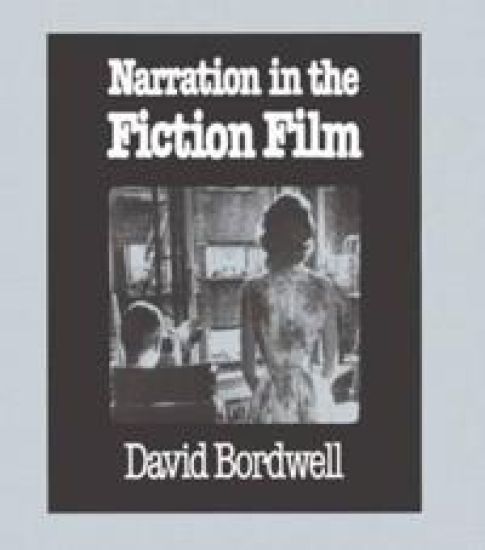
Narration in the Fiction Film

Narration in the Fiction Film

David Bordwell

Routledge
1987
nidottu
Most films tell tales, but what does that involve? How do motion pictures tease us into building what we all agree to call stories? In this study, David Bordwell offers the first comprehensive account of how movies use fundamental principles of narrative representation, unique features of the film medium, and diverse storytelling patterns to construct their fictional narratives. The result is a pioneering, far reaching work which will change the way we perceive narrative film and which every serious film scholar, student or fan will welcome. Bordwell begins his study with an overview of general approaches to narration. Drawing on the insights of certain theories- in particular Russian formalist aesthetic theory and cognitive psychology for its notion of how the viewer contributes to the process of narrative comprehension- he formulates a new concept of narration that is uniquely applicable to fictional cinema. Films, Bordwell argues, are patterned systems that prompt spectators versed in narrative conventions to construct a story. Since cinema is a medium involving both time and place, he considers how these factors affect the concrete process of film narration and help shape the spectators’ story comprehension.If the conventions of story making very from medium to medium, they also vary historically. Dominant modes of film narration, Bordwell suggests have furnished tacit conventions for film makers and audiences at different periods. Characterising four of these modes as classical Hollywood cinema, the European ‘art cinema’, the Soviet historical materialist film and parametric narration, he examines the history and specific strategies of each.Ultimately, however, Bordwell offers more than abstract theory. Demonstrating how his concept of narration can aid in the critical analysis of particular films and film makers, he provides fresh discussions of such movies as ‘His Girl Friday’, ‘The Big Sleep’, ‘Rear Window’ and ‘La Guerre est Finie’. In director Jean-Luc Goddard, Bordwell finds particularly telling reference point; the Frenchman's films derive their particular difficulty and charm, he argued, by parodying, mixing and subverting those narrative conventions which audiences have learnt to trust.