
Kirjailija
David Boyd Haycock
Kirjat ja teokset yhdessä paikassa: 12 kirjaa, julkaisuja vuosilta 2001-2026, suosituimpien joukossa BA Paul Nash re-issue. Vertaile teosten hintoja ja tarkista saatavuus suomalaisista kirjakaupoista.
12 kirjaa
Kirjojen julkaisuhaarukka 2001-2026.
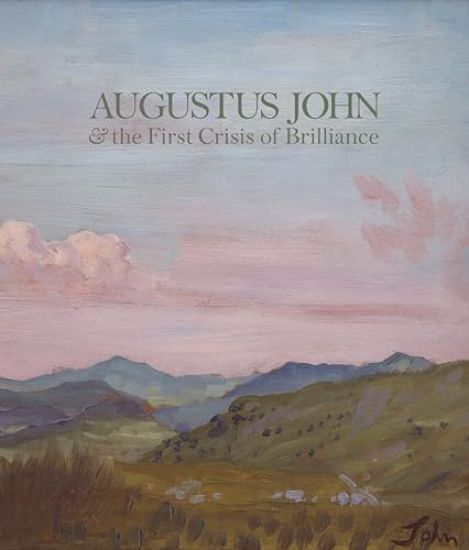
Augustus John & the First Crisis of Brilliance
David Boyd Haycock
Piano Nobile Publications
2024
nidottu
Augustus John & the First Crisis of Brilliance tells the story of a remarkable generation and its artistic achievements. Accompanying Piano Nobile’s exhibition of the same title, the publication explores the artistic networks around Augustus John before the First World War. John was closely acquainted with many of his highly talented contemporaries and this publication considers his relationship to Jacob Epstein, James Dickson Innes, Gwen John, Henry Lamb, Derwent Lees, Wyndham Lewis and William Orpen. The publication includes an introductory essay by Dr David Boyd Haycock discussing Augustus John and the notion of genius. A selection of over forty paintings, drawings and sculptures illuminates some of the key themes at play in John’s milieu, and each work is accompanied by thoroughly researched catalogue entries by Dr Haycock. Themes and subjects include friendship and family portraits, the muses Dorelia McNeill and Euphemia Lamb, and the landscapes of Wales, Provence and Ireland.
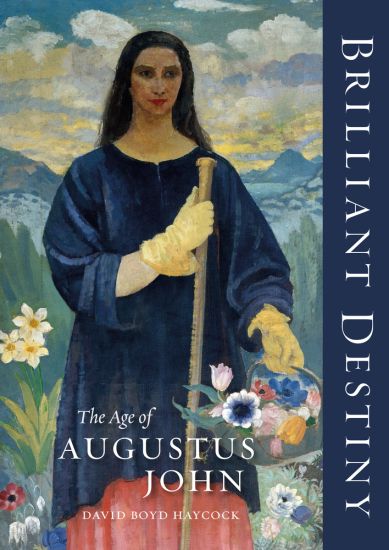
Considered by John Singer Sargent to be the best British draughtsman since the Renaissance, Augustus John was the first of the British ‘Post-Impressionists’. Such was his importance that Virginia Woolf declared in 1921 that by 1908 ‘The age of Augustus John was dawning,’ and Wyndham Lewis would dub the ten years leading up to 1914 ‘the Augustan decade'. Handsome, unconventional and full of brilliant promise and Bohemian spirit, John was the man almost every young British art student wanted to emulate. This book reveals why, telling his extraordinary story from his birth in south Wales in 1878 through to the end of his youth in the closing stages of the First World War. Interweaving his biography are the personalities who surrounded John, and the book looks at their influence on him, and his upon them. They include his fellow students at the Slade School of Art – his sister Gwen John and future wife Ida Nettleship, and his friends William Orpen, Ambrose McEvoy, Spencer Gore and Percy Wyndham Lewis – all of whom would become prominent artists in their own right. This book is a long overdue, new interpretation of this singular figure, who was both at the heart of the British artistic milieu, and yet set apart from its movements and manifestos.
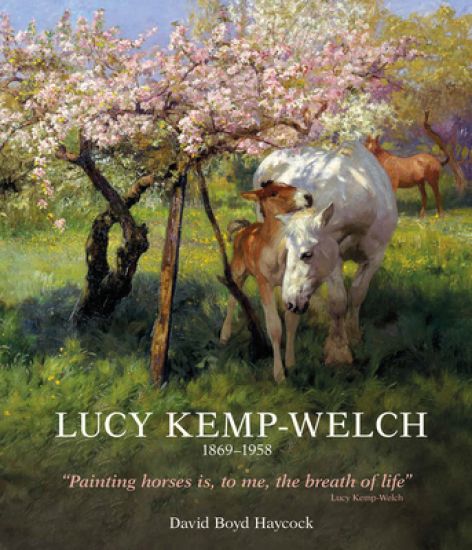
Over the course of a long and very successful career spanning the first half of the 20th century, Lucy Kemp-Welch established herself as one of the leading equestrian painters at work in the UK and one of the country’s best-known women artists. David Boyd Haycock’s new, extensively illustrated biography of Kemp-Welch brings this remarkable artist and her work back into sharp focus. Born in 1869, Kemp-Welch first came to the art establishment’s attention in 1897 when her immense painting, Colt Hunting in the New Forest, caused a sensation at the Royal Academy’s Summer Exhibition; the work was bought for the Nation by the Chantry Bequest in the year of exhibition. In 1915, she illustrated Anna Sewell’s Black Beauty, and was commissioned to paint images for the Government during the First World War. Later, the mural Women’s Work in the Great War, was placed in the Royal Exchange in London, where it remains to this day. Respected art writer and curator Boyd-Haycock shines new light on Kemp-Welch’s life, writing from a 21st-century perspective and reflecting on her as a female painter in a male-dominated environment. Alongside Kemp-Welch’s paintings, the book will feature exclusive period photographs of the artist herself, shown at work and in her studio.
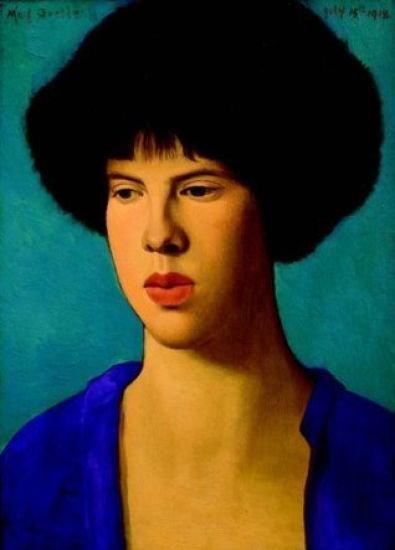
This beautifully illustrated catalog accompanied and exhibition at the leading London gallery Piano Nobile, celebrating the achievements of Mart Gertler (1891-1939). It charts Gertler's career from an early British modernist at the close of the Edwardian era through his most radical period during the years of the First World War to the 'return to order' of the 1920s, when Gertler was recognized as a consummate painter with a highly individual vision. Gertler's biographer and cataloger Sarah MacDougall introduces us to celebrated and little-known painting and drawings from a number of private collections. Example of Gertler's experimental figurative work in this period include three of his four boxing studies show together here for the first time and two rarely exhibited drawings for his iconic anti-war painting, Merry-Go-Round (1916), both of which caused an 'outcry' when first exhibited.
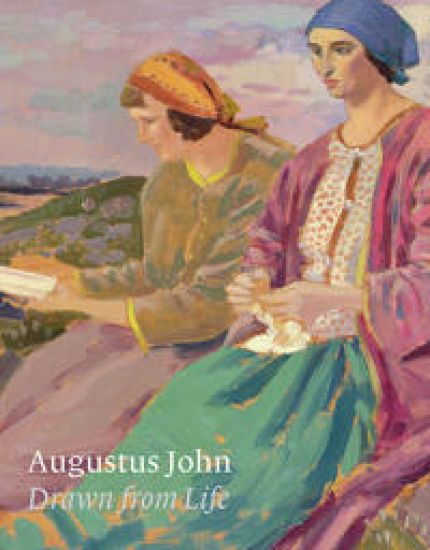
Despite achieving extraordinary fame in his lifetime, when he was widely considered to be one the greatest living British artists and his drawings were thought by John Singer Sargent to be amongst the finest seen since the Renaissance, Augustus John has grown increasingly obscure. Augustus John: Drawn from Life seeks to restore this remarkable artist to his rightful place in the canon of British Art. In the first three decades of the 20th century Augustus John (1878–1961) was widely considered one of the greatest living British artists, famous almost as much for his extraordinary Bohemian lifestyle as for his outstanding portraits, etchings and drawings. John was born in Wales in 1878 and educated at the Slade School of Art in London in the 1890s, where the onus of teaching was on the daily life class and a close study of the Old Masters. He soon emerged as a wonderfully gifted draughtsman – indeed, the American painter John Singer Sargent would declare that John’s youthful drawings were amongst the finest seen since the Renaissance. Dividing his life between England, Wales and France, and reaching his prime in the years immediately before the outbreak of the Great War, by 1910 John would be likened to a British Gauguin, a Welsh Post-Impressionist using bold colors and a willfully naïve and primitive style to explore the complex combination of romanticism, escapism and alienation engendered by 20th-century life. The great American collector John Quinn considered John and his sister Gwen key European artists, and his work would be included in the influential Armory Show in New York in 1913. After the War he would become Britain’s leading society portraitist, earning a fortune in commissions – though it was his more personal paintings of friends, lovers, family and fellow artists and writers such as W.B. Yeats, T.E. Lawrence, Dylan Thomas, Ottoline Morrell and his muse/mistress Dorelia McNeill that best revealed his great talents. Published to coincide with exhibitions at Poole Museum in Dorset in the summer of 2018 and at Salisbury Museum in Wiltshire in the summer of 2019, Augustus John: Drawn from Life reexamines the life and work of this significant but increasingly overlooked British artist. Focusing on around sixty works drawn from private and public collections, including the Tate, the National Portrait Gallery and the National Museum of Wales, the book will offer new insights into John’s life and development as an artist from the late 1890s to the outbreak of the Second World War.
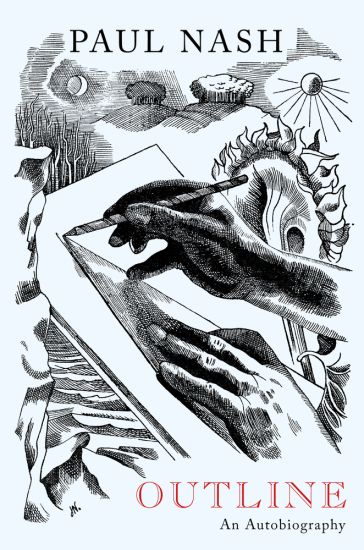
Paul Nash (1889-1946) was one of the most important British artists of the twentieth century and an official war artist in both the First and the Second World Wars. This new edition of Nash’s unfinished autobiography, Outline, is published to coincide with the Tate's major Paul Nash retrospective and incorporates an abridged edition of the previously unpublished ‘Memoir of Paul Nash’ by his wife Margaret.Nash started writing Outline in the late 1930s, but it was left incomplete on his sudden death in 1946. Nash had struggled to complete the book, finding that he could not get beyond the beginning of the Great War. Outline is, nevertheless, one of the great English literary works of the period, for Nash was a gifted writer. His autobiography offers considerable insights into to the young life of the artist himself, and the development of his personal and very distinctive vision. When eventually published in 1949 his incomplete memoir was supplemented by letters that Nash wrote to his wife from the Western Front in 1917. This new edition includes these letters for the vivid insight they give into Nash’s experience of the war. The third element of the new edition is Margaret Nash’s revealing (and previously unpublished) 1951 memoir of her husband. What emerges through these different narrative voices and perspectives, enhanced with photographs of Paul and Margaret Nash and reproductions of key works from throughout Nash's career, is a fascinating portrait of a major figure in Modern British art.
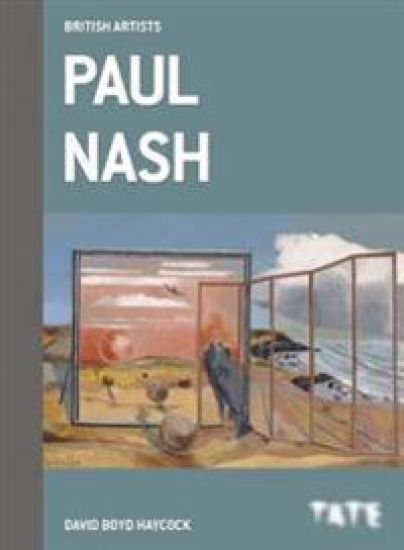
As a painter, illustrator and critic, Paul Nash (1889-1946) was at the forefront of British art in the first half of the twentieth century. Inspired by William Blake, Samuel Palmer and Dante Gabriel Rossetti, he produced some of the greatest paintings of the First and Second World Wars.
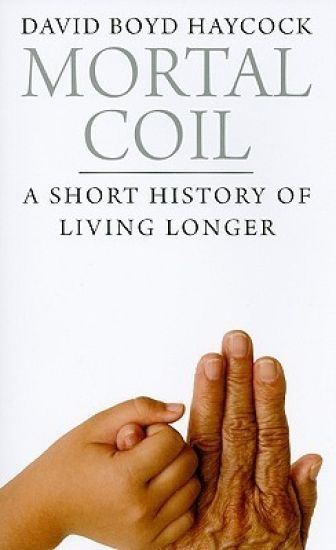
A highly engaging history of humankind's preoccupation with longevity, from 1600 to the present day An obsession with perpetual youth may seem a particularly modern phenomenon, but it is a goal that western scientists and philosophers have aspired to (and worked towards) for the last four hundred years. Mortal Coil explores the medical, scientific, and philosophical theories behind the quest for the prolongation of human life. It was a conundrum that intrigued Sir Francis Bacon and underpinned the scientific revolution; ideas of ultimate perfectibility, indefinite progress, and worldly rather than heavenly immortality fed directly into the spirit of the Enlightenment and even further into the nineteenth and twentieth centuries. In today's world of genetic research, cryonics, and nanotechnology, we still seek the same elusive philosopher's stone. From Adam and Eve to human cloning and designer babies, from seventeenth-century lifestyle guides to science fiction, Haycock's gripping story introduces an array of fascinating individuals—René Descartes, Benjamin Franklin, Jonathan Swift, Charles Darwin, and Sigmund Freud as well as a score of unknown figures. Full of extraordinary stories and valuable insights, this is a curious, witty, and captivating exploration into our unceasing desire to live forever.

Stukeley's antiquarian researches, particularly into the great stone circles of Stonehenge and Avebury, were the first to reveal their great antiquity. Friend of Newton, his life embodies the classic Enlightenment confrontation between science and religion. Dr William Stukeley (1687-1765) was the most renowned English antiquary of the eighteenth century. This study discusses his life and achievements, placing him firmly within his intellectual milieu, which he shared with his illustrious friend Isaac Newton and with other natural philosophers, theologians and historians. Stukeley's greatest memorial was his work on the stone circles of Stonehenge and Avebury: at a time when most historians believed theywere Roman or medieval monuments, he proved that they were of much greater antiquity, and his influence on subsequent interpretations of these monuments and their builders was enormous. For Stukeley, these stone circles - the work of "Celtic Druids", were a link in the chain that connected the pristine religion of Adam and Noah with the modern Anglican Church. Historians today belittle such speculations, but Stukeley shared his vision of lost religious and scientific knowledge with many of the great minds of his day; this account shows how throughout his distinguished career his antiquarian researches fortified his response to Enlightenment irreligion and the threat he believed itposed to science and society. DAVID BOYD HAYCOCK is a Junior Research Fellow at Wolfson College, Oxford.