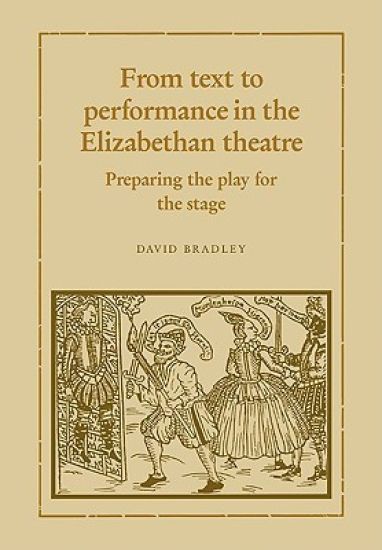
David Bradley sets out to discover how Elizabethan theatre companies prepared plays for performance: how playwrights understood the composition of the actor-companies they wrote for, how actors followed their directions for entrances and exits, and what happened when plays were adapted for changes in personnel or for other companies. Bradley's evidence includes seven theatre plots and seventeen manuscript plays, some from theatre productions which took place at the Shakespearean playhouse the Rose Theatre. Bradley's conclusions can be extrapolated to expand our understanding of other companies and their repertoires in Elizabethan theatre. The book contains facsimiles of printed plots from the period, an appendix listing playwrights, plays, theatre companies, and the number of actors needed for performance, as well as an extensive bibliography.David Bradley sets out to discover how Elizabethan theatre companies prepared plays for performance: how playwrights understood the composition of the actor-companies they wrote for, how actors followed their directions for entrances and exits, and what happened when plays were adapted for changes in personnel or for other companies.Bradley's evidence includes seven theatre plots and seventeen manuscript plays, some from theatre productions which took place at the Shakespearean playhouse the Rose Theatre. Bradley's conclusions can be extrapolated to expand our understanding of other companies and their repertoires in Elizabethan theatre. The book contains facsimiles of printed plots from the period, an appendix listing playwrights, plays, theatre companies, and the number of actors needed for performance, as well as an extensive bibliography.