Kirjojen hintavertailu. Mukana 12 114 644 kirjaa ja 12 kauppaa.

Kirjailija

David Brakke

Kirjat ja teokset yhdessä paikassa: 8 kirjaa, julkaisuja vuosilta 1999-2024, suosituimpien joukossa Shifting Cultural Frontiers in Late Antiquity. Vertaile teosten hintoja ja tarkista saatavuus suomalaisista kirjakaupoista.

8 kirjaa

Kirjojen julkaisuhaarukka 1999-2024.

Shifting Cultural Frontiers in Late Antiquity

Shifting Cultural Frontiers in Late Antiquity

David Brakke; Deborah Deliyannis

Routledge
2016
nidottu
Shifting Cultural Frontiers in Late Antiquity explores the transformation of classical culture in late antiquity by studying cultures at the borders - the borders of empires, of social classes, of public and private spaces, of literary genres, of linguistic communities, and of the modern disciplines that study antiquity. Although such canonical figures of late ancient studies as Augustine and Ammianus Marcellinus appear in its pages, this book shifts our perspective from the center to the side or the margins. The essays consider, for example, the ordinary Christians whom Augustine addressed, the border regions of Mesopotamia and Vandal Africa, 'popular' or 'legendary' literature, and athletes. Although traditional philology rightly underlies the work that these essays do, the authors, several among the most prominent in the field of late ancient studies, draw from and combine a range of disciplines and perspectives, including art history, religion, and social history. Despite their various subject matters and scholarly approaches, the essays in Shifting Cultural Frontiers coalesce around a small number of key themes in the study of late antiquity: the ambiguous effects of 'Christianization,' the creation of new literary and visual forms from earlier models, the interaction and spread of ideals between social classes, and the negotiation of ethnic and imperial identities in the contact between 'Romans' and 'barbarians.' By looking away from the core and toward the periphery, whether spatially or intellectually, the volume offers fresh insights into how ancient patterns of thinking and creating became reconfigured into the diverse cultures of the 'medieval.'
The Festal Letters of Athanasius of Alexandria, with the Festal Index and the Historia Acephala
Athanasius of Alexandria (bishop 328-373) is one of the great personalities of late-antique Christianity, and he is well-known to theologians and historians alike as a champion of orthodoxy against the ‘Arian’ heresy and a proponent of the ascetic life. His Festal Letters, written annually to announce the date of Easter, offer unique insight into another side of this towering figure—his work as a pastor and leader of the Egyptian Church. These letters have often been neglected, because they survive fragmentarily in Syriac and Coptic translations and nearly all the original Greek text has been lost. Yet his Easter messages provide a priceless glimpse into Athanasius’ thought and how a leading fourth-century bishop confronted the pastoral challenges of a rapidly changing world. This book presents the first complete English translation of all the known fragments of the Festal Letters. Introductions and annotations give the essential historical and literary background to the texts and how they illuminate Athanasius’ teachings and practice. The letters are supplemented by fresh translations of the Syriac Festal Index and the incomplete Historia acephala preserved in Latin, which furnish crucial evidence for the chronology of Athanasius’ career. Taken together, these works afford a more comprehensive picture of Athanasius as both bishop and pastor.
The Festal Letters of Athanasius of Alexandria, with the Festal Index and the Historia Acephala
Athanasius of Alexandria (bishop 328-373) is one of the great personalities of late-antique Christianity, and he is well-known to theologians and historians alike as a champion of orthodoxy against the ‘Arian’ heresy and a proponent of the ascetic life. His Festal Letters, written annually to announce the date of Easter, offer unique insight into another side of this towering figure—his work as a pastor and leader of the Egyptian Church. These letters have often been neglected, because they survive fragmentarily in Syriac and Coptic translations and nearly all the original Greek text has been lost. Yet his Easter messages provide a priceless glimpse into Athanasius’ thought and how a leading fourth-century bishop confronted the pastoral challenges of a rapidly changing world. This book presents the first complete English translation of all the known fragments of the Festal Letters. Introductions and annotations give the essential historical and literary background to the texts and how they illuminate Athanasius’ teachings and practice. The letters are supplemented by fresh translations of the Syriac Festal Index and the incomplete Historia acephala preserved in Latin, which furnish crucial evidence for the chronology of Athanasius’ career. Taken together, these works afford a more comprehensive picture of Athanasius as both bishop and pastor.
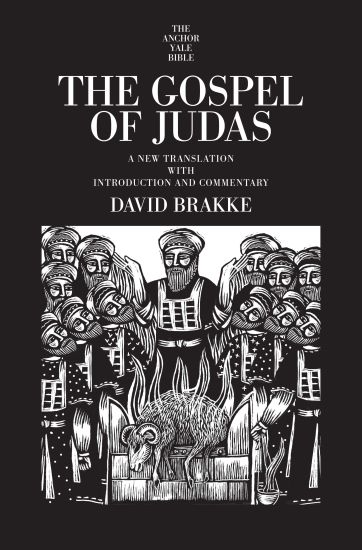
The Gospel of Judas

The Gospel of Judas

David Brakke

YALE UNIVERSITY PRESS
2022
sidottu
A new translation and commentary on the extracanonical Coptic text that describes Judas’ special status among Jesus’ disciples Since its publication in 2006, The Gospel of Judas has generated remarkable interest and debate among scholars and general readers alike. In this Coptic text from the second century C.E., Jesus engages in a series of conversations with his disciples and with Judas, explaining the origin of the cosmos and its rulers, the existence of another holy race, and the coming end of the current world order. In this new translation and commentary, David Brakke addresses the major interpretive questions that have emerged since the text’s discovery, exploring the ways that The Gospel of Judas sheds light on the origins and development of gnostic mythology, debates over the Eucharist and communal authority, and Christian appropriation of Jewish apocalyptic eschatology. The translation reflects new analyses of the work’s genre and structure, and the commentary and notes provide thorough discussions of the text’s grammar and numerous lacunae and ambiguities.
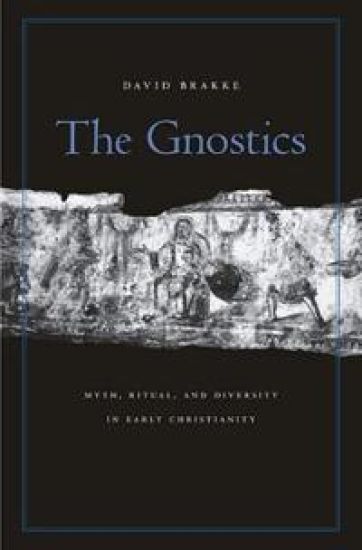
The Gnostics

The Gnostics

David Brakke

Harvard University Press
2012
nidottu
Who were the Gnostics? And how did the Gnostic movement influence the development of Christianity in antiquity? Is it true that the Church rejected Gnosticism? This book offers an illuminating discussion of recent scholarly debates over the concept of “Gnosticism” and the nature of early Christian diversity. Acknowledging that the category “Gnosticism” is flawed and must be reformed, David Brakke argues for a more careful approach to gathering evidence for the ancient Christian movement known as the Gnostic school of thought. He shows how Gnostic myth and ritual addressed basic human concerns about alienation and meaning, offered a message of salvation in Jesus, and provided a way for people to regain knowledge of God, the ultimate source of their being.Rather than depicting the Gnostics as heretics or as the losers in the fight to define Christianity, Brakke argues that the Gnostics participated in an ongoing reinvention of Christianity, in which other Christians not only rejected their ideas but also adapted and transformed them. This book will challenge scholars to think in news ways, but it also provides an accessible introduction to the Gnostics and their fellow early Christians.
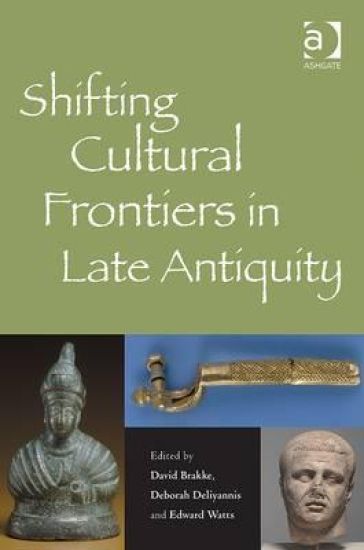
Shifting Cultural Frontiers in Late Antiquity

Shifting Cultural Frontiers in Late Antiquity

David Brakke; Deborah Deliyannis

Ashgate Publishing Limited
2012
sidottu
Shifting Cultural Frontiers in Late Antiquity explores the transformation of classical culture in late antiquity by studying cultures at the borders - the borders of empires, of social classes, of public and private spaces, of literary genres, of linguistic communities, and of the modern disciplines that study antiquity. Although such canonical figures of late ancient studies as Augustine and Ammianus Marcellinus appear in its pages, this book shifts our perspective from the center to the side or the margins. The essays consider, for example, the ordinary Christians whom Augustine addressed, the border regions of Mesopotamia and Vandal Africa, 'popular' or 'legendary' literature, and athletes. Although traditional philology rightly underlies the work that these essays do, the authors, several among the most prominent in the field of late ancient studies, draw from and combine a range of disciplines and perspectives, including art history, religion, and social history. Despite their various subject matters and scholarly approaches, the essays in Shifting Cultural Frontiers coalesce around a small number of key themes in the study of late antiquity: the ambiguous effects of 'Christianization,' the creation of new literary and visual forms from earlier models, the interaction and spread of ideals between social classes, and the negotiation of ethnic and imperial identities in the contact between 'Romans' and 'barbarians.' By looking away from the core and toward the periphery, whether spatially or intellectually, the volume offers fresh insights into how ancient patterns of thinking and creating became reconfigured into the diverse cultures of the 'medieval.'
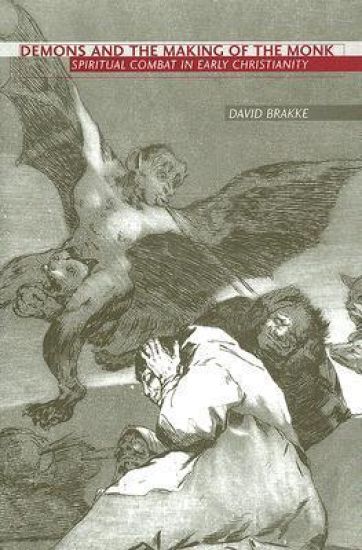
Demons and the Making of the Monk

Demons and the Making of the Monk

David Brakke

Harvard University Press
2006
sidottu
Demons--whether in embodied form or as inward temptation--make vivid appearances in early Christian monastic literature. In this finely written study of demonology and Christian spirituality in fourth- and fifth-century Egypt, David Brakke examines how the conception of the monk as a holy and virtuous being was shaped by the combative encounter with demons. Brakke studies the "making of the monk" from two perspectives. First, he describes the social and religious identities that monastic authors imagined for the demon-fighting monk: the new martyr who fights against the pagan gods, the gnostic who believes he knows both the tricks of the demons and the secrets of God, and the prophet who discerns the hidden presence of Satan even among good Christians. Then he employs recent theoretical ideas about gender and racial stereotyping to interpret accounts of demon encounters, especially those in which demons appear as the Other--as Ethiopians, as women, or as pagan gods.Drawing on biographies of exceptional monks, collections of monastic sayings and stories, letters from ascetic teachers to their disciples, sermons, and community rules, Brakke crafts a compelling picture of the embattled religious celibate. Demons and the Making of the Monk is an insightful and innovative exploration of the development of Christian monasticism.
Athanasius and Asceticism

Athanasius and Asceticism

David Brakke

Johns Hopkins University Press
1999
pokkari
It is often assumed that early Christian asceticism drew its followers completely away from worldly concerns into the realm of pure spirituality. But the life and thought of Athanasius, Bishop of Alexandria (AD 328-73), shows just how worldly-and deeply political-ascetic theology could be. David Brakke examines this important church leader's efforts to reconcile asceticism's compelling intensity with the more conventional needs of the families and everyday believers on whom the Church relied for support and stability. Brakke describes how Athanasius joined with other fourth century bishops to create a strongly unified Christian church in Egypt, bringing both the solitary monks of the desert and the female ascetics in the cities under church authority by organizing them into auxiliaries of the emerging local parishes. By carefully integrating ascetic values and practices into a comprehensive vision of the church as a heavenly commonwealth, Brakke argues, Athanasius unified a community of Christians practicing diverse versions of their faith and helped to establish the lines of administrative and pastoral authority that would be essential to the church's future success. This illuminating study of the turmoil of fourth century Christianity also includes the first English translations of many of Athanasius's ascetic and pastoral writings.