Kirjojen hintavertailu. Mukana 12 162 498 kirjaa ja 12 kauppaa.

Kirjailija

David Brannan

Kirjat ja teokset yhdessä paikassa: 3 kirjaa, julkaisuja vuosilta 2001-2005, suosituimpien joukossa Developing Iraq's Security Sector. Vertaile teosten hintoja ja tarkista saatavuus suomalaisista kirjakaupoista.

3 kirjaa

Kirjojen julkaisuhaarukka 2001-2005.

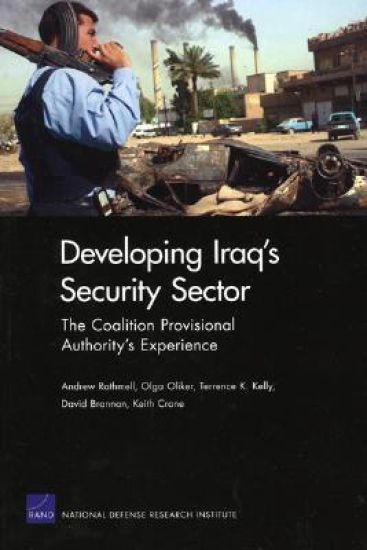
Developing Iraq's Security Sector

Developing Iraq's Security Sector

Andrew Rathmell; Olga Oliker; Terrence K. Kelly; David Brannan; Keith Crane

RAND
2005
pokkari
Looks at the Coalition Provisional Authority's efforts to rebuild Iraq's security sector and provides lessons learned. From May 2003 to June 28, 2004 (when it handed over authority to the Iraqi Interim Government), the Coalition Provisional Authority (CPA) worked to field Iraqi security forces and to develop security sector institutions. This book - all of whose authors were advisors to the CPA-breaks out the various elements of Iraq's security sector, including the defense, interior, and justice sectors, and assesses the CPA's successes and failures.
Training the 21st Century Police Officer

Training the 21st Century Police Officer

John Christian; Matthew Lewis; Scott Gerwehr; Russell W. Glenn; Barbara R. Pantich; Dionne Barnes-Proby; Elizabeth Williams; David Brannan

RAND
2003
pokkari
This study recommends that the LAPD adopts a concept of police professionalism that incorporates corporateness, responsibility and expertise to guide the its training, to include training: the use of force; search and seizure; arrest procedures; community policing; and diversity awareness.
Trends in Outside Support for Insurgent Movements

Trends in Outside Support for Insurgent Movements

Daniel L. Byman; Peter Chalk; Bruce Hoffman; William Rosenau; David Brannan

RAND
2001
pokkari
Outside supporters, including state and non-state sponsors, of insurgent movements offer various forms of assistance to insurgents based on a wide range of motivations. The most useful forms of outside support for an insurgent movement include safe havens, financial support, political backing, and direct military assistance. Because states are able to provide all of these types of assistance, their support has had a profound impact on the effectiveness of many rebel movements since the end of the Cold War. However, state support is no longer the only, or indeed necessarily the most important, game in town. Diasporas have played a particularly important role in sustaining several strong insurgencies. More rarely, refugees, guerrilla groups, or other types of non-state supporters play a significant role in creating or sustaining an insurgency, offering fighters, training, or other forms of assistance. This report assesses post-Cold War trends in external support for insurgent movements. It describes the frequency that states, diasporas, refugees, and other non-state actors back guerrilla movements.It also assesses the motivations of these actors and which types of support matter most. This book concludes by assessing the implications for analysts of insurgent movements.