Kirjojen hintavertailu. Mukana 12 152 606 kirjaa ja 12 kauppaa.

Kirjailija

David C. Gompert

Kirjat ja teokset yhdessä paikassa: 25 kirjaa, julkaisuja vuosilta 2002-2023, suosituimpien joukossa Underkill. Vertaile teosten hintoja ja tarkista saatavuus suomalaisista kirjakaupoista.

Mukana myös kirjoitusasut: David C Gompert

25 kirjaa

Kirjojen julkaisuhaarukka 2002-2023.

The U.S. Army in Asia, 2030-2040

The U.S. Army in Asia, 2030-2040

Terrence K. Kelly; James Dobbins; David A. Shlapak; David C. Gompert; Eric Heginbotham; Peter Chalk; Lloyd Thrall

RAND
2015
pokkari
Looking to the 2030 2040 time frame, U.S. policy and military strategy will need to strike a balance among maintaining a cooperative relationship with China, deterring Chinese aggression in regional disputes, and preparing for the possibility that China could become more assertive. The U.S. Army will have an important role to play in preparing for these developments and for protecting and furthering U.S. interests in the region."
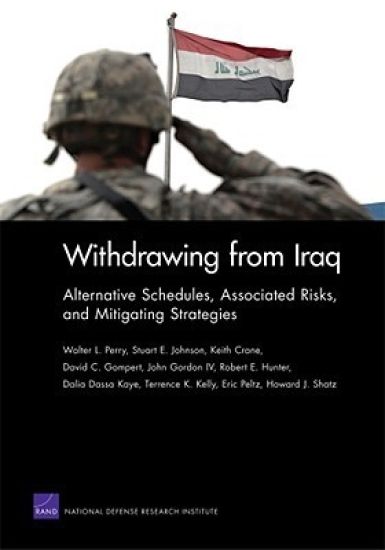
Withdrawing from Iraq

Withdrawing from Iraq

Walter L. Perry; Stuart E. Johnson; Keith Crane; David C. Gompert; John Gordon; Robert E. Hunter; Dalia Dassa Kaye; Terrence K. Kelly; Eric Peltz; Howard J. Shatz

RAND
2009
pokkari
Since 2007, security has improved dramatically in Iraq. The U.S. and Iraqi governments - and most Iraqis - want to see both the U.S. presence there reduced and the Iraqi government and security forces assuming a greater role in providing for public security. The challenge is to effect this drawdown while preserving security and stability in the country and in the region. In response to tasking from the U.S. Congress, RAND researchers conducted an independent study to examine drawdown schedules, risks, and mitigating strategies. They identified logistical constraints on moving equipment out of the country, assessed trends in insurgent activity and the ability of Iraqi security forces to counter it, and examined the implications for the size of the residual U.S. force and for security in Iraq and the region. This book presents alternative drawdown schedules - one consistent with the Obama administration's stated intentions and two others, one somewhat slower and another faster - that are responsive to these factors.It also recommends steps that the United States can take to alleviate anticipated constraints, overcome likely resistance, and reduce the potential risks associated with a drawdown. For more than 60 years, decisionmakers in the public and private sectors have turned to the RAND Corporation for objective analysis and effective solutions that address the challenges facing the nation and the world.
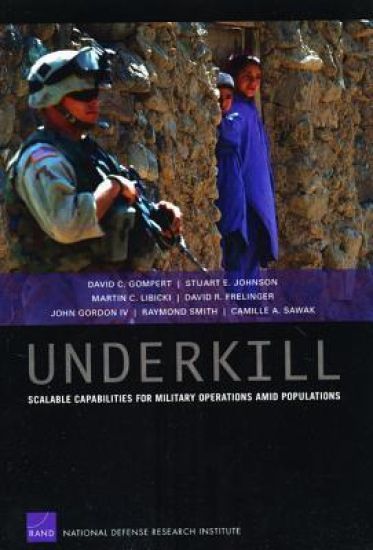
Underkill

Underkill

David C Gompert; Stuart E Johnson; Martin C Libicki; David R Frelinger; John Gordon

RAND
2009
pokkari
The U.S. military is ill-equipped to strike at extremists who hide in populations. Using deadly force against them can harm and alienate the very people whose cooperation U.S. forces are trying to earn. To solve this problem, a new RAND study proposes a "continuum of force"--a suite of capabilities that includes sound, light, lasers, cell phones, and video cameras. These technologies are available but have received insufficient attention.
Analysis of Strategy and Strategies of Analysis

Analysis of Strategy and Strategies of Analysis

David C. Gompert; Paul K. Davis; Stuart E. Johnson; Duncan Long

RAND
2008
pokkari
In a fluid global security environment such as ours, assessing the costs, risks, and likely consequences of alternative national defense strategies is as hard as it is essential. The authors show how, even in the face of uncertainty, the costs and other implications of any strategy can be assessed by examining the capabilities needed by U.S. combatant command - the chief agents of strategy - to fulfill what the strategy expects of them.
Developing Resource-informed Strategic Assessments and Recommendations

Developing Resource-informed Strategic Assessments and Recommendations

Paul K. Davis; Stuart E. Johnson; Duncan Long; David C. Gompert

RAND
2008
pokkari
A debate will likely occur in 2009 about U.S. global national-security strategy. The authors describe and illustrate a methodology to help frame and evaluate resource-informed strategies. The core is an integrated portfolio-analysis approach that compares options by their anticipated effectiveness, risks, and resource implications. Three illustrative grand strategies are compared, which deal in different ways with the problems of our time.The monograph describes a portfolio-analysis approach for integrated comparison of alternative strategies, in terms of effectiveness, risks, and resource implications.
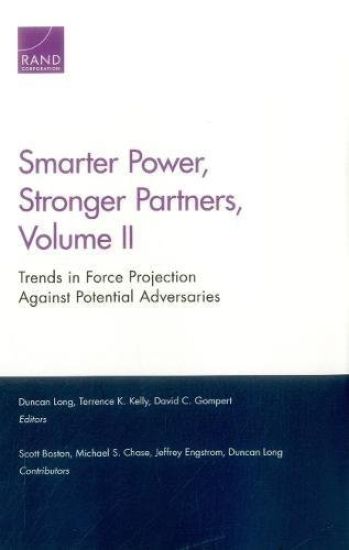
Smarter Power, Stronger Partners

Smarter Power, Stronger Partners

Duncan Long; Terrence K Kelly; David C Gompert

RAND
2017
nidottu
This volume describes nine warfighting scenarios to test whether the anti-access and area-denial threat to U.S. force projection is growing more severe in critical regions. The potential adversaries in the scenarios are China, Russia, and Iran. The scenarios describe plausible U.S. and adversary military actions based on common understanding of current operational capabilities and approaches.
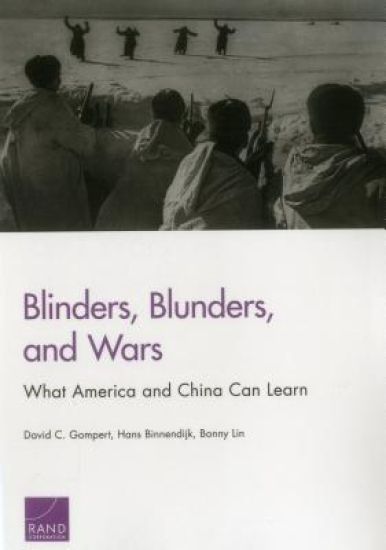
Blinders, Blunders, and Wars

Blinders, Blunders, and Wars

David C. Gompert; Hans Binnendijk; Bonny Lin

RAND
2014
pokkari
The history of wars caused by misjudgments, from Napoleon s invasion of Russia to America s invasion of Iraq, reveals that leaders relied on cognitive models that were seriously at odds with objective reality. Blinders, Blunders, and Wars analyzes eight historical examples of strategic blunders regarding war and peace and four examples of decisions that turned out well, and then applies those lessons to the current Sino-American case."
Security in Iraq

Security in Iraq

David C. Gompert; Terrence K. Kelly; Jessica Watkins

RAND
2010
pokkari
U.S. withdrawal could affect Iraq's internal security and stability, which could, in turn, affect U.S. strategic interests and the safety of U.S. troops and civilians in Iraq. U.S. policy-makers need a dynamic analytic framework with which to examine the shifting motivations and capabilities of the actors that affect Iraq's security. Within this framework, the United States should be able to contribute to continued strengthening of the internal security and stability of Iraq even as it withdraws its forces.
Breaking the Failed-state Cycle

Breaking the Failed-state Cycle

Marla C. Haims; David C. Gompert; Gregory F. Treverton; Brooke K. Stearns

RAND
2008
pokkari
Insecurity in the 21st century appears to come less from the collisions of powerful states than from the debris of imploding ones. This paper aims to improve the understanding and treatment of failed states by focusing on critical challenges at the intersections between security, economics, and politics and on the guiding goal of lifting local populations from the status of victims of failure to agents of recovery.
War by Other Means

War by Other Means

David C. Gompert; John Gordon

RAND
2008
pokkari
This book examines how the United States should improve its counterinsurgency (COIN) capabilities through, for example, much greater focus on understanding jihadist strategy, using civil measures to strengthen the local government, and enabling local forces to conduct COIN operations.It provides a broad discussion of the investments, organizational changes, and multilateral arrangements that the United States should pursue to improve its COIN capabilities.It examines the challenge of 21st-century insurgency, exemplified by the global jihadist movement, and describes the civil, information, perception-and-cognition, and security capabilities required for effective counterinsurgency.
Byting Back

Byting Back

Martin C Libicki; David C Gompert; David R Frelinger; Raymond Smith

RAND
2007
nidottu
Libicki et al. argue that information collection requirements and systems for counterinsurgency are important because the community that conducts counterinsurgency crosses national and institutional boundaries and because the indigenous population plays a large role in determining the outcome of an insurgency. They then demonstrate what this focus implies for counterinsurgency requirements, collection, networking, and systems design.
Heads We Win

Heads We Win

David C Gompert

RAND
2007
pokkari
Current U.S. counterinsurgency strategy is in need of stronger cognitive capabilities that will enable the United States to "fight smarter." These include comprehension, reasoning, and decisionmaking, the components that are most effective against an enemy that is quick to adapt, transform, and regenerate. This paper offers concrete ideas for gaining the cognitive advantage in anticipating and countering the new global insurgency.