Kirjojen hintavertailu. Mukana 12 152 606 kirjaa ja 12 kauppaa.

Kirjailija

David Castriota

Kirjat ja teokset yhdessä paikassa: 2 kirjaa, julkaisuja vuosilta 1992-2025, suosituimpien joukossa Myth, Ethos and Actuality. Vertaile teosten hintoja ja tarkista saatavuus suomalaisista kirjakaupoista.

2 kirjaa

Kirjojen julkaisuhaarukka 1992-2025.

Kilims

Kilims

Michael Mandapati; David Castriota; Jill D'Alessandro; Keith Recker

Hali Publications Ltd
2025
sidottu
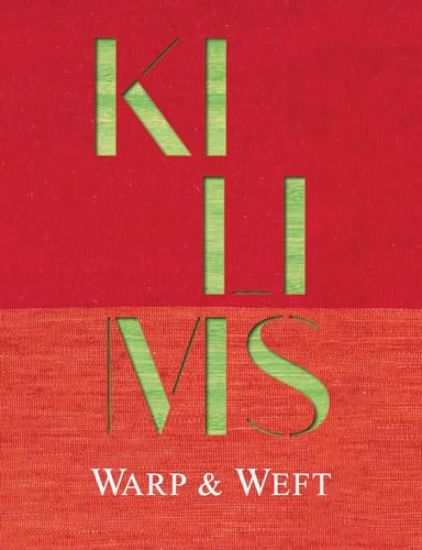
Kilims from Mazandaran are true masterpieces of woven minimalism. From stripes to fields of pure and deep colour, these textiles represent a singular kind of artistic abstraction. The women who authored these pieces made them for their own use. In wool and silk, they created works of textile art using the basic building blocks of all hand weaving: warp and weft. The grid thus created is at the same time rigid and flexible; it lends itself to geometric pattern, but also allows for feathery ikat-like effects and multidimensional colour expression. This book is a sumptuous visual celebration of a largely unknown modern art form. Expert writers add context to the pieces by contemplating subjects such as 20th-century minimalism, materiality and the nature of colour.
Myth, Ethos and Actuality

Myth, Ethos and Actuality

David Castriota

University of Wisconsin Press
1992
nidottu
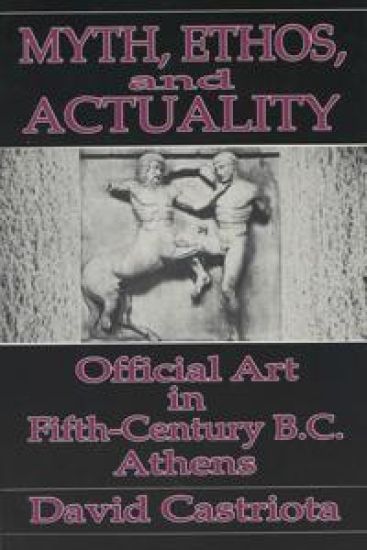
Myth, Ethos, and Actuality examines the depiction of mythic themes on Athenian public monuments in the period following the Persian Wars, during the second and third quarters of the 5th century BC. Using material remains, as well as the evidence of contemporary Greek history, rhetoric and poetry, David Castriota interprets the Athenian monuments as vehicles of an official ideology intended to celebrate and justify the present in terms of the past. Castriota focuses on the strategy of ethical antithesis asserting Greek moral superiority over the ""barbaric"" Persians, whose invasion had been repelled a generation earlier. He examines how, in major public programmes of painting and sculpture, the leading artists of the period recast the Persians in the guise of wild and impious mythic antagonists to associate them with the ethical flaws or weakness commonly ascribed to women, animals and foreigners. The Athenians in contrast, were compared to mythic protagonists representing the excellence and triumph of Hellenic culture. Castriota's study attempts to break new ground in emphasising the ethical implication of mythic precedents, which required substantial alterations to render them more effective as archetypes for the defence of Greek culture against a foreign, morally inferior enemy. The book looks at how the patrons and planners sought to manipulate viewer response through the selective presentation or repackaging of mythic traditions.