Kirjojen hintavertailu. Mukana 12 595 353 kirjaa ja 12 kauppaa.

Kirjailija

David Conradson

Kirjat ja teokset yhdessä paikassa: 3 kirjaa, julkaisuja vuosilta 2023-2026, suosituimpien joukossa A Research Agenda for Emotional Geographies. Vertaile teosten hintoja ja tarkista saatavuus suomalaisista kirjakaupoista.

3 kirjaa

Kirjojen julkaisuhaarukka 2023-2026.

A Research Agenda for Emotional Geographies

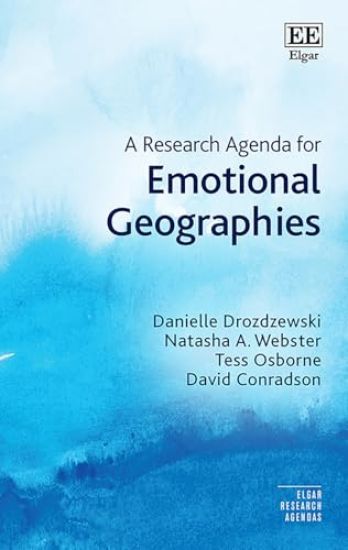
A Research Agenda for Emotional Geographies

Danielle Drozdzewski; Natasha A. Webster; Tess Osborne; David Conradson

EDWARD ELGAR PUBLISHING LTD
2026
sidottu
Elgar Research Agendas outline the future of research in a given area. Leading scholars are given the space to explore their subject in provocative ways, and map out the potential directions of travel. They are relevant but also visionary. This forward-looking book examines emotional geographies as both a subdiscipline and a practice. Written collaboratively, the authors demonstrate the diverse ways in which emotions influence research, knowledge and everyday life, inviting readers to recognise emotions as a fundamental component of human understanding, actions and relationships. Chapters highlight how the study of emotional geography provides crucial insights into pillars of daily life, such as power, work, care and social change. Drawing on feminist and embodied traditions, the book combines conceptual reflection, methodological innovation and lived experience to outline the impact of emotional geography on key challenges such as political unrest, the climate crisis, migration and technological change. Tracing the evolution of the field, the authors emphasise its future potential in research and practical applications, as well as its capacity to foster a more empathetic world. A Research Agenda for Emotional Geographies is an illuminating read for scholars and students of human geography, the social sciences and humanities, and particularly those interested in working with emotions across contexts. Feminist, decolonial, migration and climate change researchers will also benefit from the book’s interdisciplinary approach.
The Post-Earthquake City

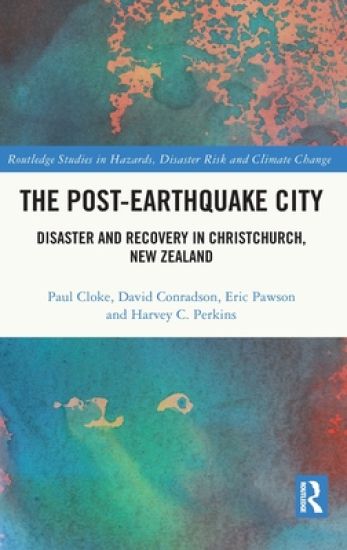
The Post-Earthquake City

Paul Cloke; David Conradson; Eric Pawson; Harvey C. Perkins

TAYLOR FRANCIS LTD
2024
nidottu
This book critically assesses Christchurch, New Zealand as an evolving post-earthquake city. It examines the impact of the 2010–13 Canterbury earthquake sequence, employing a chronological structure to consider ‘damage and displacement’, ‘recovery and renewal’ and ‘the city in transition’.It offers a framework for understanding the multiple experiences and realities of post-earthquake recovery. It details how the rebuilding of the city has occurred and examines what has arisen in the context of an unprecedented opportunity to refashion land uses and social experience from the ground up. A recurring tension is observed between the desire and tendency of some to reproduce previous urban orthodoxies and the experimental efforts of others to fashion new cultures of progressive place-making and attention to the more-than-human city. The book offers several lessons for understanding disaster recovery in cities. It illuminates the opportunities disasters create for both the reassertion of the familiar and the emergence of the new; highlights the divergence of lived experience during recovery; and considers the extent to which a post-disaster city is prepared for likely climate futures.The book will be valuable reading for critical disaster researchers as well as geographers, sociologists, urban planners and policy makers interested in disaster recovery.
The Post-Earthquake City

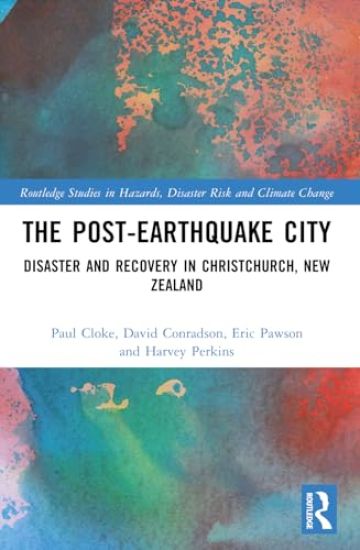
The Post-Earthquake City

Paul Cloke; David Conradson; Eric Pawson; Harvey C. Perkins

TAYLOR FRANCIS LTD
2023
sidottu
This book critically assesses Christchurch, New Zealand as an evolving post-earthquake city. It examines the impact of the 2010–13 Canterbury earthquake sequence, employing a chronological structure to consider ‘damage and displacement’, ‘recovery and renewal’ and ‘the city in transition’.It offers a framework for understanding the multiple experiences and realities of post-earthquake recovery. It details how the rebuilding of the city has occurred and examines what has arisen in the context of an unprecedented opportunity to refashion land uses and social experience from the ground up. A recurring tension is observed between the desire and tendency of some to reproduce previous urban orthodoxies and the experimental efforts of others to fashion new cultures of progressive place-making and attention to the more-than-human city. The book offers several lessons for understanding disaster recovery in cities. It illuminates the opportunities disasters create for both the reassertion of the familiar and the emergence of the new; highlights the divergence of lived experience during recovery; and considers the extent to which a post-disaster city is prepared for likely climate futures.The book will be valuable reading for critical disaster researchers as well as geographers, sociologists, urban planners and policy makers interested in disaster recovery.