Kirjojen hintavertailu. Mukana 12 595 353 kirjaa ja 12 kauppaa.

Kirjailija

David Constantine

Kirjat ja teokset yhdessä paikassa: 15 kirjaa, julkaisuja vuosilta 1988-2022, suosituimpien joukossa The Dressing-Up Box. Vertaile teosten hintoja ja tarkista saatavuus suomalaisista kirjakaupoista.

15 kirjaa

Kirjojen julkaisuhaarukka 1988-2022.

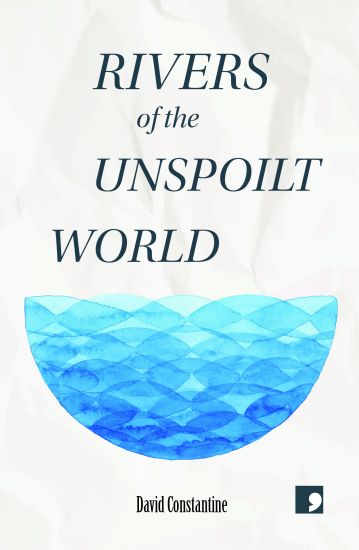
Rivers of the Unspoilt World

Rivers of the Unspoilt World

David Constantine

Comma Press
2022
nidottu
Described as one of the as one of the UK's finest short story writers, Constantine intricately interweaves fictional characters and events with the real to create new ways of seeing and connecting our past, present and possible futures. With extraordinary patience and precision, these stories centre on moments, conversations, meetings that feel like small details picked out from a larger tapestry. From the academic in Paris, researching and processing the atrocities of the 1871 Paris Commune, to the young biographer who tries to befriend the ailing poet Hoelderlin, the characters in this collection are united by an urge for connection, a desire to better know themselves - and the world around them - to counteract a loss of hope and belonging.
The New Abject

The New Abject

Matthew Holness; Ramsey Campbell; Bernardine Bishop; Lucie McKnight-Hardy; Margaret Drabble; David Constantine; Mark Haddon; Gaia Holmes; Lara Williams; Alan Beard

Comma Press
2020
nidottu
SOMETHING HAS FALLEN AWAY. We have lost a part of ourselves, our history, what we once were. That something, when we encounter it again, look it straight in the eyes, disgusts us, makes us retch. This is the horror of the abject. Following the success of Comma’s award-winning New Uncanny anthology, The New Abject invites leading authors to respond to two parallel theories of the abject – Julia Kristeva’s theory of the psychoanalytic, intimate abject, and Georges Bataille’s societal equivalent – with visceral stories of modern unease. As we become ever-more isolated by social media bubbles, or the demands for social distancing, our moral gag-reflex is increasingly sensitised, and our ability to tolerate difference, or ‘the other’, atrophies. Like all good horror writing, these stories remind us that exposure to what unsettles us, even in small doses, is always better than pretending it doesn’t exist. After all, we can never be wholly free of that which belongs to us.
Belongings

Belongings

David Constantine

Bloodaxe Books Ltd
2020
nidottu
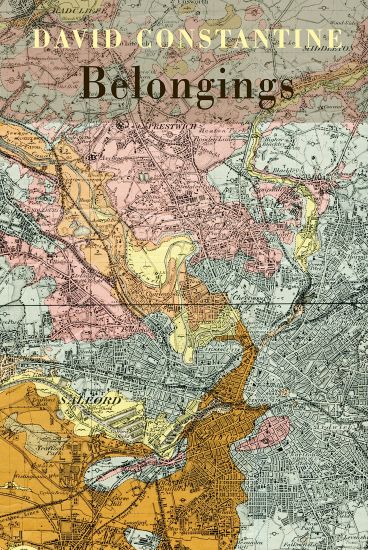
Like the work of the European poets who have nourished him, David Constantine’s poetry is informed by a profoundly humane vision of the world. The title of his eleventh collection, Belongings, signals that these are poems concerned both with our possessions and with what possesses us. Among much else in the word belongings, the poems draw on a sense of our ‘co-ordinates’ – something like the eastings and northings that give a map-reference – how you might triangulate a life. The poems ask: Where do you belong? And have in mind also the hostile: You don’t belong here. Go back where you belong. Many, possibly all, the poems in the collection touch more or less closely on such matters. Perhaps all poetry does, showing a life in its good or bad defining circumstances. In the poem ‘Red’, the defining geography is literal, drawn from an old geological map of Manchester in which Constantine finds ‘the locus itself, a railway cutting / Behind the hospital I was born in’, from which the paths of a life led outward. In other poems the particular becomes universal, a territory holding all our belongings, our memories of the people and the places we hold in our hearts. Behind these explorations another kind of belonging is challenged: our relationship with the planet to which we belong, but which does not belong to us.
The Dressing-Up Box

The Dressing-Up Box

David Constantine

Comma Press
2020
nidottu
The characters in David Constantine’s fifth collection are all in pursuit of sanctuary; the violence and mendacity of the outside world presses in from all sides – be it the ritualised brutality suffered by children at a Catholic orphanage, or the harrowing videos shared among refugees of an atrocity ‘back home’. In each case, the characters withdraw into themselves, sometimes abandoning language altogether, until something breaks and they can retreat no further. In Constantine’s luminous prose, these stories capture such moments in all their clarity; moments when an entire life seems to hang in the balance, the past’s betrayals exposed, its ghosts dragged out into the daylight; moments in which the possibility of defiance and redemption is everything.
The Dressing-Up Box

The Dressing-Up Box

David Constantine

Comma Press
2019
sidottu
The characters in David Constantine’s fifth collection are all in pursuit of sanctuary; the violence and mendacity of the outside world presses in from all sides – be it the ritualised brutality suffered by children at a Catholic orphanage, or the harrowing videos shared among refugees of an atrocity ‘back home’. In each case, the characters withdraw into themselves, sometimes abandoning language altogether, until something breaks and they can retreat no further. In Constantine’s luminous prose, these stories capture such moments in all their clarity; moments when an entire life seems to hang in the balance, the past’s betrayals exposed, its ghosts dragged out into the daylight; moments in which the possibility of defiance and redemption is everything.
In Another Country

In Another Country

David Constantine

Comma Press
2015
nidottu
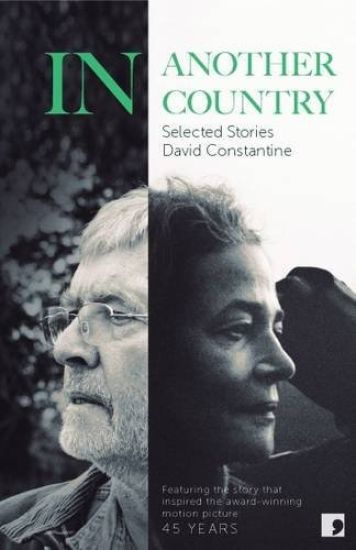
The stories of David Constantine are unlike any others. His characters possess you instantly, making you see the world as they do – sometimes as exiles, driven into isolation by convictions that even they don’t fully understand; sometimes as carriers of an unspoken but unbearable weight. The things they pursue, or evade, are often unseen and at a distance – like the perfectly preserved body of a woman in the title story, waiting to be discovered in the receding ice of a Swiss glacier. These tokens of the past, or future, haunt Constantine’s characters, but the landscapes that produce them also offer salvation, places of refuge or small treasures to take solace in – like the piece of driftwood a beachcomber chooses to carve into his idea of perfection. Gathering together stories from over two decades of writing, this selection demonstrates why Constantine has been hailed as ‘perhaps the finest of contemporary writers in this form’. Their bewitching and urgent language is at one and the same time unsettling and ‘strong enough to help’. Featuring the story, 'In Another Country', that inspired the motion picture, 45 Years.
The Life-Writer

The Life-Writer

David Constantine

Comma Press
2015
nidottu
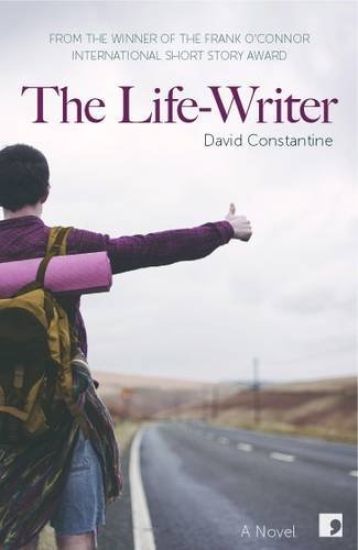
Following the death of her husband, a literary biographer resolves to turn her professional skills to the task of piecing together aspects of his life, in particular, a journey he made years before they met – a hitchhike through France that he had tried to tell her about in the last few hours of his life. Picking her way through bundles of letters and postcards from five decades earlier, Katrin begins to uncover a life she knew nothing of, and an expedition that exceeded anything her professional, biographical subjects ever undertook. ‘Think of me then,’ her husband beseeched her, at the roadside, thumb in the air, gaily setting forth, ‘never forget me then.’ David Constantine’s passionate tale of grief and rediscovery marks only the second foray into novel writing for an author whose short fiction has won international acclaim. A great work of literature, he reminds us, is never finished, it is ‘a living and moving thing, alive in all its parts in every fibre’, designed to be inexhaustible and to outlive. As Katrin’s journey proves, the lives of those we love are similarly inexhaustible, they keep on offering up new revelations, possessing the people they leave behind, and forever needing to be re-written.
In Another Country

In Another Country

David Constantine

Biblioasis
2015
sidottu
Named to Kirkus Reviews' Best Story Collections of 2015Featuring the story adapted into the Academy Award nominated film, 45 YEARS"I started reading these stories quietly, and then became obsessed, read them all fast, and started re-reading them again and again. They are gripping tales, but what is startling is the quality of the writing. Every sentence is both unpredictable and exactly what it should be."--A.S. Byatt, The GuardianThe first American publication by one of the greatest living fiction masters, In Another Country spans David Constantine's remarkable thirty-year career. Known for their pristine emotional clarity, their spare but intensely evocative dialogue, and their fearless exposures of the heart in moments of defiance, change, resistance, flight, isolation, and redemption, these stories demonstrate again and again Constantine's timeless and enduring appeal.David Constantine is an award-winning short story writer, poet, and translator. His collections of poetry include The Pelt of Wasps, Something for the Ghosts (shortlisted for the Whitbread Poetry Prize), Nine Fathom Deep, and Elder. He is the author of one novel, Davies, and has published four collections of short stories in the United Kingdom, including the winner of the 2013 Frank O'Connor Award, Tea at the Midland and Other Stories. He lives in Oxford, where, until 2012, he edited Modern Poetry in Translation with his wife Helen.
Poetry

Poetry

David Constantine

Oxford University Press
2013
nidottu
The Literary Agenda is a series of short polemical monographs about the importance of literature and of reading in the wider world and about the state of literary education inside schools and universities. The category of 'the literary' has always been contentious. What is clear, however, is how increasingly it is dismissed or is unrecognised as a way of thinking or an arena for thought. It is sceptically challenged from within, for example, by the sometimes rival claims of cultural history, contextualized explanation, or media studies. It is shaken from without by even greater pressures: by economic exigency and the severe social attitudes that can follow from it; by technological change that may leave the traditional forms of serious human communication looking merely antiquated. For just these reasons this is the right time for renewal, to start reinvigorated work into the meaning and value of literary reading. In this fascinating addition to the Literary Agenda series, David Constantine argues that poetry matters. It matters for individuals and for the society they are members of. He asserts that poetry is not for the few but for the many, and belongs and can only thrive among them, speaks of and to their concerns. Poetry considers both the writing and the reading of poetry, which Constantine views as kindred activities. He examines what goes into the writing of a poem and considers what good there is in reading it. Constantine also considers translation, arguing that great benefit comes to the native language from dealings with the foreign; also, that all reading is a form of translation - of texts into the lives we lead. Altogether, Poetry is an attempt, with many quotations, to show how poetry works, what its responsibilities are, and how it may help us in our real circumstances now.
Tea at the Midland

Tea at the Midland

David Constantine

Comma Press
2012
nidottu
The characters in David Constantine’s fourth collection are delicately caught in moments of defiance. These bewitching, finely-wrought stories give us permission to escape, side-step the inexorable traffic of our lives, and take possession of the moment by marking out a space for resistance.
The Shieling

The Shieling

David Constantine

Comma Press
2009
nidottu
Tree-climbing students, volunteering soldiers, island-bound recluses... The characters in David Constantine’s remarkable collection are united by an urge to absent themselves, to abscond from the intolerable pressures of normal life and withdraw into strange ideas, political causes, even private languages. Viewed from without, they appear sometimes absurd – like the vicar who starts conversing with the Devil when his wife leaves him – sometimes tragic – like the vision of a suicide being fished out of the River Irwell. Such is the force of Constantine’s compassion, however, we cannot help but follow each character deep into their isolation. And the further we descend, through the strata of each personal history, the ever-changing landscapes that bear down upon them, the more remarkable the discovery, at very bottom, that glimmers of redemption abide; like the babbling springs uncovered in the scars of a quarry that will one day heal it with a lake, or the secret haven of the title story, offering more than physical refuge, but a safe-house for dreams.
Under the Dam

Under the Dam

David Constantine

Comma Press
2005
nidottu
In the middle of a speech a businessman realises his soul has just left his body... In an Athens marketplace, a jealous lover finds himself staggering through a vision of hell.... High in the Alps, a young woman’s body re-appears in the glacier, perfectly preserved, where she fell 50 years before... Entering Constantine’s stories is like stepping out into a wind of words, a swarm of language. His prose is as fluid as the water that surges and swells through all his landscapes. Yet, against this fluidity, his stories are able to stop time, to freeze-frame each protagonist’s life just at the moment when the past breaks the surface, or when the present - like the dam of the title - collapses under its own weight.
Hölderlin

Hölderlin

David Constantine

Clarendon Press
1988
sidottu
This new critical biography of Friedrich Hölderlin (1770-1843) is the first to appear for more than fifty years. In this time his status as one of the greatest European poets has become increasingly apparent - yet he is commonly considered a 'difficult' poet. A prime aim of this book is to make Hölderlin more accessible to the English-speaking reader. This comprehensive discussion of Hölderlin's work includes close readings of many individual poems, with English translations of all quotations. The author, who is also concerned to locate Hölderlin constantly in his times, recounts in a chronological framework the main line of the poet's life, his dealings with his important contemporaries, his love for Susette Gontard, and the long years of loneliness and frustration. Hölderlin is an archetypal figure, exciting fear and pity, a poet whose religion was founded on the conviction that his gods were absent, and whose modernity lies in his experience of absence.