

Kirjailija
David Cope
Kirjat ja teokset yhdessä paikassa: 154 kirjaa, julkaisuja vuosilta 1983-2025, suosituimpien joukossa Tinman Too. Vertaile teosten hintoja ja tarkista saatavuus suomalaisista kirjakaupoista.
154 kirjaa
Kirjojen julkaisuhaarukka 1983-2025.
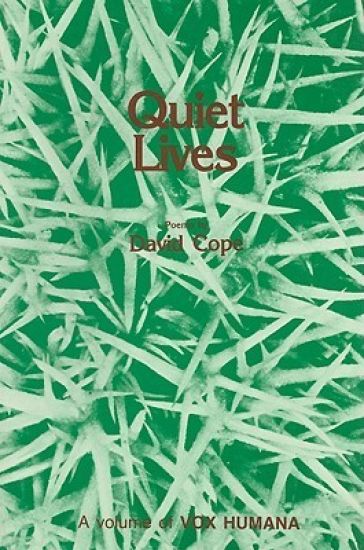
I have been much absorbed in David Cope's poetry as necessary continuation of tradition of lucid grounded sane objectivism in poetry following the visually solid practice of Charles Reznikoff & William Carlos Williams. Though the notions of 'objectivism' were common for many decades among U. S. poets, there is not a great body of direct-sighted "close to the nose" examples of poems that hit a certain ideal objectivist mark-"No ideas but in things" consisting of "minute particulars" in which "the natural object is always the adequate symbol", works of language wherein "the mind is clamped down on objects", and where these "Things are symbols of themselves. " The poets I named above specialized in this refined experiment, and Pound touched on the subject as did Zukofsky and Bunting, and lesser but inter esting figures such as Marsden Hartley in his little known poetry , and more romantic writers such as D. H. Lawrence. In this area of phanopoeiac "focus," the sketching of particulars by which a motif is recognizably significant, David Cope has made, by the beginning of his third decade, the largest body of such work that I know of among poets of his own generation. Allen Ginsberg Table of Contents Foreword, Allen Ginsberg. . . . . . . . . . . . . . . . . . . . . . . . . . . . . . . . v THE STARS The Line-up. . . . . . . . . . . . . . . . . . . . . . . . . . . . . . . . 2 . . . . . . . . . . . . Empty Street . . . . . . . . . . . . . . . . . . . . . . . . . . . . . . . . . . . . . . . . . . . 3 The River. . . . . . . . . . . . . . . . . . . . . . . . . . . . . . . . . . . . . . . . . . . . . . 4 Down on the Farm . . . . . . . . . . . . . . . . . . . . . . . . . . . . . . . . . . . . . . 5 The Storm. . . . . . . . . . . . . . . . . . . . . . . . . . . . . . . . . . . . .. . . . . . . . 6 American Dream. . . . . . . . . . . . . . . . . . . . . . . . . . . . . . 7 . . . . . . . . . . Baseball. . . . . . . . . . . . . . . . . . . . . . . . . . . . . . . . . . . 8 . . . . . . . . . . . . Crash. . . . . . . . . . . . . . . . . . . . . . . . . . . . . . . . . . . . . . . . . . . . . . . . 9 . Lunch Hour. . . . . . . . . . . . . . . . . . . . . . . . . 9 . . . . . . . . . . . . . . . . . . . Winter Camp. . . . . . . . . . . . . . . . . . . . . . . . . . 10 . . . . . . . . . . . . . . . . . A Circle of Lights . . . . . . . . . . . . . . . . . . . . . . . . . . . . 12 . . . . . . . . . . GO Labor Day . . . . . . . . . . . . . . . . . . . . . . . . . . . . . . . . . . 14 . . . . . . . . . . . Peace. . . . . . . . . . . . . . . . . . . . . . . . . . . . . . . . . . . . 15 . . . . . . . . . . . . .
Poe, Hemingway, Twain, Salinger, O. Henry, and Updike move over, there's clearly a new rival on the block. In his near two hundred and fifty short stories published in twelve volumes, David Cope has created a new paradigm of the form. The genres he's chosen cover the map-from noir, mystery, and thriller, to science fiction, humor, death, and amnesia-and these stories range in size from a few pages to short novellas. Cope also covers a variety of writing styles, comfortable in all, with first-person narratives, third person fifties' pulp fiction, newspaper factual revelations, and extraordinary allegory, metaphors, and profound observations about the human condition abounding. Without a single exception, I find these stories the perfect antidote to the often-endless drivel of today's thousand-page novels and a once-again peek into the world where every word counts. Five stars. Jon Marshall, Bookworm Magazine

Poe, Hemingway, Twain, Salinger, O. Henry, and Updike move over, there's clearly a new rival on the block. In his two hundred plus short stories published in eleven volumes, David Cope has created a new paradigm of the form. The genres he's chosen cover the map-from noir, mystery, and thriller, to science fiction, humor, death, and amnesia-and these stories range in size from a few pages to short novellas. Cope also covers a variety of writing styles, comfortable in all modes, with first-person narratives, third person fifties' pulp fiction, newspaper factual revelations, and extraordinary allegory, metaphors, and profound observations about the human condition abounding. Without a single exception, I find these stories the perfect antidote to the often-endless drivel of today's thousand-page novels and a once-again peek into the world where every word counts. Five stars. Jon Marshall, Bookworm Magazine

Testament follows nine stories intertwined in ways that only those truly dedicated to finding those ways after much thought will discover. The stories do not have any characters in common and the fragments do not necessarily continue in order. Surprisingly readable due to the clarity of writing, Testament will keep readers awake at night with guessing the endings of each of the 'stories' being the cause. Many will wrestle with continuity, waiting for characters and plots to continue, but not finish until the ending and the manner in which Cope provides little obvious help in making the fragments connect. But, trust me, nothing here is arbitrary or random in any way. The overall glue will keep your attention and when you figure out the novel in full, its surprise ending in your mind will make it worth every bit of the time you've spent in thinking it through.

To Where Your Lifeless Bodies Go
David Cope
Createspace Independent Publishing Platform
2018
nidottu
To Where Your Lifeless Bodies Go follows nine stories intertwined in ways that only those truly dedicated to finding those ways after much thought will discover. The stories do not have any characters in common and the fragments do not necessarily develop in order. Surprisingly readable, To Where Your Lifeless Bodies Go will keep readers awake at night guessing the endings of each of the 'stories' and how they actually do relate to one another. Many will wrestle with continuity, waiting for characters and plots to continue, but not finished until the ending. Trust me, though, nothing here is arbitrary or random in any way. The overall narrative glue will hold your attention and when you figure out the novel in full, its surprise ending will make it worth every bit of the time you've spent in thinking it through.

Slaughterhouse Island's only claim to fame derives from its origins-an actual slaughterhouse now situated deep in the waters off its southern shores. Other than that, and a hanging death from a branch off one of its scrub pine trees, it's mostly unknown. Of course, with a name like Slaughterhouse Island, there are plenty of stories that suggest its cruel past and blood-thirsty denizens, but only some of these are plausible and none worthy of their billing. With a part of this novel truth rather than fiction, however, and even the fiction so much like the truth, readers may find its contents more than interesting. Welcome to Northern California and Slaughterhouse Island. You may or may not be sorry you came.

A book of 2000 haiku some created by Japanese Masters and some by machine code. Your decision: to figure out which is which.

Doug Cassidy is a university professor of archeology specializing in the Inca of Peru. Unfortunately he suffers from acrophobia and cannot fly requiring him to collaborate with an adventurer named Karlin Mulrey who finds the antiquities for him to verify. Now Mulrey has been murdered and Douglas has to identify his body. In the process he uncovers a complicated plot to steal one of the world's most sought after treasures. He also discovers a Paiute woman named Emily Howell a Harvard trained doctor whom he befriends. Before long the two find themselves in a nest of intrigue eventually forcing both to fly to Peru to connect with Doug's friend Mulrey who has turned up alive. Together they go in search of the famed but lost thirteen mummies of the Inca kings. Legend has it that anyone who discovers them will find the lost power of the Inca a magical knowledge which can conquer the world. Along the way Doug finds himself facing a deadly enemy and a memory from his youth either of which he may not survive.

A professor of computer science at a northern North Dakota university, Will Francis specializes in the study of Artificial Life (AL which he sometimes refers to Actual Life). As he and his graduate-student laboratory work on various approaches to the creation of new life using computers he and they (mostly him) discover a highly dynamic field of those wishing to take advantage of his successes for illegitimate purposes and those wishing to put him out of business for religious and philosophical reasons. As he gains more widespread notoriety reactions become more dangerous and deadly chasing him to Canada, New York City, and the North Atlantic and from traditional computers to analog and quantum varieties. As time progresses we learn how life may have been created on Earth as well as many alternate versions of the genesis of life via mathematics, accidents, biochemistry, and biodiversity. It's a grand journey with a remarkable ending that will surprise even those most hardened of readers who think they have it nailed before getting there. Welcome to a humankind bent on suiciding its own existence for reasons no one seems able to explain.

Photographs on a common theme taken by David Cope, artist, composer, and author.

The waves and other similar images presented herein, provide a variety of un-retouched photos of water being sloshed in a two-inch deep cooking pan on a summer's afternoon. I am curiously attracted to mathematic nonlinear chaotic images, both those that reveal organization (attractors) and those that produce apparent disorganization (chaos). The occasional multiple images of the sun's reflection and the various scratches and stains on the metal holding the water make, for me at least, a kind of code that enhances rather than detracts from the resultant images.
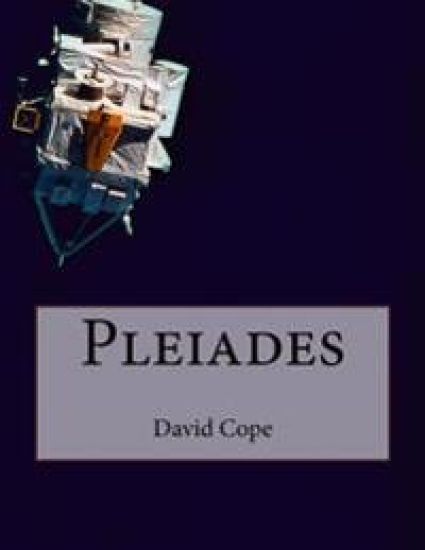
One of my very first research studies in my early teens (1952) I decided to combine art and science in the design of a radio telescope to fit my parent's rooftop, gave indications of changes through sound output and input (a very large radio inherited from my relatives for SETI) and looked, I thought, quite elegant. This took about half a year but eventually gave me the opportunity to hear all manner of sounds I'd never heard before, patterns that gave me thoughts of little green men along with all manner of sunrises and sunsets and the great red spot on Jupiter.After a year or so as Acting Dean and Provost at UCSC in the early 1980s, I took my first sabbatical and decided to spend some time traveling, as well as considering what I'd do for contrast. What then occurred was probably more of a mid-life crisis than a break from academia. I gathered a robust and professional group of scientists, artists, and musicians to help make my dream a reality. This group included professional radio astronomers, architects, electronics experts, surveyors, and maybe six or seven other very gifted people in the fields of law, financial experts, and publicists. Unfortunately, the few thousands of dollars we were able to raise would not cover the publication of this book, and thus, after several years, the wonderful group of dedicated board members and I gave up on the project which produced the book you are now reading the back cover (of). While the dreams of this project still occasionally makes dreams for us, most are fully aware of the gravity of projects like this and the cost of observatories (both of the radio telescopic variety and the mirror and lens variety) and know that without incredible support, few of these actually get built. .
VeriChess: Five Variants on Chess
David Cope
Createspace Independent Publishing Platform
2017
nidottu

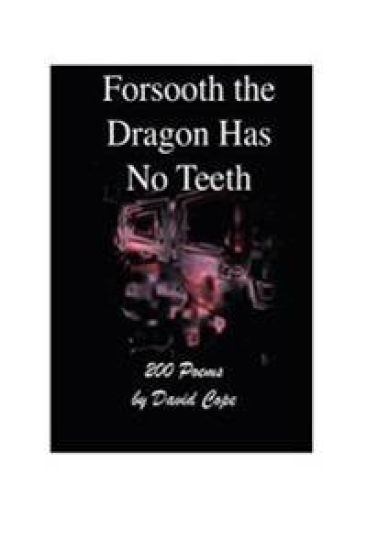
Forsooth The Dragon Has No Teeth
David Cope
Createspace Independent Publishing Platform
2016
nidottu