

Kirjailija
David Crane
Kirjat ja teokset yhdessä paikassa: 15 kirjaa, julkaisuja vuosilta 2003-2026, suosituimpien joukossa Alan Ross biography. Vertaile teosten hintoja ja tarkista saatavuus suomalaisista kirjakaupoista.
15 kirjaa
Kirjojen julkaisuhaarukka 2003-2026.
David Crane has given us a magisterial portrait of one of Britainââ?¬â?¢s greatest heroes and explorers, acclaimed as the ââ?¬Ë?masterpieceââ?¬â?¢ on the subject. Reissued for the 100th anniversary of Scottââ?¬â?¢s doomed expedition.

Meanwhile... 12
Gary Spencer Millidge; David Crane; Roger Langridge
Soaring Penguin Press
2023
nidottu
In these pages, acclaimed historian David Crane gives us an astonishing, intimate snapshot of the people and places surrounding the battle that changed the course of world history. Switching perspectives between Britain and Belgium, prison and palace, poet and pauper, husband and wife, Went the Day Well? offers a highly original view of Waterloo, showing how the battle was not only a military landmark, but also a cultural watershed that drew the line between the rural, reactionary age of the past and the urban, innovative era to come. Lyrically rendered in Crane's signature prose style, this essential account freeze-frames the ordinary men and women of 1815 who went about their business, attended lectures, worked in fields and factories--all on the cusp of a new, unforeseeable age.
[Previously published as 'Went The Day Well'] 'Of all the books marking the bicentenary Waterloo, this has to be the best' Spectator 'A book to die for' Evening Standard From Samuel Johnson Prize shortlisted author David Crane, this is a breathtaking portrait of the Britain that fought the battle of Waterloo.
The First World War Diaries of Manchester Pals Captain Charlie May – written and kept in secret and published now for the first time. A born storyteller, Charlie May’s vivid eye for detail and warm good humour brings his experience in the trenches (and the experience of millions of ordinary men like him) to life for a 21st-century readership. Captain Charlie May was killed, aged 27, in the early morning of 1st July 1916, leading the men of ‘B Company’, 22nd Manchester Service Battalion (the Manchester Pals) into action on the first day of the Somme. This tolerant and immensely likeable man had been born in New Zealand and – against King’s regulations – he kept a diary in seven small, wallet-sized pocket books. A journalist before the war and a born storyteller, May’s diaries give a vivid picture of battalion life in and behind the trenches during the build-up to the greatest battle fought by a British army and are filled with the friendships and tensions, the home-sickness, frustrations, delays and endless postponements, the fog of ignorance, the combination of boredom and terror to which every man that has ever fought could testify. His diaries reflect on the progress of the war, tell jokes – good and bad, give details of horse-rides along the Somme valley, afternoons with a fishing rod, lunch in Amiens, a gastronomic celebration of Christmas 1915 and concerts in ‘Whiz Bang Hall’. He describes battles not just with the enemy, but with rats, crows and on the makeshift football pitch – all recorded with a freshness that brings these stories home as if for the first time. The diaries are also written as an extended and deeply-moving love letter to his wife Maude and baby daughter Pauline. ‘I do not want to die’, he wrote – ‘Not that I mind for myself. If it be that I am to go, I am ready. But the thought that I may never see you or our darling baby again turns my bowels to water.’ Fresh, eloquent and warm, these diaries were kept secret from the censor and were delivered to his wife after his death by a fellow soldier in Charlie’s company. Edited by his great-nephew and published for the first time, these diaries give an unforgettable account of the war that took Charlie May’s life, and millions of others like him.

Shortlisted for the Samuel Johnson prize for non-fiction. The extraordinary and forgotten story of the building of the World War One cemeteries, due to the efforts of one remarkable man, Fabian Ware. In the wake of the First World War, Britain and her Empire faced the enormous question of how to bury the dead. Critically-acclaimed author David Crane describes how the horror of the slaughter motivated an ambulance commander named Fabian Ware to establish the Commonwealth war cemeteries. Behind these famous monuments – the Cenotaph, Tyne Cot, Menin Gate, Etaples amongst them – lies a deeply moving story; ‘Empires of the Dead’ chronicles a generation coming to terms with grief on a colossal scale.

Musical revue Words by David Crane, Seth Friedman and Marta Kauffman. Music by William Dreskin, Joel Philip Friedman, Seth Friedman, Alan Menken, Steven Schwartz and Michael Skloff. Characters: 3 male, 3 female Unit set. This is a wonderful collection of songs about people who place lonely hearts ads: lonely people looking for that certain someone. In other words: Personals is about Most of Us, about the unending search for love in the Post Me Decade. "Are you looking for that "special' night where everything is going to be peachy, and you are going to meet the swellest little show of your dreams?...Personals is a winner, destined to find, apart from anything else, its own special place on the singles scene, the date show for the young in heart, the Jacques Brel of the '80s."-- N.Y. Post.


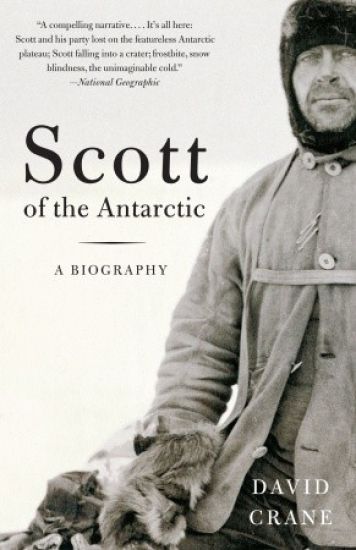
Scott of the Antarctic: A Life of Courage and Tragedy
David Crane
Knopf Doubleday Publishing Group
2007
nidottu
Historian David Crane, with full access to the explorer's papers, diaries, and expedition records, gives us an illuminating portrait of Robert Falcon Scott that is more nuanced and balanced than any we have had before. In reassessing Scott's life, Crane is able to provide a fresh perspective on not only the Discovery expedition of 1901--4 and the Terra Nova expedition of 1910--13, but his remarkable scientific achievements and the challenges of his tumultuous private life. Neither foolhardy dilettante, nor the last romantic champion of his age, Scott is presented as a man of indomitable courage and questionable judgment. The result is an absolutely compelling portrait of a complicated hero.
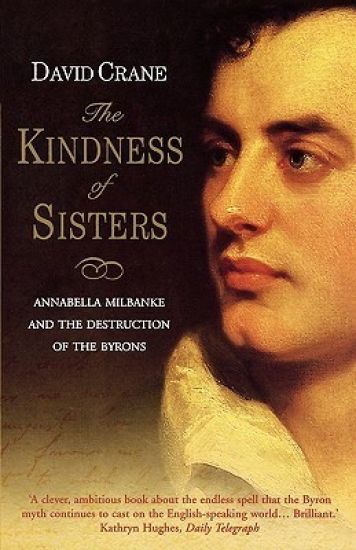
In this biography, Crane focuses on the feud between Byron's half-sister - with whom he had a passionate affair - and his society wife. Recreating a meeting between the two, years later, he explores the emotional and sexual truth and the vulnerability that lie at the heart of the Byron story.