Kirjojen hintavertailu. Mukana 12 390 323 kirjaa ja 12 kauppaa.

Kirjailija

David Crystal

Kirjat ja teokset yhdessä paikassa: 69 kirjaa, julkaisuja vuosilta 1964-2026, suosituimpien joukossa A Word for All Seasons. Vertaile teosten hintoja ja tarkista saatavuus suomalaisista kirjakaupoista.

69 kirjaa

Kirjojen julkaisuhaarukka 1964-2026.

A Word for All Seasons

A Word for All Seasons

David Crystal

BODLEIAN LIBRARY
2026
sidottu
Silly season, spring chicken, Shrovetide, dog days, Halloween, wassail, Snowtober, Hogmanay and over 100 other words and phrases are brought together here to show how seasonal vocabulary has become one of the most productive areas of the English lexicon. Words associated with spring, summer, autumn – or fall – and winter, along with ‘season’ itself, have long been used creatively in such worlds as commerce, politics and the arts; music and painting especially provide famous cases of the popular appeal of the 'four seasons'. The entries in this book, alongside idioms, extracts from poetry and exquisite engravings by Eric Ravilious, demonstrate how these words and phrases have spread throughout the language. Each entry gives an account of historical origins, tracing the development of meaning over time, and concluding with examples of current usage in everyday situations, some of which are decidedly unexpected. Appendices provide etymologies for the months of the year and wonderfully evocative folklore names for moons. Few other lexical domains would bring together St Augustine, Antonio Vivaldi, James Joyce and Stormzy – just four of some 200 personalities that enliven the pages of this fascinating book.
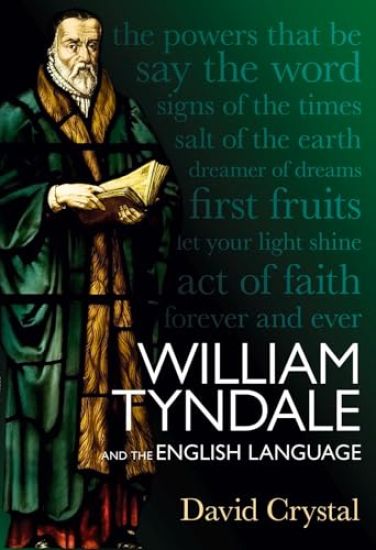
William Tyndale and the English Language

William Tyndale and the English Language

David Crystal

BODLEIAN LIBRARY
2026
sidottu
‘Dearly beloved’, ‘say the word’, ‘the powers that be’, ‘for ever and ever’ – these familiar phrases and many more were set down in print for the first time by William Tyndale. For his groundbreaking English translation of the Bible, he deliberately chose to write in a way that could be understood by the widest possible audience. In the first half of this pioneering exploration of the extraordinary impact Tyndale’s writing had on the development of the English language, David Crystal provides an analysis of his prose style, demonstrating its character as a novel genre of ‘written speech’, and bringing to light the remarkable number of cases where Tyndale is the first recorded user of a word or phrase in English. He also draws attention to the hitherto unrecognised role of Tyndale as an early lexicographer. The second half of the book is a linguistic detective story, devising an innovative lexical and grammatical metric to investigate the often-stated claim that eighty per cent of later biblical translations display Tyndale’s influence. The result is a fascinating exploration of the work of the Father of the English Bible.
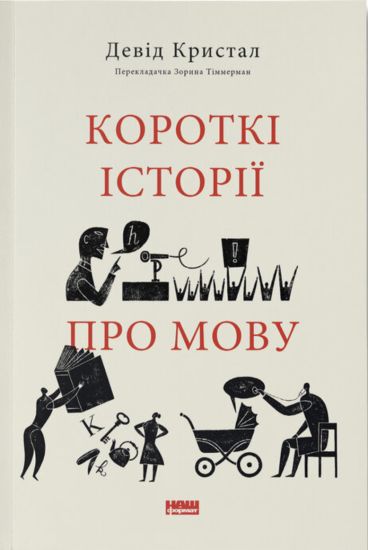
Korotki istoriji pro movu

Korotki istoriji pro movu

David Crystal

Nash Format
2026
nidottu
*Skilki u sviti mov?*Chomu zhestova mova peredaje ne okremi slova, a tsili znachennja? *Jak diti formujut vlasnij movnij vsesvit?*Chi zminjuje internet nashe spilkuvannja? Devid Kristal iz legkistju doslidnika j zakhvatom ditini provodit chitacham ekskurs u minule, teperishnje ta majbutnje mov. Vi diznajetesja, chomu reperam potribno znati pravopis, jak aktsent sprijaje vizhivannju, chomu Joda rozmovljaje v takij nezvichajnij maneri, a dialekti - tse schos bilshe, nizh prosto "girsha" versija literaturnoji movi.Avtor pojednuje naukovu tochnist i zhvavij stil, pojasnjuje na istorijakh, skhemakh ta legko vikladenikh faktakh. Chimalo prikladiv spetsialno adaptovano pid ukrajinsku movu. Use tse dopomagaje pogljanuti na movu ne jak na sukhu teoriju, a jak na nezbagnennij zhivij organizm.
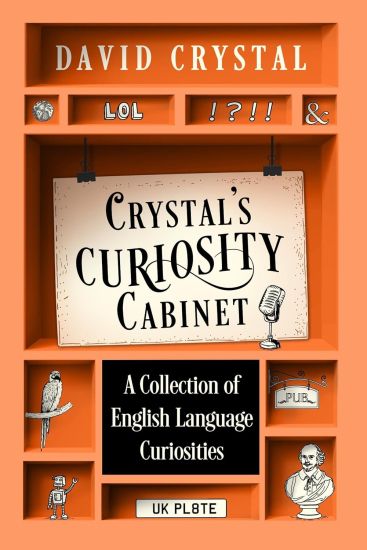
Crystal’s Curiosity Cabinet

Crystal’s Curiosity Cabinet

David Crystal

John Murray Press
2025
sidottu
What do a comic alphabet, a glorious lipogram and a wellerism have in common? Or, an audit of accountants, an illusion of magicians, and an intrusion of spammers? And do you know how Shakespeare pronounced his name?Quirky, original, amusing and enlightening, this charming English Language Miscellany from David Crystal, one of the greatest British linguists of our time, offers fascinating observations on random, weird and witty words and expressions, collected over a number of years.Following the tradition of the Victorian miscellany and cabinets of curiosities, the 150+ random entries reveal the global, national, contemporary and historical impact of language, and will appeal to word lovers and fun-fact-fiends alike.Showcasing linguistic creativity in all its glory, and featuring a wide range of topics that reflect current language issues, such as accents, dialects, etymology, proverbs, place names, punctuation, everyday usage, and language change, this book provides a playful, entertaining and informative read on the bizarre nature of language.
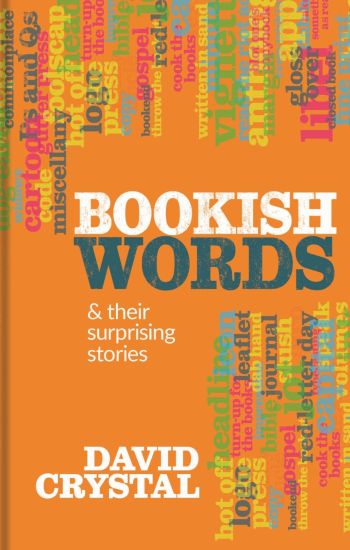
Bookish Words & their Surprising Stories

Bookish Words & their Surprising Stories

David Crystal

BODLEIAN LIBRARY
2025
sidottu
The world of books has played a striking role in the history of English vocabulary. Book itself is one of the oldest words in the language, originating from boc in Old English, and appears in many commonly used expressions today – by the book, bring to book and bookworm – to name a few. With the arrival of printing, typesetting and the development of the newspaper industry came terminology that developed into commonly used phrases such as stop the press, front-page news and hit the headlines, and the emergence of the internet generated still more. This anthology presents a selection of more than 100 words which show the influence of writing, reading and publishing books on our everyday vocabulary over the centuries, telling the stories behind their linguistic origins, and uncovering some surprising twists in the development of their meaning through time.
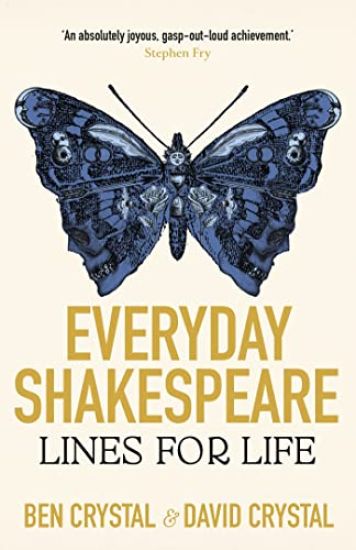
Everyday Shakespeare

Everyday Shakespeare

Ben Crystal; David Crystal

John Murray Press
2025
nidottu
An absolutely joyous, gasp-out-loud achievement. - Stephen FryShakespeare's flame is infectious. An olympic torch, for us all, to be enlightened, words which share the shadow and light of humanity's hues. - LionHeart, artist, poet and BBC Radio London presenterSilver Medal Winner at the 2024 Nautilus Book Awards. Shakespeare had an ear and hand that was able to capture our everyday thoughts and emotions, pin them to a page, and express them so well that still today they can make us feel stunned to be seen.'Better three hours too soon than a minute too late.''Make not your thoughts your prisons.''Wisely and slow. They stumble that run fast.''And I have heard it said, unbidden guests are often welcomest when they're gone.' With a quote for every day of the year, this beautiful book gathers the finest lines from the lesser-known corners of Shakespeare's plays and poems. While you may not be familiar with these 400-year-old phrases, you will be surprised by the immediate, easy resonance they have with modern day-to-day life and, hopefully, inspired to learn a few quotes, say them out loud, and drop them into conversation.Each page bears a gift of Shakespearean delight - around which lies a treasure trove of trivia, miscellaneous fact, and opportunities for reflection. The Crystals - son and father - draw attention to points of daily life, literary, linguistic, and theatrical interest through their entertaining commentary. They offer notes of context for anyone who wants to know who originally said the words, in which play, and why. And finally, the authors provide three indexes, allowing readers to help find the right quote for a task, or to follow-up on a quote's original source.Shakespeare's words are a mirror for us to peer into, to see if any part of ourselves, familiar or strange, is visible. Each day as you read his lines, you'll get glimpses of loves you've known, jealousies you've felt, relationships you've had, and situations you've encountered that bring a smile - or a wince - of familiarity.Everyday Shakespeare shares the simple lines that encapsulate the wondrous complexity of life, and the enduring appeal of the Bard.Shakespeare was not of an age, but for all time. - Ben Jonson
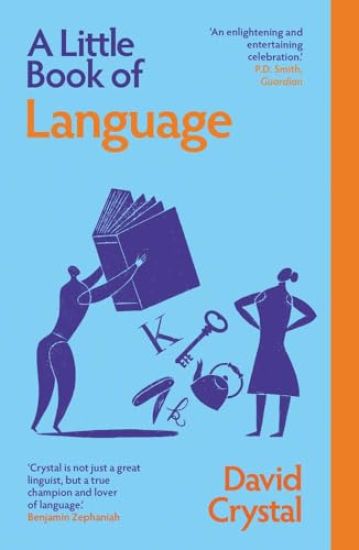
A Little Book of Language

A Little Book of Language

David Crystal

YALE UNIVERSITY PRESS
2025
pokkari
A lively journey through the story of language, from an infant's first word to the languages of the internet Language never leaves you alone. It’s there in your head, helping you think. It’s there to help you make relationships – and to break them. It’s there to remind you who you are and where you come from. From the first words of an infant to texting and emojis, languages are full of mysteries and quirks. In this entertaining book, renowned author David Crystal sheds light on the development of unique linguistic styles, the origins of obscure accents, and the search for the first written word. Little Histories – Inspiring Guides for Curious Minds
A Date with Language

A Date with Language

David Crystal

BODLEIAN LIBRARY
2023
sidottu
In this ingenious and diverse collection of 366 stories, events and facts about language, David Crystal presents a selection of insights from literary and linguistic writers, poets and global institutions, together with the weird and wonderful creations of language enthusiasts to enliven each day of the year. The day-by-day treatment illustrates the extraordinary breadth of the subject, from ‘Morse Code Day’ to ‘Talk Like William Shatner Day’, from forensic phonetics used to catch serial killers to heroines of speed reading, and covers writers from many different eras and cultures, including William Shakespeare, Oscar Wilde, Emily Dickinson, Toni Morrison, R. K. Narayan, Wole Soyinka and many more. Some days focus on pronunciation, orthography, grammar or vocabulary. Others focus on the way language is used in science, religion, politics, broadcasting, publishing, the Internet and the arts. There are days that acknowledge the achievements of language study, such as in language teaching, speech therapy, deaf education and forensic science, as well as technological progress, from the humble pencil to digital software. Several days celebrate individual languages, such as those recognised as ‘official’ by the United Nations, but not forgetting those spoken by small communities, along with their associated cultural identities. A celebration of the remarkable creativity of all who have illuminated our understanding of language, this book is ideal for anyone wanting to add an extra point of interest to their language day.
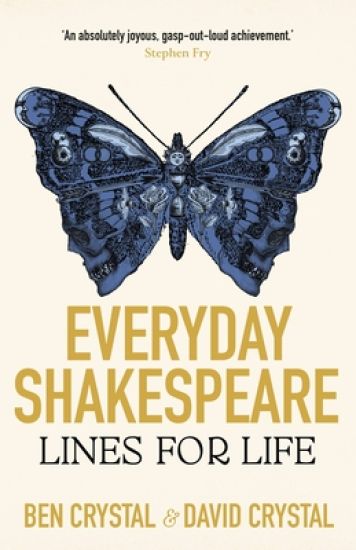
Everyday Shakespeare

Everyday Shakespeare

Ben Crystal; David Crystal

John Murray Press
2023
sidottu
An absolutely joyous, gasp-out-loud achievement. - Stephen FryA cathedral of consciousness - Shakespeare's uncanny insight into human nature finds us, unearthed here. - LionHeart, artist, poet, and BBC Radio London presenterShakespeare had an ear and hand that was able to capture our everyday thoughts and emotions, pin them to a page, and express them so well that still today they can make us feel stunned to be seen.'Better three hours too soon than a minute too late.''Make not your thoughts your prisons.''Wisely and slow. They stumble that run fast.''And I have heard it said, unbidden guests are often welcomest when they're gone.' With a quote for every day of the year, this beautiful book gathers the finest lines from the lesser-known corners of Shakespeare's plays and poems. While you may not be familiar with these 400-year-old phrases, you will be surprised by the immediate, easy resonance they have with modern day-to-day life and, hopefully, inspired to learn a few quotes, say them out loud, and drop them into conversation.Each page bears a gift of Shakespearean delight - around which lies a treasure trove of trivia, miscellaneous fact, and opportunities for reflection. The Crystals - son and father - draw attention to points of daily life, literary, linguistic, and theatrical interest through their entertaining commentary. They offer notes of context for anyone who wants to know who originally said the words, in which play, and why. And finally, the authors provide three indexes, allowing readers to help find the right quote for a task, or to follow-up on a quote's original source.Shakespeare's words are a mirror for us to peer into, to see if any part of ourselves, familiar or strange, is visible. Each day as you read his lines, you'll get glimpses of loves you've known, jealousies you've felt, relationships you've had, and situations you've encountered that bring a smile - or a wince - of familiarity.Everyday Shakespeare shares the simple lines that encapsulate the wondrous complexity of life, and the enduring appeal of the Bard.Shakespeare was not of an age, but for all time. - Ben Jonson
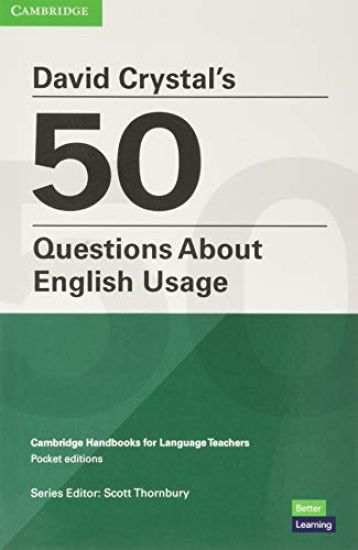
David Crystal's 50 Questions About English Usage Pocket Editions
David Crystal provides concise, accessible answers to fifty questions about English language usage. In this compact, user-friendly book, David Crystal draws on his extensive knowledge and experience to answer questions from English language teachers and learners from around the world. The book covers topics ranging from general enquiries about the language as a whole to specific points of grammar, pronunciation, orthography, vocabulary, idiom and style. The author's responses are illustrated by personal anecdotes, placed within historical and literary context and supported by research and corpus data to provide unique, authentic insights.
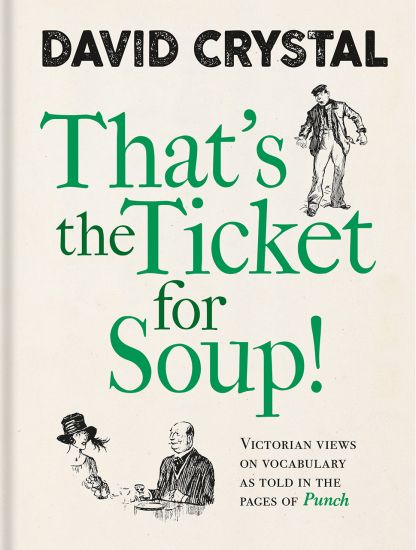
That's the Ticket for Soup!

That's the Ticket for Soup!

David Crystal

Bodleian Library
2020
sidottu
The vocabulary of past times, no longer used in English, is always fascinating, especially when we see how it was pilloried by the satirists of the day. Here we have Victorian high and low society, with its fashionable and unfashionable slang, its class awareness and the jargon of steam engines, motor cars and other products of the Industrial Revolution. Then as now, people had strong feelings about the flood of new words entering English. Swearing, new street names and the many borrowings from French provoked continual irritation and mockery, as did the Americanisms increasingly encountered in the British press. In this intriguing collection, David Crystal has pored through the pages of the satirical magazine, Punch, between its first issue in 1841 and the death of Queen Victoria in 1901, and extracted the articles and cartoons that poked fun at the jargon of the day, adding a commentary on the context of the times and informative glossaries. In doing so he reveals how many present-day feelings about words have their origins over a century ago.
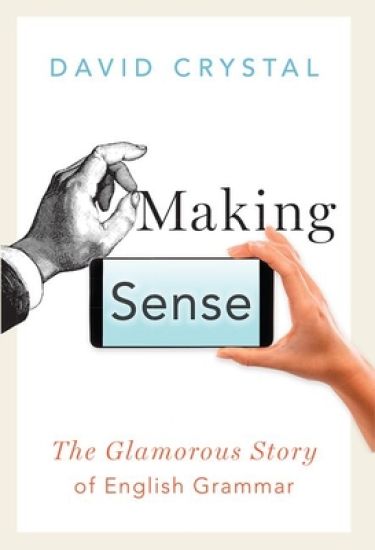
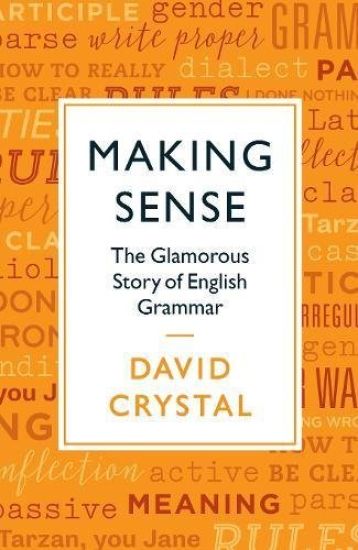
Making Sense: The Glamorous Story of English Grammar

Making Sense: The Glamorous Story of English Grammar

David Crystal

Oxford University Press
2020
nidottu
In Making Sense, David Crystal confronts the foe of many: grammar. Once taught relentlessly to all students in the English-speaking world, grammar disappeared from most school curricula, so that terms such as "preposition" and "conjunction" now often confound children and adults alike. Explaining the nuts and bolts of grammar presents a special challenge, because - far more than is the case with spelling and punctuation - the subject is burdened with a centuries-old history of educational practice that many will recall as anything but glamorous. One of the world's foremost authorities on the English language, Crystal sets out to rid grammar of its undeserved reputation as a dry and intimidating subject, pointing out how essential grammar is to clear and effective speech and writing. He moves briskly through the stages by which children acquire grammar, along the way demystifying grammar's rules and irregularities and showing us how to navigate its snares and pitfalls. He offers the fascinating history of grammar, explaining how it has evolved from the first grammarians in ancient Greece to our 21st century digital environment of blogging, emailing, and texting. Many find grammar to be a daunting subject, but in this breezy, entertaining book, Crystal proves that grammar doesn't need to make us uneasy-we can all make sense of how we make sense.
Let's Talk

Let's Talk

David Crystal

Oxford University Press
2020
sidottu
Banter, chit-chat, gossip, natter, tete-a-tete: these are just a few of the terms for the varied ways in which we interact with one another through conversation. David Crystal explores the factors that motivate so many different kinds of talk and reveals the rules we use unconsciously, even in the most routine exchanges of everyday conversation. We tend to think of conversation as something spontaneous, instinctive, habitual. It has been described as an art, as a game, sometimes even as a battle. Whichever metaphor we use, most people are unaware of what the rules are, how they work, and how we can bend and break them when circumstances warrant it.
Pronouncing Shakespeare

Pronouncing Shakespeare

David Crystal

Cambridge University Press
2019
pokkari
How did Shakespeare's plays sound when they were originally performed? How can we know, and could the original pronunciation ever be recreated? For three days, Shakespeare's Globe presented a production of Romeo and Juliet in original, Shakespearian pronunciation. In an unusual blend of autobiography, narrative, and academic content, David Crystal recounts the unique nature of the experience. He begins by discussing the Globe theatre's approach to 'original practices', which had dealt with all aspects of Elizabethan stagecraft - except pronunciation. A large section is devoted to the nature of the Early Modern English sound system. There are reports of how the actors coped with the task of learning the pronunciation, how it affected their performances and how the audiences reacted. In this new edition, he reflects on the development of the original pronunciation movement across the world, since the Globe's experiment.
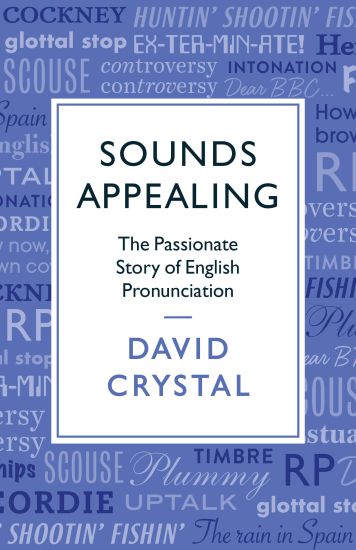
Sounds Appealing

Sounds Appealing

David Crystal

Profile Books Ltd
2019
pokkari
It's not what you say, it's the way that you say it ... There have long been debates about 'correct' pronunciation in the English language, and Britain's most distinguished linguistic expert, David Crystal, is here to set the record straight. Sounds Appealing tells us exactly why, and how, we pronounce words as we do. Pronunciation is integral to communication, and is tailored to meet the demands of the two main forces behind language: intelligibility and identity. Equipping his readers with knowledge of phonetics, linguistics and physiology - with examples ranging from Eliza Doolittle to Winston Churchill - David Crystal explores the origins of regional accents, how they are influenced by class and education, and how their peculiarities have changed over time.
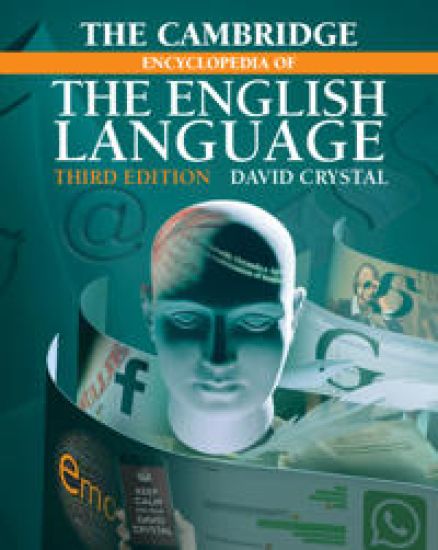
The Cambridge Encyclopedia of the English Language

The Cambridge Encyclopedia of the English Language

David Crystal

Cambridge University Press
2018
pokkari
Now in its third edition, The Cambridge Encyclopedia of the English Language provides the most comprehensive coverage of the history, structure and worldwide use of English. Fully updated and expanded, with a fresh redesigned layout, and over sixty audio resources to bring language extracts to life, it covers all aspects of the English language including the history of English, with new pages on Shakespeare's vocabulary and pronunciation, updated statistics on global English use that now cover all countries and the future of English in a post-Brexit Europe, regional and social variations, with fresh insights into the growing cultural identities of 'new Englishes', English in everyday use with new sections on gender identities, forensic studies, and 'big data' in corpus linguistics, and digital developments, including the emergence of new online varieties in social media platforms such as Facebook, Twitter and WhatsApp. Packed with brand new colour illustrations, photographs, maps, tables and graphs, this new edition is an essential tool for a new generation of twenty-first-century English language enthusiasts.
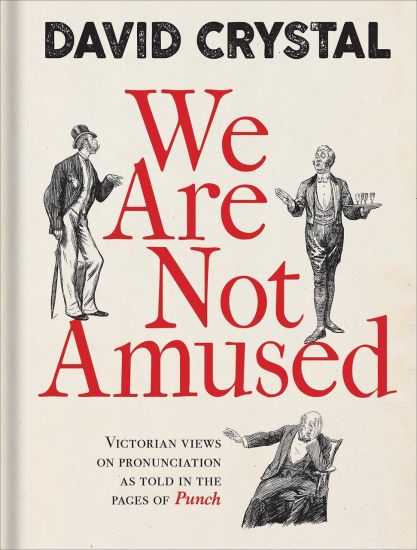
We Are Not Amused

We Are Not Amused

David Crystal

Bodleian Library
2017
sidottu
Pronunciation governs our regional and social identity more powerfully than any other aspect of spoken language. No wonder, then, that it has attracted most attention from satirists. In this intriguing book, David Crystal shows how our feelings about pronunciation today have their origins in the way our Victorian predecessors thought about the subject, as revealed in the pages of the satirical magazine, Punch. In the sixty years between its first issue in 1841 and the death of Queen Victoria in 1901, jokes about the fashions affecting English usage provide one of Punch's most fruitful veins of humour, from the dropped aitches of the Cockney accent to the upper-class habit of dropping the final ‘g’ (huntin’ and fishin’). For 'We Are Not Amused', David Crystal has examined all the issues during the reign of Queen Victoria and brought together the cartoons and articles that poked fun at the subject of pronunciation, adding a commentary on the context of the times, explaining why people felt so strongly about accents, and identifying which accents were the main source of jokes. The collection brings to light a society where class distinction ruled, and where the way you pronounced a word was seen as a sometimes damning index of who you were and how you should be treated. It is a fascinating, provocative and highly entertaining insight into our on-going amusement at the subject of how we speak.
Making Sense

Making Sense

David Crystal

Profile Books Ltd
2017
pokkari
The world's greatest authority on language explains the secrets and subtleties of the grammar of English. David Crystal explores its history and varieties, explains its rules and irregularities and shows how to navigate its snares and pitfalls. He gives practical guidance on how grammar is used in different ways for different purposes and in different social settings. In a series of revealing illustrations he also considers what learned and prominent people have said about English grammar over the centuries. Like its three companion volumes Making Sense will appeal to everyone interested in the English language and how to use it.
Making Sense: The Glamorous Story of English Grammar
In Making Sense, David Crystal confronts the foe of many: grammar. Once taught relentlessly to all students in the English-speaking world, grammar disappeared from most school curricula, so that terms such as "preposition" and "conjunction" now often confound children and adults alike. Explaining the nuts and bolts of grammar presents a special challenge, because - far more than is the case with spelling and punctuation - the subject is burdened with a centuries-old history of educational practice that many will recall as anything but glamorous. One of the world's foremost authorities on the English language, Crystal sets out to rid grammar of its undeserved reputation as a dry and intimidating subject, pointing out how essential grammar is to clear and effective speech and writing. He moves briskly through the stages by which children acquire grammar, along the way demystifying grammar's rules and irregularities and showing us how to navigate its snares and pitfalls. He offers the fascinating history of grammar, explaining how it has evolved from the first grammarians in ancient Greece to our 21st century digital environment of blogging, emailing, and texting. Many find grammar to be a daunting subject, but in this breezy, entertaining book, Crystal proves that grammar doesn't need to make us uneasy-we can all make sense of how we make sense.