Kirjojen hintavertailu. Mukana 12 595 353 kirjaa ja 12 kauppaa.

Kirjailija

David d'Avray

Kirjat ja teokset yhdessä paikassa: 4 kirjaa, julkaisuja vuosilta 2005-2017, suosituimpien joukossa Medieval Marriage. Vertaile teosten hintoja ja tarkista saatavuus suomalaisista kirjakaupoista.

4 kirjaa

Kirjojen julkaisuhaarukka 2005-2017.

Papacy, Monarchy and Marriage 860–1600

Papacy, Monarchy and Marriage 860–1600

David D'Avray

Cambridge University Press
2017
pokkari
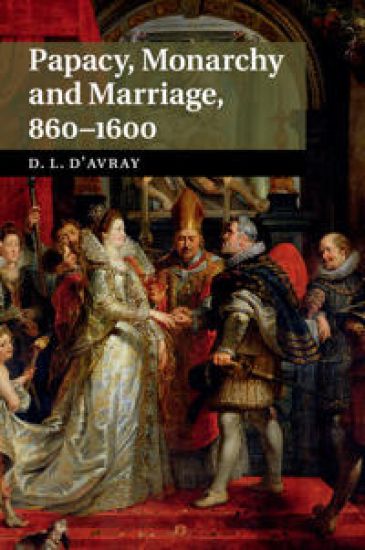
This analysis of royal marriage cases across seven centuries explains how and how far popes controlled royal entry into and exits from their marriages. In the period between c.860 and 1600, the personal lives of kings became the business of the papacy. d'Avray explores the rationale for papal involvement in royal marriages and uses them to analyse the structure of church-state relations. The marital problems of the Carolingian Lothar II, of English kings - John, Henry III, and Henry VIII - and other monarchs, especially Spanish and French, up to Henri IV of France and La Reine Margot, have their place in this exploration of how canon law came to constrain pragmatic political manoeuvring within a system increasingly rationalised from the mid-thirteenth century on. Using documents presented in the author's Dissolving Royal Marriages, the argument brings out hidden connections between legal formality, annulments, and dispensations, at the highest social level.
Papacy, Monarchy and Marriage 860–1600

Papacy, Monarchy and Marriage 860–1600

David D'Avray

Cambridge University Press
2015
sidottu
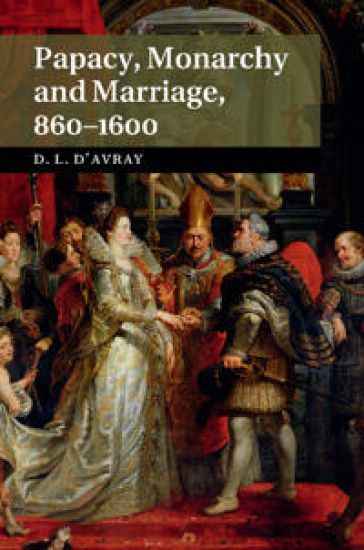
This analysis of royal marriage cases across seven centuries explains how and how far popes controlled royal entry into and exits from their marriages. In the period between c.860 and 1600, the personal lives of kings became the business of the papacy. d'Avray explores the rationale for papal involvement in royal marriages and uses them to analyse the structure of church-state relations. The marital problems of the Carolingian Lothar II, of English kings - John, Henry III, and Henry VIII - and other monarchs, especially Spanish and French, up to Henri IV of France and La Reine Margot, have their place in this exploration of how canon law came to constrain pragmatic political manoeuvring within a system increasingly rationalised from the mid-thirteenth century on. Using documents presented in the author's Dissolving Royal Marriages, the argument brings out hidden connections between legal formality, annulments, and dispensations, at the highest social level.
Medieval Marriage

Medieval Marriage

David d'Avray

Oxford University Press
2007
nidottu
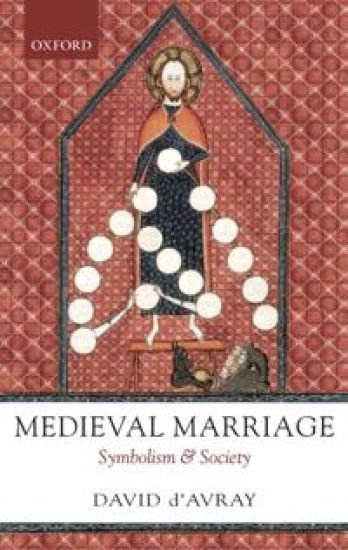
This study shows how marriage symbolism emerged from the world of texts to become a social force affecting ordinary people. It covers the whole medieval period but identifies the decades around 1200 as decisive. New arguments for regarding preaching as a mass medium from the thirteenth century are presented, building on the author's Medieval Marriage Sermons. In marriage preaching symbolism was central. Marriage symbolism also became a social force through law, and lay behind the combination of monogamy and indissolubility which made the medieval Church's marriage system a unique development in world history. Symbolism is not presented as an explanation on its own: it interacted with other causal factors, notably the eleventh-century Gregorian Reform's drive for celibacy, which made the higher clergy like a third gender and less sympathetic to patriarchal polygamous tendencies. Sexual intercourse as a symbol of Christ's union with the Church became central, not just in mysticism but in society as structured by Church law. Symbolism also explains apparently bizarre rules, such as the exemption from capital punishment of clerics in minor orders provided that they married a virgin not a widow. The rules about blessing second marriages are also connected with this nexus of thought. The book is based on a wide range of manuscript sources: sermons, canon law commentaries, Apostolic Penitentiary registers, papal bulls, a gaol delivery roll, and pastoral handbooks. The collection of documents at the end of the book expands the source base for the history of medieval marriage generally as well as underpinning the thesis about symbolism.
Medieval Marriage

Medieval Marriage

David d'Avray

Oxford University Press
2005
sidottu
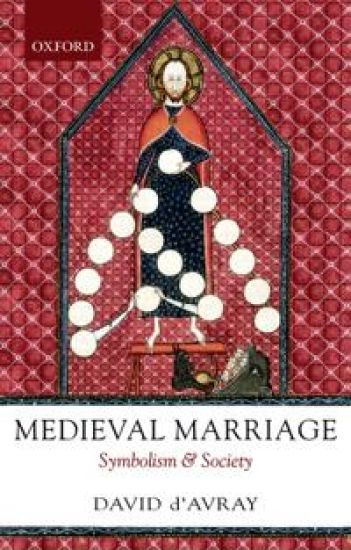
This study shows how marriage symbolism emerged from the world of texts to become a social force affecting ordinary people. It covers the whole medieval period but identifies the decades around 1200 as decisive. New arguments for regarding preaching as a mass medium from the thirteenth century are presented, building on the author's Medieval Marriage Sermons. In marriage preaching symbolism was central. Marriage symbolism also became a social force through law, and lay behind the combination of monogamy and indissolubility which made the medieval Church's marriage system a unique development in world history. Symbolism is not presented as an explanation on its own: it interacted with other causal factors, notably the eleventh-century Gregorian Reform's drive for celibacy, which made the higher clergy like a third gender and less sympathetic to patriarchal polygamous tendencies. Sexual intercourse as a symbol of Christ's union with the Church became central, not just in mysticism but in society as structured by Church law. Symbolism also explains apparently bizarre rules, such as the exemption from capital punishment of clerics in minor orders provided that they married a virgin not a widow. The rules about blessing second marriages are also connected with this nexus of thought. The book is based on a wide range of manuscript sources: sermons, canon law commentaries, Apostolic Penitentiary registers, papal bulls, a gaol delivery roll, and pastoral handbooks. The collection of documents at the end of the book expands the source base for the history of medieval marriage generally as well as underpinning the thesis about symbolism.