Kirjojen hintavertailu. Mukana 12 657 676 kirjaa ja 12 kauppaa.
Kirjailija
David De Vries
Kirjat ja teokset yhdessä paikassa: 6 kirjaa, julkaisuja vuosilta 2000-2025, suosituimpien joukossa Voyages From Holland to America, A.D. 1632 to 1644. Translated From the Dutch by H. C. Murphy, F.P. Vertaile teosten hintoja ja tarkista saatavuus suomalaisista kirjakaupoista.
Title: Voyages from Holland to America, A.D. 1632 to 1644 ... Translated from the Dutch by H. C. Murphy, F.P. Publisher: British Library, Historical Print Editions The British Library is the national library of the United Kingdom. It is one of the world's largest research libraries holding over 150 million items in all known languages and formats: books, journals, newspapers, sound recordings, patents, maps, stamps, prints and much more. Its collections include around 14 million books, along with substantial additional collections of manuscripts and historical items dating back as far as 300 BC. The HISTORY OF TRAVEL collection includes books from the British Library digitised by Microsoft. This collection contains personal narratives, travel guides and documentary accounts by Victorian travelers, male and female. Also included are pamphlets, travel guides, and personal narratives of trips to and around the Americas, the Indies, Europe, Africa and the Middle East. ++++ The below data was compiled from various identification fields in the bibliographic record of this title. This data is provided as an additional tool in helping to insure edition identification: ++++ British Library Vries, David de; Murphy, Henry Cruse; 1853. 4 . 10410.f.15. This work has been selected by scholars as being culturally important, and is part of the knowledge base of civilization as we know it. This work was reproduced from the original artifact, and remains as true to the original work as possible. Therefore, you will see the original copyright references, library stamps (as most of these works have been housed in our most important libraries around the world), and other notations in the work. This work is in the public domain in the United States of America, and possibly other nations. Within the United States, you may freely copy and distribute this work, as no entity (individual or corporate) has a copyright on the body of the work. As a reproduction of a historical artifact, this work may contain missing or blurred pages, poor pictures, errant marks, etc. Scholars believe, and we concur, that this work is important enough to be preserved, reproduced, and made generally available to the public. We appreciate your support of the preservation process, and thank you for being an important part of keeping this knowledge alive and relevant.
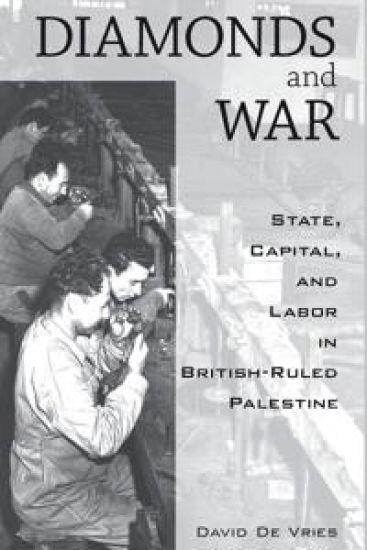
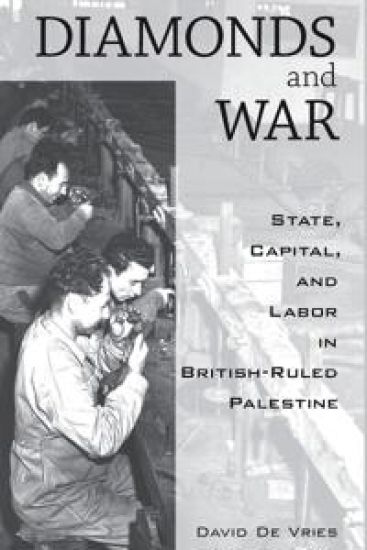
The mining of diamonds, their trading mechanisms, their financial institutions, and, not least, their cultural expressions as luxury items have engaged the work of historians, economists, social scientists, and international relations experts. Based on previously unexamined historical documents found in archives in Belgium, England, Israel, the Netherlands, and the United States, this book is the first in English to tell the story of the formation of one of the world’s main strongholds of diamond production and trade in Palestine during the 1930s and 1940s. The history of the diamond-cutting industry, characterized by a long-standing Jewish presence, is discussed as a social history embedded in the international political economy of its times; the genesis of the industry in Palestine is placed on a broad continuum within the geographic and economic dislocations of Dutch, Belgian, and German diamond-cutting centers. In providing a micro-historical and interdisciplinary perspective, the story of the diamond industry in Mandate Palestine proposes a more nuanced picture of the uncritical approach to the strict boundaries of ethnic-based occupational communities. This book unravels the Middle-eastern pattern of state intervention in the empowerment of private capital and recasts this craft culture’s inseparability from international politics during a period of war and transformation of empire.
Strike-action has long been a notable phenomenon in Israeli society, despite forces that have weakened its recurrence, such as the Arab-Jewish conflict, the decline of organized labor, and the increasing precariousness of employment. While the impact of strikes was not always immense, they are deeply rooted in Israel's past during the Ottoman Empire and Mandate Palestine. Workers persist in using them for material improvement and to gain power in both the private and public sectors, reproducing a vibrant social practice whose codes have withstood the test of time. This book unravels the trajectory of the strikes as a rich source for the social-historical analysis of an otherwise nation-oriented and highly politicized history.
The mining of diamonds, their trading mechanisms, their financial institutions, and, not least, their cultural expressions as luxury items have engaged the work of historians, economists, social scientists, and international relations experts. Based on previously unexamined historical documents found in archives in Belgium, England, Israel, the Netherlands, and the United States, this book is the first in English to tell the story of the formation of one of the world’s main strongholds of diamond production and trade in Palestine during the 1930s and 1940s. The history of the diamond-cutting industry, characterized by a long-standing Jewish presence, is discussed as a social history embedded in the international political economy of its times; the genesis of the industry in Palestine is placed on a broad continuum within the geographic and economic dislocations of Dutch, Belgian, and German diamond-cutting centers. In providing a micro-historical and interdisciplinary perspective, the story of the diamond industry in Mandate Palestine proposes a more nuanced picture of the uncritical approach to the strict boundaries of ethnic-based occupational communities. This book unravels the Middle-eastern pattern of state intervention in the empowerment of private capital and recasts this craft culture’s inseparability from international politics during a period of war and transformation of empire.
Workers who loaded and unloaded ships have formed a distinctive occupational group over the past two centuries. As trade expanded so the numbers of dock labourers increased and became concentrated in the major ports of the world. This ambitious two-volume project goes beyond existing individual studies of dock workers to develop a genuinely comparative international perspective over a long historical period. Volume 1 contains studies of 22 major ports worldwide. Built around an agreed framework of issues, these 'port studies' examine the type of workers who dominated dock labour, their race, class and ethnicity, the working conditions of dockers and the role of government as employer, arbitrator and supporter. The studies also detail how dockers organized their labour, patterns of strike action and involvement in political organizations. The structure of the port city is also outlined and descriptions given of the waterside environment. These areas of investigation form the basis for a series of 11 thematic studies which comprise Volume 2. Drawing on the information provided in the port studies, these essays identify important aspects and recurring themes, and explain how and why particular cases diverge from the rest. The final chapter of the book synthesizes the various approaches taken to offer a model which suggests several configurations of dock labour and presents suggestions for future research. This major scholarly achievement represents the most sustained attempt to date to provide a comparative international history of dock labour. An annotated bibliography completes this essential reference work.