Kirjojen hintavertailu. Mukana 12 578 625 kirjaa ja 12 kauppaa.
Kirjailija
DAVID DEMATTEO
Kirjat ja teokset yhdessä paikassa: 10 kirjaa, julkaisuja vuosilta 2005-2025, suosituimpien joukossa Career Paths in Forensic Psychology. Vertaile teosten hintoja ja tarkista saatavuus suomalaisista kirjakaupoista.
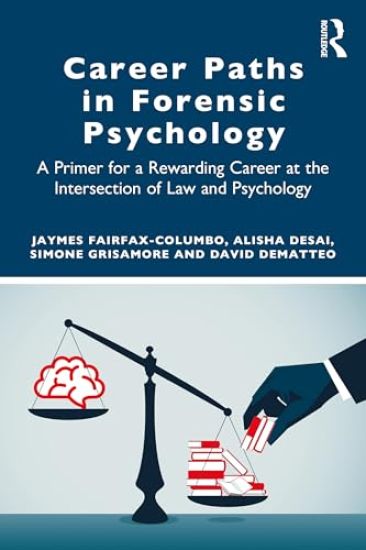
Career Paths in Forensic Psychology offers a comprehensive introduction and guide to the varied career paths for aspiring forensic psychologists, showing what a rewarding career at the intersection of law and psychology can look like in practice.The book is divided into five parts. Part I provides an overview of the field of forensic psychology, and also briefly explores its origins and evolution in the United States. Additionally, it explores common professional activities of forensic psychologists, as well as common career settings in which they ply their trade (academic settings, clinical settings, policy settings). Part II examines employment in academic settings, chiefly research academia, practice-oriented academia, and teaching-focused academia. Part III discusses opportunities for clinical-forensic psychology practice, in both the public sector and in private practice settings. Part IV considers career opportunities for policy-interested forensic psychologists, including in government agencies and policy-focused non-profit organizations. Finally, Part V gives readers tips on how to pick the best career “home base” for themselves, considers supplemental opportunities that forensic psychologists can pursue if their “home base” does not scratch all their professional itches, and provides guidance on how to put one’s best foot forward as a forensic psychologist and be a worthy representative of the field.This book is an ideal resource for students of forensic psychology and early career forensic psychologists looking to start and progress their career in academic, clinical, and policy settings, as well as practicing psychologists looking to navigate career changes and transitions.
Career Paths in Forensic Psychology offers a comprehensive introduction and guide to the varied career paths for aspiring forensic psychologists, showing what a rewarding career at the intersection of law and psychology can look like in practice.The book is divided into five parts. Part I provides an overview of the field of forensic psychology, and also briefly explores its origins and evolution in the United States. Additionally, it explores common professional activities of forensic psychologists, as well as common career settings in which they ply their trade (academic settings, clinical settings, policy settings). Part II examines employment in academic settings, chiefly research academia, practice-oriented academia, and teaching-focused academia. Part III discusses opportunities for clinical-forensic psychology practice, in both the public sector and in private practice settings. Part IV considers career opportunities for policy-interested forensic psychologists, including in government agencies and policy-focused non-profit organizations. Finally, Part V gives readers tips on how to pick the best career “home base” for themselves, considers supplemental opportunities that forensic psychologists can pursue if their “home base” does not scratch all their professional itches, and provides guidance on how to put one’s best foot forward as a forensic psychologist and be a worthy representative of the field.This book is an ideal resource for students of forensic psychology and early career forensic psychologists looking to start and progress their career in academic, clinical, and policy settings, as well as practicing psychologists looking to navigate career changes and transitions.
The paths to becoming a forensic psychologist are numerous and varied. Becoming a Forensic Psychologist provides insight into the process of pursuing a career in forensic psychology, from an introduction to the field itself to graduate school and beyond. This comprehensive guide extends beyond mere definitions and overviews to discuss tips, strategies, and questions to ask at every step of the way to becoming a forensic psychologist. Told from the perspectives of individuals at different stages in their career, this book provides up-to-date information about existing forensic psychology programs and resources to assist aspiring forensic psychologists in career decision-making. Additional sidebars define key terms, highlight important court decisions that shaped the field of forensic psychology, and provide interesting facts about the field. This book will help any individual pursuing a career as a forensic psychologist, including those about to start college who are narrowing their career interests, graduate students, and those already in the field of psychology who are considering a career shift.
Forensic mental health professionals provide a range of services to courts, attorneys, law enforcement agencies, and correctional facilities. Yet despite the importance of understanding the law, most forensic mental health professionals do not have any formal legal training, which can make it challenging for them to develop a sufficient understanding of relevant legal cases, rules, and statutes. Forensic Mental Health Practice and the Law is an up-to-date, scholarly, and comprehensive primer that provides foundational knowledge about the laws most relevant to forensic practice. The authors address topics that are most applicable to forensic mental health professionals in their varied roles as clinicians, researchers, and consultants, including relevant court cases, statutes, court rules, administrative regulations, and ethical standards and guidelines. As they show, having knowledge of the legal system and relevant laws can lead to several benefits for forensic mental health professionals, including increased competence in performing forensic mental health assessments, conducting forensically relevant research, providing consultation to the legal system, and communicating results to legal decision-makers. To this end, the book offers discussion of exemplar state laws that differ markedly from federal law, examples of majority and minority approaches among the states to certain legal topics, and detailed tables that provide citations to the relevant laws in all 50 states.
The paths to becoming a forensic psychologist are numerous and varied. Becoming a Forensic Psychologist provides insight into the process of pursuing a career in forensic psychology, from an introduction to the field itself to graduate school and beyond. This comprehensive guide extends beyond mere definitions and overviews to discuss tips, strategies, and questions to ask at every step of the way to becoming a forensic psychologist. Told from the perspectives of individuals at different stages in their career, this book provides up-to-date information about existing forensic psychology programs and resources to assist aspiring forensic psychologists in career decision-making. Additional sidebars define key terms, highlight important court decisions that shaped the field of forensic psychology, and provide interesting facts about the field. This book will help any individual pursuing a career as a forensic psychologist, including those about to start college who are narrowing their career interests, graduate students, and those already in the field of psychology who are considering a career shift.
Problem-solving courts provide judicially supervised treatment for behavioral health needs commonly found among criminal offenders, including substance abuse and mental health disorders, and they treat a variety of offender populations. These courts employ a team-based approach consisting of a judge, defense attorney, prosecutor, and treatment providers, representing a significant paradigm shift in how the justice system treats offenders with special needs. Despite the proliferation of problem-solving courts, there remains some uncertainty about how they function, how effective they are, and the most promising ways to implement problem-solving justice. Problem-Solving Courts and the Criminal Justice System provides a comprehensive foundation of knowledge related to problem-solving courts and the role they play in the United States criminal justice system. The book begins with an overview that explores precipitating factors in these courts' development, relevant political influence, and their history, purposes, benefits, and drawbacks, followed by a detailed discussion of specific types of problem solving courts, including drug courts, mental health courts, and veterans courts, among many others. Next a review of the legal and ethical considerations of alternative methods to standard prosecution is complemented by an examination of the methodological challenges faced by researchers when attempting to study the effectiveness of problem-solving courts. The book concludes with a discussion of future directions in terms of research, practice, and policy relating to these courts in the United States. Problem-Solving Courts and the Criminal Justice System is appropriate for professionals, researchers, and students in the fields of mental health, criminal justice, and law.
Focusing on juvenile transfer and disposition evaluations, this volume provides an up-to-date integration of current law, science, and practice with respect to juvenile risk assessment, treatment needs/amenability, and sophistication-maturity. Included are perspectives relating to international practices, use of specialized assessment tools, and a separate chapter on resentencing following US Supreme Court decisions on juveniles sentenced to mandatory life without parole. This text will be a useful and comprehensive reference for forensic psychologists and other mental health professionals engaged in juvenile evaluation, as well as legal professionals, juvenile and criminal justice professionals, and others involved with juvenile assessment, decision-making, and rehabilitation.
Focusing on juvenile transfer and disposition evaluations, this volume provides an up-to-date integration of current law, science, and practice with respect to juvenile risk assessment, treatment needs/amenability, and sophistication-maturity. Included are perspectives relating to international practices, use of specialized assessment tools, and a separate chapter on resentencing following US Supreme Court decisions on juveniles sentenced to mandatory life without parole. This text will be a useful and comprehensive reference for forensic psychologists and other mental health professionals engaged in juvenile evaluation, as well as legal professionals, juvenile and criminal justice professionals, and others involved with juvenile assessment, decision-making, and rehabilitation.
Forensic mental health assessments in death penalty cases are on the rise due in part to the continuing growth of forensic psychology and psychiatry as professions, combined with several recent U.S. Supreme Court decisions. Forensic mental health professionals are now conducting assessments at every stage of death penalty proceedings, ranging from pre-trial evaluations to determine eligibility for the death penalty to evaluations conducted post-sentencing and closer to the date of execution. Yet there are surprisingly few comprehensive resources available for students interested in death penalty assessments, clinicians who conduct those assessments, and attorneys who work with forensic mental health professionals. Forensic Mental Health Assessments in Death Penalty Cases fills this gap in the literature, providing an essential road map to the field for students and practitioners. Well-written and comprehensive, this book integrates the most up-to-date research with best practice recommendations, yielding a solid foundation of information related to capital punishment, death penalty litigation, and the role of forensic mental health professionals in death penalty cases. Vivid descriptions of influential court cases, a discussion of ethical considerations, guidance on conducting various types of forensic mental health assessments, and sample forensic reports illustrating best practices make up this important work. Current case law is covered in detail, alongside an important discussion of what remains unknown and directions for future research. This book is essential reading for students and professionals in the fields of mental health, criminal justice, and law, as well as for forensic practitioners who may not be familiar with the special requirements of death penalty cases. It is also an important resource for attorneys who work with forensic mental health professionals. "Dr. DeMatteo and his colleagues address a range of forensic mental health assessments, all related to death penalty litigation. They thoroughly consider up-to-date key legal cases, ethical issues, and methodology relevant to psychologists and psychiatrists working in this difficult area of practice. The inclusion of tables describing mitigating and aggravating factors and definitions of mental retardation on a state-by-state basis is an important feature of this book. This book is appropriate for graduate students, for 'seasoned' forensic mental health professionals, and for clinicians interested in developing expertise in evaluating a range of capital cases."--Alan M. Goldstein, Ph.D., ABPP, Board Certified in Forensic Psychology and Professor Emeritus, John Jay College of Criminal Justice "In Forensic Mental Health Assessments in Death Penalty Cases, DeMatteo and colleagues have done a superb job of distilling the domains important for mental health evaluations in capital contexts. Having identified and described the issues surrounding Atkins, competence for execution, mitigation, and violence risk assessment, they go on to frame these issues within the larger context of best practice in forensic assessment. This book is scholarly, comprehensive, and practical-a combination that is certain to appeal to all who are (or aspire to be) involved in the process of capital litigation."--Kirk Heilbrun, Ph.D., Drexel University "For better or worse, the United States continues to permit executions, and over thirty states house hundreds of people on death row. Mental health professionals are almost always involved in these cases. If you are such a professional, or a lawyer contemplating using a mental health expert in a capital case, this book will provide you with all the basic legal and clinical information you need. It is the only book of its kind, and well worth a look." --Christopher Slobogin, Milton Underwood Professor of Law, Vanderbilt University Law School "This book is a wonderful addition to the body of knowledge in capital case evaluations, presenting both legal and mental health information in depth and in a nuanced, thoughtful manner. The chapters on Atkins-type evaluations, mitigation evaluations, and the specifics of forensic assessments in capital cases are excellent guides for evaluators. For mental health professionals and attorneys who work in death penalty cases, this book is an indispensible resource."--Stanley L. Brodsky, Ph.D., The University of Alabama
Master the essential skills for designing and conducting a successful research project Essentials of Research Design and Methodology contains practical information on how to design and conduct scientific research in the behavioral and social sciences. This accessible guide covers basic to advanced concepts in a clear, concrete, and readable style. The text offers students and practitioners in the behavioral sciences and related disciplines important insights into identifying research topics, variables, and methodological approaches. Data collection and assessment strategies, interpretation methods, and important ethical considerations also receive significant coverage in this user-friendly guide. Essentials of Research Design and Methodology is the only available resource to condense the wide-ranging topics of the field into a concise, accessible format for handy and quick reference. As part of the Essentials of Behavioral Science series, this book offers a thorough review of the most relevant topics in research design and methodology. Each concise chapter features numerous callout boxes highlighting key concepts, bulleted points, and extensive illustrative material, as well as "Test Yourself" questions that help you gauge and reinforce your grasp of the information covered.