Kirjojen hintavertailu. Mukana 12 595 353 kirjaa ja 12 kauppaa.

Kirjailija

David Dent

Kirjat ja teokset yhdessä paikassa: 18 kirjaa, julkaisuja vuosilta 1990-2024, suosituimpien joukossa The Black Earth. Vertaile teosten hintoja ja tarkista saatavuus suomalaisista kirjakaupoista.

18 kirjaa

Kirjojen julkaisuhaarukka 1990-2024.

The Nature of Scientific Innovation, Volume II

The Nature of Scientific Innovation, Volume II

David Dent

Springer International Publishing AG
2024
sidottu
Innovation is a major driver of social, economic and environmental change and is researched extensively by academics from disciplines as diverse as, business, engineering, economics, sociology and psychology. On the whole, each discipline pursues its own pathway to understanding without an interdisciplinary framework that links diverse research outputs. This partite structure creates a remove from the practical realities of entrepreneurship, and the innovators who operate and perceive innovation in its entirety. This book delivers insights and creates a different framework, one that includes terminologies and typologies, greater understanding of paradigmatic influences in science, needs vs wants and demand, impact and value of knowledge, publications and patents and economic benefits. It challenges current approaches to education, research, creativity and skills development, infrastructure, investment and policy. This book addresses changes needed to better deliver innovation at a time when the world is desperate for solutions to global problems. It will be of interest to scholars and students of innovation from multiple disciplines, as well as practitioners, policymakers and all those with an interest in scientific innovation. The second volume focuses on those individuals who actually deliver innovation; the nature, traits, skills and behaviours that characterise inventors, intrapreneurs and entrepreneurs. How does a nation generate sufficient innovators to positively impact on the economy, and how can systems and organisations at all levels be best geared to meet their needs? The conundrum posed in providing a supportive leadership and organisational culture for innovators who naturally challenge prevailing orthodoxies and approaches, is addressed; along with the means to unleash and resource disruptive entrepreneurs to do what they do best - to innovate and underpin economic, social and environmental progress.
The Nature of Scientific Innovation, Volume I

The Nature of Scientific Innovation, Volume I

David Dent

Springer International Publishing AG
2024
sidottu
Innovation is a major driver of social, economic and environmental change and is researched extensively by academics from disciplines as diverse as, business, engineering, economics, sociology and psychology. On the whole, each discipline pursues its own pathway to understanding without an interdisciplinary framework that links diverse research outputs. This partite structure creates a remove from the practical realities of entrepreneurship, and the innovators who operate and perceive innovation in its entirety. This book delivers insights and creates a different framework, one that includes terminologies and typologies, greater understanding of paradigmatic influences in science, needs vs wants and demand, impact and value of knowledge, publications and patents and economic benefits. It challenges current approaches to education, research, creativity and skills development, infrastructure, investment and policy. This book addresses changes needed to better deliver innovation at a time when the world is desperate for solutions to global problems. It will be of interest to scholars and students of innovation from multiple disciplines, as well as practitioners, policymakers and all those with an interest in scientific innovation. The first volume focuses on the processes, the means and the impact of scientific innovation. It highlights the way scientific research came to the fore as an instrument of government policy for economic growth, the way research is undertaken, the structures and processes involved, the values, biases and limitations associated with them, and why these matter for innovation. Questions are asked about who innovation is for and whether value is being captured in ways that really matter, whether the systems are fit-for-purpose and how meaningful impact could be delivered to meet societal, economic and environmental needs and priorities.
Insect Pest Management

Insect Pest Management

David Dent; Richard Binks

CABI Publishing
2020
sidottu
This new, third edition has been thoroughly updated to include all the key principles, methodologies, approaches and practical examples of insect pest management in agriculture, horticulture, medical and veterinary entomology. The book covers monitoring and forecasting of pest outbreaks, yield loss and impact assessments and all of the latest methods involved in the control and management of insects. It includes coverage of host manipulation, plant resistance, biological control, use of interference, agronomic precision control methods and insecticides as well as socio-economic and research management aspects of developing integrated approaches to pest management. The new edition also reflects the key advances made in the disciplines of molecular biology, biochemistry and genomics related to insects and their management. It also considers the importance and role of biodiversity, climate change, precision agriculture, data management and sustainability of production and supply in delivering integrated management solutions. This important text continues to be essential reading for students, researchers and industry scientists involved in all aspects of insect pest management, applied entomology, crop protection and medical and veterinary entomology.
Insect Pest Management

Insect Pest Management

David Dent; Richard Binks

CABI Publishing
2020
nidottu
An undergraduate and postgraduate textbook covering the key principles, methodologies, approaches and practical examples of insect pest management in agricultural, post harvest systems, horticulture, insect vectors and medical and veterinary entomology. The book covers the underpinning monitoring and forecasting of pest outbreaks, yield loss and impact assessments and all of the latest methods of control and management of insects from insecticides, host manipulation, plant resistance, biological control, use of interference, agronomic and precision control methods as well as socio-economic and research management aspects of developing integrated approaches to pest management. The new edition also reflects the key advances made in the disciplines of molecular biology, biochemistry and genomics related to insects and their management, as well as the importance and role of biodiversity, climate change, precision agriculture, data management and sustainability of production and supply in delivering integrated management solutions.
Farming the Black Earth

Farming the Black Earth

Boris Boincean; David Dent

Springer Nature Switzerland AG
2020
nidottu
This book deals with the sustainability of agriculture on the Black Earth by drawing on data from long-term field experiments. It emphasises the opportunities for greater food and water security at local and regional levels.The Black Earth, Chernozem in Russian, is the best arable soil in the world and the breadbasket of Europe and North America. It was the focus of scientific study at the very beginnings of soil science in the late 19th century—as a world in itself, created by the roots of the steppe grasses building a water-stable granular structure that holds plentiful water, allows rapid infiltration of rain and snow melt, and free drainage of any surplus.Under the onslaught of industrial farming, Chernozem have undergone profound but largely unnoticed changes with far-reaching consequences—to the point that agriculture on Chernozem is no longer sustainable. The effects of agricultural practices on global warming, the diversion of rainfall away from replenishment of water resources to destructive runoff, and the pollution of streams and groundwater are all pressing issues. Sustainability absolutely requires that these consequences be arrested.
Farming the Black Earth

Farming the Black Earth

Boris Boincean; David Dent

Springer Nature Switzerland AG
2019
sidottu
This book deals with the sustainability of agriculture on the Black Earth by drawing on data from long-term field experiments. It emphasises the opportunities for greater food and water security at local and regional levels.The Black Earth, Chernozem in Russian, is the best arable soil in the world and the breadbasket of Europe and North America. It was the focus of scientific study at the very beginnings of soil science in the late 19th century—as a world in itself, created by the roots of the steppe grasses building a water-stable granular structure that holds plentiful water, allows rapid infiltration of rain and snow melt, and free drainage of any surplus.Under the onslaught of industrial farming, Chernozem have undergone profound but largely unnoticed changes with far-reaching consequences—to the point that agriculture on Chernozem is no longer sustainable. The effects of agricultural practices on global warming, the diversion of rainfall away from replenishment of water resources to destructive runoff, and the pollution of streams and groundwater are all pressing issues. Sustainability absolutely requires that these consequences be arrested.
Use of the Normalized Difference Vegetation Index (NDVI) to Assess Land Degradation at Multiple Scales

Use of the Normalized Difference Vegetation Index (NDVI) to Assess Land Degradation at Multiple Scales

Genesis T. Yengoh; David Dent; Lennart Olsson; Anna E. Tengberg; Compton J. Tucker III

Springer International Publishing AG
2015
nidottu
This report examines the scientific basis for the use of remotely sensed data, particularly Normalized Difference Vegetation Index (NDVI), primarily for the assessment of land degradation at different scales and for a range of applications, including resilience of agro-ecosystems. Evidence is drawn from a wide range of investigations, primarily from the scientific peer-reviewed literature but also non-journal sources. The literature review has been corroborated by interviews with leading specialists in the field.The report reviews the use of NDVI for a range of themes related to land degradation, including land cover change, drought monitoring and early warning systems, desertification processes, greening trends, soil erosion and salinization, vegetation burning and recovery after fire, biodiversity loss, and soil carbon. This SpringerBrief also discusses the limits of the use of NDVI for land degradation assessment and potential for future directions of use.A substantial body of peer-reviewed research lends unequivocal support for the use of coarse-resolution time series of NDVI data for studying vegetation dynamics at global, continental and sub-continental levels. There is compelling evidence that these data are highly correlated with biophysically meaningful vegetation characteristics such as photosynthetic capacity and primary production that are closely related to land degradation and to agroecosystem resilience.
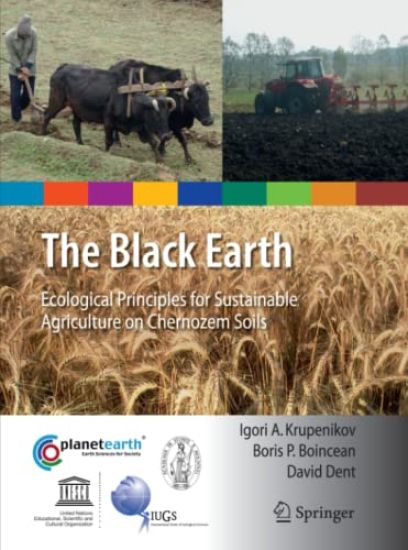
The Black Earth

The Black Earth

Igori Arcadie Krupenikov; Boris P Boincean; David Dent

Springer
2011
sidottu
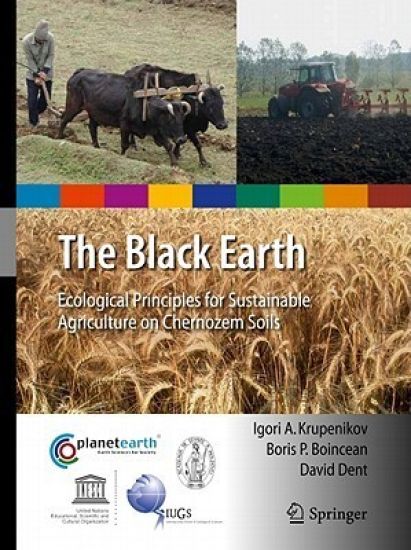
Soil is the Earth’s living skin. It provides anchorage for roots, holds water long enough for plants to make use of it and the nutrients that sustain life – otherwise the Earth would be as barren as Mars. It is home to myriad micro-organisms and armies of microscopic animals as well as the familiar earthworm that accomplish biochemical transformations from fixing atmospheric nitrogen to recycling wastes; it receives and process all fresh water, provides the foundations for our built environment; and comprises the biggest global carbon store that we know how to manage. This book is about the best soil in the world - the black earth or chernozem: how it is being degraded by farming and how it may be farmed sustainably. Industrialisation of farming has laid bare contradictions between the unforgiving laws of ecology and economics. Soil organic matter is the fuel that powers soil systems and the cement that holds the soil together – and in place – but agriculture is burning it up faster than it is being formed: even the chernozem cannot long survive this treatment. Here is the evidence for this trend and, based on long-term field experiments, ecological principles for sustainable agriculture that can reverse the trend and, at the same time, feed the world. Unlike other volumes in the series, this is not an edited collection of scientific papers. The authors have chosen the classical monograph to be near to the reader from beginning to end - to convey their anxiety about the state of the land and their optimism about the possibility of retrieving the situation by changing the social and political approach to the land so as to provide the necessary incentives for sustainable land use and management.
Hot Spot: Latin America

Hot Spot: Latin America

David Dent

Greenwood Press
2008
sidottu
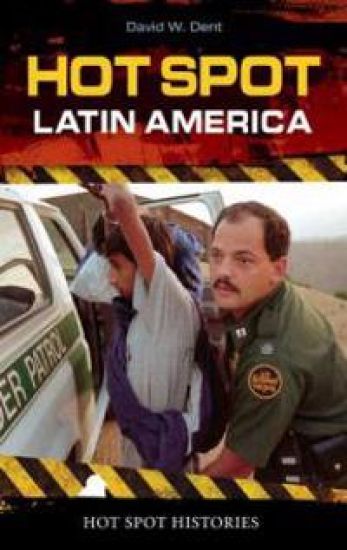
From border crime in Mexico to Chavez's revolution in Venezuela, this volume presents up-to-the-minute coverage of the key conflicts, corruption, and revolutionary movements simmering or raging in every region of Latin America. In-depth, comprehensive chapters explore drug wars, immigration issues, terrorism, youth gangs, government corruption, controversy over oil, and political instability, including: The Zapatista Rebellion, the Darien Gap controversy, Evo Morales, Shining Path (Sendero Luminoso) and Tupac Amaru, the Falklands, and Guantanamo Bay.From border crime in Mexico to Chavez's revolution in Venezuela, this volume presents up-to-the-minute coverage of the key conflicts, corruption, and revolutionary movements simmering or raging in every region of Latin America. In-depth, comprehensive chapters explore drug wars, imigration issues, terrorism, youth gangs, government corruption, controversy over oil, and political instability. This is a must-have source for current coverage of trouble spots in Latin America, their origins, and subsequent development.Over 30 security-based hot spots are analyzed within these geographical regions. They vary in severity, background, and degree of threat to the United States, the nation itself, or its regional neighbors. Hot spots covered include: Zapatista Rebellion Darien Gap controversy Evo Morales Shining Path (Sendero Luminoso) and Tupac Amaru Falklands Guantanamo Bay
Historical Dictionary of U.S.-Latin American Relations
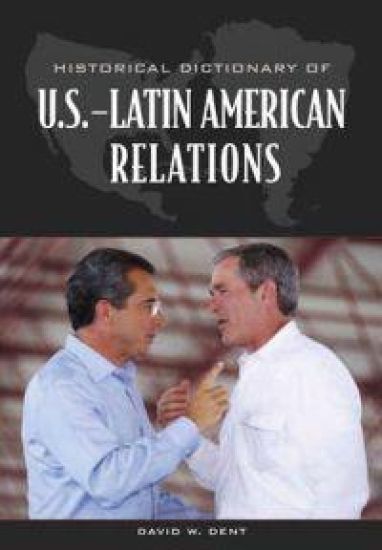
This book provides over 260 entries on U.S. presidents, Latin American politicians, covert operations, policies, and major events since the early 1800s that define the contentious relations between the United States and the Latin American and Caribbean region.From the Monroe Doctrine to NAFTA, the tone of U.S.-Latin America relations has been set by the United States, and largely to its benefit. Dent compiles more than 260 A-to-Z entries that detail the key people, events, treaties, wars, and concepts that have gone into the making of the often contentious relations between the United States and the Latin American and Caribbean region. Entries conclude with suggested readings and are thoroughly cross-referenced. A thematic index guides users to related entries, and an extensive bibliography includes a list of key works central to the study of U.S.-Latin American relations. There is also a separate list of relevant online resources. The entire work is also thoroughly indexed.Useful for students and researchers of international politics within the Western hemisphere, Dent's historical dictionary covers items ranging from pro-slavery filibusterers adventuring in Central America, Dollar Diplomacy, Anti-Americanism, Banana Wars, the Reagan Doctrine, Sandinistas, friendly Dictators, Che Guevara, to the impact of the events of September 11, 2001 on Latin America, among many others.
Rural Planning in Developing Countries

Rural Planning in Developing Countries

David Dent; Olivier Dubois; Barry Dalal-Clayton

Earthscan Ltd
2002
sidottu
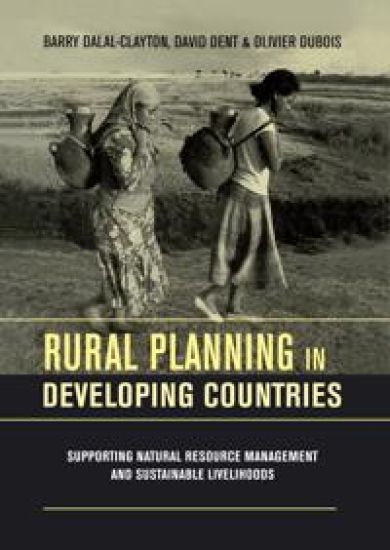
This book provides an international perspective on rural planning, focused on developing countries. It examines conventional development planning and innovative local planning approaches, drawing together lessons from recent experience of rural planning and land use. The authors examine past and current practice and ways that land use planning and management of natural resources can underpin sustainable local livelihoods. They draw on case studies from Africa, Asia and Latin America to present findings relevant throughout the developing world.
Convention on Biological Diversity and Product Commercialisation in Development Assistance Projects
The LUBILOSA (Lutte Biologique contre les Locustes et Sauteriaux) Programme was initiated in 1989 and has been successful in developing a bioinsecticide for the biological control of locusts and grasshoppers. The efficacy of the product named Green Muscle has been clearly demonstrated in Africa, and provides an environmentally friendly alternative to chemical insecticides. Although it predates the Convention on Biological Diversity, LUBILOSA has been conducted in accordance with the benefit sharing and related provisions of the Convention.This book provides a review of the programme in order to demonstrate how such research and product commercialisation can be accomplished in the context of a development assistance project. In particular it shows how the provisions of the Convention can be fulfilled with respect to: equitable sharing of research results and benefits; access to and transfer of technology; exchange of information; technical and scientific cooperation; participation in research; financial resources.
Priorities in Biopesticide Research and Development in Developing Countries
Biopesticides Series, No. 2Biological pesticides based on pathogenic micro-organisms specific to a target pest offer an ecologically-sound and effective solution to pest problems. They pose less threat to the environment and to human health than do chemical pesticides. However, despite the enormous potential for biopesticides, their development, commercialisation and use has been slow.The information reported in this book is based on a survey of more than 100 biopesticide research workers in developing countries. The results demonstrate that the main difficulties and constraints facing researchers relate to a lack of expertise in the crucial later stages of development. Biopesticide research is receiving mostly low investment, mainly from the public sector, and requires more multidisciplinary expertise. It is concluded that targeted assistance on a multinational and multi-disciplinary basis is required in developing countries in order to remove the constraints.
The Legacy of the Monroe Doctrine

The Legacy of the Monroe Doctrine

David Dent

Greenwood Press
1999
sidottu
Ideal for student research and debate, this is the first single-volume reference work to examine, country by country, the history of U.S. involvement in 24 Latin American and Caribbean nations. It will help students to understand and debate the role of the United States in Latin America since the Monroe Doctrine in 1823 and whether in the long run U.S. intervention in the internal affairs of Latin American governments has been counterproductive. Each country and its relations with the United States is analyzed succinctly in an individual chapter. Dent, a noted expert on inter-American relations, organizes each chapter around major themes that illuminate both historical and contemporary issues, and shows how in recent years U.S. concerns have been transformed from issues of security and economic interests to drug trafficking, immigration, and trade pacts. Discussion of key events—wars, revolutions, and dictatorships—and lively accounts of the role of powerful individuals illustrate the causes and consequences of U.S. involvement.Each chapter features a timeline of events in the history of U.S. involvement in that country and a list of suggested readings on the country and its relationship with the United States. A glossary explains key terms used throughout the book. A number of comparative tables and charts put inter-American relations in perspective. A selection of editorial cartoons from the 1980's offer biting commentary on U.S. relations with its Latin American neighbors. Designed to meet the information needs of high school and college students and the general public, this reference work will guide the user to an understanding of the richness and complexity of the inter-American relationship over the last two centuries and provide both historical perspective and timely analysis of current problems confronting the United States and its neighbors to the south.
U.S.-Latin American Policymaking

U.S.-Latin American Policymaking

David Dent

Greenwood Press
1995
sidottu
Teachers, students, experts, policymakers, and citizen activists all should welcome this authoritative, systematic, single-volume sourcebook of who makes foreign policy, how it is made, and what U.S. policy has been since the 1960s. Well-known experts assess all the significant literature and research about U.S. policy in the region over the last three decades and analyze the role and procedures of foreign policymaking through regional institutions, key factors and major players in the United States, and special issues such as interventionism, human rights, democratization, and peacekeeping efforts.
Handbook of Political Science Research on Latin America
The volume offers a rich synthesis of political science research on Latin America over the past 30 years and offers a wealth of information to anyone interested in the area--from the beginning student to the area specialist. . . . The volume is an impressive achievement and will not outdate soon. Library Journal (starred review)This handbook offers the reader a rich synthesis of the political science research on the Latin American region over the past thirty years. It reviews published books, articles, and government documents in addition to a few select doctoral dissertations. Sixteen contributors participated in the making of this volume, all of whom have lived and done field work in Latin America and the Caribbean and have studied and taught about Latin America. The starting date of 1960 was chosen because that year coincided with the rapid growth of research on Latin America, spurred by the Cuban Revolution and the Alliance for Progress.The handbook is divided into two main sections: comparative politics and international relations. Within each section are chapters on specific countries of interest or on general topics or areas. Appendixes (which include a selected bibliography and a listing of major research centers in Latin America and the Caribbean) and indexes follow the main body of the book. This book should be of great value to anyone interested in the history and methodology of political science research on Latin America and the Caribbean. Specialists from other areas of study will also find this volume's information invaluable. Beginning students of Latin American history and politics will find this work a comprehensive review of the field over the past three decades.
The Black Earth

The Black Earth

Igori Arcadie Krupenikov; Boris P Boincean; David Dent

Springer
2013
nidottu
Soil is the Earth’s living skin. It provides anchorage for roots, holds water long enough for plants to make use of it and the nutrients that sustain life – otherwise the Earth would be as barren as Mars. It is home to myriad micro-organisms and armies of microscopic animals as well as the familiar earthworm that accomplish biochemical transformations from fixing atmospheric nitrogen to recycling wastes; it receives and process all fresh water, provides the foundations for our built environment; and comprises the biggest global carbon store that we know how to manage. This book is about the best soil in the world - the black earth or chernozem: how it is being degraded by farming and how it may be farmed sustainably. Industrialisation of farming has laid bare contradictions between the unforgiving laws of ecology and economics. Soil organic matter is the fuel that powers soil systems and the cement that holds the soil together – and in place – but agriculture is burning it up faster than it is being formed: even the chernozem cannot long survive this treatment. Here is the evidence for this trend and, based on long-term field experiments, ecological principles for sustainable agriculture that can reverse the trend and, at the same time, feed the world. Unlike other volumes in the series, this is not an edited collection of scientific papers. The authors have chosen the classical monograph to be near to the reader from beginning to end - to convey their anxiety about the state of the land and their optimism about the possibility of retrieving the situation by changing the social and political approach to the land so as to provide the necessary incentives for sustainable land use and management.
Hoddesdon & Broxbourne Through Time

Hoddesdon & Broxbourne Through Time

David Dent; Sue Garside; Stephen Jeffery-Poulter

Amberley Publishing
2010
nidottu
Hoddesdon really came into its own between the sixteenth and mid nineteenth centuries as a coaching town providing a welcome stopping place for travellers from London setting out on the Old North Road. Broxbourne, just to the south, was a smaller and more rural settlement focused around the church and manor house until the coming of the railway in 1840 began the process of gradual suburbanisation that has continued ever since. The contrasting illustrations provide an accessible and interesting way of seeing the extraordinary changes that have taken place in the two towns over a century or more of evolution, expansion and re-development. The period photos, the majority of which are being published for the very first time, have mainly been sourced from Lowewood Museum's extensive archive.