Kirjojen hintavertailu. Mukana 12 657 676 kirjaa ja 12 kauppaa.
Kirjailija
David Diaz
Kirjat ja teokset yhdessä paikassa: 7 kirjaa, julkaisuja vuosilta 1996-2019, suosituimpien joukossa Anti-Tracking: Hiding in the Shadows, an Illusion of Invisibility. Vertaile teosten hintoja ja tarkista saatavuus suomalaisista kirjakaupoista.
Getting Your FREE Bonus Download this book, read it to the end and see "BONUS: Your FREE Gift" chapter after the conclusion. Survival Vehicle: (FREE Bonus Included) Get 25 Tips And Build Your Own Survival Vehicle In this book Survival Vehicle 25 tips are mentioned that will help you to build your own survival vehicle. When you leave your home for the wild visit you need to go there on your survival vehicle. There are several other advantages of survival vehicle as well. On the one side it helps in surviving while on the other side you can carry your survival tools and kit's in the survival vehicle. The survival vehicle can also help you in navigation from the wild. Getting a survival vehicle is really expensive but if you choose to build your survival vehicle by yourself then definitely it's a great idea. You can save a lot of money if you construct it by yourself. There are several tips and techniques that you should learn to build a survival vehicle and most of them are mentioned in this incredible book. The main topics covered by Survival Vehicle are as follows: Tips for building survival vehicle How to build amazingly survival vehicle What should your survival vehicle contain? And much more. Download your E book "Survival Vehicle: Get 25 Tips And Build Your Own Survival Vehicle " by scrolling up and clicking "Buy Now with 1-Click" button
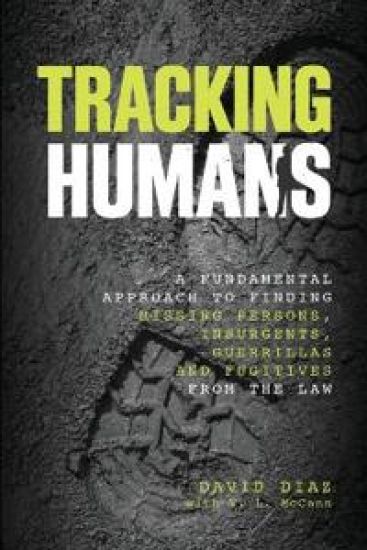
Tracker. The very word evokes images of buckskin-clad braves crouching over the ground, carefully studying the signs before them—a part of history. But the modern world has not put behind it the need for the earthy business of tracking. Such skills are still routinely used by the military, rescue personnel, and law enforcement, as well as by hunters and people living at subsistence level throughout the world. Tracking Humans is the ultimate authoritative guide to this most complex pursuit. A great resource for military, law enforcement, and rescue professionals, Tracking Humans is also useful for outdoor enthusiasts. Users will find it invaluable as an on-site manual to assist in any ongoing search.Unlike many tracking manuals, this guide focuses on tracking humans, whether they're enemy combatants or lost children. Author David Diaz explains what it takes to be an expert tracker, from the physical stamina to the focus and perception necessary to do the job correctly. He explains the tools of the tracker and presents essential safety tips every tracker should know. Tracking Humans is an important tool for anyone dealing with missing persons—it could be an essential lifesaver.
Examine alternative strategies to resolving important Latino social issues! Latino Social Policy: A Participatory Research Model examines the failure of traditional research methods to address major social needs in Latino communities, promoting instead a participatory/action approach to research that is sociallyand scientificallymeaningful. Experts from a variety of disciplines focus on nontraditional strategies that engage community residents in community-research projects, shortening the distance between the researcher and the subject. This unique book recounts lessons learned on conducting Participatory Action Research (PAR) in Latino communities using techniques based on anthropology, education, community health and evaluation, and urban planning. Latino Social Policy: A Participatory Research Model addresses non-traditional methods of reducing the tension between the reality of interaction with the subject community and the academic training structures used by researchers. The book promotes a new vision and practice of research design in which the subject is central to the process, advocating a participatory approach to produce qualitatively different research based on community identified problems and needs. Contributors examine the value of integrating local knowledge, language, and culture into the methodological design, the ethics of conducting research in Latino communities, and the internal conflicts Chicana/o researchers face within their profession and in the field. Topics addressed in Latino Social Policy: A Participatory Research Model include: community health and Central Americans in Los Angeles ethnography and substance abuse among transnational Mexican farmworkers identity and field research in Mexico the Latino Coalition for a New Los Angeles (LCNLA) researcher/community partnerships and much more!Latino Social Policy: A Participatory Research Model includes case studies, ethnographies, and vignettes that illustrate participatory approaches and outcomes in Latino research. The book is equally valuable as a textbook for academics and students working in the social sciences, public policy, and urban planning, and as a professional guide for community leaders and organizations interested in developing research partnerships.
Examine alternative strategies to resolving important Latino social issues! Latino Social Policy: A Participatory Research Model examines the failure of traditional research methods to address major social needs in Latino communities, promoting instead a participatory/action approach to research that is sociallyand scientificallymeaningful. Experts from a variety of disciplines focus on nontraditional strategies that engage community residents in community-research projects, shortening the distance between the researcher and the subject. This unique book recounts lessons learned on conducting Participatory Action Research (PAR) in Latino communities using techniques based on anthropology, education, community health and evaluation, and urban planning. Latino Social Policy: A Participatory Research Model addresses non-traditional methods of reducing the tension between the reality of interaction with the subject community and the academic training structures used by researchers. The book promotes a new vision and practice of research design in which the subject is central to the process, advocating a participatory approach to produce qualitatively different research based on community identified problems and needs. Contributors examine the value of integrating local knowledge, language, and culture into the methodological design, the ethics of conducting research in Latino communities, and the internal conflicts Chicana/o researchers face within their profession and in the field. Topics addressed in Latino Social Policy: A Participatory Research Model include: community health and Central Americans in Los Angeles ethnography and substance abuse among transnational Mexican farmworkers identity and field research in Mexico the Latino Coalition for a New Los Angeles (LCNLA) researcher/community partnerships and much more!Latino Social Policy: A Participatory Research Model includes case studies, ethnographies, and vignettes that illustrate participatory approaches and outcomes in Latino research. The book is equally valuable as a textbook for academics and students working in the social sciences, public policy, and urban planning, and as a professional guide for community leaders and organizations interested in developing research partnerships.
"Africa belongs to the Africans; the sooner they take it back the better. But--a country also belongs to those who feel at home in it. Perhaps it may be that love of Africa the country will be strong enough to link people who hate each other now. Perhaps..." Going Home is Doris Lessing's powerful nonfiction memoir of her first journey back to Africa, the land in which she grew up and in which so much of her emotion and her concern are still invested. Returning to Southern Rhodesia in 1956, she found that her love of the country had remained as strong as her hatred of the idea of "white supremacy" espoused by its ruling class. Going Home evokes brilliantly the experience of the people, black and white, who have shaped and will shape a beloved country. In this unflinching work of social commentary, Lessing explores the charged landscape of a nation on the brink: A Raw Portrait of Colonial Africa: Journey with Lessing back to 1956 Southern Rhodesia, a land she loves, ruled by a system of racial inequality she despises. Incisive Social Commentary: Witness through Lessing's sharp, observant eye the daily realities of apartheid and the rigid structure of white supremacy. A Personal Memoir: A deeply personal account of returning to the place that shaped her, grappling with a complex sense of home, identity, and belonging. The Human Experience: Lessing evokes the lives of both black and white people, caught together in a system that pits them against each other, in a country beloved by all.