Kirjailija
David Dobson
Kirjat ja teokset yhdessä paikassa: 153 kirjaa, julkaisuja vuosilta 1986-2025, suosituimpien joukossa Scottish-Flemish Links, 1100-1850. Vertaile teosten hintoja ja tarkista saatavuus suomalaisista kirjakaupoista.
153 kirjaa
Kirjojen julkaisuhaarukka 1986-2025.
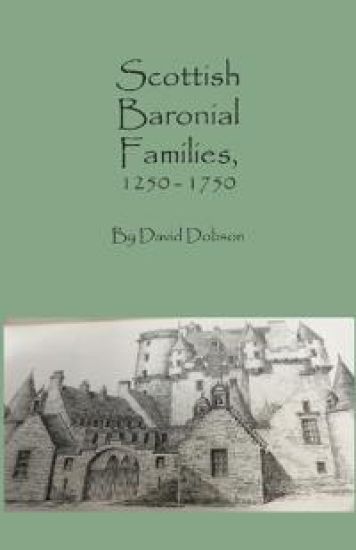
From the 11th century onwards, Scottish kings increasingly favored the feudal system as a method of ruling and controlling the kingdom. These baronies were supervised by lords known as barons, whose function included ensuring that the king's laws operated within the baronies, collecting taxes, maintaining a Barony Court where local justice was administered, and providing the king with knights and men when required.For this work, Mr. Dobson has traced the origin and line of descent of nearly 1,000 Scottish baronies and baronetcies, including some whose progeny eventually moved to the Americas. Mr. Dobson's principal source was the Register of the Great Seal of Scotland from about 1320. The work incudes a list of sources and an appendix of scots-Irish baronetcies established in Ireland and in the Americas.
Scottish Soldiers in Colonial America. Consolidated Edition. In Two Volumes. Volume II
David Dobson
Clearfield
2024
pokkari
Between 1997 and 2024, Clearfield Company published the eight-volume series, Scottish Settlers in Colonial America, by David Dobson. We are delighted to present these books in a new, fully-indexed, consolidated edition in two volumes. Each volume contains an index of names, enabling researchers to identify every person named in the soldier descriptions--spouses, children, parents, ship captains, and so on--not just the soldiers themselves. Included in Volume II is a detailed list of Scottish regiments that were stationed in colonial America that originally appeared in Part Eight. The Appendix in Volume II contains all the "American" entries from the author's 2021 book, Scottish Soldiers in Europe and America, 1600-1700, which was published separately from the colonial America series.

In 1698 Presbyterianism became the established form of church government in Scotland, and those people who wished to retain Episcopacy formed their own congregations. As a result, two distinct Episcopalian churches developed: the Qualified Episcopal Church, which used the English liturgy and practices and employed Anglican clergy; and the other, which retained the Scottish Episcopal practices.In Dundee both churches existed and retained their independence until the early 19th century. The existence of records of baptisms, marriages, and deaths for Episcopalians are virtually non-existent in Dundee until around 1810. To identify who were members of the churches it has been necessary to use other sources, such as the vestry records and financial records, where available. The outcome of that effort is this partial compilation, which cites many, though not all, members of the church during the period 1715 to 1835. This book is overwhelmingly based on records in St. Paul's Cathedral and in the Dundee City Archives.
Scottish soldiers could be found in the Americas during the 17th century, some in the service of England, others in the service of the Netherlands or other European powers. In the mid-18th century, the British government raised Highland regiments to fight in America during the Seven Years War (1756-1763), known in America as the French and Indian War. The allocation of land to former military personnel in the aftermath of that war was a major incentive to settle.With the outbreak of the American Revolution, former soldiers were recalled for duty in Loyalist regiments by the British government. After the war, large numbers of these soldiers were settled in Nova Scotia, Prince Edward Island, New Brunswick, Ontario, and Quebec. Scottish Soldiers, thus, played an important role in settling the British colonies in the Americas.
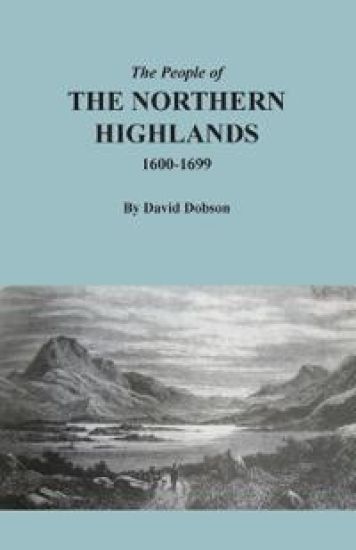
This book identifies many of the people of the counties of Caithness, Sutherland, and Inverness-Shure during the 17th century. The region mostly lies west and north the Great Glen apart from a portion of Inverness-shire which lies east of Lochs Lochy, Oich, and Ness. The main clans or families during the 217th century were Sinclairs, Mackays, Sutherlands, McLeods, Rosses, Stewarts, McKenzies, Munros, Urquharts, Frasers, McDonnells, Chisholms, MacPhersons, McGillivrays, Davidsons, McKinnons, MacDonalds, McLeans, Camerons, Gunns, and Roses.Migration from the Northern Highlands was initially small-scale, apart from mercenaries who were recruited to fight for Scandinavia and the Netherlands, many of whom settled there. The Wars of the Three Kingdoms, 1638-1651, led to the transportation of Scottish prisoners of war, banished to the English colonies in the Caribbean, notably Barbados, or to Virginia and New England; they can be identified by their distinctive local surnames.
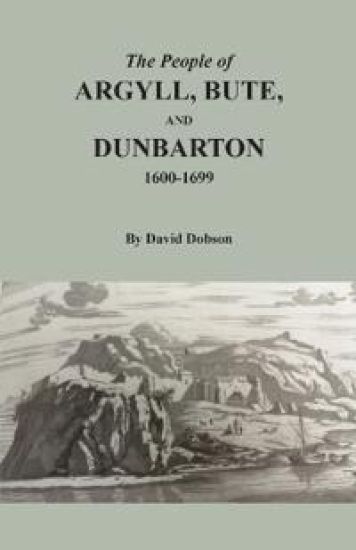
This book concentrates on the people of Argyll, Bute, and western Dunbartonshire during the 17th century. This region lies on the west coast of Scotland between the Firth of Clyde in the south to the Sound of Arisaig and Lochiel in the north. Clans located here were the Campbells, Lamont, McIntyres, McGregors, McEwan, McCorquadale, McMillan, Malcolms or MacCollums, McLachlan, and Macleans. This book is largely based on Documents located in the National Records of Scotland in Edinburgh, including those of the Argyll Sheriff Court, church records, the Register of the Privy Council of Scotland, Sasines (property records), deeds, and military rolls. This work provides evidence of 17th-century links from Argyll with Ireland, Nova Scotia, New England, New Jersey, Jamaica, and Barbados. These early links led to significant emigration to Jamaica and North Carolina in the 18th century.
This consolidated edition brings together all ten Parts of David Dobson's series, Irish Emigrants in North America. A comprehensive index of names has been added to facilitate the reader's search through all ten Parts. While compiling the series, the author consulted reference material located in archives and libraries in the United States, Ireland, Great Britain, Canada, and the West Indies.Most Irishmen who settled in the Americas in the 17th century arrived as prisoners of war, banished by Oliver Cromwell to islands in the West Indies and other locations from Newfoundland to the Amazon River. In the early 18th century, Presbyterian "Scotch-Irish" began to settle in the North American mainland thirteen colonies. The Irish potato famine of 1846-1851 forced hundreds of thousands of mostly Irish Catholics to seek refuge in North America, as well as in Britain and Australasia. The expansion of transatlantic trade facilitated emigration, as well as Irish soldiers in the British Army who settled permanently throughout the British Empire, especially Canada.
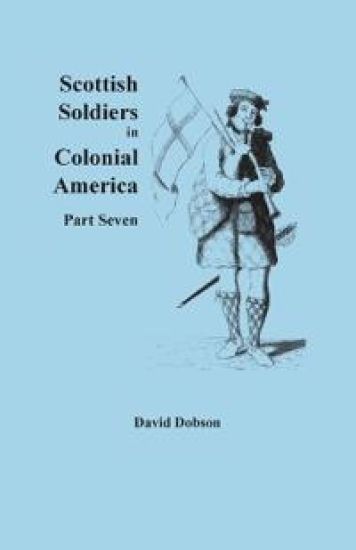
Sottish soldiers could be found in the Americas during the 17th century, some in the service of England, others it the service of the Netherlands or other European powers. In the mid-18th century, the British government raised Highland regiments to fight in America during the Seven Years War (1756-1763), known in America as the French and Indian War. The allocation of land to former military personnel in the aftermath of that war was a major incentive to settle.With the outbreak of the American Revolution, former soldiers were recalled for duty in Loyalist regiments by the British government. After the war, large numbers of these soldiers were settled in Nova Scotia, Prince Edward Island, New Brunswick, Ontario, and Quebec. Scottish soldiers, thus, played an important role in settling the British colonies in the Americas.
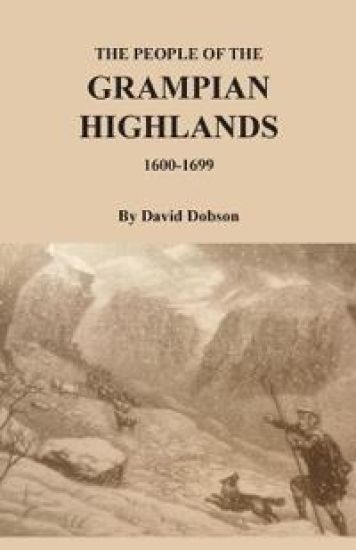
The Grampian Highlands lie in north-east Scotland and stretch from Aberdeenshire, through Kincardineshire, the Braes of Angus, to eastern Perthshire. In the seventeenth century the majority of the population were Gaelic speaking. The region sported only a handful of small burghs, such as Kincardine O'Neill or Fettercairn, with mot people dispersed throughout the region, mainly in fermtouns or isolated crofts, and employed in agriculture, notably cattle rearing.The Grampian Highlands were mostly controlled by landowners such as the Earl of Aboyne or the Earl of Airlie, or heads of families or clans such as Forbes, Gordon, Farquharson, Burnett, Irvine, Douglas, Lindsay, Carnegie, Ogilvie, Spalding, Stewart, and Robertson. These families were generally Royalist and supporters of the House of Stuart, notably in the Jacobite Wars of 1689, 1715, and 1745.Most seventeenth-century Highlanders, however, were Protestants (Presbyterian and Episcopalian), with a few Roman Catholics in remote glens, such as around Braemar. Emigration from the Grampian Highlands did not occur until the early eighteenth century, apart from prisoners of war banished to the Plantations.
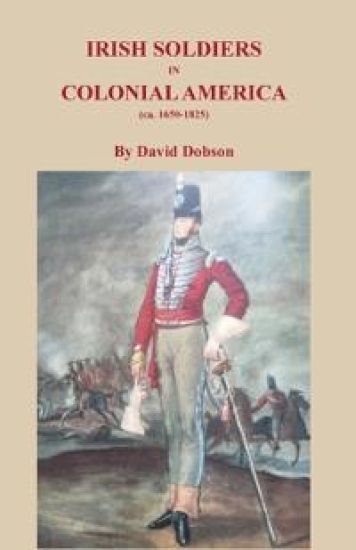
This volume attempts to identify many of the Irish soldiers in the British colonies in North America and the Caribbean from around 1650 until 1825. Before 1800 Ireland was garrisoned mainly by British regiments, through new regiments were raised in Ireland, such as the Royal Regiment of Foot of Ireland and the Inniskilling Regiment.Irish settlers in colonial America were recruited into local militias, such as the Virginia Regimnet or the Montserrat Militia, which are identified in this book. During the American Revolution, people of Irish origin could be found in both Loyalist and Patriot units, including the "Volunteers of Ireland". The Loyalist Claims reports identify Irish fighting men in the Revolution.Between 1789 and 1815 Britain was at war with Napoleon's France, necessitating an expansion of the British Army. In the aftermath of the Battle of Waterloo the British government settled substantial numbers of demobilized soldiers, including Irishmen, in Canada. From about 1780 onwards the British regiments enlisted at least one-third of their recruits in Ireland; this increased to about 40% by the early 19th century owing to demand from the British Army and the East India Company.
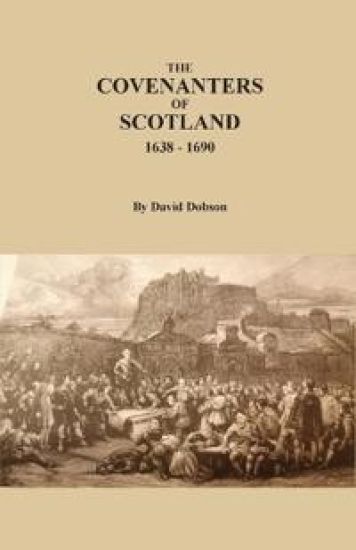
The Wars of the Covenant covered the years between 1638 and 1651, when Scotland and England were two independent countries, though both were subject to King Charles I. The cause of the Covenanter movement lay in the attempts of the Stuart Kings to impose Anglicanism on a basically Presbyterian Church of Scotland and to make the Stuart kings head of the Church of Scotland in line with their position in the Church of England.In 1638 a National Covenant was subscribed to throughout Scotland, which demanded that general assemblies and parliaments be free of royal control. Charles duly raised an army in England to subdue the Scots. After many military skirmishes and battles both in Scotland and in northern England, in 1647 King Charles I surrendered to the Scottish Army, which handed the king over to Oliver Cromwell. King Charles I was executed in London. England became a republic while Scotland chose to remain a kingdom. Charles's son returning from exile in the Netherlands, was crowned at Scone as King: Charles II of Scotland. In response, Cromwell's army invaded Scotland and defeated the Scottish Army of the Covenant in 1650. Thousands of Scots were taken prisoner, and may were transported for sale to the plantations or colonies in America and the West Indies. King Charles II escaped to exile in Holland, where he remained until the Restoration of 1660.In 1685 King Charles II was succeeded by his brother as King James VII of Scotland and King James II of England and Ireland. King James, however, was a Catholic--something unacceptable to the Protestants of England and of Scotland. In 1689 the Scots Parliament offered the crown to William of Orange and his wife Mary Stuart. This was opposed by followers of King James II, and his Jacobite Army clashed with a government army in 1689. This, and the Battle of the Boyne in Ireland in 1690, ended the rule of the Stuart kings.
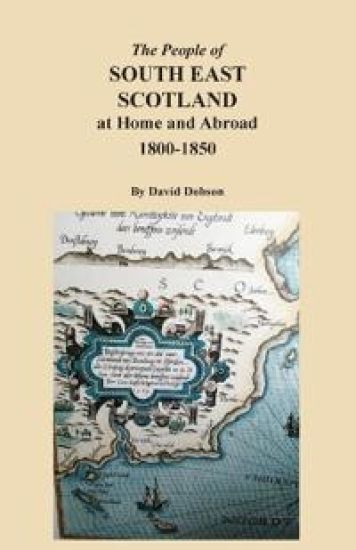
The People of South East Scotland at Home and Abroad, 1800-1850
David Dobson
Clearfield
2022
pokkari
This work identifies people from the old counties of West Lothian, Mid Lothian, East Lothian, Berwickshire, Roxburghshire, Selkirkshire, and Peeblesshire, now known as Lothian and Borders, for the period 1800 to 1850. The information derives from a wide range of contemporary sources such as court records, newspapers and journals, monumental inscriptions, and documents found in archives. The main families traditionally found in the region, which stretches from the Firth of Forth to the border with England, include Home, Lindsay, Elphinstone, Seton, Dundas, Hamilton, Scott, Elliot, and Douglas.
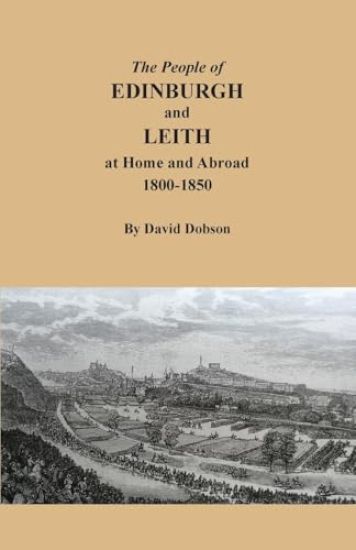
The People of Edinburgh and Leith at Home and Abroad, 1800-1850
David Dobson
Clearfield
2022
pokkari
The second half of the 18th century saw the construction of the New Town of Edinburgh, to the north of the medieval burgh and across the Nor' Loch. During the first half of the 19th century, Edinburgh and Leith remained as two distinct communities. Leith only became a burgh in 1833 and remained so until it was formally integrated into Edinburgh in 1922. This book is based largely on contemporary newspapers and magazines, monumental inscriptions around Edinburgh, and a host of sources found in archives. The entries combine information on people who went abroad as well as those who remained in Edinburgh. The Scottish Enlightenment gave Edinburgh much of its international renown. Edinburgh became the capital of the Scottish professional classes, and it also was the center of publishing, banking, the Church, and insurance companies, as well as distinguished educational establishments. Transportation improvements, such as the Leith Docks, introduction of the railways, and construction of bridges within the city, enabled Edinburgh to expand. During the 19th century, the affluent would abandon the Old Town in favor of the New Town, the middle classes and the skilled workers moved out to the suburbs, while those who had no option remained in the Old Town. Leith functioned as the port of Edinburgh. The import-export trade initially was confined to western Europe but eventually became worldwide. Timber was imported from Scandinavia, grain from the Baltic, and wine from France and Spain, while coal from nearby coalfields was exported to Scandinavia and the Netherlands. Leith was famous for its glass and bottle-making works, brewing, distilling, and warehousing. Leith was also an important shipbuilding center, and many immigrant transports sailed from Leith.
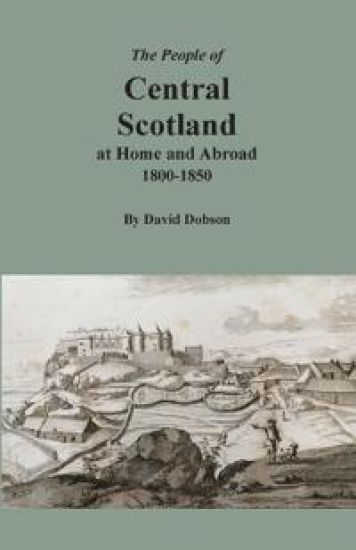
Central Scotland includes the counties of Stirlingshire and neighboring Clackmannanshire, which stretch from Loch Lomond and the Trossachs to the upper reaches of the River Forth. The region is partly in the Highlands and partly in the Lowlands. Most of the early emigration from Central Scotland was by individual or family groups, but in 1773 the Arnprior Emigration Society formed by farmers in west Stirlingshire organized an emigration to Vermont. In the early 19th century three other emigration societies in Stirlingshire--Alloa in 1817, Balfron in 1821, and Deanston in 1821--organized groups of emigrants bound to Upper Canada.The entries in this work, to some extent, enable family historians in the Americas, Australasia, and other locations to link with their kin who remained in Scotland. The Statistical Account of Scotland (OSA), compiled between 1791 and 1799, and the New Statistical Account of Scotland (NSA), compiled between 1832 and 1845, are especially helpful for understanding Scottish society of the period. These can be consulted in major libraries, such as the National Library of Scotland, or online.In the late 18th century, the regional economy was based on farming, textiles, and mining. The existence of iron and coal enabled industrialization to occur relatively early. Coalmining rapidly expanded due to domestic demand and industrial expansion, especially the adoption of the Bolton and Watt steam engines in Scottish textile mills. Supplies of flax were imported from the Baltic, and the linen manufactured became an important export for Central Scotland. The nearly simultaneous Agricultural Revolution caused the merging of small farms, creating a rural labor surplus that either moved to the burgeoning factory towns in the Lowlands or emigrated.
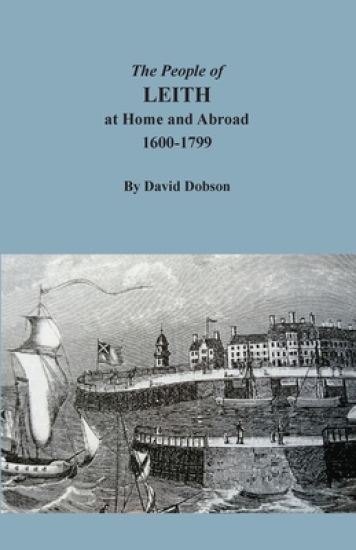
Leith lies on the south shore of the Firth of Forth, a few miles north of Edinburgh. Since the 12th century it has been the main port serving Edinburgh and the Lothians. This book identifies many of Leith's population during the 17th and 18th centuries and is based on a wide range of sources, both manuscript and published, such as testaments, sasines (property records), services of heirs, court books, port books, monumental inscriptions, register of deeds, apprenticeship records, burgess rolls, government records, journals, and newspapers.During the early modern period Leith traded with ports around the Baltic, the North Sea, and the Mediterranean, as well as with the Americas. Its seamen, in Dutch or English service, could be found as far away as Asia or the Americas. Leith was a major importer and distribution center of French and Spanish wine from the 16th century onwards. Leith also had a thriving whaling industry, and shipbuilding, dependent upon timber from Norway, was another traditional industry. However, the emphasis of the economy was on seafaring. Leith was the single most important port in Scotland until the rise of trans-Atlantic trade enabled the Clyde ports of Glasgow-Greenock to become pre-eminent.