Kirjojen hintavertailu. Mukana 12 595 353 kirjaa ja 12 kauppaa.
Kirjailija
David E. Johnson
Kirjat ja teokset yhdessä paikassa: 34 kirjaa, julkaisuja vuosilta 1995-2026, suosituimpien joukossa Recommended Research Priorities for the Qatar Foundation's Environment and Energy Research Institute. Vertaile teosten hintoja ja tarkista saatavuus suomalaisista kirjakaupoista.
Nidhi Kalra; Obaid Younossi; Kristy N. Kamarck; Sarah Al-Dorani; Gary Cecchine; Aimee E. Curtright; Chaoling Feng; Aviva Litovitz; David E. Johnson; Mohammed Makki; Shanthi Nataraj; David S. Ortiz; Parisa Roshan; Constantine Samaras
The Qatar Foundation is establishing a national research institute to conduct and collaborate on applied research in energy, environment, and water issues, the Qatar Environment and Energy Research Institute. This book recommends research priorities for the new institution and reports on a survey of relevant research institutions in the region.
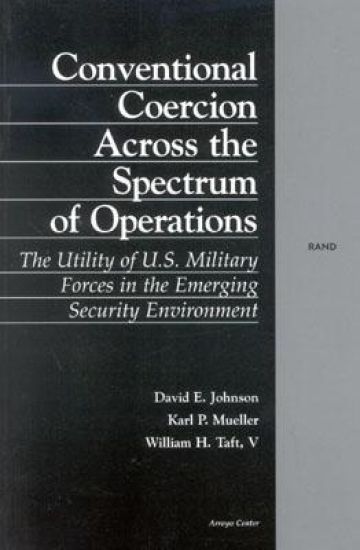
The raison d'etre for any military is to deter an adversary from acting inimically to a nation's interests or, if deterrence fails, to coerce him into ceasing the actions. After defining terms and reviewing the literature on coercion, this report looks at the utility of the military as a coercive instrument. The authors analyze cases that provide insights into conventional coercion. They conclude by stressing the unchanged nature of coercion and that only a thorough understanding of our adversaries, and of our own will and capabilities, will yield a successful coercive strategy. (DS)
The authors of this report examine what happened in the crucial 1863 Battle of Gettysburg and create an alternative history by examining what could have happened if a few key technologies that were available for military use had been used in this battle. Would the outcome have been different if the Union and Confederate armies had deployed these technologies?
This report describes how the Israel Defense Force evolved to meet an adaptive and determined hybrid adversary during its wars in Gaza. It then draws a series of lessons from the Israeli experience for the U.S. Army and the joint force: from the importance of armored vehicles and active protection systems to the limitations of airpower in urban terrain and of conventional militaries to deter nonstate actors.
The development of raw land into buildable lots can be filled with opportunities as well as pitfalls. In Residential Land Development Practices, Fourth Edition, Johnson draws on more than 40 years of experience as an engineer, consultant, and lecturer to prepare an easy-to-use guide to the basic concepts of land planning, subdivision design, and residential standards.This edition has been updated with five new chapters reflecting the social and economic changes in the last ten years. The new material includes sustainable land development concepts; the municipal government's changing landscape; the developer, consultant, regulator relationship; due diligence practices; and land development as part of the engineering curriculum.Added to the core topics of bidding, financing, marketing, project management, and field operations, this new edition provides a comprehensive guide for land development beginners or seasoned professionals to better understand the complexities of the residential land development business.
David E Johnson; Agnes Gereben Schaefer; Brenna Allen; Raphael S Cohen; Gian Gentile; James Hoobler; Michael Schwille; Jerry M Sollinger; Sean M Zeigler
Gian Gentile; David E. Johnson; Lisa Saum-Manning; Raphael S. Cohen; Shara Williams; Carrie Lee; Michael Shurkin; Brenna Allen; Sarah Soliman; James L. Doty
Provides a historical analysis of the ways in which militaries have deployed light and mechanized infantry with armored forces during close urban combat in order to to identify the advantages and costs of this warfighting approach and inform how the Army might confront foes in complex, urban environments in the future.
Arc pair grammar is a new, extensively formalized, theory of the grammatical structure of natural languages. As an outgrowth of relational grammar, it constitutes a theoretical alternative to the long-dominant generative transformational approach to linguistics. In this work, David Johnson and Paul Postal offer the first comprehensive presentation of this theoretical framework, which provides entirely new notions of all the basic concepts of grammatical theory: sentence, language, rule, and grammar. Originally published in 1981. The Princeton Legacy Library uses the latest print-on-demand technology to again make available previously out-of-print books from the distinguished backlist of Princeton University Press. These editions preserve the original texts of these important books while presenting them in durable paperback and hardcover editions. The goal of the Princeton Legacy Library is to vastly increase access to the rich scholarly heritage found in the thousands of books published by Princeton University Press since its founding in 1905.
What can the United States learn from other militaries about how better to prepare for full-spectrum operations - simultaneous offensive, defensive, and stability or civil support operations - and deployments? The authors examine the militaries of China, France, the UK, India, and Israel to identify different approaches to readiness, adaptability, and operational issues, including using subject-matter experts to improve training for specific deployments * using staff training to prepare forces for multiple contingencies; allowing combat training centers to focus on foundational skills; and, preparing units for a specific operational environment prior to deployment. The authors also examine how the United States, France, and the UK prepare for and conduct train, advise, and assist (TAA) missions, finding that the three countries employ significantly different approaches to staff selection, TAA deployments, staff training, and career progression.
Although airpower capabilities have improved dramatically in the past decade, the joint warfighting potential offered by these capabilities is not being fully realized. After describing several alternative options for improving the effectiveness of air and ground fires and maneuver, the authors propose a new joint warfighting concept and demonstrate its potential to increase effectiveness during major combat.
The authors find that medium-armored forces fare poorly against competent, heavily armored opponents, and that the Stryker and Future Combat Systems will not fill the void created by the retirement of the M551 Sheridan. An analysis of the performance of medium-armored forces across the range of military operations since World War I yields insights with significant implications for U.S. Army decisions about fielding these units in the Future Force.
Posing a powerful challenge to dominant trends in cultural analysis, this book covers the whole history of the concept of culture, providing the broadest study of this notion to date. Johnson and Michaelsen examine the principal methodological strategies or metaphors of anthropology in the past two decades (embodied in works by Edward Said, James Clifford, George Marcus, V. Y. Mudimbe, and others) and argues that they do not manage to escape anthropology's grounding in representational practices. To the extent that it remains a practice of representation, anthropology, however complex, critical, or self-reflexive, cannot avoid objectifying its others. Extending beyond a critique of anthropology, the book reads the twinned notions of the human and culture across the long history of the human sciences broadly conceived, including anthropology, cultural studies, history, literature, and philosophy. Although there is no chance, they argue, for a "new" anthropology that would not repeat the old anthropology's problem of disciplining the other, they also recognize that there may be no way out of anthropology. We are always writing, thinking, and living in anthropology's wake, within its specific compass or horizon. Moreover, they demonstrate, we have been doing so for a very long time, since at least the beginning of the institution of philosophy in Plato and Aristotle.
Properly planned and visualized, large-scale developments can be successfully constructed, whether as master planned communities, planned unit developments, or new towns. Fundamentals of Land Development provides an in-depth approach to the design, planning, and development of large land areas into comprehensively designed communities. This book provides in-depth discussions of the full range of development tasks involved in any large development project, from site and land use selection, market analysis, preparing the land use plan and impact statements, to getting approval from the municipality and community, permitting and approval, scheduling and cost management, and the basics of engineering systems and design. Developers and other stake-holders will find guidance on such issues as: • How real-world development is driven by profits, and how team members can maximize profits while developing creatively and responsibly • Site selection and acquisition • Entering the growing business of retirement (active adult) community development Illustrated with real-world case studies drawn from the authors own experience, Fundamentals of Land Development is a practical manual for developers looking to improve the profitability of their projects and gain a better understanding of what all team members undertake in a project of this size and complexity.
The relative roles of U.S. ground and air power in major operations and campaigns have shifted since the end of the Cold War. To assess this shift (i.e., between the Army and Air Force, respectively), this executive summary discusses four of the five post-Cold War conflicts analyzed in the larger monograph: Iraq (1991), Kosovo (1999), Afghanistan (2001), and Iraq (2003).
The Army Medical Department (AMEDD) Transformation Workshop (ATW) V is described in this report. The workshop continued the assessment, begun in ATWs I-IV, of the medical risks associated with emerging Army operational concepts and the capacity of the AMEDD to mitigate these risks. The results of the workshop will provide information valuable in designing the medical system at echelons above the unit of action.
A series of Army Medical Command workshops assessed the effect of the Future Force doctrine on the Health Service Support system's ability to deliver medical care on the battlefield. The authors summarize these assessments and present conclusions based on the scenarios and the data gathered during the workshops.
This report documents the Army Medical Department's (AMEDD's) process of identifying and addressing medical issues related to the Army's transformation to the Future Force. It describes the AMEDD Transformation Workshop (ATW) IV, conducted at the RAND Corporation Washington office in February 2004, and it includes an analysis and discussion of the workshop results.
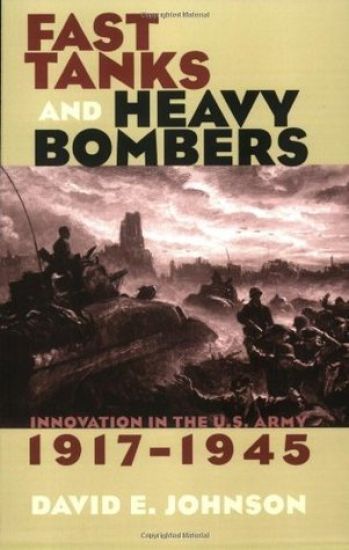
The U.S. Army entered World War II unprepared. In addition, lacking Germany's blitzkrieg approach of coordinated armor and air power, the army was organized to fight two wars: one on the ground and one in the air. Previous commentators have blamed Congressional funding and public apathy for the army's unprepared state. David E. Johnson believes instead that the principal causes were internal: army culture and bureaucracy, and their combined impact on the development of weapons and doctrine. Johnson examines the U.S. Army's innovations for both armor and aviation between the world wars, arguing that the tank became a captive of the conservative infantry and cavalry branches, while the airplane's development was channeled by air power insurgents bent on creating an independent air force. He maintains that as a consequence, the tank's potential was hindered by the traditional arms, while air power advocates focused mainly on proving the decisiveness of strategic bombing, neglecting the mission of tactical support for ground troops. Minimal interaction between ground and air officers resulted in insufficient cooperation between armored forces and air forces. Fast Tanks and Heavy Bombers makes a major contribution to a new understanding of both the creation of the modern U.S. Army and the Army's performance in World War II. The book also provides important insights for future military innovation.