

Kirjailija
David E. Wellbery
Kirjat ja teokset yhdessä paikassa: 4 kirjaa, julkaisuja vuosilta 1996-2026, suosituimpien joukossa Die schönste Geschichte der Welt. Vertaile teosten hintoja ja tarkista saatavuus suomalaisista kirjakaupoista.
4 kirjaa
Kirjojen julkaisuhaarukka 1996-2026.
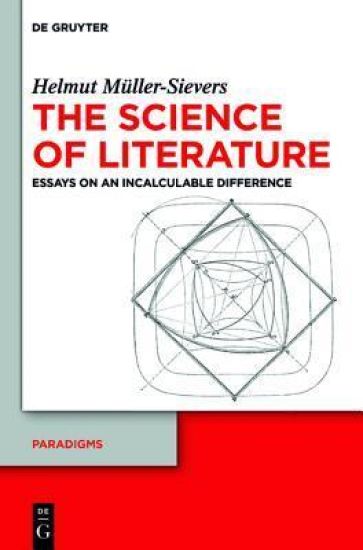
One of the most contentious questions in contemporary literary studies is whether there can ever be a science of literature that can lay claim to objectivity and universality, for example by concentrating on philological criticism, by appealing to cognitive science, or by exposing the underlying media of literary communication. The present collection of essays seeks to open up this discussion by posing the question’s historical and systematic double: has there been a science of literature, i.e. a mode of presentation and practice of reference in science that owes its coherence to the discourse of literature? Detailed analyses of scientific, literary and philosophical texts show that from the late 18th to the late 19th century science and literature were bound to one another through an intricate web of mutual dependence and distinct yet incalculable difference. The Science of Literature suggests that this legacy continues to shape the relation between literary and scientific discourses inside and outside of academia.
This study analyses the emergence of aesthetic theory in eighteenth-century Germany in relation to contemporary theories of the nature of language and signs. As well as being extremely relevant to the discussion of literary theory, this perspective casts much light on Enlightenment aesthetics. The central text under consideration shows that the extended comparison of poetry and the plastic arts contained in that major work of aesthetic criticism rests upon a theory of signs and constitutes a complex and global theory of aesthetic signification. His analysis of Laocoon is preceded by chapters which establish the underlying structure and influence of the Enlightenment metasemiotic - that is, the place and function of the sign concept in the culture of the early eighteenth century. As an important reinterpretation of Lessing's Laocoon and of the development of German aesthetic theory, this book will be of special interest to students and scholars of German literature. Moreover, as a significant chapter in the history of semiotics, it will be read with profit by all those concerned with the history of literary criticism and aesthetic theory.
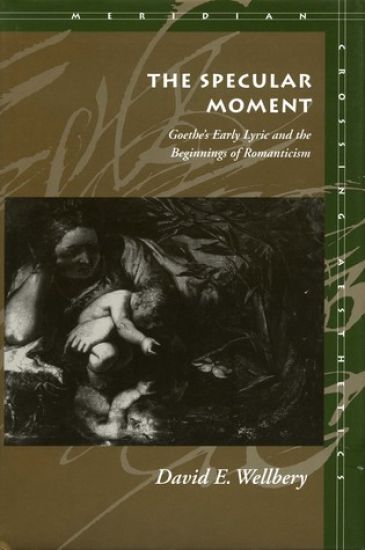
In this book, the author has three aims: (1) to elaborate an interpretation of Goethe's lyric poetry adequate to the intricacies of its subject matter; (2) to demonstrate the significance of that poetry to the development of European Romanticism; (3) to establish a method of inquiry that weaves together the major strands of theoretical reflection in modern literary studies. Remarkably enough, no study of Goethe's early lyric poetry has been published in English in the last fifty years. But the reading of this poetry the author presents is not intended merely to introduce an English readership to a major body of work; rather, the book delineates for the first time in any language an account of the symbolic network or organizing myth that underlies Goethe's individual poems. This marks a decisive break with the previous research on Goethe, which has tended to view his poetry as the expression of occasional experiences. The author shows, on the contrary, that Goethe's lyric work circles around a core set of problems and figures, that it evinces a systematic coherence until now unperceived despite an enormous interpretive literature. In the literature on European Romanticism, consideration of the German contribution has typically been restricted to the theoretical work of the Schlegel brothers and Novalis, and philosophers such as Schelling and Hegel. The author contends that the ideas they articulated were first worked through in Goethe's astonishingly bold poetic experimentation. In this sense, Goethe's lyric can be seen to constitute one of Romanticism's earliest and most significant beginnings. In addition to its interpretive and historical dimensions, The Specular Moment pursues a methodological aim. The author has combined the insights of linguistics, semiotics, psychoanalysis, social history, and philosophy in such a way that they yield a powerful and supple instrument of analysis. Thus, the book offers a fully developed contribution to the contemporary debate on method, a contribution that argues for interdisciplinarity, descriptive precision, controlled conjecture, and, above all, respect for literary complexity and nuance.