Kirjojen hintavertailu. Mukana 12 152 606 kirjaa ja 12 kauppaa.

Kirjailija

David Ebony

Kirjat ja teokset yhdessä paikassa: 6 kirjaa, julkaisuja vuosilta 2015-2026, suosituimpien joukossa Julio Larraz. Vertaile teosten hintoja ja tarkista saatavuus suomalaisista kirjakaupoista.

6 kirjaa

Kirjojen julkaisuhaarukka 2015-2026.

Julio Larraz

Julio Larraz

David Ebony; Ariel Larraz

Rizzoli International Publications
2021
sidottu
One of the most important contemporary painters to emerge from Latin America, Julio Larraz (b. 1944, Havana) creates powerful, dreamlike paintings that reflect the influence of painters from Velazquez to Sargent and Hopper, and Surrealist artists like Dali and Magritte. A unique visionary, Larraz produces work that has been described by some as mind-bending and playful, using a refreshingly wide range of subjects from still life to Cuban cultural imagery, such as bullfights, men in white linen suits, and maritime scenes. He reveals imaginary worlds, with deeply satirical, ambiguous, and multilayered themes, in which he often alludes to political corruption, class structure, and human foibles. This is the largest and most comprehensive book to date, with 200 paintings, 50 works on paper, and 10 sculptures, ranging from the 1960s to the present, accompanied by an essay by David Ebony that situates Larraz s work within the Latin American painting tradition.
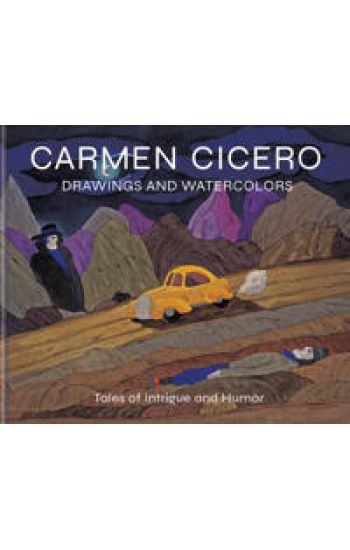
Carmen Cicero: Drawings and Watercolors

Carmen Cicero: Drawings and Watercolors

David Ebony

ABBEVILLE PRESS INC.,U.S.
2025
sidottu
The first book devoted to the enigmatic and thought-provoking drawings and watercolours of Carmen Cicero — in a handsome oversize format. Carmen Cicero (b. 1926) is now in the midst of his seventh decade at the cutting edge of contemporary art. His works of the 1950s — collected by the Museum of Modern Art, the Guggenheim, the Whitney, and other major museums — combined the gestures of Abstract Expressionism with the complex emergent forms of Surrealist automatism. In the 1960s, Cicero was one of the first members of the American avant-garde to return to figuration, pursuing, through the 1960s and 1970s, a style he called “figurative expressionism.” This evolved into his more recent “visionary” mode, in which he depicts, with a startling clarity, mysterious scenes animated by multiple contradictory feelings — unfulfilled desires, jealousy, despair, and isolation — as well as a generous dose of humour. Throughout his entire artistic evolution, drawing and watercolour have remained central to Cicero’s practice, allowing him to body forth his fertile imaginings with a vivid immediacy. This oversize volume presents a generous selection of drawings and watercolours from every stage of Cicero’s career; it is printed on a quality uncoated stock that recalls the artist’s favoured Arches watercolour paper, and many of the drawings are reproduced at actual size. An essay by the noted critic David Ebony brings out the humour, pathos, and consummate skill of Cicero’s art, and a full apparatus — including an artist’s statement, chronology, and bibliography — further add to the value of this work, which will be an essential addition to any library of American art.
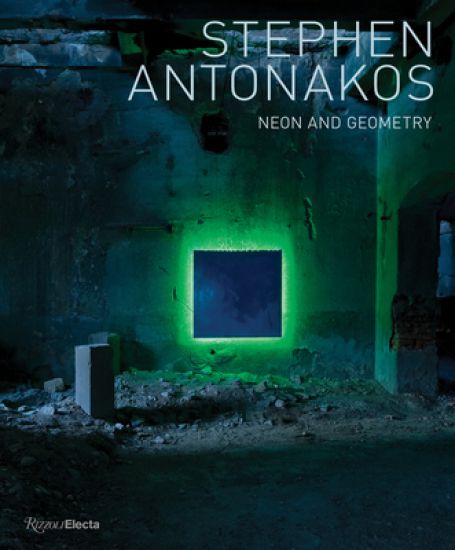
Stephen Antonakos

Stephen Antonakos

David Ebony

RIZZOLI INTERNATIONAL PUBLICATIONS
2023
sidottu
The first major retrospective of the preeminent Greek-born American artist, who was a pioneer in the use of neon in the realm of fine art. Prolific multimedia artist Stephen Antonakos (1926 2013) is best known for his resplendent abstract neon sculptures instantly recognizable for their vibrant colors and crisp geometry. Along with well-known artists Lucio Fontana, Bruce Nauman, Keith Sonnier, and his compatriot Chryssa, Antonakos brought new perceptual and formal possibilities to the medium of neon. This comprehensive book comprises Antonakos s diverse output of neon, canvases, drawings, travel collages, chapels, and gold works, all of which reflect an abiding concern with illumination, incomplete geometric shapes, and an almost mystical spirituality that is manifest throughout his oeuvre, from his overtly religious pieces to his playful assembled collages from his trips to Greece. His later pieces feature neon lights placed behind painted or gold-leaf panels, often bathing the surfaces and the surrounding space in gold halos like Byzantine icons, a tradition that has long fascinated this extraordinary artist. Author David Ebony provides research on Antonakos as a central figure in the international avant-garde of the 1960s and 70s. He also discusses the artist s Greek heritage and legacy, as well as the spiritual and mystical aspects of his later works.
Larry Poons

Larry Poons

David Anfam; David Ebony; Barbara Rose

Abbeville Press Inc.,U.S.
2020
sidottu
Larry Poons (b. 1937) shot to fame while still in his twenties, on the strength of his “dot paintings,” in which dots or ellipses were meticulously arranged on brightly coloured fields, creating a rhythmic, pulsating effect. But within a few years, Poons first loosened the hard-edged precision of the dot paintings and then abandoned them entirely for an organic mode of abstraction based on vertical drips of flung paint. This marked the beginning of an uncompromising five-decade evolution that has finally led the artist back to a more intimate mode of painting with brushes — and his own hands. At every stage, Poons's career has compelled the attention of critics and, in particular, other artists. This handsome volume, the first full-length biocritical monograph on Poons, reproduces more than 140 of his most important works in full colour, some as spectacular gatefolds. The incisive text — a collaboration between four leading critics and historians — traces the development of the artist’s extraordinary career. Larry Poons is a necessary addition to the library of anyone with an interest in American art.
Emily Mason

Emily Mason

David Ebony; Christina Weyl

Dartmouth College Press
2015
sidottu
With exquisite full-page color reproductions, Emily Mason: The Light in Spring reveals sixty-eight recent canvases along with thirty-two prints, covering Mason’s work with five master printers. David Ebony continues where he left off in his 2006 volume, Emily Mason: The Fifth Element, elaborating on Mason’s prolific career and her influence as a woman artist working in New York for the past sixty years. Christina Weyl contributes an essay on the history and technique of Mason’s experimental approach to printmaking. Together with editor Ani Boyajian, the authors enrich our understanding of Mason as a bold colorist, fearless experimenter, and dynamic historical presence. This book will be a delight for fans of Emily Mason and of art and color in general.