Kirjojen hintavertailu. Mukana 12 502 829 kirjaa ja 12 kauppaa.

Kirjailija

David Elkind

Kirjat ja teokset yhdessä paikassa: 7 kirjaa, julkaisuja vuosilta 1987-2015, suosituimpien joukossa Giants in the Nursery. Vertaile teosten hintoja ja tarkista saatavuus suomalaisista kirjakaupoista.

7 kirjaa

Kirjojen julkaisuhaarukka 1987-2015.

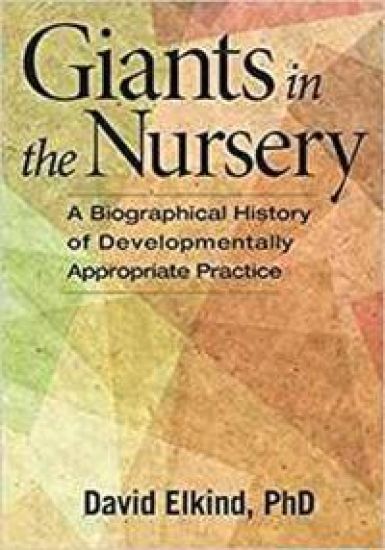
Giants in the Nursery

Giants in the Nursery

David Elkind

Redleaf Press
2015
nidottu
A biographical history of the evolution of Developmentally Appropriate Practice, written by best-selling early childhood author David Elkind, PhD. Examine the evolution of developmentally appropriate practice with this biographical history of early childhood education. This book explores the theory's progression from its beginnings in writings of sixteenth- and seventeenth-century philosophers, its experimental implementation by eighteenth- and nineteenth-century practitioner, to its scientific grounding in contemporary theory and research. Included are biographical sketches and perspectives of eleven philosophical, pedagogical, and theoretical figures - the giants - whose contributions mark turning points in early childhood education.
Parenting on the Go

Parenting on the Go

David Elkind

Da Capo Lifelong
2014
pokkari
Essential parenting advice from one of today's leading psychologists, at your fingertipsWhat is the most treasured resource for families with young children? Time. Between keeping house, shopping, doing chores, and getting everyone to work and school,let alone fitting in family meals, fun activities, and much-needed downtime,being a parent can require major feats of scheduling. While parents don't always have hours to pore over parenting books, they could use short, to-the-point advice on the challenges they confront every day.Now, for today's busy families, child-development expert and bestselling author David Elkind offers Parenting on the Go : an authoritative, accessible guide for parents of infants and young children. Elkind has long been praised for his timely, resonant responses to key child-rearing issues. Here, with characteristic insight and comforting sensibility, he offers practical answers to more than 100 common parenting questions, on topics from A to Z, including: Attention Deficit Disorders Back-to-School Blues Child-Proofing the Computer Empathy in Children Homework Manners and Morals Only Children Sibling Rivalry Time-Outsand much more. Praise for David Elkind" The Power of Play should be considered one of the primers for good parenting.", Chicago Parent "[O]ffers excellent perspectives on children, parents, and culture . . . this powerful book is essential reading.", Library Journal on The Hurried Child "Elkind . . . is a child-study specialist of eminent common sense . . . whom parents would do well to heed.", Publishers Weekly
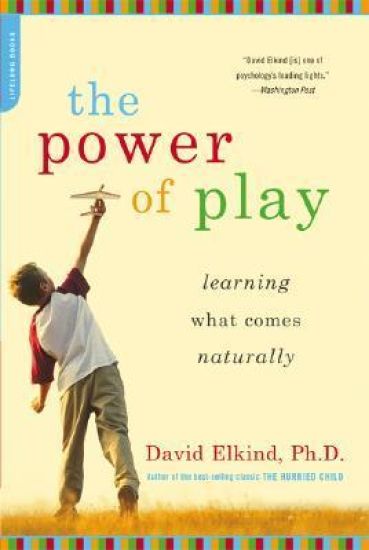
The Power of Play

The Power of Play

David Elkind

Da Capo Press Inc
2007
pokkari
A child development expert emphasizes the importance of imaginative play in preparing a child for social and academic success, demonstrating how creative and spontaneous play enhances healthy mental and social development and sets the stage for later academic learning. Reprint.
The Hurried Child, 25th anniversary edition

The Hurried Child, 25th anniversary edition

David Elkind

Da Capo Press Inc
2006
pokkari
With the first edition of The Hurried Child , David Elkind emerged as the voice of parenting reason, calling our attention to the crippling effects of hurrying our children through life. He showed that by blurring the boundaries of what is age appropriate, by expecting- or imposing- too much too soon, we force our kids to grow up too fast, to mimic adult sophistication while secretly yearning for innocence. In the more than two decades since this book first appeared, new generations of parents have inadvertently stepped up the assault on childhood, in the media, in schools, and at home. In the third edition of this classic (2001), Dr. Elkind provided a detailed, up-to-the-minute look at the Internet, classroom culture, school violence, movies, television, and a growing societal incivility to show parents and teachers where hurrying occurs and why. And as before, he offered parents and teachers insight, advice, and hope for encouraging healthy development while protecting the joy and freedom of childhood. In this twenty-fifth anniversary edition of the book, Dr. Elkind delivers important new commentary to put a quarter century of trends and change into perspective for parents today.
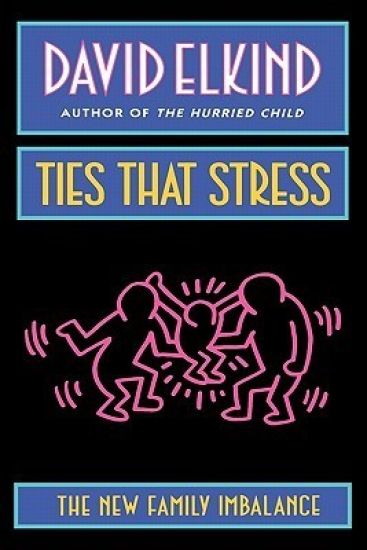
Ties That Stress

Ties That Stress

David Elkind

Harvard University Press
1998
nidottu
What has happened to the American family in the last few decades? And what are these changes doing to our children? David Elkind, renowned child psychologist and author of The Hurried Child, has devoted his career to these urgent questions. This eloquent book puts together all the puzzling facts and conflicting accounts to show us as never before what the American family has become.
All Grown Up And No Place To Go

All Grown Up And No Place To Go

David Elkind

Westview Press Inc
1998
pokkari
Once our society set aside time for adolescents to grow from children to adults, to become accustomed to their expanding bodies and minds. Now the markers that defined passage,differences in dress, behaviour, and responsibilities,have vanished. The institutions that guarded adolescence, such as family and schools, now expect young adults" to deal with adult issues. Those trends leave teens no time to be teens. All Grown Up and No Place to Go spotlights the pressures on teenagers to grow up quickly. The resulting problems range from common alienation to self-destructive behaviour. Quoting teenagers themselves, Elkind shows why adolescence is a time of thinking in a new key," and how young people need this time to get used to the social and emotional changes their new thinking brings. Many of his ideas, such as the imaginary audience" that makes teens so self-conscious, have become seminal in adolescent psychology.Already there are more than 175,000 copies of All Grown Up and No Place to Go in print. In this thoroughly revised edition, Elkind also explores the post-modern family" in which teenagers are growing up. He helps parents and those who work with youth and understand teens in crucial ways, because the root of so many adolescent frictions is the gap between what teenagers need and what our culture provides.
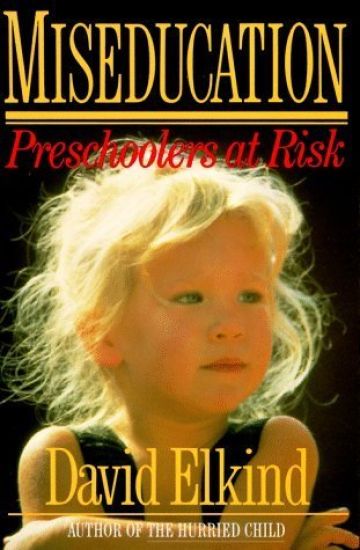
Miseducation

Miseducation

David Elkind

RANDOM HOUSE USA INC
1987
pokkari
David Elkind's new book is designed to help parents avoid the miseducation of young children that is on the increase today. Across the country--in schools and in homes--educational programs intended for school-age children are being misappropriated for the instruction of preschoolers. Books, lectures, and the media propagate the idea that only a "superkid" can grow up to compete successfully in the adult world--thereby encouraging parents to teach infants and young children academic and athletic skills. Yet, there is considerable evidence that early instruction can do lasting harm--that young children subjected to this kind of pressure are, in fact, at psychological and physical risk. Dr. Elkind shows us the very real difference between the mind of a preschool child (how it works) and that of a school-age child. He makes clear how much young children can and do learn when they are presented with developmentally appropriate parenting practices and education. He shows us how healthy education supports and encourages the spontaneous learning process through which young children explore and understand their immediate world, and how miseducation ignores it, attempting to teach the wrong things at the wrong time. And, in turn, we see how early miseducation can cause permanent damage to a child's self-esteem, the loss of the positive attitude a child needs for learning the blocking of natural gifts and potential talents. Finally, Dr. Elkind discusses what parents should look for when deciding upon the initial stages of their children's education and what preschool programs are the most considerate of the individual child. In a special section, he answers the most common questions he's heard from parents.