

Kirjailija
David Ellis
Kirjat ja teokset yhdessä paikassa: 110 kirjaa, julkaisuja vuosilta 1988-2026, suosituimpien joukossa D.H. Lawrence's Non-Fiction Art, Thought, and Genre. Vertaile teosten hintoja ja tarkista saatavuus suomalaisista kirjakaupoista.
110 kirjaa
Kirjojen julkaisuhaarukka 1988-2026.


This book meditates on the nature of biography and the way biographers habitually explain their subjects' loves by reference to psychology, ancestry, childhood experience, social relations, the body, or illness.
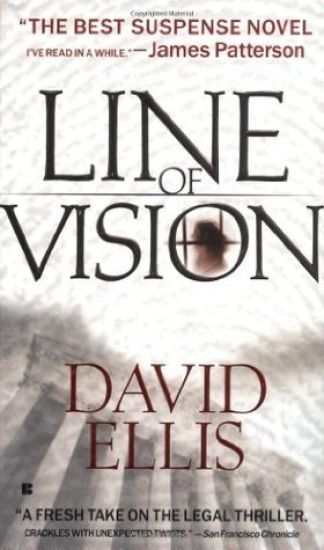
David Ellis's Line of Vision won the 2002 Edgar Allan Poe Award for Best First Novel by an American Author Marty Kalish is a young man suffocating in the heat of an affair with a married woman named Rachel. When Rachel's husband disappears one night, Marty is one of the first to be questioned. With few likely suspects, the police arrest him for murder. We know Marty was outside their home that night. We know he has a motive. We know he's guilty of something. But is it murder? Everything we have learned--about Marty as a man, his affair with Rachel, and the night in question--comes from Marty himself. But as the trial unfolds to a jaw-dropping conclusion, we learn that there is more to the truth than one man's narrow line of vision.
This book documents a quest to determine if a flock of cranes could be trained to follow a truck on a long-distance migration and arrive wild enough to survive after release. This fast-moving, and often humorous, odyssey describes the training of tiny crane chicks and then the truck-led convoy of the grown birds on a bone-jarring, backroad migration over the mountains and across the deserts of Arizona. David Ellis' cranes and his team of unshaven, obsessively dedicated 'craniacs' suffer collisions with powerlines, eagle attacks and close calls with an array of trains, trucks and cars. The mood of this true adventure story varies from playful to mournful as the wonder and harshness of nature imprints the journey's outcome.

Most experts believe that innovation in every aspect of patient care will be nothing less than astonishing as we move into the next century. Technology and the Future of Health Care brings together a remarkable group of health care visionaries who have identified and begun to analyze which trends and technological advances will likely shape and inform the next generation of medicine. From fundamental advances in computing and administration, research, nursing, and patient care delivery to noninvasive surgery, biomolecular therapies, bionics, and beyond, this ground-breaking book offers professional, executive-level insight into topics that until recently existed only in the realm of science fiction.

This book meditates on the nature of biography and the way biographers habitually explain their subjects' loves by reference to psychology, ancestry, childhood experience, social relations, the body, or illness.

Popular though biography is, it has as yet received very little critical attention. What nearly all biographies offer is an understanding of their subjects and an explanation of their behaviour. In this book David Ellis, author of the acclaimed third volume of the Cambridge biography of D H Lawrence, meditates on the nature of biography and the way biographers habitually explain their subjects' lives by reference to psychology, ancestry, childhood experience, social relations, the body or illness. Packed with examples and written in a lively, engrossing style, the aim of the book is to uncover the principles which biographers adopt in their efforts to make sense of others' lives whilst at the same time ensuring that their own narratives remain coherent. In exploring the methods of literary biographers and the ways in which they interpret the material they accumulate - from Dr Johnson to Jean-Paul Sartre - David Ellis is able to make challenging and highly valuable comments on biography in general. Although he chiefly draws on recent lives of writers such as Dickens, Henry James, Flaubert, Virginia Woolf, Sylvia Plath, Graham Greene, George Orwell, W B Yeats and Hemingway, Professor Ellis also considers the biographies of such compelling, non-literary figures as Mozart, Picasso and Cezanne. With their focus on the understanding of other people as the main feature of biography, the informed and often humorous discussions in this book provide the ideal context for appreciating this fascinating literary form.
This text is geared to the Computer-Adaptive Test (CAT) version of the GMAT, which is effective as of October 1997.
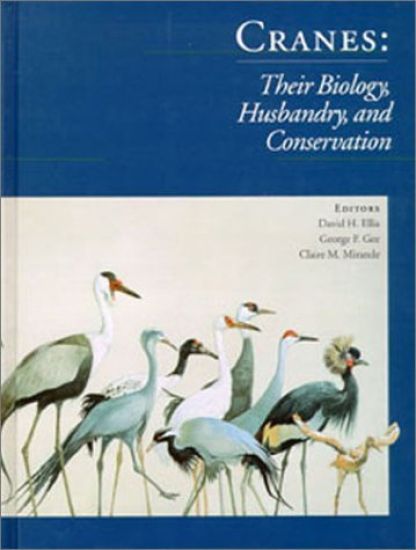
Cranes Their Biology, Husbandry and Conservation
David Ellis; George F. Gee
Hancock House Publishers Ltd ,Canada
1996
sidottu
Topics covered include: Crane Biology; General Husbandry; Egg and Semen Production; Incubation and Hatching; Veterinary Techniques for Rearing Crane Chicks; Behaviour Management; Imprinting, Attachment, and Behavioural Development in Cranes; Reproductive Physiology; Medicine and Surgery; Genetic Management; Records; Special Techniques; Artificial Insemination; Cryopreservation; Sex Determination; Reintroduction Techniques; Flight Restraint; Predator and Pest Management; Facilities; Ecology, Status, and Conservation.