Kirjojen hintavertailu. Mukana 12 319 096 kirjaa ja 12 kauppaa.

Kirjailija

David F. Ford

Kirjat ja teokset yhdessä paikassa: 23 kirjaa, julkaisuja vuosilta 1999-2025, suosituimpien joukossa Election, Atonement, and the Holy Spirit. Vertaile teosten hintoja ja tarkista saatavuus suomalaisista kirjakaupoista.

Mukana myös kirjoitusasut: David F Ford

23 kirjaa

Kirjojen julkaisuhaarukka 1999-2025.

Meeting God in John

Meeting God in John

David F. Ford

SPCK PUBLISHING
2025
pokkari
Whether you are completely new to John's Gospel or have read it many times before, Meeting God in John will help you see the Fourth Gospel with fresh eyes and better understand its essential meaning and purpose. David ford, one of the world's most widely respected theologians and author of Theology - A Very short Introduction and The Gospel of John - A Theological Commentary, offers an accessible introduction to the main message of John's Gospel. Powerful and absorbing, it is packed full of compelling observations about the personality and impact of Jesus, both in the first century and today. Meeting God in John explores what the Gospel teaches us about the revelation of God in the person of Jesus Christ. Essential reading for anyone wanting to understand the gospel message better, it will leave you with a new appreciation of and enthusiasm for the riches of John's writing, and the desire to return to it over and over again. Its straightforward, enlightening approach also makes it eminently helpful for new Christians just starting out on their faith journey. Each chapter includes questions for reflection or discussion, making Meeting God in John a perfect book for Bible study both for individuals and small groups. With a focus on the Passion narrative, it is also ideal for use as a Lent devotional. Simple yet profound, Meeting God in John is an invitation to anyone wanting to deepen their understanding of the Gospel of John and through it to meet the God who is revealed in Jesus Christ. Contents Part 1 Lent 1 The Big Picture—Meaning, Love, Jesus [Mainly, Prologue] 2 Identity—Who are you? [Mainly, John 4:1-42, Jesus and Samaritan Woman] 3 Desire—What are you looking for? [Mainly, John 6, Feeding of 5000 + discourse] 4 Home—Where are you staying? [Mainly, John 15:1-17 Parable of the Vine] 5 Glory—Meeting God in John [Mainly, John 12:27-28 &17:20-26 on Glory and Love] Part 2 The Hour Happens 6 Thursday—Loving Utterly, Intimately, Vulnerably, Mutually [Mainly, John 13] 7 Friday—Jesus Dies [Mainly, John 18-19] 8 Sunday—Jesus is Alive [Mainly, John 20] Part 3 The Ongoing Drama—Jesus Happening in the Twenty-first Century 9 Christian Essentials Now: Learning, Praying, Loving [Mainly, John 13-17, 21]
Scripture in Doctrinal Dispute

Scripture in Doctrinal Dispute

Frances M Young; David F Ford

WILLIAM B EERDMANS PUBLISHING CO
2024
sidottu
How did Scripture function in early arguments about doctrine? Historical criticism has revealed a gap between scripture and the mainstream doctrines that define Christianity today. Not the least of these are the Trinity and two natures of Christ--widely accepted since the fifth century, but seemingly unfounded in historical readings of Scripture. How did these dogmas become so integral to the faith in the first place? Frances M. Young tackles this monumental question in a culmination of decades of biblical and patristic research. The second of two volumes, Scripture in Doctrinal Dispute illuminates the role of biblical hermeneutics in the debates that forged Christian dogma on the nature of God. Young shows how the theological commitments to God as the sole creator of all else from nothing shaped fourth- and fifth-century disputes over Christology and the Trinity. Played out in the great councils of the fourth century and beyond, these conflicts drove the need to discern doctrinal coherence in scripture. The different sides relied on different prooftexts, and the rule of faith served as the criterion by which scriptural interpretation was measured--thereby forming the basis of the creeds. Nuanced and ecumenical, Scripture in Doctrinal Dispute completes Young's magnum opus, closing the gap between scripture and Christian tradition. Young's magisterial study holds widespread implications for not only patristics but also exegesis and systematic theology.
Glorification and the Life of Faith

Glorification and the Life of Faith

Ashley Cocksworth; David F. Ford; Kent Eilers; Kyle Strobel

BAKER PUBLISHING GROUP
2023
nidottu
Two renowned theologians open up the reality of God's glory in this book, offering readers a dynamic foundation for glorifying God in the twenty-first century.Drawing from Christian spirituality, liturgy, poetry, hymns, iconography, seminal "glory" texts in the Bible, the Nicene Creed, and theologians throughout the ages who caught sight of the glory of God in diverse ways, this book explores the immensely rich and generative soteriological theme of glorification. It shows students how to integrate theology into the life of faith and demonstrates how the practices of Christian worship influence theological thinking. Metaphors, descriptions, evocations, concepts, narratives, and more highlight the amazing, abundant reality of glorification.This is the first book in the Soteriology and Doxology series. These introductory textbooks cover key topics in soteriology, providing substantive treatments of doctrine while pointing to the setting of theology in doxology. Series editors are Kent Eilers and Kyle C. Strobel.
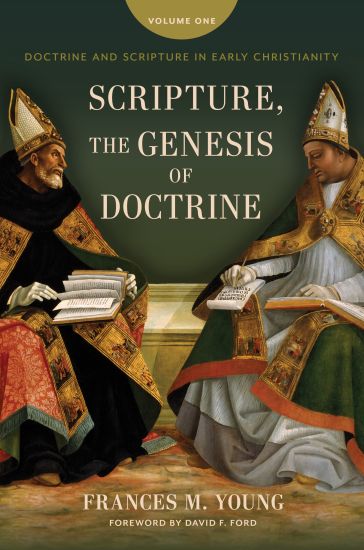
Scripture, the Genesis of Doctrine

Scripture, the Genesis of Doctrine

Frances M Young; David F Ford

WILLIAM B EERDMANS PUBLISHING CO
2023
sidottu
How did we get from Scripture to creed?Historical criticism has revealed a gap between Scripture and the mainstream doctrines that define Christianity today. Not the least of these are the Trinity and two natures of Christ--widely accepted since the fifth century, but unfounded in historical readings of Scripture. How did these dogmas become so integral to the faith in the first place?Frances M. Young tackles this monumental question in a culmination of decades of biblical and patristic research. The first of two volumes exploring the emergence of doctrine in the early church, Scripture, the Genesis of Doctrine reframes the relationship between Scripture and doctrine according to the intellectual context of the first few centuries CE. Young situates the early Christians' biblical hermeneutic within the context of Greco-Roman learning without espousing historical relativism. Ultimately, Young argues that the scriptural canon and the Rule of Faith emerged concurrently in the early Church, and both were received as apostolic. The perceived gap between the two may in fact be the product of our modern assumptions rather than an ancient reality.Nuanced and ecumenical, Scripture, the Genesis of Doctrine explores early Christians' biblical hermeneutic, with an eye toward how we interpret the bible today. Young's magisterial study holds widespread implications for not only patristics but also exegesis and systematic theology.
The Gospel of John

The Gospel of John

David F. Ford

Baker Academic, Div of Baker Publishing Group
2021
sidottu
John is a Gospel of abundant truth, life, and love. David Ford, one of the world's leading Christian theologians, invites readers into a fresh, profound encounter with Jesus through the Gospel of John in this comprehensive theological commentary. This commentary will appeal to a wide audience, including pastors, church leaders, and other readers interested in the intersection of theology and spirituality. It will also be of interest to professors and students doing research on John and the reception of the Gospel in Christian theology.
Meditations on the Birth of Christ

Meditations on the Birth of Christ

You Bin; David F Ford

Wipf Stock Publishers
2021
sidottu
This series of meditations on the birth of Christ encourages the reader to relive the miracle of Christmas. Through reflecting on Scripture, Church tradition, and Chinese culture the reader may experience afresh the Word becoming flesh. The reader travels to ancient Bethlehem in a spiritual sense to contemplate the meaning of the incarnation for the past, the future, and the present. As the reader recalls the first coming of Christ into history, he or she may also direct the heart to the future, looking forward to the second coming of Christ at the end of the age, and simultaneously experience his transforming presence in the present. The reader could develop a spiritual formation in the Advent season with the inspirations from the Chinese cultural and wisdom resources.
Religion Without Violence

Religion Without Violence

Peter Ochs; David F Ford

Cascade Books
2019
sidottu
In 1992, Peter Ochs and a few Christian and Muslim colleagues began to gather small groups, in and outside the classroom, to practice close and attentive reading of the sacred Scriptures of the Jewish, Muslim, and Christian traditions. The hope was that members of different religions could hear one another through the patient, respectful reading of each other's Scripture. Hearing each other, participants might enter into interreligious relationships that might point a way to the peaceful engagement of religions--especially those who, after September 11, 2001, too often found themselves at each other's throats. It was a hope for religion without violence. Nearly thirty years later, this practice of study-across-difference has seeded an international movement, now named Scriptural Reasoning. The movement nurtures cooperative study among students, scholars, and congregants devoted to distinctly different religious and value traditions. In Religion without Violence, Ochs reflects on the practical and philosophic lessons he has learned from hosting hundreds of Scriptural Reasoning engagements. He introduces the ""scriptural pragmatism"" of Scriptural Reasoning."" He painstakingly recounts instances of successful scriptural reasoning and warns where and how it might fail. He provides guidance on how to introduce and facilitate Scriptural Reasoning in the classroom. He shows how reading out of the ""hearth"" of a faith can contribute to peace building across religions. And, drawing on the resources of rabbinic tradition, Augustine, and Charles Peirce, he moves beyond practice to reflect on the implications of Scriptural Reasoning for discerning what kinds of ""reasoning"" best address and help repair societal crises like religion-related violent conflict.
Religion Without Violence

Religion Without Violence

Peter Ochs; David F Ford

Cascade Books
2019
pokkari
In 1992, Peter Ochs and a few Christian and Muslim colleagues began to gather small groups, in and outside the classroom, to practice close and attentive reading of the sacred Scriptures of the Jewish, Muslim, and Christian traditions. The hope was that members of different religions could hear one another through the patient, respectful reading of each other's Scripture. Hearing each other, participants might enter into interreligious relationships that might point a way to the peaceful engagement of religions--especially those who, after September 11, 2001, too often found themselves at each other's throats. It was a hope for religion without violence. Nearly thirty years later, this practice of study-across-difference has seeded an international movement, now named Scriptural Reasoning. The movement nurtures cooperative study among students, scholars, and congregants devoted to distinctly different religious and value traditions. In Religion without Violence, Ochs reflects on the practical and philosophic lessons he has learned from hosting hundreds of Scriptural Reasoning engagements. He introduces the "scriptural pragmatism" of Scriptural Reasoning." He painstakingly recounts instances of successful scriptural reasoning and warns where and how it might fail. He provides guidance on how to introduce and facilitate Scriptural Reasoning in the classroom. He shows how reading out of the "hearth" of a faith can contribute to peace building across religions. And, drawing on the resources of rabbinic tradition, Augustine, and Charles Peirce, he moves beyond practice to reflect on the implications of Scriptural Reasoning for discerning what kinds of "reasoning" best address and help repair societal crises like religion-related violent conflict.
Children Before God

Children Before God

John McNeill; David F Ford

Pickwick Publications
2017
pokkari
This work seeks to delineate a theological framework into which biblically informed imagery and language of children in relation to God can be placed. McNeill's aim is to offer a work of positive construction within the general Reformed tradition. The book shows that John Calvin has much to offer in this respect, but by examining the imagery and language of children in his works it is shown that Calvin is not adequately biblically informed in this area. McNeill argues that Jonathan Edwards provides a theological tool that enables a construal of children more in keeping with biblical language and imagery. The book then offers a general critique of current child development theories in which providential activity in child development is more or less ignored. By adopting Calvin's theological framework to understand children before God, it is argued that the integration of child development and divine providence becomes a distinct possibility. This work should be of interest to those working in biblical, childhood, Calvin, and Edwards studies, as well as to the more general practitioner working with children in church and society. ""McNeill's study valuably explores the connections between the pressing concern for the education and care of children and our fundamental, sometimes unreflective, ideas about the nature of childhood as construed by Christian faith. Careful historical work on Calvin, Edwards, and the wider Reformed tradition here funds a better practical wisdom for Christian life with and for children in our own time."" --Philip G. Ziegler, University of Aberdeen ""A fascinating set of insights into a vastly underdeveloped area of theological reflection. As well as offering an account of Calvin and Edwards on the theology of childhood, this book offers a constructive account which cannot but be helpful for the church today."" --Tom Greggs, University of Aberdeen ""This is a thoughtful study on an important topic not often addressed by theologians. Dr. McNeill's historical researches into Calvin and Edwards highlight successes and failures in Christian ministry to children, casting new light on contemporary approaches to pastoral practice."" -- George Newlands, The University of Glasgow ""Every adult was once a child. The lack of attention to childhood by Christian theology is, therefore, at the least a missed opportunity. In Children before God John McNeill uses the Bible to shed light on the way children have been represented, and often misrepresented, in one strand of Christian tradition. The result is an original and ultimately beautiful reappraisal not only of children in the order of salvation, but of the abiding significance of childhood to adult Christians. McNeill's writing is resourced by an astonishingly deep engagement with Calvin and with Edwards that will also contribute to a more appreciative appraisal of their legacy."" --Stephen Plant, University of Cambridge John McNeill is the Superintendent Methodist Minister based in Aberdeen, Scotland. He has a BA in Near Eastern Archaeology (Liverpool), Masters degrees in Computing in Archaeology (Southampton), Mission Studies (Sheffield), and Philosophical Theology (Cambridge), and a PhD in theology (Cambridge). He worked for a number of years with children in the Shetland Islands.
Children before God

Children before God

John McNeill; David F Ford

Pickwick Publications
2017
sidottu
This work seeks to delineate a theological framework into which biblically informed imagery and language of children in relation to God can be placed. McNeill's aim is to offer a work of positive construction within the general Reformed tradition. The book shows that John Calvin has much to offer in this respect, but by examining the imagery and language of children in his works it is shown that Calvin is not adequately biblically informed in this area. McNeill argues that Jonathan Edwards provides a theological tool that enables a construal of children more in keeping with biblical language and imagery. The book then offers a general critique of current child development theories in which providential activity in child development is more or less ignored. By adopting Calvin's theological framework to understand children before God, it is argued that the integration of child development and divine providence becomes a distinct possibility. This work should be of interest to those working in biblical, childhood, Calvin, and Edwards studies, as well as to the more general practitioner working with children in church and society. ""McNeill's study valuably explores the connections between the pressing concern for the education and care of children and our fundamental, sometimes unreflective, ideas about the nature of childhood as construed by Christian faith. Careful historical work on Calvin, Edwards, and the wider Reformed tradition here funds a better practical wisdom for Christian life with and for children in our own time."" --Philip G. Ziegler, University of Aberdeen ""A fascinating set of insights into a vastly underdeveloped area of theological reflection. As well as offering an account of Calvin and Edwards on the theology of childhood, this book offers a constructive account which cannot but be helpful for the church today."" --Tom Greggs, University of Aberdeen ""This is a thoughtful study on an important topic not often addressed by theologians. Dr. McNeill's historical researches into Calvin and Edwards highlight successes and failures in Christian ministry to children, casting new light on contemporary approaches to pastoral practice."" -- George Newlands, The University of Glasgow ""Every adult was once a child. The lack of attention to childhood by Christian theology is, therefore, at the least a missed opportunity. In Children before God John McNeill uses the Bible to shed light on the way children have been represented, and often misrepresented, in one strand of Christian tradition. The result is an original and ultimately beautiful reappraisal not only of children in the order of salvation, but of the abiding significance of childhood to adult Christians. McNeill's writing is resourced by an astonishingly deep engagement with Calvin and with Edwards that will also contribute to a more appreciative appraisal of their legacy."" --Stephen Plant, University of Cambridge John McNeill is the Superintendent Methodist Minister based in Aberdeen, Scotland. He has a BA in Near Eastern Archaeology (Liverpool), Masters degrees in Computing in Archaeology (Southampton), Mission Studies (Sheffield), and Philosophical Theology (Cambridge), and a PhD in theology (Cambridge). He worked for a number of years with children in the Shetland Islands.
The Drama of Living

The Drama of Living

David F. Ford

Canterbury Press Norwich
2014
nidottu
How can we live wisely today, attuned to God and to other people amid the ups and downs of modern life with its complexities, conflicts and distractions? Responding creatively to the multiple challenges of the contemporary world requires us to draw on many sources and to exercise imagination, discernment and understanding. In 'The Drama of Living', the renowned theologian David Ford offers reflective and practical insights into living wisely and well, rooted in the Spirit.
The Shape of Living

The Shape of Living

David F. Ford

Canterbury Press Norwich
2012
nidottu
In an overwhelming world, how can our lives be shaped to their greatest potential? David F. Ford describes the ‘overwhelmings’ we face in the whirl of life today – the endless images and information that inundate us and pervade our lives. Examining the people and forces that influence us, the rhythm of work and leisure, and the intense experiences, both good and bad, that make up reality, Ford serves up practical wisdom for coping creatively with challenge and change. Above all, Ford helps us to discover a dynamic pattern that can respond to the ‘overwhelmings’ and shape our desires, relationships, responsibilities and celebrations. Here is a vision of genuine Christian life that can face both the living God and the best and worst of today’s world.
The Future of Christian Theology

The Future of Christian Theology

David F. Ford

Wiley-Blackwell (an imprint of John Wiley Sons Ltd)
2011
sidottu
The Future of Christian Theology represents a personal manifesto from one of the world's leading theologians, exploring the ways Christian theology in the twenty-first century has been, and can now continue to be, both creative and wise. Represents an outstanding and engaging account of the task of theology todayOffers an insightful description of what makes for discerning and creative theology.Written from the perspective of decades of experience, and in close dialogue with theologians of other faithsFeatures a strong interfaith and public theology dimension, and a contemporary portrait of the field from the insideA hopeful and illuminating search for wisdom and understanding in the increasingly complex religious and secular world of the twenty-first century.
The Future of Christian Theology

The Future of Christian Theology

David F. Ford

Wiley-Blackwell (an imprint of John Wiley Sons Ltd)
2011
nidottu
The Future of Christian Theology represents a personal manifesto from one of the world's leading theologians, exploring the ways Christian theology in the twenty-first century has been, and can now continue to be, both creative and wise. Represents an outstanding and engaging account of the task of theology todayOffers an insightful description of what makes for discerning and creative theology.Written from the perspective of decades of experience, and in close dialogue with theologians of other faithsFeatures a strong interfaith and public theology dimension, and a contemporary portrait of the field from the insideA hopeful and illuminating search for wisdom and understanding in the increasingly complex religious and secular world of the twenty-first century.
Shaping Theology

Shaping Theology

David F. Ford

Wiley-Blackwell (an imprint of John Wiley Sons Ltd)
2007
sidottu
This is an innovative book about the shape theology takes in its varied interactions – religious and secular, local and global, historical and contemporary, academic and practical. An innovative book about the shape of theology in reaction to its relationship with the Church, with theologians, with other religions, and with the university Written by David Ford, recognized internationally as one of the most creative of contemporary theologians Considers how theology shapes other areas of life via its conversations in the public sphere and with non-faith communities Views theology as both a way of thinking and a way of living, and considers how this lived character cannot be entirely grasped through reason alone The first volume to bring together a complete and well-rounded account of theology’s interaction with all its conversation partners.
Shaping Theology

Shaping Theology

David F. Ford

Wiley-Blackwell (an imprint of John Wiley Sons Ltd)
2007
nidottu
This is an innovative book about the shape theology takes in its varied interactions – religious and secular, local and global, historical and contemporary, academic and practical. An innovative book about the shape of theology in reaction to its relationship with the Church, with theologians, with other religions, and with the university Written by David Ford, recognized internationally as one of the most creative of contemporary theologians Considers how theology shapes other areas of life via its conversations in the public sphere and with non-faith communities Views theology as both a way of thinking and a way of living, and considers how this lived character cannot be entirely grasped through reason alone The first volume to bring together a complete and well-rounded account of theology’s interaction with all its conversation partners.
Christian Wisdom

Christian Wisdom

David F. Ford

Cambridge University Press
2007
sidottu
What is Christian wisdom for living in the twenty-first century? Where is it to be found? How can it be learnt? In the midst of diverse religions and worldviews and the demands and complexities of our world, David Ford explores a Christian way of uniting love of wisdom with wisdom in love. Core elements are the 'discernment of cries', the love of God for God's sake, interpretation of scripture, and the shaping of desire in faith. Case studies deal with inter-faith wisdom among Jews, Christians and Muslims, universities as centres of wisdom as well as knowledge and know-how and the challenge of learning disabilities. Throughout, there is an attempt to do justice to the premodern, modern and postmodern while grappling with scripture, tradition and the cries of the world today. Ford opens up the rich resources of Christianity in engaging with the issues and urgencies of contemporary life.