Kirjojen hintavertailu. Mukana 12 595 353 kirjaa ja 12 kauppaa.

Kirjailija

David F Wells

Kirjat ja teokset yhdessä paikassa: 13 kirjaa, julkaisuja vuosilta 1985-2018, suosituimpien joukossa Losing Our Virtue. Vertaile teosten hintoja ja tarkista saatavuus suomalaisista kirjakaupoista.

Mukana myös kirjoitusasut: David F. Wells

13 kirjaa

Kirjojen julkaisuhaarukka 1985-2018.

Losing Our Virtue

Losing Our Virtue

David F Wells

Inter-Varsity Press
1998
nidottu
In a society whose moral fabric is rent can the church recover its moral character enough to make a difference? This compelling critique of the influence of modernity on Evangelical moral values today is by the highly regarded author of God in the Wasteland and No place for truth.
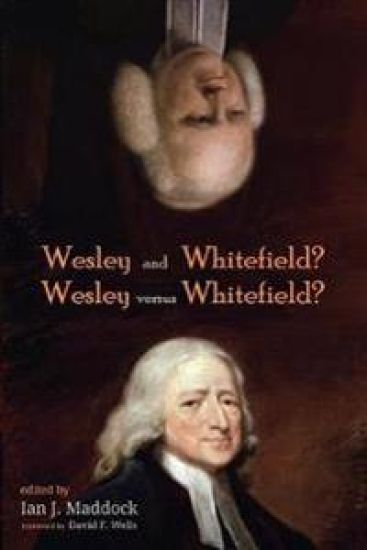
Wesley and Whitefield? Wesley versus Whitefield?

Wesley and Whitefield? Wesley versus Whitefield?

David F Wells

Pickwick Publications
2018
pokkari
John Wesley and George Whitefield were in many ways larger-than-life figures during their own lifetimes and continue to be so today. Yet our ability to appreciate their abiding influence on contemporary Evangelical theology and practice is lacking if we consider them in isolation from one another. Our understanding of Wesley and the legacy of his public ministry is impoverished apart from considering Whitefield (and vice versa). This collection of essays explores the complex dynamics at work in the Wesley-Whitefield relationship, spanning a variety of theological, historical, and pastoral facets of their full-orbed public ministries. They serve as an invitation to grow in our awareness of their undoubted affinities and significant differences, all the while resisting the potential allure of either uncritically ecumenical ""Wesley and"" or uncharitably partisan ""Whitefield versus"" narratives. ""Empowered by the publication of an earlier successful work on two of the eighteenth century's most important evangelical leaders, Ian Maddock has assembled a number of leading scholars, representing distinct traditions, to explore the engaging topic of Wesley and Whitefield as well as Wesley versus Whitefield . . . I highly recommend this book."" --Kenneth J. Collins, Director, The Wesleyan Studies Summer Seminar, Asbury Theological Seminary ""This is a creative and unique book that tracks the biographies of two well-known figures whose ministries were deeply intertwined. The book compares Wesley and Whitefield on a whole range of topics (conversion, their views on Christian formation, mentoring, and slavery) as well as theology (Christian perfection, covenant theology, and the atonement). It is a feast for those interested in the nexus between theology, ministry, and history."" --Robert Caldwell, Associate Professor of Church History ""This remarkable collection of comparative essays exemplifies the finest scholarship from a variety of disciplines and perspectives, offering the reader a balanced and innovative reexamination of Wesley and Whitefield that sheds new light on their legendary differences while underscoring their shared commitments--this volume represents a significant advance in the study of Methodist evangelicalism."" --Keith Edward Beebe, Whitworth University ""To this day, worldwide evangelical Christianity has two wings, one might say - Calvinist and Arminian. This can be traced back to two remarkable men who were passionate evangelists in the eighteenth century, cooperating in preaching the gospel, but espousing the two sides of this theological debate. Despite their disagreement, John Wesley and George Whitefield were notable examples of 'evangelical ecumenicity.' This collection of essays follows their example. Calvinists and Arminians cooperate here to paint a vivid portrait of two men who were at the forefront of the revival of evangelical life and theology, leading to the great nineteenth-century missionary movement and today's notable demographic shift in world Christianity."" --Thomas A. Noble, Senior Research Fellow, Nazarene Theological College, Manchester Ian J. Maddock (University of Aberdeen) is Senior Lecturer in Theology at Sydney Missionary and Bible College. He is author of Men of One Book: A Comparison of Two Methodist Preachers, John Wesley and George Whitefield (2011).
Wesley and Whitefield? Wesley Versus Whitefield?

Wesley and Whitefield? Wesley Versus Whitefield?

David F Wells

Pickwick Publications
2018
sidottu
John Wesley and George Whitefield were in many ways larger-than-life figures during their own lifetimes and continue to be so today. Yet our ability to appreciate their abiding influence on contemporary Evangelical theology and practice is lacking if we consider them in isolation from one another. Our understanding of Wesley and the legacy of his public ministry is impoverished apart from considering Whitefield (and vice versa). This collection of essays explores the complex dynamics at work in the Wesley-Whitefield relationship, spanning a variety of theological, historical, and pastoral facets of their full-orbed public ministries. They serve as an invitation to grow in our awareness of their undoubted affinities and significant differences, all the while resisting the potential allure of either uncritically ecumenical ""Wesley and"" or uncharitably partisan ""Whitefield versus"" narratives. ""Empowered by the publication of an earlier successful work on two of the eighteenth century's most important evangelical leaders, Ian Maddock has assembled a number of leading scholars, representing distinct traditions, to explore the engaging topic of Wesley and Whitefield as well as Wesley versus Whitefield . . . I highly recommend this book."" --Kenneth J. Collins, Director, The Wesleyan Studies Summer Seminar, Asbury Theological Seminary ""This is a creative and unique book that tracks the biographies of two well-known figures whose ministries were deeply intertwined. The book compares Wesley and Whitefield on a whole range of topics (conversion, their views on Christian formation, mentoring, and slavery) as well as theology (Christian perfection, covenant theology, and the atonement). It is a feast for those interested in the nexus between theology, ministry, and history."" --Robert Caldwell, Associate Professor of Church History ""This remarkable collection of comparative essays exemplifies the finest scholarship from a variety of disciplines and perspectives, offering the reader a balanced and innovative reexamination of Wesley and Whitefield that sheds new light on their legendary differences while underscoring their shared commitments--this volume represents a significant advance in the study of Methodist evangelicalism."" --Keith Edward Beebe, Whitworth University ""To this day, worldwide evangelical Christianity has two wings, one might say - Calvinist and Arminian. This can be traced back to two remarkable men who were passionate evangelists in the eighteenth century, cooperating in preaching the gospel, but espousing the two sides of this theological debate. Despite their disagreement, John Wesley and George Whitefield were notable examples of 'evangelical ecumenicity.' This collection of essays follows their example. Calvinists and Arminians cooperate here to paint a vivid portrait of two men who were at the forefront of the revival of evangelical life and theology, leading to the great nineteenth-century missionary movement and today's notable demographic shift in world Christianity."" --Thomas A. Noble, Senior Research Fellow, Nazarene Theological College, Manchester Ian J. Maddock (University of Aberdeen) is Senior Lecturer in Theology at Sydney Missionary and Bible College. He is author of Men of One Book: A Comparison of Two Methodist Preachers, John Wesley and George Whitefield (2011).
The Courage to Be Protestant: Reformation Faith in Today's World

The Courage to Be Protestant: Reformation Faith in Today's World

David F. Wells

William B. Eerdmans Publishing Company
2017
nidottu
At its heart, the Protestant Reformation was about a deep, doctrinally shaped faith centered on God and his Word. But that historic, substantive faith is not faring so well in our contemporary Western context. In his 2008 book The Courage to Be Protestant, David Wells issued a summons to return to the historic Protestant faith, defined by the Reformation solas (grace, faith, and Scripture alone) and by a high regard for doctrine. In this thoroughly reworked second edition, Wells presents an updated look at the state of evangelicalism and the changes that have taken place since the original publication of his book. There is no better time than now to hear and heed Wells's clarion call to reclaim the historic, doctrinally serious Reformation faith in our fast-paced, technologically dominated, postmodern culture.
God in the Whirlwind

God in the Whirlwind

David F. Wells

Crossway Books
2014
pokkari
Offering a remedy for evangelicalism’s superficial theology, Wells points readers to the paradox of God’s “holy-love,” exploring how the interplay of his characteristics reorient our lives and change the world.
God in the Whirlwind

God in the Whirlwind

David F Wells

Inter-Varsity Press
2014
nidottu
We all struggle at times to hold together the holiness and the love of God, and can fall into problems such as liberalism and universalism on the one hand, or legalism and moralism on the other. However, what David Wells calls God's 'holy-love' is right at the heart of the incarnation and cross of Jesus - and understanding how God's holiness is inextricably bound to his love is what sets apart Christian spirituality from other spiritualities, what characterizes authentic Christian worship, and what defines our life of service in the world. Building on years of research and teaching, Wells offers a remedy for evangelicalism's often superficial theology and weightless conception of God. He examines and offers solutions to two particular problems facing the contemporary church: the pressure to conform to cultural norms, and the danger of living in an age of constant distraction. This accessible, edifying and challenging volume helps us to cultivate a balanced vision of the meaning of God-centredness in our current context.
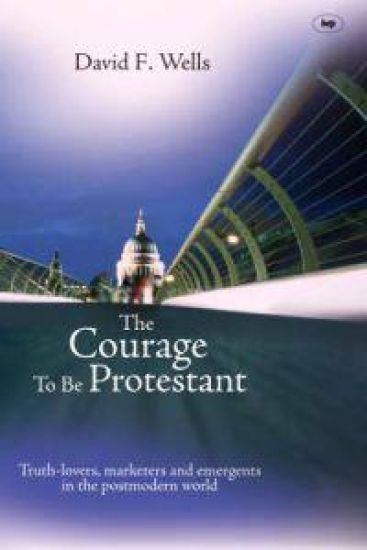
The Courage to be Protestant

The Courage to be Protestant

David F Wells

Inter-Varsity Press
2008
nidottu
It takes no courage to sign up as a Protestant. With these words, David Wells opens his bold challenge to the modern church. In this volume, Wells offers the summa of his critique of the evangelical landscape, as well as a call to return to the historic faith, one defined by the Reformation solas (grace, faith, and Scripture alone), and to a reverence for doctrine. Wells argues that the historic, classical evangelicalism is one marked by doctrinal seriousness, as opposed to the new movements of the marketing church and the emergent church. He energetically confronts the marketing communities and what he terms their sermons-from-a-barstool and parking lots and après-worship Starbucks stands . He also takes issue with the most popular evangelical movement in recent years - the emergent church. For Wells, many emergents are postmodern, postconservative and postfoundational, embracing a less absolute understanding of the authority of Scripture than he maintains is required. 'The Courage to be Protestant' is a dynamic argument for the courage to be faithful to what biblical Christianity has always stood for, thereby securing hope for the church's future.
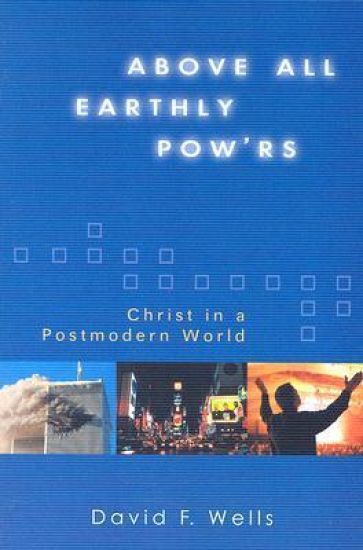
Above All Earthly Pow'rs: Christ in a Postmodern World

Above All Earthly Pow'rs: Christ in a Postmodern World

David F. Wells

William B. Eerdmans Publishing Company
2006
nidottu
The deflation of the Enlightenment worldview and rise of the post-modern mood over the last decades has altered the relation of Christian faith to culture. How, in this new situation, should the church confess Christ? "Above All Earthly Powers" paints a picture of the West in all its complexity, brilliance, and emptiness.As David F. Wells masterfully depicts it, the postmodern ethos is relativistic, individualistic, therapeutic, and yet remarkably spiritual. By placing a premium on marketing rather than truth, the evangelical church is in danger of selling authentic engagement with culture for worldly success. Christians need to confess Christ as the center in a society lacking a center, as the sovereign in a world seemingly ruled by chance, and as the one who can give meaning in a nihilistic culture. "Above All Earthly Powers" issues a prophetic call to the evangelical church that it cannot afford to ignore.
The Search for Salvation

The Search for Salvation

David F Wells

Wipf Stock Publishers
2000
pokkari
David Wells discusses the doctrine of salvation from six perspectives: conservative, existential, God-is -dead,"neo-orthodox, liberation/revolutionary and Roman Catholic. Each of these schools of thought is explored in its views toward revelation and the work of Christ, its strengths and weaknesses.
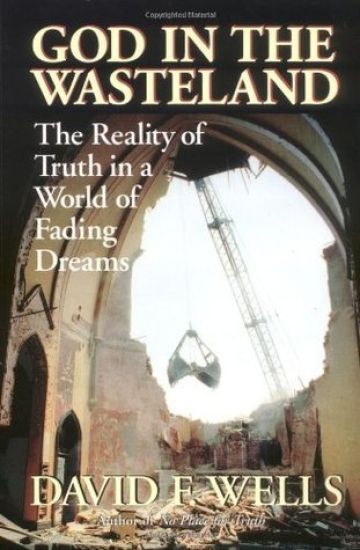
God in the Wasteland: The Reality of Truth in a World of Fading Dreams
David F. Wells's award-winning book No Place for Truth - called "a stinging indictment of evangelicalism's theological corruption" by TIME magazine - woke many evangelicals to the fact that their tradition has slowly but surely capitulated to the values and structures of modernity. In God in the Wasteland Wells continues his trenchant analysis of the cultural corruption now weakening the church's thought and witness with the intent of getting evangelicals to rethink their relationship to the "world." Wells argues that the church is enfeebled in part because it has lost its sense of God's sovereignty and holiness. "The fundamental problem in the evangelical world today," says Wells, "is that God rests too inconsequentially upon the church. His truth is too distant, his grace is too ordinary, his judgment is too benign, his gospel is too easy, and his Christ is too common." God has become weightless to the extent that the church no longer allows him to shape its character, outlook, and practice. Evangelicals have become heavily invested in the mind-set of modernity a mind-set that Wells correlates with the biblical concept of the "world." They have become enamored of advanced management and marketing techniques, have blurred the distinctions between Christ and culture, and have largely abandoned their traditional emphasis on divine transcendence in favor of an emphasis on divine immanence. In doing so, they have produced a faith in God that is of little consequence to those who believe. An extensive survey of students at seven evangelical theological seminaries - the results of which are included in this book - indicates that the next generation of evangelical leaders is as caught up in these trends as the laity. Arguing that the church's diminished appetite for truth will not be restored without repentance and a fresh encounter with the holy God, Wells makes a compelling case for urgently needed reform in the evangelical church. Without such reform, he says, evangelical faith will be lost in and to the modernity that has invaded the church.
God in the Wasteland

God in the Wasteland

David F. Wells

William B Eerdmans Publishing Co
1994
pokkari
In this sequel to the widely praised No Place for Truth, David Wells calls for the restoration of the church based on a fresh encounter with the transcendent God. By looking anew at the way God's transcendence and immanence have been taken captive by modern appetites, Wells argues convincingly for a reform of the evangelical world.