Kirjojen hintavertailu. Mukana 12 595 353 kirjaa ja 12 kauppaa.

Kirjailija

David Fairer

Kirjat ja teokset yhdessä paikassa: 10 kirjaa, julkaisuja vuosilta 1993-2026, suosituimpien joukossa Eighteenth-Century English Labouring-Class Poets, vol 3. Vertaile teosten hintoja ja tarkista saatavuus suomalaisista kirjakaupoista.

10 kirjaa

Kirjojen julkaisuhaarukka 1993-2026.

Pope

Pope

David Fairer

Barnes Noble Books-Imports, Div of Rowman Littlefield Pubs., Inc
1993
sidottu
This collection of essays brings together exciting work from a new generation of British scholars and critics, and tests such a view by placing Pope's poetry in a series of revealing contextsóintellectual, religious, political, and gender-basedówhich provoke new interpretations of his work. The authors debate Pope's "Toryism" and "Jabonism," his "feminized" or sexually ambivalent discourse, his relationship to strategies of politeness and decorum, discordia concors, epic manliness, models of body/spirit and voice/spectacle, and offers to read him and his work in the company of the romantic writers and later women novelists. Contents: Acknowledgements; Abbreviations; Introduction; J. A. Downie 1688: Pope and the Rhetoric of Jacobitism; Christine Gerrard Pope and the Patriots; Thomas Woodman "Wanting Nothing but the Laurel": Pope and the Idea of the Laureate Poet; Carolyn D. Williams Breaking Decorums: Belinda, Bays, and Epic Effeminacy; Steve Clark "Let Blood and Body bear the Fault": Pope and Misogyny; Susan Matthews "Matter too soft": Pope and the Women's Novel; Stephen Bygrave Missing Parts: Voice and Spectacle in^R Eloisa to Abelard; Rebecca Ferguson "Intestine Wars": Body and Text in An Epistle to Dr. Arbuthnot and The Dunciad; John Whale Romantic Attacks: Pope and the Spirit of Language; David Fairer Pope, Blake, Heraclitus, and Oppositional Thinking; Nicholas Roe Pope, Politics, and Wordsworth's Prelude; Stephen Copley and David Fairer An Essay on Man and the Polite Reader; Brean S. Hammond "Guard the Sure Barrier": Pope and the Partitioning of Culture; Notes on Contributors^R
Graham and the Flitchcombe Murders

Graham and the Flitchcombe Murders

David Fairer

THE BOOK GUILD LTD
2026
pokkari
When thriller writer Graham Tomlinson is forced to reinvent himself as “Tamara Wilde”, his research trip to the Cotswolds turns deadly. As fiction bleeds into reality, he’s framed for murder and must embrace both his tough and cosy alter egos to uncover the village’s secrets before he becomes its next victim.
Captain Hazard’s Game

Captain Hazard’s Game

David Fairer

TROUBADOR PUBLISHING
2022
nidottu
Captain Hazard’s Game, third in the Chocolate House Mysteries series, conjures up the vibrant life of early eighteenth-century gamesters and money-men, a world of deception where risk could bring huge rewards – especially when you turned the stock-market by false news or shortened the odds by cheating. It was a scene where all was in hazard and life lived on the edge. The book weaves its classic murder mystery around actual events of October 1708, and we move among a rich cast of characters, both in Vandernan’s gaming-house, Covent Garden, and the notorious Exchange Alley. Playing Captain Hazard’s Game brings murder and scandal uncomfortably close, and Widow Trotter and her friends at the Bay-Tree are drawn into a frenzied game of chance and speculation at a time when the market was unregulated. Fortunes were made overnight, and ruin could descend in a single hour. People played for the highest stakes, and men of power manipulated things for their own ends. In this book the chocolate house itself comes under threat as Mary Trotter, with help from her young friends Tom and Will, struggles to find the truth behind an ingenious system of deception. Once again, she presides over the novel, as she does over the Bay-Tree, with good humour, fierce integrity, and resolute determination.
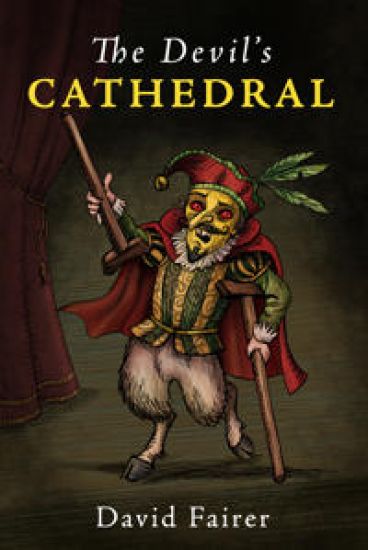
The Devil’s Cathedral

The Devil’s Cathedral

David Fairer

Matador
2021
nidottu
THEATRE ROYAL, DRURY LANE, 24 April 1708. A performance of Macbeth is under way when disaster strikes and the stage becomes a scene of elemental chaos – and for Widow Trotter and her friends at the Bay-Tree Chocolate House, a new adventure begins, involving murder, poison, fire, and a rogue elephant . . . Devoted fans of Chocolate House Treason will welcome this second novel in the Chocolate House Mysteries series, which captures all the energies of the early eighteenth-century theatre. We move among the eccentric characters of the Theatre Royal company, in Drury Lane and at the exuberant May Fair where the actors moonlight in the fairground booths. The puritanical reformers are determined to close the theatre and abolish the Fair, and ‘accidents’ begin to happen – but Mary Trotter and her friends at the Bay-Tree are determined to expose the conspiracy, and the action reaches its climax at the Fair when the players are faced with the ultimate act of terror. Once again, David Fairer offers the delights of the classic eighteenth-century novel, intricately weaving a murder mystery with authentic history, and bringing the London of Queen Anne to life.
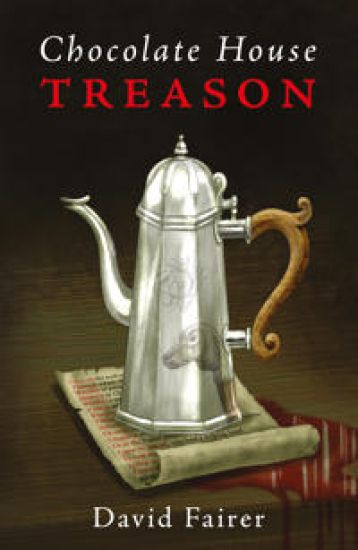
Chocolate House Treason

Chocolate House Treason

David Fairer

Matador
2019
nidottu
Covent Garden, January 1708. Widow Trotter has big plans for her recently-inherited coffee house, not suspecting that within days her little kingdom will be caught up in a national drama involving scandal, conspiracy and murder... Queen Anne’s new “Great Britain” is in crisis. The Queen is mired in a sexual scandal, spies are everywhere, and political disputes are bringing violence and division. The treasonous satirist “Bufo” is public enemy number one and the Ministry is determined to silence him. Drawn into a web of intrigue that reaches from the brothels of Drury Lane to the Court of St James’s, Mary Trotter and her young friends Tom and Will race against time to unravel the political plots, solve two murders, and prevent another. The first in a projected series of "Chocolate House Mysteries", the novel presents the London of Queen Anne in all its brilliance and filth, its violence, elegance and wit. The book moves among a rich cast of characters, ranging from the life of the streets and the "nymphs" of Drury Lane to the conspiratorial world of Queen Anne's Court. At its heart is the Bay-Tree Chocolate House, Covent Garden, where Widow Trotter presides as she does over the novel itself, with good humour, fierce integrity, and resolute determination.
English Poetry of the Eighteenth Century, 1700-1789
In recent years the canon of eighteenth-century poetry has greatly expanded to include women poets, labouring-class and provincial poets, and many previously unheard voices. Fairer’s book takes up the challenge this ought to pose to our traditional understanding of the subject. This book seeks to question some of the structures, categories, and labels that have given the age its reassuring shape in literary history. In doing so Fairer offers a fresh and detailed look at a wide range of material.
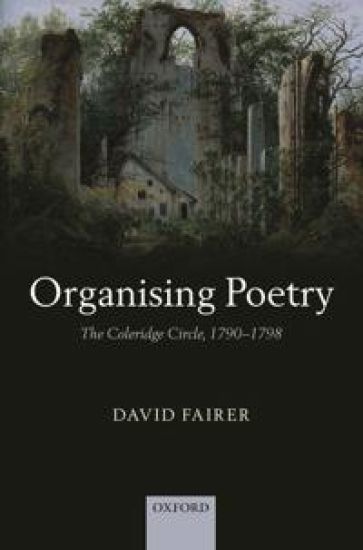
Organising Poetry

Organising Poetry

David Fairer

Oxford University Press
2009
sidottu
In this revisionary study of the poetry of Coleridge, Wordsworth and their friends during the 'revolutionary decade' David Fairer questions the accepted literary history of the period and the critical vocabulary we use to discuss it. The book examines why, at a time of radical upheaval when continuities of all kinds (personal, political, social, and cultural) were being challenged, this group of poets explored themes of inheritance, retrospect, revisiting, and recovery. Organising Poetry charts their struggles to find meaning not through vision and symbol but from connection and dialogue. By placing these poets in the context of an eighteenth-century 'organic' tradition, Fairer moves the emphasis away from the language of idealist 'Romantic' theory towards an empirical stress on how identities are developed and sustained through time. Locke's concept of personal identity as a continued organisation 'partaking of one common life' offered not only a model for a reformed British constitution but a way of thinking about the self, art and friendship, which these poets found valuable. The key term, therefore, is not 'unity' but 'integrity'. In this context of a need to sustain and organise diversity and give it meaning, the book offers original readings of some well known poems of the 1790s, including Wordsworth's 'Tintern Abbey' and 'The Ruined Cottage', and Coleridge's conversation poems 'The Eolian Harp', 'This Lime-Tree Bower', and 'Frost at Midnight'. Organising Poetry represents an important contribution to current critical debates about the nature of poetic creativity during this period and the need to recognise its more communal and collaborative aspects.