Kirjojen hintavertailu. Mukana 12 390 323 kirjaa ja 12 kauppaa.

Kirjailija

David Farber

Kirjat ja teokset yhdessä paikassa: 14 kirjaa, julkaisuja vuosilta 1988-2023, suosituimpien joukossa Chicago '68. Vertaile teosten hintoja ja tarkista saatavuus suomalaisista kirjakaupoista.

14 kirjaa

Kirjojen julkaisuhaarukka 1988-2023.

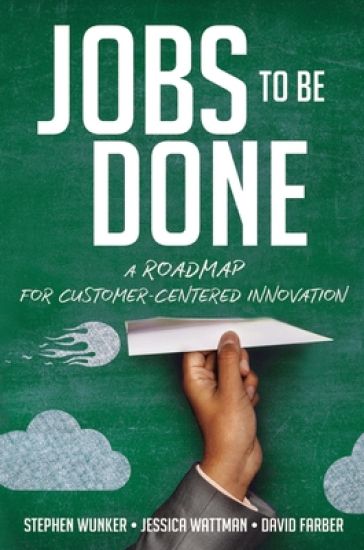
Jobs to Be Done

Jobs to Be Done

Stephen Wunker; Jessica Wattman; David Farber

HarperCollins Focus
2023
nidottu
In an age of unlimited data and research, why do more than 50 percent of new products fail to meet expectations? It boils down to a lack of customer insight. The revolutionary theory behind Jobs to Be Done argues that people purchase products and services to solve a specific problem or fulfill a distinct need. For example, people down shovel down Rocky Road and Buttered Pecan ice cream because they want nuts, marshmallows, and gobs of frozen goodness, but because they feel the need to celebrate, indulge, or bond with friends and family. But how can this simple concept be best utilized for your company's success?This groundbreaking book, with its Jobs Roadmap, is intended to remake how companies approach their market. Successful innovation doesn't begin with a brainstorming session--it starts with the customer. Learn how to put that into practice by discovering how to: - Gather valuable customer insights- Turn those insights into new product ideas- Test and iterate until you find successDon't miss out on what Foreword Reviews described as "highly organized and expertly crafted. . . . Company leaders looking for ways to institutionalize innovation are sure to find it here." To maximize your company's success, begin with the customer

Crack

Crack

David Farber

Cambridge University Press
2022
pokkari
A shattering account of the crack cocaine years from award-winning American historian David Farber, Crack tells the story of the young men who bet their lives on the rewards of selling 'rock' cocaine, the people who gave themselves over to the crack pipe, and the often-merciless authorities who incarcerated legions of African Americans caught in the crack cocaine underworld. Based on interviews, archival research, judicial records, underground videos, and prison memoirs, Crack explains why, in a de-industrializing America in which market forces ruled and entrepreneurial risk-taking was celebrated, the crack industry was a lucrative enterprise for the 'Horatio Alger boys' of their place and time. These young, predominately African American entrepreneurs were profit-sharing partners in a deviant, criminal form of economic globalization. Hip Hop artists often celebrated their exploits but overwhelmingly, Americans - across racial lines -did not. Crack takes a hard look at the dark side of late twentieth-century capitalism.
Crack

Crack

David Farber

Cambridge University Press
2019
sidottu
A shattering account of the crack cocaine years from award-winning American historian David Farber, Crack tells the story of the young men who bet their lives on the rewards of selling 'rock' cocaine, the people who gave themselves over to the crack pipe, and the often-merciless authorities who incarcerated legions of African Americans caught in the crack cocaine underworld. Based on interviews, archival research, judicial records, underground videos, and prison memoirs, Crack explains why, in a de-industrializing America in which market forces ruled and entrepreneurial risk-taking was celebrated, the crack industry was a lucrative enterprise for the 'Horatio Alger boys' of their place and time. These young, predominately African American entrepreneurs were profit-sharing partners in a deviant, criminal form of economic globalization. Hip Hop artists often celebrated their exploits but overwhelmingly, Americans - across racial lines -did not. Crack takes a hard look at the dark side of late twentieth-century capitalism.
Everybody Ought to Be Rich

Everybody Ought to Be Rich

David Farber

Oxford University Press Inc
2013
sidottu
John Raskob is not a name that looms large but his greatest building casts a shadow on us every day. Financier of the Empire State Building, Raskob was a self-made businessman who worked for DuPont and for GM and famously invented with the idea for consumer credit, which he first offered to individual car buyers (GMAC). A friend of New York Governor Al Smith, Raskob became active in New York politics and ran the Democratic National Committee and Smith's campaign for the presidency. He invested his own fortune heavily in the Empire State Building, built at the height of the Great Depression. A colorful figure, Raskob's life evokes the roaring twenties, the Catholic elite, the boardrooms of America's biggest corporations, and the rags-to-riches tale that is central to the American dream. His most famous interview was entitled "Everybody Ought to Be Rich" in Ladies' Home Journal in August 1929-on the eve of the stock market crash--and his personal achievement of such extraordinary wealth and power highlight just how far he came traveled from a teenage candy seller on the railway between Lockport and Buffalo. His wide circle of business associates and personal acquaintances included Water Chrysler, the DuPonts, Alfred Sloane, Franklin Roosevelt, Joseph Kennedy, Western miners, and the Pope. He lived his own creed: "Go ahead and do things. The bigger the better, if your fundamentals are sound. Avoid procrastination."
The Rise and Fall of Modern American Conservatism

The Rise and Fall of Modern American Conservatism

David Farber

Princeton University Press
2012
pokkari
The Rise and Fall of Modern American Conservatism tells the gripping story of perhaps the most significant political force of our time through the lives and careers of six leading figures at the heart of the movement. David Farber traces the history of modern conservatism from its revolt against New Deal liberalism, to its breathtaking resurgence under Ronald Reagan, to its spectacular defeat with the election of Barack Obama. Farber paints vivid portraits of Robert Taft, William F. Buckley Jr., Barry Goldwater, Phyllis Schlafly, Ronald Reagan, and George W. Bush. He shows how these outspoken, charismatic, and frequently controversial conservative leaders were united by a shared insistence on the primacy of social order, national security, and economic liberty. Farber demonstrates how they built a versatile movement capable of gaining and holding power, from Taft's opposition to the New Deal to Buckley's founding of the National Review as the intellectual standard-bearer of modern conservatism; from Goldwater's crusade against leftist politics and his failed 1964 bid for the presidency to Schlafly's rejection of feminism in favor of traditional gender roles and family values; and from Reagan's city upon a hill to conservatism's downfall with Bush's ambitious presidency. The Rise and Fall of Modern American Conservatism provides rare insight into how conservatives captured the American political imagination by claiming moral superiority, downplaying economic inequality, relishing bellicosity, and embracing nationalism. This concise and accessible history reveals how these conservative leaders discovered a winning formula that enabled them to forge a powerful and formidable political majority.
The Political Culture of the New West

The Political Culture of the New West

David Farber

University Press of Kansas
2008
nidottu
From wildcatting Texas oilmen to Colorado rock climbers, from hipster capitalists to populist moralizers, westerners have proven themselves to be a highly individualistic breed of American - as much in their politics as in their vocations or lifestyles. This first book on the landscape of the American West's politics looks beyond red state/blue state assumptions to explore how westerners have expanded the boundaries of the political and emerged as a harbinger of America's electoral future.Representing a wide range of specialties - popular culture, business history, the environment, ethnic history, agriculture, and more - these authors portray a politically heterogeneous region and show how its multiple traditions have strongly shaped the nation's body politic. Viewing politics as more than cyclical electioneering, they draw on historical evidence to portray westerners imaginatively rethinking democratic practice and constantly forging new political publics.These twelve essays move western political history beyond the usual discussions of elections and parties and the standard issues of water, progressivism, and states' rights. Some explore claims to western authenticity among those associated with western conservatism - not just regional heroes like Barry Goldwater and Ronald Reagan, but farmers and evangelicals as well. Others examine the transformation of the West's minority communities to reveal a liberalism that celebrates diversity and articulates claims for social justice. The final chapters reveal the complexity of contemporary western political culture, challenging longstanding assumptions about such notions as space, nature, and the liberal-conservative divide.Here then is the paradox of western politics in all its enigmatic glory, with frontier individualism going head-to-head with multiethnic diversity in debates over divergent views of ""western authenticity,"" and wild cards put into play by counterculturalists, cyber-libertarians, fiscally conservative guntoting Democrats, and environmentalists. This book shows how westerners have expressed themselves within a complex, often contradictory, and constantly changing political culture - and helps explain why no electoral outcome in this part of America can be predicted for certain.
The Political Culture of the New West

The Political Culture of the New West

David Farber

University Press of Kansas
2008
sidottu
From wildcatting Texas oilmen to Colorado rock climbers, from hipster capitalists to populist moralizers, westerners have proven themselves to be a highly individualistic breed of American - as much in their politics as in their vocations or lifestyles. This first book on the landscape of the American West's politics looks beyond red state/blue state assumptions to explore how westerners have expanded the boundaries of the political and emerged as a harbinger of America's electoral future.Representing a wide range of specialties - popular culture, business history, the environment, ethnic history, agriculture, and more - these authors portray a politically heterogeneous region and show how its multiple traditions have strongly shaped the nation's body politic. Viewing politics as more than cyclical electioneering, they draw on historical evidence to portray westerners imaginatively rethinking democratic practice and constantly forging new political publics.These twelve essays move western political history beyond the usual discussions of elections and parties and the standard issues of water, progressivism, and states' rights. Some explore claims to western authenticity among those associated with western conservatism - not just regional heroes like Barry Goldwater and Ronald Reagan, but farmers and evangelicals as well. Others examine the transformation of the West's minority communities to reveal a liberalism that celebrates diversity and articulates claims for social justice. The final chapters reveal the complexity of contemporary western political culture, challenging longstanding assumptions about such notions as space, nature, and the liberal-conservative divide.Here then is the paradox of western politics in all its enigmatic glory, with frontier individualism going head-to-head with multiethnic diversity in debates over divergent views of ""western authenticity,"" and wild cards put into play by counterculturalists, cyber-libertarians, fiscally conservative guntoting Democrats, and environmentalists. This book shows how westerners have expressed themselves within a complex, often contradictory, and constantly changing political culture - and helps explain why no electoral outcome in this part of America can be predicted for certain.
Taken Hostage

Taken Hostage

David Farber

Princeton University Press
2006
pokkari
On November 4, 1979, Iranian militants stormed the United States Embassy in Tehran and took sixty-six Americans captive. Thus began the Iran Hostage Crisis, an affair that captivated the American public for 444 days and marked America's first confrontation with the forces of radical Islam. Using hundreds of recently declassified government documents, historian David Farber takes the first in-depth look at the hostage crisis, examining its lessons for America's contemporary War on Terrorism. Unlike other histories of the subject, Farber's vivid and fast-paced narrative looks beyond the day-to-day circumstances of the crisis, using the events leading up to the ordeal as a means for understanding it. The book paints a portrait of the 1970s in the United States as an era of failed expectations in a nation plagued by uncertainty and anxiety. It reveals an American government ill prepared for the fall of the Shah of Iran and unable to reckon with the Ayatollah Khomeini and his militant Islamic followers. Farber's account is filled with fresh insights regarding the central players in the crisis: Khomeini emerges as an astute strategist, single-mindedly dedicated to creating an Islamic state. The Americans' student-captors appear as less-than-organized youths, having prepared for only a symbolic sit-in with just a three-day supply of food. ABC news chief Roone Arledge, newly installed and eager for ratings, is cited as a critical catalyst in elevating the hostages to cause celebre status. Throughout the book there emerge eerie parallels to the current terrorism crisis. Then as now, Farber demonstrates, politicians failed to grasp the depth of anger that Islamic fundamentalists harbored toward the United States, and Americans dismissed threats from terrorist groups as the crusades of ineffectual madmen. Taken Hostage is a timely and revealing history of America's first engagement with terrorism and Islamic fundamentalism, one that provides a chilling reminder that the past is only prologue.
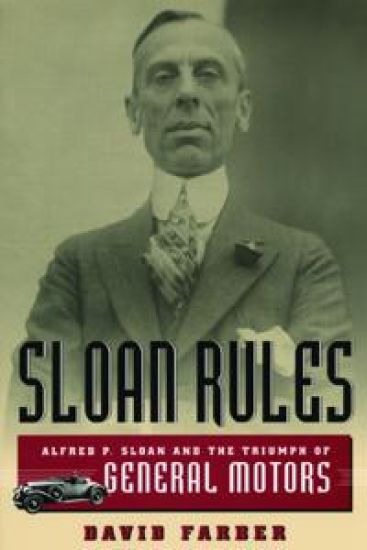
Sloan Rules

Sloan Rules

David Farber

University of Chicago Press
2005
nidottu
Alfred P. Sloan Jr. became the president of General Motors in 1923 and stepped down as its CEO in 1946. During this time, he led GM past the Ford Motor Company and on to international business triumph by virtue of his brilliant managerial practices and his insights into the new consumer economy he and GM helped to produce. Bill Gates has said that Sloan's 1964 management tome, My Years with General Motors, "is probably the best book to read if you want to read only one book about business." And if you want to read only one book about Sloan, that book should be historian David Farber's Sloan Rules.Here, for the first time, is a study of both the difficult man and the pathbreaking executive. Sloan Rules reveals the GM genius as not only a driven manager of men, machines, money, and markets but also a passionate and not always wise participant in the great events of his day. Sloan, for example, reviled Franklin Roosevelt and the New Deal; he firmly believed that politicians, government bureaucrats, and union leaders knew next to nothing about the workings of the new consumer economy, and he did his best to stop them from intervening in the private enterprise system. He was instrumental in transforming GM from the country's largest producer of cars into the mainstay of America's "Arsenal of Democracy" during World War II; after the war, he bet GM's future on renewed American prosperity and helped lead the country into a period of economic abundance. Through his business genius, his sometimes myopic social vision, and his vast fortune, Sloan was an architect of the corporate-dominated global society we live in today.David Farber's story of America's first corporate genius is biography of the highest order, a portrait of an extraordinarily compelling and skillful man who shaped his era and ours.
The Columbia Guide to America in the 1960s

The Columbia Guide to America in the 1960s

David Farber; Beth Bailey

Columbia University Press
2003
pokkari
The 1960s continue to be the subject of passionate debate and political controversy, a touchstone in struggles over the meaning of the American past and the direction of the American future. Amid the polemics and the myths, making sense of the Sixties and its legacies presents a challenge. This book is for all those who want to take it on. Because there are so many facets to this unique and transformative era, this volume offers multiple approaches and perspectives. The first section gives a lively narrative overview of the decade's major policies, events, and cultural changes. The second presents ten original interpretative essays from prominent historians about significant and controversial issues from the Vietnam War to the sexual revolution, followed by a concise encyclopedia articles organized alphabetically. This section could stand as a reference work in itself and serves to supplement the narrative. Subsequent sections include short topical essays, special subjects, a brief chronology, and finally an extensive annotated bibliography with ample information on books, films, and electronic resources for further exploration. With interesting facts, statistics, and comparisons presented in almanac style as well as the expertise of prominent scholars, The Columbia Guide to America in the 1960s is the most complete guide to an enduringly fascinating era.
The Columbia Guide to America in the 1960s

The Columbia Guide to America in the 1960s

David Farber; Beth Bailey

Columbia University Press
2001
sidottu
The 1960s continue to be the subject of passionate debate and political controversy, a touchstone in struggles over the meaning of the American past and the direction of the American future. Amid the polemics and the myths, making sense of the Sixties and its legacies presents a challenge. This book is for all those who want to take it on. Because there are so many facets to this unique and transformative era, this volume offers multiple approaches and perspectives. The first section gives a lively narrative overview of the decade's major policies, events, and cultural changes. The second presents ten original interpretative essays from prominent historians about significant and controversial issues from the Vietnam War to the sexual revolution, followed by a concise encyclopedia articles organized alphabetically. This section could stand as a reference work in itself and serves to supplement the narrative. Subsequent sections include short topical essays, special subjects, a brief chronology, and finally an extensive annotated bibliography with ample information on books, films, and electronic resources for further exploration. With interesting facts, statistics, and comparisons presented in almanac style as well as the expertise of prominent scholars, The Columbia Guide to America in the 1960s is the most complete guide to an enduringly fascinating era.
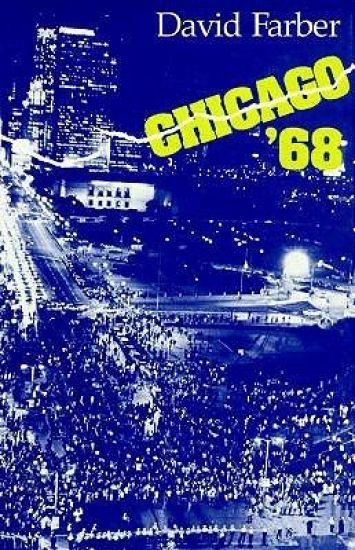
Chicago '68

Chicago '68

David Farber

University of Chicago Press
1994
nidottu
Entertaining and scrupulously researched, Chicago '68 reconstructs the 1968 Democratic Convention in Chicago—an epochal moment in American cultural and political history. By drawing on a wide range of sources, Farber tells and retells the story of the protests in three different voices, from the perspectives of the major protagonists—the Yippies, the National Mobilization to End the War, and Mayor Richard J. Daley and his police. He brilliantly recreates all the excitement and drama, the violently charged action and language of this period of crisis, giving life to the whole set of cultural experiences we call "the sixties." "Chicago '68 was a watershed summer. Chicago '68 is a watershed book. Farber succeeds in presenting a sensitive, fairminded composite portrait that is at once a model of fine narrative history and an example of how one can walk the intellectual tightrope between 'reporting one's findings' and offering judgements about them."—Peter I. Rose, Contemporary Sociology
Chicago '68

Chicago '68

David Farber

University of Chicago Press
1988
sidottu
Entertaining and scrupulously researched, Chicago '68 reconstructs the 1968 Democratic Convention in Chicago--an epochal moment in American cultural and political history. By drawing on a wide range of sources, Farber tells and retells the story of the protests in three different voices, from the perspectives of the major protagonists--the Yippies, the National Mobilization to End the War, and Mayor Richard J. Daley and his police. He brilliantly recreates all the excitement and drama, the violently charged action and language of this period of crisis, giving life to the whole set of cultural experiences we call "the sixties." "Chicago '68 was a watershed summer. Chicago '68 is a watershed book. Farber succeeds in presenting a sensitive, fairminded composite portrait that is at once a model of fine narrative history and an example of how one can walk the intellectual tightrope between 'reporting one's findings' and offering judgements about them."--Peter I. Rose, Contemporary Sociology