

Kirjailija
David Farley
Kirjat ja teokset yhdessä paikassa: 7 kirjaa, julkaisuja vuosilta 2010-2023, suosituimpien joukossa Modernist Travel Writing. Vertaile teosten hintoja ja tarkista saatavuus suomalaisista kirjakaupoista.
7 kirjaa
Kirjojen julkaisuhaarukka 2010-2023.
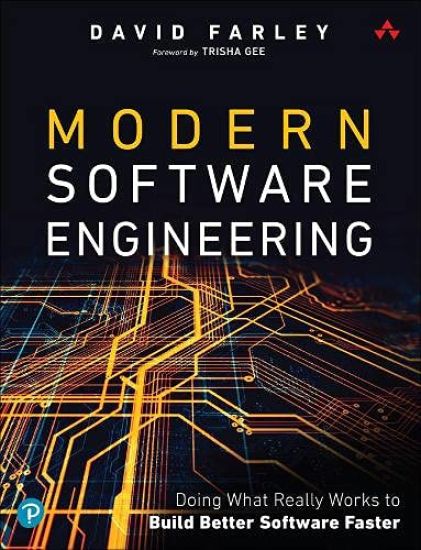
Improve Your Creativity, Effectiveness, and Ultimately, Your Code In Modern Software Engineering, continuous delivery pioneer David Farley helps software professionals think about their work more effectively, manage it more successfully, and genuinely improve the quality of their applications, their lives, and the lives of their colleagues. Writing for programmers, managers, and technical leads at all levels of experience, Farley illuminates durable principles at the heart of effective software development. He distills the discipline into two core exercises: learning and exploration and managing complexity. For each, he defines principles that can help you improve everything from your mindset to the quality of your code, and describes approaches proven to promote success. Farley's ideas and techniques cohere into a unified, scientific, and foundational approach to solving practical software development problems within realistic economic constraints. This general, durable, and pervasive approach to software engineering can help you solve problems you haven't encountered yet, using today's technologies and tomorrow's. It offers you deeper insight into what you do every day, helping you create better software, faster, with more pleasure and personal fulfillment. Clarify what you're trying to accomplishChoose your tools based on sensible criteriaOrganize work and systems to facilitate continuing incremental progressEvaluate your progress toward thriving systems, not just more "legacy code"Gain more value from experimentation and empiricismStay in control as systems grow more complexAchieve rigor without too much rigidityLearn from history and experienceDistinguish "good" new software development ideas from "bad" ones Register your book for convenient access to downloads, updates, and/or corrections as they become available. See inside book for details.


A visual and anecdotal exploration of the curious worlds hidden beneath our feet, including ancient cities, salt mine cathedrals, underground amusement parks, and more.From bone-filled catacombs to sculpted salt churches to hand-carved cave complexes large enough to house 20,000 people, Underground Worlds is packed with more than 50 unusual destinations that take some digging to find. Award-winning travel writer David Farley revels in the unexpected, whether it is a cave city in China which houses one of the world's largest collections of Buddhist art or an old salt mine converted into a theme park in Romania.Stunning photos help readers see places they could not even imagine, such as a three-story underground train station in Taiwan that is home to the a 4,500-panel "Dome of Light" that is the largest glasswork on Earth, as well as secret spaces, such as an ornate temple built beneath a suburban home in Italy. Throughout the fascinating text are themed entries of underground systems such as the 2,500-year-old water tunnels of Kish Qanat in Iran or engineering marvels like the New York City steam tunnels.

"This is an incisive study showing the instrumental role of travelling and travel writing in the late phase of modernism. Whether it is Wyndham Lewis in Morocco. Rebecca West In the Balkans, E.E. Cummings in [Soviet] Russia, or Ezra Pound in France - in each case, travelling was productive of an awareness and a formal repertoire germane to the writer's respective literary project. David Farley's book is part of an ongoing reassessment of modernism's vital historical, cultural, and political contexts." - Bernard Schweizer, author of Radicals on the Road: The Politics of English Travel Writing in the 1930s. As the study of travel writing has grown in recent years, scholars have largely ignored the literature of modernist writers. Modernist Travel Writing: Intellectuals Abroad, by David Farley, addresses this gap by examining the ways in which a number of writers employed the techniques and stylistic innovations of modernism in their travel narratives to variously engage the political, social, and cultural milieu of the years between the world wars. Modernist Travel Writing argues that the travel book is a crucial genre for understanding the development of modernism in the years between the wars, despite the established view that travel writing during the interwar period was largely an escapist genre - one in which writers hearkened back to the realism of nineteenth-century literature in order to avoid interwar anxiety. Farley analyzes works that exist on the margins of modernism, generically and geographically, works that have yet to receive the critical attention they deserve, partly due to their classification as travel narratives and partly because of their complex modernist styles. The book begins by examining the ways that travel and the emergent travel regulations in the wake of the First World War helped shape Ezra Pound's Cantos. From there, it goes on to examine E. E. Cumming's frustrated attempts to navigate the "unworld" of Soviet Russia in his book Eimi, Wyndham Lewis's satiric journey through colonial Morocco in Filibusters in Barbary, and Rebecca West's urgent efforts to make sense of the fractious Balkan states in Black Lamb and Grey Falcon. These modernist writers travelled to countries that experienced most directly the tumult of revolution, the effects of empire, and the upheaval of war during the years between World War I and World War II. Farley's study focuses on the question of what constitutes "evidence" for Pound, Lewis, Cummings, and West as they establish their authority as eyewitnesses, translate what they see for an audience back home, and attempt to make sense of a transformed and transforming modern world. Modernist Travel Writing makes an original contribution to the study of literary modernism while taking a distinctive look at a unique subset within the growing field of travel writing studies. David Farley's work will be of interest to students and teachers in both of these fields as well as to early-twentieth-century literary historians and general enthusiasts of modernist studies.
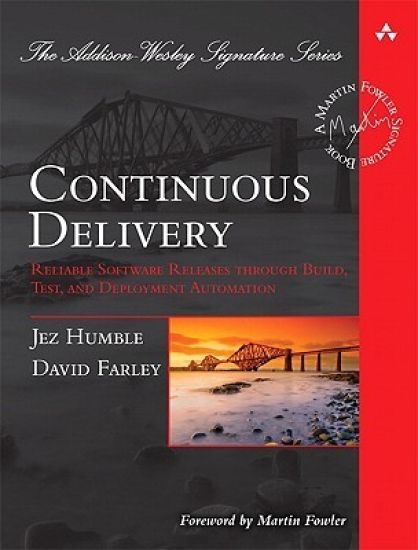
Winner of the 2011 Jolt Excellence Award! Getting software released to users is often a painful, risky, and time-consuming process.This groundbreaking new book sets out the principles and technical practices that enable rapid, incremental delivery of high quality, valuable new functionality to users. Through automation of the build, deployment, and testing process, and improved collaboration between developers, testers, and operations, delivery teams can get changes released in a matter of hours—sometimes even minutes–no matter what the size of a project or the complexity of its code base. Jez Humble and David Farley begin by presenting the foundations of a rapid, reliable, low-risk delivery process. Next, they introduce the “deployment pipeline,” an automated process for managing all changes, from check-in to release. Finally, they discuss the “ecosystem” needed to support continuous delivery, from infrastructure, data and configuration management to governance. The authors introduce state-of-the-art techniques, including automated infrastructure management and data migration, and the use of virtualization. For each, they review key issues, identify best practices, and demonstrate how to mitigate risks. Coverage includes Automating all facets of building, integrating, testing, and deploying softwareImplementing deployment pipelines at team and organizational levels Improving collaboration between developers, testers, and operationsDeveloping features incrementally on large and distributed teams Implementing an effective configuration management strategy Automating acceptance testing, from analysis to implementation Testing capacity and other non-functional requirements Implementing continuous deployment and zero-downtime releases Managing infrastructure, data, components and dependencies Navigating risk management, compliance, and auditing Whether you’re a developer, systems administrator, tester, or manager, this book will help your organization move from idea to release faster than ever—so you can deliver value to your business rapidly and reliably.
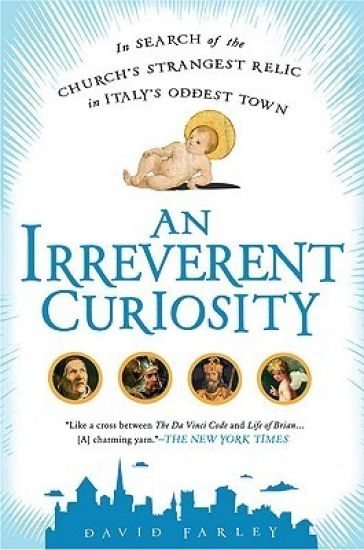
An Irreverent Curiosity: In Search of the Church's Strangest Relic in Italy's Oddesttown
David Farley
Avery Publishing Group
2010
nidottu
Read David Farley's posts on the Penguin Blog.A tour through the centuries and through a bizarre Italian town in search of an unbelievable relic: the foreskin of Jesus Christ In December 1983, a priest in the Italian hill town of Calcata shared shocking news with his congregation: the pride of their town, the foreskin of Jesus, had been stolen. Some postulated that it had been stolen by Satanists. Some said the priest himself was to blame. Some even pointed their fingers at the Vatican. In 2006, travel writer David Farley moved to Calcata, determined to find the missing foreskin, or at least find out the truth behind its disappearance. Farley recounts how the relic passed from Charlemagne to the papacy to a marauding sixteenth-century German solider before finally ending up in Calcata, where miracles occurred that made the sleepy town a major pilgrimage destination. Blending history, travel, and perhaps the oddest story in Christian lore, An Irreverent Curiosity is a weird and wonderful tale of conspiracy and misadventure.