Kirjojen hintavertailu. Mukana 12 391 801 kirjaa ja 12 kauppaa.

Kirjailija

David Farr

Kirjat ja teokset yhdessä paikassa: 27 kirjaa, julkaisuja vuosilta 1955-2026, suosituimpien joukossa Länk 2026 : nya pjäser för unga ensembler. Vertaile teosten hintoja ja tarkista saatavuus suomalaisista kirjakaupoista.

27 kirjaa

Kirjojen julkaisuhaarukka 1955-2026.

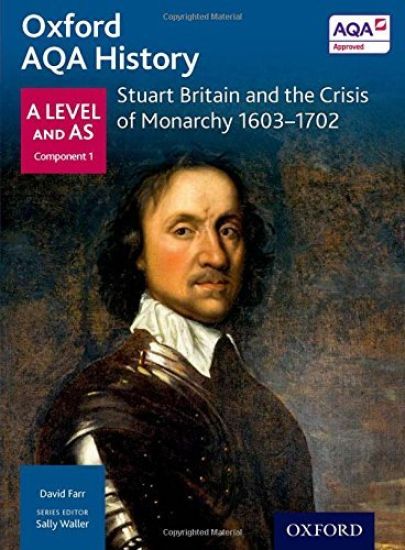
Oxford AQA History for A Level: Stuart Britain and the Crisis of Monarchy 1603-1702
Approved by AQA and tailored to the latest specification, Stuart Britain and the Crisis of Monarchy 1603-1702 helps students understand issues of change, continuity, and cause and consequence in this period of British history. It explores: - how the monarchy changed during Stuart Britain - why there were disputes over religion - how effective the opposition was - how important ideologies and individuals were Make connections between the six key thematic questions in the specification Focus on skills building and exam practice Key features are: - Source-Based Learning. Includes a wide range of sources and extracts to develop vital skills in historical interpretation and source analysis - Exam Practice. Features exam-style questions and study tips to help students prepare and perform Perfect for any student studying AQA AS or A Level History, this book helps students achieve success in Stuart Britain and the Crisis of Monarchy 1603-1702.
Major-General Thomas Harrison

Major-General Thomas Harrison

David Farr

Ashgate Publishing Limited
2014
sidottu
Thomas Harrison is today perhaps best remembered for the manner of his death. As a leading member of the republican regime and signatory to Charles I’s death warrant, he was hanged, drawn and quartered by the Restoration government in 1660; a spectacle witnessed by Samuel Pepys who recorded him ’looking as cheerful as any man could do in that condition’. Beginning with this grisly event, this book employs a thematic, rather than chronological approach, to illustrate the role of millenarianism and providence in the English Revolution, religion within the new model army, literature, image and reputation, and Harrison’s relationship with key individuals like Ireton and Cromwell as well as groups, most notably the Fifth Monarchists. Divided in three parts, the study starts with an analysis of Harrison’s last year of life, the nature of his response to the political collapse of the Interregnum regimes, and his apparent acceptance of the Restoration without overt resistance. Part two considers Harrison’s years of ’power’, analysing his political activities and influence in the New Model, especially with regard to the regicide. The final part ties Harrison’s political retreat to his initial emergence from obscurity; arguing that Harrison’s relative political quietism during the later 1650s was a reflection of the development of his millenarianism. Unlike the only two previous full length studies of Harrison the present work makes use of a full range of manuscript, primary and secondary sources, including the huge range of new material that has fundamentally changed how the early modern period is now understood. Fully footnoted and referenced, this study provides the first modern academic study of Harrison, and through him illuminates the key themes of this contested period.
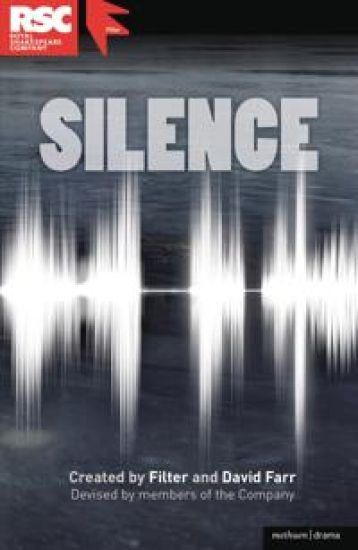
Silence

Silence

Filter Theatre; David Farr

Methuen Drama
2011
nidottu
Left alone in an unfamiliar land, Kate struggles to silence the noises inside her head and begins to question her own sanity. In London, Michael listens carefully to a conversation recorded twenty years ago. Can he hear a third silent person on the tape? In a small Russian town, Irina searches desperately for her missing friend, piecing together fragments from his life.From urban noise to rural emptiness, through rationalism to spirituality, from Russia to the UK, Silence is the latest collaboration between the celebrated theatre company Filter and RSC Associate Director David Farr. Silence premiered at Hampstead Theatre, London, on 12 May 2011, produced by the Royal Shakespeare Company.
The Queen Must Die

The Queen Must Die

David Farr

Samuel French Ltd
2007
nidottu
On the eve of Queen Elizabeth II's Golden Jubilee celebrations, a papier-mache statue of Her Royal Highness stands in Margaret Chivers' living-room in preparation for the Jubilee parade. Two factions converge on the house with the aim of vandalizing the statue - three girls who can see no other way of escaping the embarrassment of having to dance in the parade, and three lads who want to make an anti-monarchist statement. Politics, friendship, body image, Oliver Cromwell and Britney Spears feature in this ingenious slapstick comedy.
Henry Ireton and the English Revolution

Henry Ireton and the English Revolution

David Farr

The Boydell Press
2006
sidottu
A devout puritan, Henry Ireton was an immediate parliamentarian activist rising to the rank of Commissary-General of the New Model Army. Ireton shared Oliver Cromwell's religious enthusiasm and acted as one of his political mentors. Ireton, more than any other individual, even Cromwell, brought about the execution of Charles I. Indeed it was Ireton's influence, symbolised by his marriage to Bridget Cromwell, that did much to persuade Cromwell to become a regicide. Ireton's importance was through the theoretical and practical framework he provided for the revolution of 1647-9. As the 'penman' of the revolutionary army Ireton was an author of its significant political statements. Ireton was at the heart of the army's Heads of the Proposals, their attempt at settlement with the king in 1647, he was its chief negotiator with the Levellers at the Putney and Whitehall Debates and Ireton was chiefly responsible for the 1648 Remonstrance that justified the army's purge of Parliament and called for execution of justice on Charles I. In 1649 both Ireton and Cromwell embarked on the conquest of Ireland, Ireton remaining there asLord Deputy until he died on campaign in 1651.
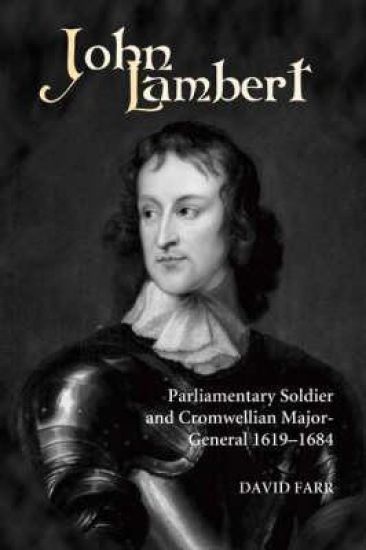
John Lambert, Parliamentary Soldier and Cromwellian Major-General, 1619-1684
A biography of one of the most prominent soldiers in the New Model Army, who made Cromwell Lord Protector but stopped him becoming king. John Lambert's life and career have long deserved this revealing study. The man who made Cromwell Lord Protector in 1653 also stopped him becoming king in 1657; and Lambert was the originator of the Instrument of Government, on which Cromwell's Protectorate was based. Committed to his deeply held, radical beliefs, Lambert first rose to prominence as a dashing cavalry commander in the civil wars of 1642 - 51, and he was a prominent upholder of the power ofthe New Model Army, particularly in his creation of the Major Generals, who ruled England in 1655. Lambert's refusal to countenance Cromwell as king saw his temporary fall from power, but he emerged after the Protector's death asa possible successor. His radical ideas seemed to threaten even 'his own side', and led to his imprisonment in the Tower in 1660, but he escaped and staged a last desperate republican stand against the return of Charles II. Although Lambert was subsequently convicted of treason, Charles did not have him executed - sure recognition that his character, private actions and beliefs were those of a man who was much more than a military revolutionary. DAVID FARR is head of history at Norwich School.