Kirjojen hintavertailu. Mukana 12 595 353 kirjaa ja 12 kauppaa.

Kirjailija

David Farrell Krell

Kirjat ja teokset yhdessä paikassa: 25 kirjaa, julkaisuja vuosilta 1990-2025, suosituimpien joukossa This Dagger, My Heart. Vertaile teosten hintoja ja tarkista saatavuus suomalaisista kirjakaupoista.

25 kirjaa

Kirjojen julkaisuhaarukka 1990-2025.

This Dagger, My Heart

This Dagger, My Heart

David Farrell Krell

STATE UNIVERSITY OF NEW YORK PRESS
2025
sidottu
Historical fiction centered around the life and tragic death of the German Romantic poet and philosopher Karoline von Günderrode. In 1806, when she was only twenty-six, Karoline von Günderrode plunged a dagger through her heart. She was a gifted poet and philosopher, a member of the circle of Romantic writers such as Bettine Brentano, Clemens Brentano, and Achim von Arnim. Women were not admitted to universities at the time (1780–1806) and so Karoline educated herself with the help of mentors and a library of books. She was devoted to the greatest writers, philosophers, and thinkers of her time and of all times, among them Goethe, Kant, Schelling, Novalis, Hölderlin, Plato, Heraclitus, and Empedocles. Yet neither her learning nor her intense love of nature were able to sustain her life. Karoline fell in love with a Heidelberg professor of classics who was married and unable or unwilling to leave his wife. There were of course other factors that led to her suicide—and the novel details them in its eighty-six episodes narrated by twenty-six different characters. Each character tells her or his or its own version of the story, and the reader is left to piece it all together—which is what one must do when confronting any case of suicide. We are called upon to understand the catastrophe but also to realize that our understanding will never satisfy us. Tragedy is not about understanding. When the old men of Thebes see Antigone marching to her tomb, they can only cry, "Child! Child!"
Struck by Apollo

Struck by Apollo

David Farrell Krell

STATE UNIVERSITY OF NEW YORK PRESS
2024
pokkari
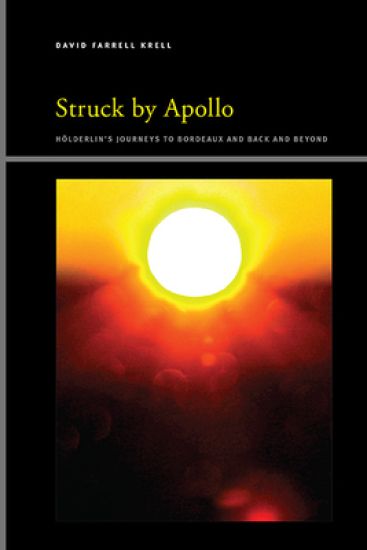
Retraces Hölderlin's journeys to Bordeaux and back in 1801–02, explaining why they are turning points in the great poet's life.2024 CHOICE Outstanding Academic TitleIn the winter of 1801–02, Friedrich Hölderlin traveled more than one thousand kilometers from his home near Stuttgart to Bordeaux, partly on foot, partly by post coach. It took him two months. Then, after four months serving as a tutor, he inexplicably decided to return home. Not long after he set out, his coach was held up by highwaymen, and, with no money, he had to walk the rest of the way. By the time he arrived, he was so disheveled and disoriented his friends did not recognize him. Though Hölderlin was just thirty-two years old, the trip marked the beginning of the end of his active life as one of Germany's greatest poets and thinkers.With more than sixty black-and-white photographs by the author and eighteen historical route maps, Struck by Apollo follows Hölderlin to Bordeaux and back and beyond. David Farrell Krell retraces the journeys in striking detail, reflecting on their significance for Hölderlin's life and work in ways that will interest a wide swath of fellow thinkers and travelers.
Struck by Apollo

Struck by Apollo

David Farrell Krell

STATE UNIVERSITY OF NEW YORK PRESS
2023
sidottu
Retraces Hölderlin's journeys to Bordeaux and back in 1801–02, explaining why they are turning points in the great poet's life.2024 CHOICE Outstanding Academic TitleIn the winter of 1801–02, Friedrich Hölderlin traveled more than one thousand kilometers from his home near Stuttgart to Bordeaux, partly on foot, partly by post coach. It took him two months. Then, after four months serving as a tutor, he inexplicably decided to return home. Not long after he set out, his coach was held up by highwaymen, and, with no money, he had to walk the rest of the way. By the time he arrived, he was so disheveled and disoriented his friends did not recognize him. Though Hölderlin was just thirty-two years old, the trip marked the beginning of the end of his active life as one of Germany's greatest poets and thinkers.With more than sixty black-and-white photographs by the author and eighteen historical route maps, Struck by Apollo follows Hölderlin to Bordeaux and back and beyond. David Farrell Krell retraces the journeys in striking detail, reflecting on their significance for Hölderlin's life and work in ways that will interest a wide swath of fellow thinkers and travelers.
Three Encounters

Three Encounters

David Farrell Krell

INDIANA UNIVERSITY PRESS
2023
pokkari
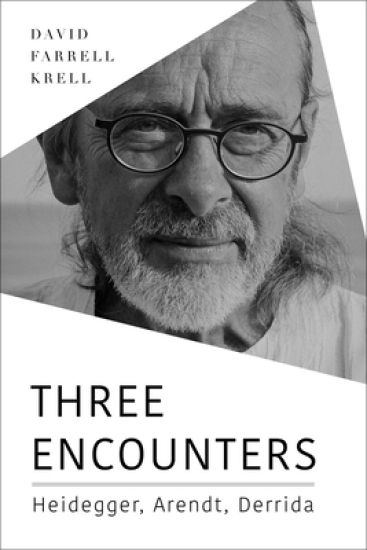
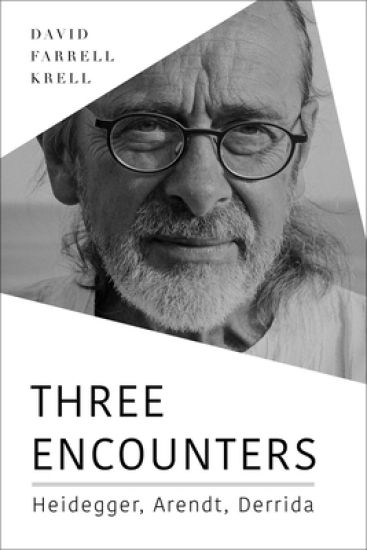
In 1974, thirty-year-old philosopher and translator David Farrell Krell began corresponding and meeting with Martin Heidegger and Hannah Arendt. Years later, he would meet Jacques Derrida and, through many letters and visits, come to know him well. Drawing on unpublished correspondence and Krell's warmly told personal recollections, Three Encounters presents an intimate and highly insightful look at the lives and ideas of three noted philosophers at the peak of their careers. Three Encounters offers a chance for readers to encounter these three great philosophers and their ideas, not merely through the lens of their biographies, but as "people" we come to know through their personal correspondence and Krell's recollections. Three Encounters demonstrates the intertwining of thought and lived experience.
Three Encounters

Three Encounters

David Farrell Krell

INDIANA UNIVERSITY PRESS
2023
sidottu
In 1974, thirty-year-old philosopher and translator David Farrell Krell began corresponding and meeting with Martin Heidegger and Hannah Arendt. Years later, he would meet Jacques Derrida and, through many letters and visits, come to know him well. Drawing on unpublished correspondence and Krell's warmly told personal recollections, Three Encounters presents an intimate and highly insightful look at the lives and ideas of three noted philosophers at the peak of their careers. Three Encounters offers a chance for readers to encounter these three great philosophers and their ideas, not merely through the lens of their biographies, but as "people" we come to know through their personal correspondence and Krell's recollections. Three Encounters demonstrates the intertwining of thought and lived experience.
A Black Forest Walden

A Black Forest Walden

David Farrell Krell

STATE UNIVERSITY OF NEW YORK PRESS
2022
pokkari
Compares life today in the German Black Forest with Thoreau's experiences at Walden Pond.Finalist for the 2022 Foreword INDIES Book of the Year Award in the Essay Category A Black Forest Walden is a work of philosophical reflection, nature description, and sly humor. In brief chapters, or aphorisms, the American philosopher David Farrell Krell recounts his experiences in a cabin located in the mountains of southern Germany's Black Forest, where he has lived for several decades. Insofar as Krell compares his experiences with those of Henry David Thoreau, who serves as both inspiration and irritation, the book could be described as a critical commentary on Thoreau's Walden. Yet it equally reads as a rigorous yet playful and profoundly literary manifestation of where and how the mind wanders. Hence, the "Marlonbrando" of the subtitle is not the late actor but a feral cat who frequents the cabin and comes to be an important interlocutor, as if playing the role of analyst to the author. The subjects Krell treats are wide-ranging: the changing seasons, environmental issues, romantic love, parent-child relations, European versus American "values," higher education, artistic creativity, solitude, and the contrast between lifestyles in a quiet Black Forest village and in a noisy contemporary United States. Forty-one black-and-white photographs taken by the author accompany and enliven the text.
A Black Forest Walden

A Black Forest Walden

David Farrell Krell

STATE UNIVERSITY OF NEW YORK PRESS
2022
sidottu
Compares life today in the German Black Forest with Thoreau's experiences at Walden Pond.Finalist for the 2022 Foreword INDIES Book of the Year Award in the Essay Category A Black Forest Walden is a work of philosophical reflection, nature description, and sly humor. In brief chapters, or aphorisms, the American philosopher David Farrell Krell recounts his experiences in a cabin located in the mountains of southern Germany's Black Forest, where he has lived for several decades. Insofar as Krell compares his experiences with those of Henry David Thoreau, who serves as both inspiration and irritation, the book could be described as a critical commentary on Thoreau's Walden. Yet it equally reads as a rigorous yet playful and profoundly literary manifestation of where and how the mind wanders. Hence, the "Marlonbrando" of the subtitle is not the late actor but a feral cat who frequents the cabin and comes to be an important interlocutor, as if playing the role of analyst to the author. The subjects Krell treats are wide-ranging: the changing seasons, environmental issues, romantic love, parent-child relations, European versus American "values," higher education, artistic creativity, solitude, and the contrast between lifestyles in a quiet Black Forest village and in a noisy contemporary United States. Forty-one black-and-white photographs taken by the author accompany and enliven the text.
The Cudgel and the Caress

The Cudgel and the Caress

David Farrell Krell

State University of New York Press
2020
pokkari
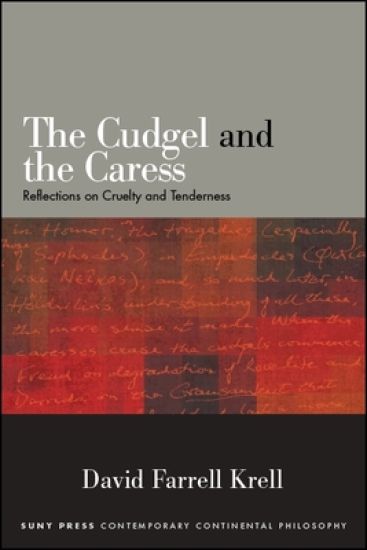
Offers philosophical and psychological reflections on cruelty and tenderness.The Cudgel and the Caress explores the enduring significance of tenderness and cruelty in a range of works across philosophy, psychoanalysis, and literature. Divided into two parts, the book initially focuses on tenderness, with David Farrell Krell delivering original readings of Homer's Iliad, Sophocles's Antigone, and writings by Hölderlin, Hegel, Freud, and Derrida that deal with the importance of tenderness and the tragic consequences of its absence. Part One concludes with an extended reading of Robert Musil's Man Without Qualities, in which Krell analyzes the tender relationship between Ulrich and Agathe. In Part Two, Krell begins by examining Otto Rank's Birth Trauma, which reflects on the tenderness of gestation in the womb and the cruel necessity of birth. He then turns to an examination of cruelty in general, focusing on Derrida's challenge to contemporary psychoanalysis, his opposition between Kant and Nietzsche, and his analysis (and indictment) of the death penalty. Groundbreaking and insightful, the book provides a rare philosophical treatment of subjects vital to the world we live in.
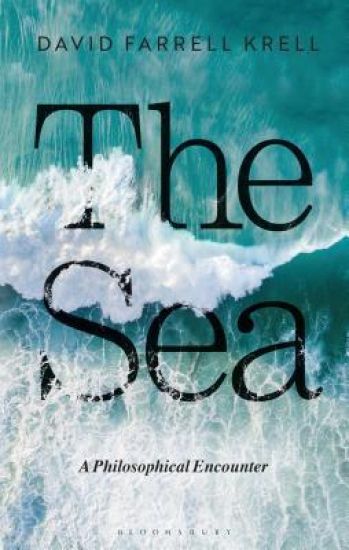
The Sea

The Sea

David Farrell Krell

Bloomsbury Academic
2018
nidottu
Humankind has a profound and complex relationship with the sea, a relationship that is extensively reflected in biology, psychology, religion, literature and poetry. The sea cradles and soothes us, we visit it often for solace and inspiration, it is familiar, being the place where life ultimately began. Yet the sea is also dark and mysterious and often spells catastrophe and death. The sea is a set of contradictions: kind, cruel, indifferent. She is a blind will that will ‘have her way’. In exploring this most capricious of phenomena, David Farrell Krell engages the work of an array of thinkers and writers including, but not limited to, Homer, Thales, Anaximander, Heraclitus, Plato, Aristotle, Hölderlin, Melville, Woolf, Whitman, Nietzsche, Heidegger, Schelling, Ferenczi, Rank and Freud. The Sea explores the significance in Western civilization of the catastrophic and generative power of the sea and what humankind’s complex relationship with it reveals about the human condition, human consciousness, temporality, striving, anxiety, happiness and mortality.
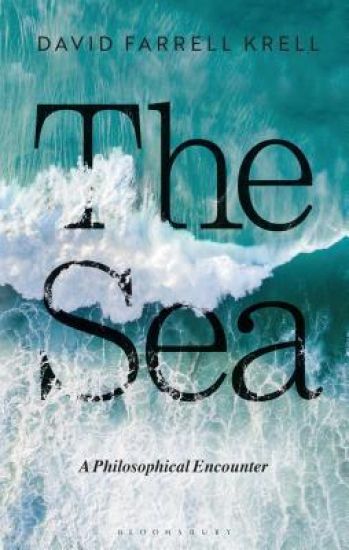
The Sea

The Sea

David Farrell Krell

Bloomsbury Academic
2018
sidottu
Humankind has a profound and complex relationship with the sea, a relationship that is extensively reflected in biology, psychology, religion, literature and poetry. The sea cradles and soothes us, we visit it often for solace and inspiration, it is familiar, being the place where life ultimately began. Yet the sea is also dark and mysterious and often spells catastrophe and death. The sea is a set of contradictions: kind, cruel, indifferent. She is a blind will that will ‘have her way’. In exploring this most capricious of phenomena, David Farrell Krell engages the work of an array of thinkers and writers including, but not limited to, Homer, Thales, Anaximander, Heraclitus, Plato, Aristotle, Hölderlin, Melville, Woolf, Whitman, Nietzsche, Heidegger, Schelling, Ferenczi, Rank and Freud. The Sea explores the significance in Western civilization of the catastrophic and generative power of the sea and what humankind’s complex relationship with it reveals about the human condition, human consciousness, temporality, striving, anxiety, happiness and mortality.
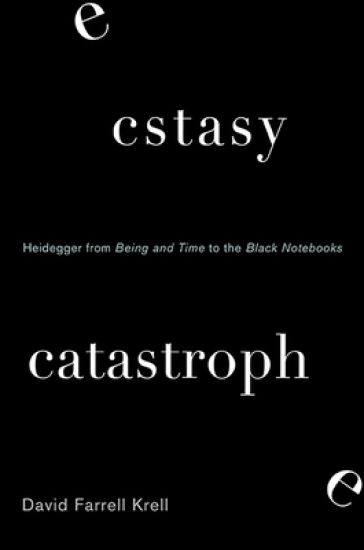
Ecstasy, Catastrophe

Ecstasy, Catastrophe

David Farrell Krell

State University of New York Press
2016
pokkari
Lectures on ecstatic temporality and on Heidegger's political legacy.In Ecstasy, Catastrophe, David Farrell Krell provides insight into two areas of Heidegger's thought: his analysis of ecstatic temporality in Being and Time (1927) and his "political" remarks in the recently published Black Notebooks (1931–1941). The first part of Krell's book focuses on Heidegger's interpretation of time, which Krell takes to be one of Heidegger's greatest philosophical achievements. In addition to providing detailed commentary on ecstatic temporality, Krell considers Derrida's analysis of ekstasis in his first seminar on Heidegger, taught in Paris in 1964–1965. Krell also relates ecstatic temporality to the work of other philosophers, including Aristotle, Augustine, Kant, Schelling, Hölderlin, and Merleau-Ponty; he then analyzes Dasein as infant and child, relating ecstatic temporality to the "mirror stage" theory of Jacques Lacan.The second part of the book turns to Heidegger's Black Notebooks, which have received a great deal of critical attention in the press and in philosophical circles. Notorious for their pejorative references to Jews and Jewish culture, the Notebooks exhibit a level of polemic throughout that Krell takes to be catastrophic in and for Heidegger's thought. Heidegger's legacy therefore seems to be split between the best and the worst of thinking-somewhere between ecstasy and catastrophe.Based on the 2014 Brauer Lectures in German Studies at Brown University, the book communicates the fruits of Krell's many years of work on Heidegger in an engaging and accessible style.
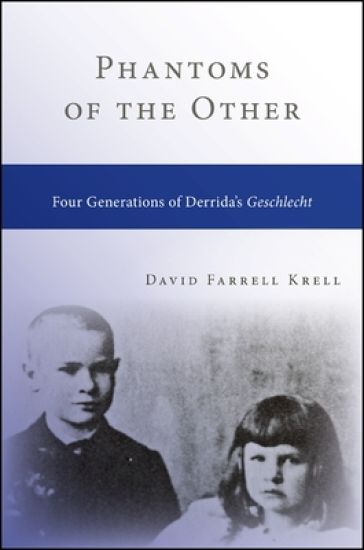
Phantoms of the Other

Phantoms of the Other

David Farrell Krell

State University of New York Press
2015
pokkari
Features a reconstruction of an unfinished text by Jacques Derrida from his most penetrating series of readings of Heidegger's philosophy.During the 1980s Jacques Derrida wrote and published three incisive essays under the title Geschlecht, a German word for "generation" and "sexuality." These essays focused on the philosophy of Martin Heidegger, taking up the rarely discussed issue of sexual difference in Heidegger's thought. A fourth essay-actually the third in the series-was never completed and never published. In Phantoms of the Other, David Farrell Krell reconstructs this third Geschlecht on the basis of archival materials and puts it in the context of the entire series. Touching on the themes of sexual difference, poetics, politics, and criticism as practiced by Heidegger, Derrida's unfinished third essay offers a penetrating critical analysis of Heidegger's views on sexuality and Heidegger's reading of the love poems of Georg Trakl, one of the greatest Expressionist poets of the German language, who died during the opening days of the First World War.
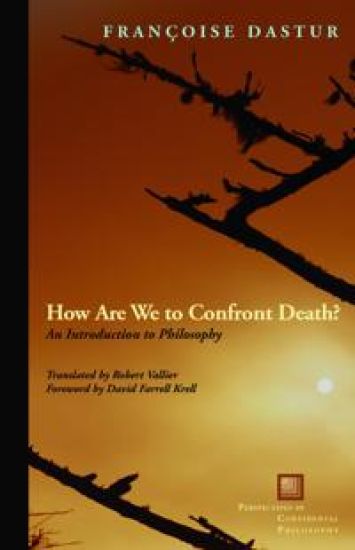
How Are We to Confront Death?

How Are We to Confront Death?

Françoise Dastur; David Farrell Krell

Fordham University Press
2012
pokkari
Confronting death means looking it squarely in the face. Contemporary society refuses to do so, preferring to hide it and hide from it. Funeral rites no longer function as a way to mediate death or to maintain a link between the living and dead. Today the disappearance of certain funerary practices attests to the denial of death as such. They reflect a preference for focusing on remembering the life of the deceased in order to neutralize death, thus displacing the value of mourning, now viewed as something to be done as quickly as possible. Moreover, science, like religion before it and like the contemporary "cult of the body," has fed our fantasies about immortality, promising us longer lives of better quality, and even the possibility of conquering death altogether. Despite all these attempts to overcome or neutralize death, humanity has been unable to eliminate its anxiety about death and nothingness. True to her roots in phenomenology, Dastur not only examines these contemporary tendencies with a critical eye but also argues that we must once again learn to assume death, to become mortal, to learn how to die. Death is not the last moment of human life, but rather its essential attribute. Dastur's skill as a "translator" of phenomenology into accessible and clear prose is nowhere more apparent than in her "little book on death"—indeed, the intended audience is less those who specialize in phenomenology or academic philosophy than a nonspecialist public hungry for philosophical reflection on what is closest to us. And nothing is closer to us than the ever-present possibility of our own imminent death. As its subtitle suggests, this book is an "introduction to philosophy," one that obliges the reader to ask what it means to be human and to embrace death and mortality as the defining essence of our humanity.
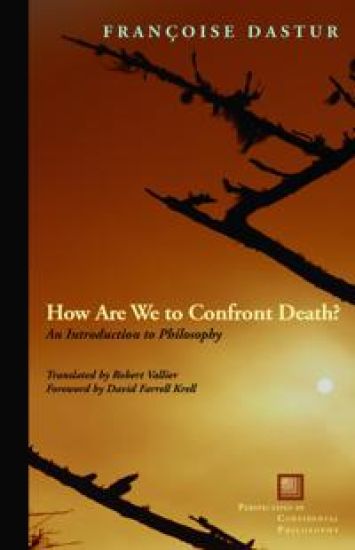
How Are We to Confront Death?

How Are We to Confront Death?

Françoise Dastur; David Farrell Krell

Fordham University Press
2012
sidottu
Confronting death means looking it squarely in the face. Contemporary society refuses to do so, preferring to hide it and hide from it. Funeral rites no longer function as a way to mediate death or to maintain a link between the living and dead. Today the disappearance of certain funerary practices attests to the denial of death as such. They reflect a preference for focusing on remembering the life of the deceased in order to neutralize death, thus displacing the value of mourning, now viewed as something to be done as quickly as possible. Moreover, science, like religion before it and like the contemporary "cult of the body," has fed our fantasies about immortality, promising us longer lives of better quality, and even the possibility of conquering death altogether. Despite all these attempts to overcome or neutralize death, humanity has been unable to eliminate its anxiety about death and nothingness. True to her roots in phenomenology, Dastur not only examines these contemporary tendencies with a critical eye but also argues that we must once again learn to assume death, to become mortal, to learn how to die. Death is not the last moment of human life, but rather its essential attribute. Dastur's skill as a "translator" of phenomenology into accessible and clear prose is nowhere more apparent than in her "little book on death"—indeed, the intended audience is less those who specialize in phenomenology or academic philosophy than a nonspecialist public hungry for philosophical reflection on what is closest to us. And nothing is closer to us than the ever-present possibility of our own imminent death. As its subtitle suggests, this book is an "introduction to philosophy," one that obliges the reader to ask what it means to be human and to embrace death and mortality as the defining essence of our humanity.
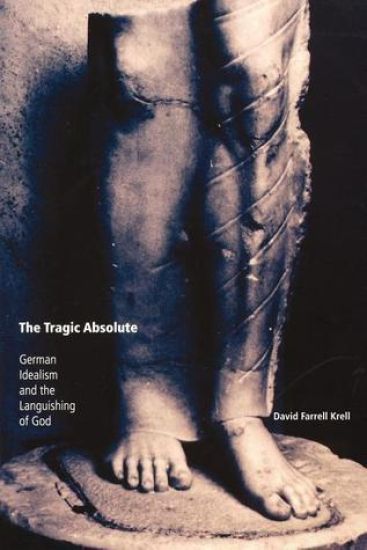
The Tragic Absolute

The Tragic Absolute

David Farrell Krell

Indiana University Press
2005
pokkari
"This is vintage Krell—he is as always, a reader in the best sense of the word. . . ." —Dennis J. Schmidt "Krell is a strong and often eloquent writer . . . I regard this to be one of his most important works. . . ." —Jason M. Wirth In The Tragic Absolute, David Farrell Krell shows that German Idealist and Romantic theories of literature and aesthetic judgment, especially when it comes to tragedy, are closer to the heart of metaphysics and ethics than previously thought. Krell not only explores the contributions of Schelling, Hölderlin, Novalis, Hegel, and Nietzsche to the aesthetics of tragedy, he also charts the fate of the absolute and speculative philosophy in terms of the tragic. Krell explodes the usual conception that aesthetic judgments about literary genres are relatively marginal subjects for philosophy. Indeed, in Krell's view, even God himself, the very absolute of traditional metaphysics, is seen as languishing and condemned to tragic downfall. Questions concerning the death of God, the role of trauma and forgetting in narrative, the overcoming of barriers between humans and other living beings, and the role of music and rhythm as sources of ecstasy are highlighted in this keen, precise, and lively book.
The Purest of Bastards

The Purest of Bastards

David Farrell Krell

Pennsylvania State University Press
2000
pokkari
The “deconstruction” that is commonly seen to be the method of Derrida’s philosophy has an inescapably negative connotation. To counter this view of Derrida’s thought as basically destructive, David Farrell Krell invites readers to understand how it may instead be seen as fundamentally affirmative—just as Nietzsche’s philosophy, so allegedly nihilistic, is at heart a call for tragic affirmation, in amor fati. But, while affirmative, Derrida is also engaged in a thinking of mourning, which he views as the promise of memory—a fragile yet vital promise that binds past and future. The book explores what mourning means in Derrida’s writing and how the labors of mourning and affirmation are mediated by works of art. Thus the book engages many different areas of Derrida’s work, from the classic texts of deconstruction to the more recent meditations on art and mourning."This chance [affirmation without issue] can come to us only from you, do you hear me? Do you understand me? . . . And me, the purest of bastards, leaving bastards of all kinds just about everywhere.” This passage from Derrida’s La Carte postale nicely encapsulates what David Farrell Krell wants to convey about Derrida’s thought—its astonishing mix of negativity and affirmation in his labors of mourning.
Contagion

Contagion

David Farrell Krell

Indiana University Press
1998
pokkari
"Krell writes here with a brilliance of style that few other philosophers can match." —John Sallis Although the Romantic Age is usually thought of as idealizing nature as the source of birth, life, and creativity, David Farrell Krell focuses on the preoccupation of three key German Romantic thinkers—Novalis, Schelling, and Hegel—with nature's destructive powers—contagion, disease, and death.
Infectious Nietzsche

Infectious Nietzsche

David Farrell Krell

Indiana University Press
1996
pokkari
"Infectious Nietzsche is simply one of the most interesting and engaging works to appear on Nietzsche's philosophy in years." —David Allison Krell explores health, illness, and creativity in the life and thought of Friedrich Nietzsche. Drawing on a varied literature of philosophical reflections on health, and analyzing Nietzsche's confrontation with traditional values, Krell skillfully engages the legacy of Platonism and Western metaphysics that is at the core of Nietzsche's thought. Nietzsche's genealogical critique, his doctrine of eternal recurrence of the same, and the Nietzschean physiology and psychology of decadence are principal foci. Anyone interested in a philosophical reflection on questions of genius and pathology, and all readers of Nietzsche, will find Krell's new book compelling reading.
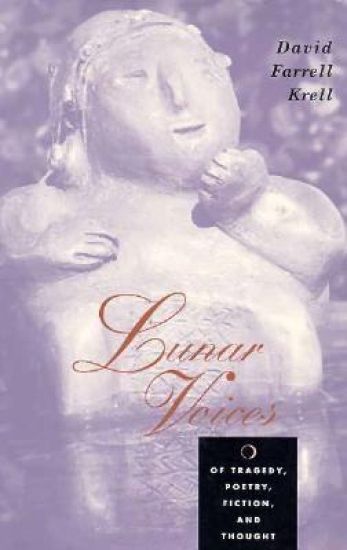
Lunar Voices

Lunar Voices

David Farrell Krell

University of Chicago Press
1995
nidottu
This text reflects on nine writers and philosophers, including Heidegger, Derrida, Blanchot and Holderlin, in a personal exploration of the meaning of sensual love, language, tragedy and death. The moon provides a unifying image that guides Krell's development of a new poetics in which literature and philosophy become one. The author pursues important philosophical motifs such as time, rhythm and desire, through texts by Nietzsche, Trakl, Empedocles, Kafka and Garcia Marquez. He surveys instances in which poets or novelists explicitly address philosophical questions, and philosophers confront literary texts - Heidegger's and Derrida's appropriations of Georg Trakl's poetry, Blanchot's obsession with Kafka's tortuous love affairs and Garcia Marquez's use of Nietzsche's idea of the Eternal Return - all linked by the tragic hero Empedocles. In his search to understand the insatiable desire for completeness that patterns so much art and philosophy, Krell investigates the identification of the lunar voice with woman in various roles - lover, friend, sister, shadow and narrative voice.