Kirjailija
David Faulkner
Kirjat ja teokset yhdessä paikassa: 19 kirjaa, julkaisuja vuosilta 2001-2023, suosituimpien joukossa The Criminal Justice System. Vertaile teosten hintoja ja tarkista saatavuus suomalaisista kirjakaupoista.
19 kirjaa
Kirjojen julkaisuhaarukka 2001-2023.
This timely publication explains the duties and responsibilities of the Home Office following its reorganization in 2007. The New Home Office provides an accessible introduction but with sufficient detail for the more critical reader seeking to understand both the historic and modern-day role of this key office of State. Easy to read - written in the style of the acclaimed Waterside Press Introductory Series - this handbook contains a wealth of information making it an indispensable resource. An ideal text for students and practitioners alike. A closely observed account of the 21st century arrangements to ensure public safety, law enforcement and crime reduction in the UK. Contents Foreword, Preface and Charts The Home Office: An Overview Public Safety, Liberty and Protecting the Public The Police and Policing Crime Prevention and Crime Reduction Terrorism and Emergency Powers Border Controls, Immigration and Asylum Safeguarding Personal Identity Miscellaneous Home Office Responsibilities The Changed Role of the Home Secretary A Fresh Start and a New Era Reviews (of the First Edition with The New Ministry of Justice): 'Should be read by everybody involved in the Criminal Justice System': Internet Law Book Reviews 'Invaluable': Thames View 'Bryan Gibson and Waterside Press are to be congratulated on producing these stimulating books': Justice of the Peace Author Bryan Gibson is a barrister-at-law and a former a clerk to the justices. He is editor-in-chief of Waterside Press. David Faulkner teaches at the Oxford Centre for Criminal justice Research and is a former Deputy Secretary of State at the Home Office.
The Criminal Justice System
Bryan Gibson; Paul Cavadino; David Faulkner
Waterside Press
2008
pokkari
A comprehensive and accessible overview of the Criminal Justice System, its framework, institutions, practitioners and working methods that will be of interest to any reader seeking an up-to-date description of this important and historic sphere of public affairs. An informative, practical handbook that describes the wide-ranging developments and changes that have taken place in relation to crime prevention, public safety, the entire criminal process and the punishment of offenders. Highly acclaimed since first published in 1995, this new extensively updated edition of The Criminal Justice System covers the spectrum of the criminal process against a backdrop of the Common Law, legislation and human rights from investigation and arrest to trial, sentence, release from prison and parole, as well as such key reforms as the Ministry of Justice and new-style Home Office. Part of our growing Introductory Series, and available on this website as a special value three book set with the matching volumes;The New Home Office: An Introduction and The New Ministry of Justice: An Introduction for just GBP39.95 (and delivered FREE in the UK). N.B. Total separate RRP for these three books is GBP64.50, total price when bought separately on watersidepress.co.uk is currently GBP55.50 Reviews 'This is an excellent book and is one which any student studing criminal justice should buy. The book will be particular interest to my first year undergraduate students studying an 'Introduction to Criminal Process and Procedure' module. This text will be key in assisting them in their academic journey. A recommended buy for my students!': Laura Monteith, Runshaw College 'So straightforward and comprehensive - perfect. I loved it, and so will my first years': Claire Kinsella, Edge Hill University 'Up to date information on recent changes. Very well written in clear informative style. Good definitions and Glossary': Ann Kneebone, Truro and Penwith College 'This is a book, which can be purchased and read by the man in the street without having concern about misunderstanding words, expressions, etc. For the more legal minded it is a superb introduction to any legal aspect before advancing into a more complicated legal tome. It is book that can be recommended to anyone requiring clarification on a legal subject in plain words': Internet Law Book Reviews 'The range of topics is broad and apt. The language is accessible and the layout clear. There are short sections on the successive steps involved as an offence is investigated, a suspect charged, convicted, imprisoned and released under supervision. The agencies which support and invigilate the process are introduced and there is a useful glossary': Independent Monitor Authors Bryan Gibson is a barrister-at-law and editor-in-chief, Waterside Press. Paul Cavadino is chief executive of Nacro. David Faulkner is a senior research fellow at the Centre for Criminological Research, Oxford University * Previous editions were titled "Introduction to the Criminal Justice Process"
If you've completed the entire De cabo a rabo series, you won't skip a beat. If you've been studying Spanish elsewhere for a few years, you're in for a treat. Either way, you have a solid foundation in the language and are ready for new, advanced challenges, and that's where Al fin y al cabo ("when it was all said and done") comes in. But this time around, as in life, there are no units, there are no limits. RELATOS Y AN LISIS - Book 2 of 2 in the "Al fin y al cabo - Spanish" seriesNew, advanced stories for the advancing reader will put what you've learned in De cabo a rabo and elsewhere to the test. Each "relato" will introduce new vocabulary and challenge you with comprehension questions, content-analysis questions, grammar-analysis questions, and a related writing prompt. Don't miss ACTIVIDADES - Book 1 of 2 in the "Al fin y al cabo - Spanish" seriesAll your classic favorites from De cabo a rabo like "absurdo o normal," "todo menos," and word scramble are back and better than ever. You'll also find refreshingly new, advanced activities, now that your skills are primed for them, and it won't take long before you add them to your list of greatest hits. Everything you have learned in De cabo a rabo, and more, is in play, so you may want to have Vocabulario and Gram tica "al alcance de la mano." For answer keys and bonus resources, go to David Faulkner Books dot com.For additional support, go to Spanish for the Love of It dot com.
If you've completed the entire De cabo a rabo series, you won't skip a beat. If you've been studying Spanish elsewhere for a few years, you're in for a treat. Either way, you have a solid foundation in the language and are ready for new, advanced challenges, and that's where Al fin y al cabo ("when it was all said and done") comes in. But this time around, as in life, there are no units, there are no limits.Actividades - All your classic favorites from De cabo a rabo like "absurdo o normal," "todo menos," and word scramble are back and better than ever. You'll also find refreshingly new, advanced activities, now that your skills are primed for them, and it won't take long before you add them to your list of greatest hits. Everything you have learned in De cabo a rabo, and more, is in play, so you may want to have Vocabulario and Gram tica "al alcance de la mano." Don't miss Relatos y an lisis (coming soon) - New, advanced stories for the advancing reader will put what you've learned in De cabo a rabo and elsewhere to the test. Each "relato" will introduce new vocabulary and challenge you with comprehension questions, content-analysis questions, grammar-analysis questions, and a related writing prompt. For answer keys and bonus resources, go to David Faulkner Books dot com.
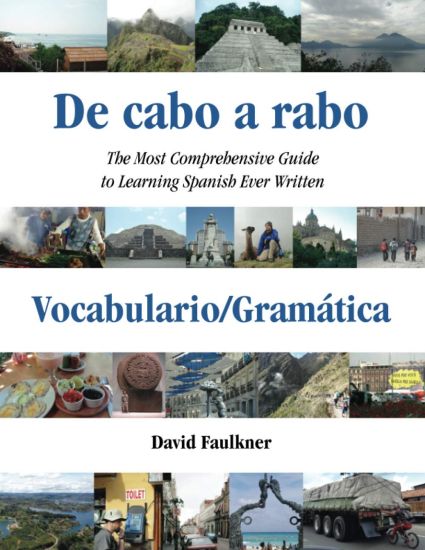
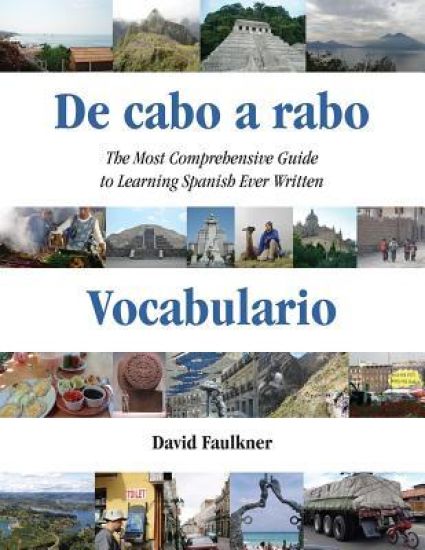
VOCABULARIO/GRAM TICA - 2 great books in 1 (out of 3) in the "De cabo a rabo - Spanish" series - Gram tica, broken down into 30 manageable units, explains, in detail, everything there is to know about Spanish grammar. Whether you are a beginner, intermediate, or advanced student, this is the only guide you'll ever need to push you to the next level. Gram tica answers questions you never knew you had and delves into subtleties other books don't dare to wade into. If you want to attain the elusive superior level, you need De cabo a rabo: Gram tica. - Vocabulario, broken down into 30 themed units, complements Gram tica unit by unit, giving you context to learn the grammar and expand your vocabulary. If you master Vocabulario, you'll not only be able to effectively contribute to conversations on just about every daily topic you come across with native speakers, you'll also impress the heck out of them.For experienced students looking to brush up on their Spanish grammar and expand their Spanish vocabulary, Vocabulario/Gram tica provides the perfect combination. For those looking for exercises to put their grammar and vocabulary into practice, pick up Actividades as well.Don't miss ACTIVIDADES - book 3 of 3 in the "De cabo a rabo - Spanish" seriesBroken down into 30 workable units, Actividades goes hand-in-hand with Gram tica and Vocabulario, providing fun and challenging practice every step of the way. For answer keys and bonus activities, like crossword puzzles and vocabulary quizzes, go to www.DavidFaulknerBooks.com.If you teach Spanish and are looking for a curriculum to use with your students or a no-fluff guide to help you polish your own skills, look no further. You no longer have to purchase book after book trying to piecemeal a complete curriculum. This is it, A to Z, beginning to end, start to finish, or as the saying goes in Spanish: de cabo a rabo.
Cooperative Strategy
John Child; David Faulkner; Stephen Tallman; Linda Hsieh
Oxford University Press
2019
sidottu
Cooperation has become the leading strategy adopted by business and other organizations. It is taking on new forms that are adapted to changing market expectations and technological possibilities in the rapidly evolving business environment. This new edition of Cooperative Strategy provides a comprehensive view of the practical and theoretical literature concerning cooperative strategies, and the alliance and network organizational forms that are the enablers of these strategies. It takes the reader through the stages of developing a cooperative alliance, from choosing a cooperative form and selecting partners, to establishing an alliance and managing the process of cooperation. It examines cooperative strategies in different sectors as well as internationally, and discusses performance criteria and evolution of cooperation over time. With insights from internationally recognized experts on cooperative strategy, this book presents extensive research on the topic while also addressing practical issues of alliance management. Echoing the words of the famous social psychologist Kurt Lewin that 'there is nothing so practical as a good theory', the authors provide a sound understanding of the theory and research on cooperative strategy so as to inform its practice. In this respect, this new edition follows its predecessor as an essential resource for both students and managers alike.
Cooperative Strategy
John Child; David Faulkner; Stephen Tallman; Linda Hsieh
Oxford University Press
2019
nidottu
Cooperation has become the leading strategy adopted by business and other organizations. It is taking on new forms that are adapted to changing market expectations and technological possibilities in the rapidly evolving business environment. This new edition of Cooperative Strategy provides a comprehensive view of the practical and theoretical literature concerning cooperative strategies, and the alliance and network organizational forms that are the enablers of these strategies. It takes the reader through the stages of developing a cooperative alliance, from choosing a cooperative form and selecting partners, to establishing an alliance and managing the process of cooperation. It examines cooperative strategies in different sectors as well as internationally, and discusses performance criteria and evolution of cooperation over time. With insights from internationally recognized experts on cooperative strategy, this book presents extensive research on the topic while also addressing practical issues of alliance management.
A powerful coming of age story as a boy walks into the life of being a man. From an agonising childhood from a broken home to venturing forward trying to make a meaning in life. That was Craig's story as he moved through the years, battling the obstacles of life as time never allowed his wounds to heal from years gone by. Caring for a sick father with a terminal disease, little did Craig know that what he fought against for his father he would inherit. Troubled from a break-up of his parents, he soon realised the learned behaviour from a distorted and bitter past would return to haunt his own future relationships. On his journey he would question the moralities of life as he struggled against the pressure of being a man. This is one man's battle to overcome a nightmarish beginning as a youngster and then confronting those very demons again that clung to his very soul. The question is, will he do it? A powerful, must read for those who have endured the many hardships of life who wish to strive forward and put to rest once and for all decades of trouble and strife.
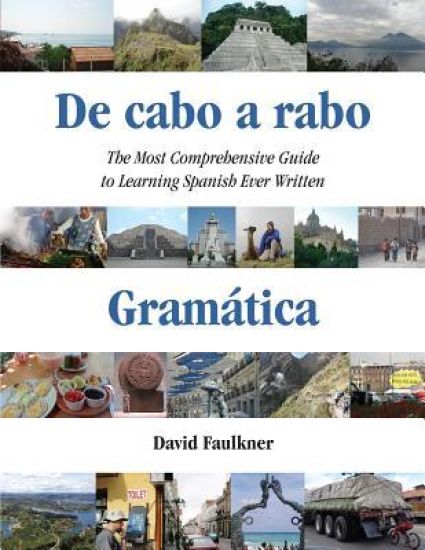
Gram tica, broken down into 30 manageable units, explains, in detail, everything there is to know about Spanish grammar. Whether you are a beginner, intermediate, or advanced student, this is the only guide you'll ever need to push you to the next level. Gram tica answers questions you never knew you had and delves into subtleties other books don't dare to wade into. If you want to attain the elusive superior level, you need De cabo a rabo: Gram tica.If you teach Spanish and are looking for a curriculum to use with your students or a no-fluff guide to help you polish your own skills, look no further. You no longer have to purchase book after book trying to piecemeal a complete curriculum. This is it, A to Z, beginning to end, start to finish, or as the saying goes in Spanish: de cabo a rabo.
Vocabulario, broken down into 30 themed units, complements Gram tica unit by unit, giving you context to learn the grammar and expand your vocabulary. If you master Vocabulario, you'll not only be able to effectively contribute to conversations on just about every daily topic you come across with native speakers, you'll also impress the heck out of them.If you teach Spanish and are looking for a curriculum to use with your students or a no-fluff guide to help you polish your own skills, look no further. You no longer have to purchase book after book trying to piecemeal a complete curriculum. This is it, A to Z, beginning to end, start to finish, or as the saying goes in Spanish: de cabo a rabo.
Servant of the Crown takes the reader inside Whitehall to see how issues of the day were handled and policies formed as the author progressed to working alongside Home Secretaries and other senior politicians. Charting high profile events and everyday activities, it covers government's approaches towards political, strategic and operational situations, looking also at traditions of public service and freedom under the law. Centrally the book discusses the relationship between civil servants and ministers; also with judges, magistrates and criminal justice services across a 30-year time frame (from the late-1950s to the early-1990s). It includes an explanation of the author's understanding of a civil servant's duty as a servant of the Crown, historically and in a world where public services have become increasingly subject to political intervention. The book is illustrated by examples of the interaction between political and professional points of view, covering situations familiar to the police, courts and correctional services.Equally it will be of interest to students of government, especially those concerned with how policy is formulated in answer to the immediacy of political events or the continuum of knowledge and experiences of civil servants (whichever administration is in power). With a Foreword by the Rt Hon Sir John Chilcot, GCB.
* Backed by the Magistrates' Association * Coincides with the 650th anniversary of JPs. * Essential reading for criminal justice practitioners. * The key text at a critical time for government and the courts. * Supported by a substantial media campaign. * A celebratory volume and collection piece. After 650 years justices of the peace find themselves at a crossroads. This book looks at the role of one of the UK's oldest institutions in a rapidly changing world. Well-informed, thought-provoking and published at a critical time when government is looking to find ever more efficient and cost-effective ways to deliver justice, this book by leading commentators from the courts, universities, the media and the magistracy itself sets examines the options for the future. It looks at economic and other pressures as well as demands for new kinds of community justice and changing ideas about public and voluntary service. It's sheer breadth, expertise and diversity of views means it will be in demand across the criminal justice system as the best word on the subject. What is the modern-day role of the magistracy and how might it better serve the citizen's to whom it ultimately belongs? From an age-old institution as a bastion of democracy to the idea that there should be fresh avenues of engagement and a greater sense of a fairness and transparency, each of the distinguished contributors' chapter is valuable within what is a highly innovative and readable work. With a Foreword by Lord Dholakia.
Successive governments have promised to reform criminal justice in England and Wales and to make it more efficient and more effective in preventing and reducing crime. And yet there is still a feeling that not enough has been achieved and more has to be done - a feeling that the English riots in August 2011 painfully revived. Where Next for Criminal Justice? offers a principled framework for the development of policy, legislation and practice, and argues with examples for an approach to criminal justice which acknowledges the limitations on what governments and reforms of criminal justice can achieve on their own, and where the focus is on promoting procedural justice and legitimacy; fostering human decency and civility; and enabling prevention, restoration and desistance from crime.
Understanding Global Strategy is the eagerly anticipated new textbook from Susan Segal-Horn and David Faulkner for international strategy courses at all levels. Exploring strategic decision-making on a global scale from multinational corporations through to small enterprises, Segal-Horn and Faulkner cover globalization, networking, culture barriers and benefits, ethics and emerging economies to provide the complete introduction for today’s global strategy courses. Key learning features include: Premium Case Studies – a selection of in-depth international case studies from premium case study authors provide practical illustrations of key issues in real-life situations Strategies in Action – a wealth of shorter case studies to reinforce principles outlined in each chapter Discussion Questions – are provided at the end of each chapter to test knowledge and understanding, and provide a basis for group discussions and activities This textbook is essential reading for all international or global strategy modules on advance undergraduate or postgraduate (particularly MBA) programmes, in addition to broader strategic management and professional courses.
Cooperative Strategy
John Child; David Faulkner; Stephen Tallman
Oxford University Press
2005
nidottu
Cooperation has become the leading strategy adopted by business and other organizations. It is taking on new forms that are adapted to changing market expectations and technological possibilities in the rapidly evolving business environment. This new edition of Cooperative Strategy provides a comprehensive view of the practical and theoretical literature concerning cooperative strategies, and the alliance and network organizational forms that are the enablers of these strategies. It takes the reader through the stages of developing a cooperative alliance, from choosing a cooperative form and selecting partners, to establishing an alliance and managing the process of cooperation. It examines cooperative strategies in different sectors as well as internationally, and discusses performance criteria and evolution of cooperation over time. With insights from internationally recognized experts on cooperative strategy, this book presents extensive research on the topic while also addressing practical issues of alliance management.
The Management of International Acquisitions
John Child; David Faulkner; Robert Pitkethly
Oxford University Press
2003
nidottu
This book addresses two important areas of concern for managers and management researchers. What are the management challenges involved in the acquisition of a foreign subsidiary? Why do companies pursue a strategy of growth through acquisition when the evidence shows performance is disappointing? In addition to addressing these questions, the authors examine both the acquisitions of foreign companies in the UK and the 'acquirers' themselves. They discuss the theoretical background to the debate over the significance of national management practices as opposed to international norms of practice shaped by global forces transcending national boundaries. They then compare and contrast the management practices of the five countries from which the acquirers covered in this book originate: the UK, the USA, Japan, France, and Germany. The authors' research indicates that while considerable convergence is taking place on many dimensions of management practice, distinct national management styles still exist among acquiring companies. The findings also show that although some policies are generally associated with better post-acquisition performance across the board, no one national approach is more successful than another, so long as it is implemented with confidence, determination, and consistency. Failure tends to follow from a lack of these qualities, rather than from having the 'wrong' management style.
The Management of International Acquisitions
John Child; David Faulkner; Robert Pitkethly
Oxford University Press
2001
sidottu
This book addresses three important areas of concern for managers and management researchers. What are the management challenges involved in the acquisition of a foreign subsidiary? Which post-acquisition changes lead to better performance among acquired companies? What scope is there for the retention of national styles of management when building international networks through acquisition? In addressing these questions, the authors examine acquisitions by foreign companies in the UK. They discuss the theoretical background to the debate over the significance of national management practices as opposed to international norms of 'best practice' shaped by global forces transcending national boundaries. They then compare and contrast the management practices of the five countries from which the acquirers covered in this book originate: the UK, the USA, Japan, France, and Germany. The authors' research indicates that while considerable convergence is taking place on many dimensions of management practice, distinct national management styles still exist among acquiring companies. The findings also show that although some policies are generally associated with better post-acquisition performance across the board, no one national approach is more successful than another, so long as it is implemented with confidence, determination, and consistency. Failure tends to follow from a lack of these qualities, rather than from having the 'wrong' management style.