Kirjojen hintavertailu. Mukana 12 249 931 kirjaa ja 12 kauppaa.

Kirjailija

David Fenner

Kirjat ja teokset yhdessä paikassa: 6 kirjaa, julkaisuja vuosilta 2009-2025, suosituimpien joukossa Mini-Lathe Tools & Projects for Home Machinists. Vertaile teosten hintoja ja tarkista saatavuus suomalaisista kirjakaupoista.

6 kirjaa

Kirjojen julkaisuhaarukka 2009-2025.

Mini-Lathe for Home Machinists

Mini-Lathe for Home Machinists

David Fenner

FOX CHAPEL PUBLISHING
2025
nidottu
The versatile and affordable mini-lathe has become the best-selling piece of machinery and is often purchased as a first step for beginners. Mini-Lathe for Home Machinists explains the different parts of the mini-lathe and shows how they can be used to complete different projects. Author David Fenner covers all the basics, from safety and materials, setting up, and tuning the machine to using accessories and performing a full range of essential tasks. It includes detailed instructions for making useful components like shafts, bushings, spindles, part-off tools, DRO handwheels, and a radius turning attachment. Chapters are broken down into easy-to-understand sections, and include hundreds of clear illustrations that will help guide readers as they set up a machine and start to use it. A complete course on using and improving the new generation of budget lathes, this book is a perfect choice for beginners as well as for those who are experienced with the lathe, but have never tried the mini-lathe.

The Art and Philosophy of the Garden

The Art and Philosophy of the Garden

David Fenner; Ethan Fenner

OXFORD UNIVERSITY PRESS INC
2024
sidottu
The Art and Philosophy of the Garden offers the first authoritative and comprehensive philosophical discussion of the aesthetics of gardens. Philosopher David Fenner and horticulturist Ethan Fenner address such questions as: what is a garden? Are some gardens works of art? What does it mean to appreciate gardens aesthetically? Given that gardens are always changing in a variety of ways, how is it possible to compare, evaluate, or find meaning in them? How can we interpret gardens? How do we value gardens and gardening? While grounded in Western thought, Fenner and Fenner bring to bear global ideas and examples of gardens and gardening techniques. Inspired by a surge of philosophical interest in gardening, Fenner and Fenner argue that some gardens are indeed works of art. They explore how we might understand the aesthetic properties of gardens, and focus on what it means to "read" the formal aspects of gardens -- what the authors call "garden form" -- as a basis for interpreting a garden. They discuss the intersection of gardens/gardening and value: questions such as what sort of value gardens possess; whether and how ethics are relevant to gardens; how gardens may be evaluated and compared; and the value of the practice of gardening. This comprehensive philosophical discussion on the aesthetics of gardens and gardening will not only interest those concerned with garden theory but will interest any thoughtful and intellectually curious gardener.
Plain Aesthetics

Plain Aesthetics

David Fenner

BROADVIEW PRESS LTD
2024
pokkari
Plain Aesthetics is an introduction to philosophical aesthetics and the philosophy of art written for all audiences. While students studying philosophy will find it informative, it is specifically constructed to be accessible to anyone, even those with no background in philosophy. It contains no jargon or technical language, except where such terms are defined at their point of use. Philosophers and theorists are discussed only where appropriate, and their views explained in context. Plain Aesthetics is written as a conversation between the author and the reader, and employs a great many examples of fascinating and influential artworks. Images and other works are presented to the reader both within the text and through an innovative interactive system. This book makes aesthetics accessible to everyone.
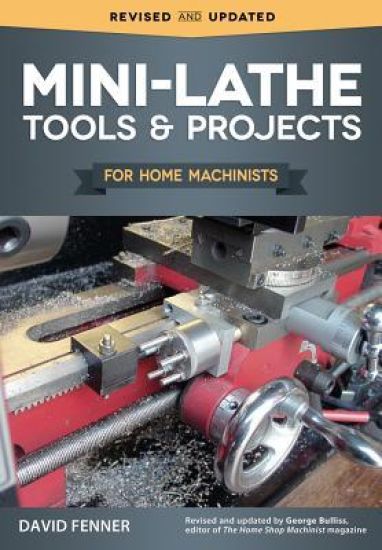
Mini-Lathe Tools & Projects for Home Machinists

Mini-Lathe Tools & Projects for Home Machinists

David Fenner

FOX CHAPEL PUBLISHING
2018
nidottu
If you own a mini-lathe, this book is a must-have resource to fully understand everything this little machine can do In continuation with its introductory manual, Mini-Lathe for Home Machinists, this book presents a series of projects to extend the versatility of small metal lathes. With detailed explanations, full-color photography, and insightful diagrams and illustrations, author David Fenner provides practical tools and modifications to help you get the most from your mini-lathe. From improving radius turning attachments and strategies for saddle adjustments to techniques for taper turning and knurling, the projects and concepts described in this book can also be applied to various small model engineering lathes and scaled to suit other equipment.
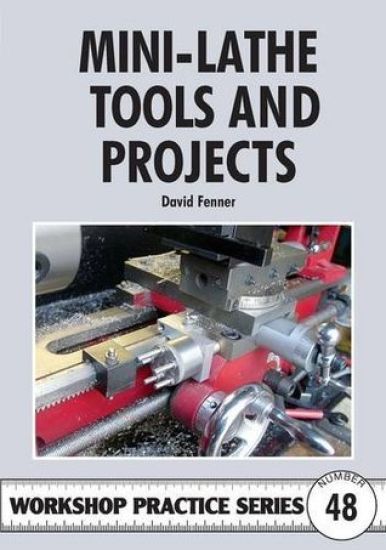
Mini-Lathe Tools and Projects

Mini-Lathe Tools and Projects

David Fenner

Special Interest Model Books
2012
pokkari
This book follows on from the same author's introduction to the Mini-Lathe (Workshop Practice Series No. 43) and presents a series of projects which are intended to extend the versatility of this little machine and specific tools such as the radius turning attachment, the tailstock and the dividing head.
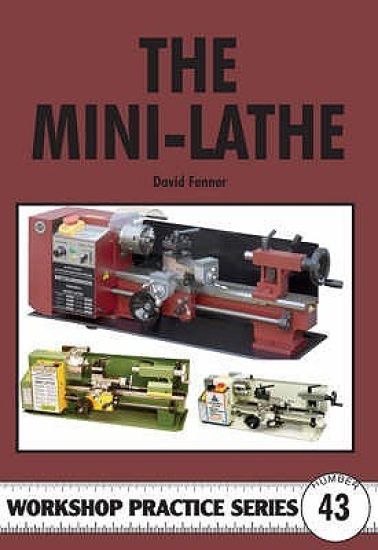
The Mini-Lathe

The Mini-Lathe

David Fenner

Special Interest Model Books
2009
nidottu
The Mini-lathe has become the best-selling item of machinery in the hobby engineering market - often purchased as a first step by beginners to the hobby. For many years Myford lathes were considered as 'standard issue' for model engineers, but at about one-twentieth of the price of a new Myford, these new Mini-lathes set the benchmark for the future. This book is a complete course on using and improving this new generation of budget lathes. It explains everything from setting up and 'tuning' the machine for best performance to using accessories and carrying out tasks. The Mini-Lathe covers: Safety, Preparing the lathe, Tooling materials & geometry, Tooling up, Getting started, Gear cover, Head stock dividing attachment, Modifications for milling, Improving rigidity, Making a part off too , Guided centre punch, filing rest, use of steadies and chuck depth stop, Toolpost powered spindle, saw table and grinding rest , DRO handwheels, taper roller bearings.