Kirjojen hintavertailu. Mukana 12 499 709 kirjaa ja 12 kauppaa.

Kirjailija

David Freedberg

Kirjat ja teokset yhdessä paikassa: 9 kirjaa, julkaisuja vuosilta 1991-2021, suosituimpien joukossa Fungi. Vertaile teosten hintoja ja tarkista saatavuus suomalaisista kirjakaupoista.

9 kirjaa

Kirjojen julkaisuhaarukka 1991-2021.

Iconoclasm

Iconoclasm

David Freedberg

University of Chicago Press
2021
sidottu
With new surges of activity from religious, political, and military extremists, the destruction of images has become increasingly relevant on a global scale. A founder of the study of early modern and contemporary iconoclasm, David Freedberg has addressed this topic for five decades. His work has brought this subject to a central place in art history, critical to the understanding not only of art but of all images in society. This volume collects the most significant of Freedberg's texts on iconoclasm and censorship, bringing five key works back into print alongside new assessments of contemporary iconoclasm in places ranging from the Near and Middle East to the United States, as well as a fresh survey of the entire subject. The writings in this compact volume explore the dynamics and history of iconoclasm, from the furious battles over images in the Reformation to government repression in modern South Africa, the American culture wars of the early 1990s, and today's cancel culture. Freedberg combines fresh thinking with deep expertise to address the renewed significance of iconoclasm, its ideologies, and its impact. This volume also provides a supplement to Freedberg's essay on idolatry and iconoclasm from his pathbreaking book, The Power of Images. Freedberg's writings are of foundational importance to this discussion, and this volume will be a welcome resource for historians, museum professionals, international law specialists, preservationists, and students.

Visions of the Self

Visions of the Self

David Freedberg; Wendy Monkhouse

Rizzoli International Publications
2020
sidottu
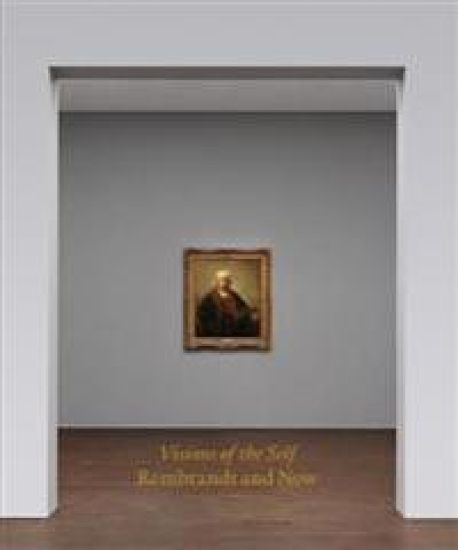
Published to commemorate an exhibition presented by Gagosian in partnership with English Heritage, this stunning volume centers on Rembrandt s masterpiece Self-Portrait with Two Circles (c. 1665), from the collection of Kenwood House in London. The painting is considered to be Rembrandt s greatest late self-portrait and is accompanied here by examples of the genre from leading artists of the past one hundred years. These include works by Francis Bacon, Jean-Michel Basquiat, Lucian Freud, and Pablo Picasso, as well as contemporary artists such as Georg Baselitz, Glenn Brown, Urs Fischer, Damien Hirst, Howard Hodgkin, Giuseppe Penone, Richard Prince, Cindy Sherman, and Rudolf Stingel, among others. Also featured is a new work by Jenny Saville, created in response to Rembrandt s masterpiece. Full-color plates of the works, generous details, and installation views of the exhibition accompany an expansive essay by art historian David Freedberg that provides a close look at the self-portraits created by Rembrandt throughout his life and considers the role of the Dutch master as the precursor of all modern painting.
The Young Durer

The Young Durer

Stephanie Buck; David Freedberg; Stephanie Porras; Michael Roth

Paul Holberton Publishing
2013
sidottu
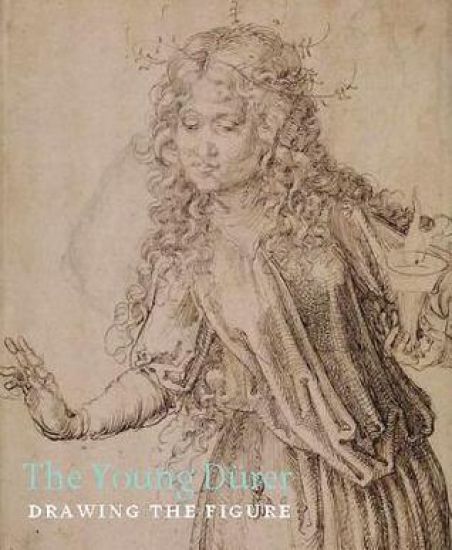
Accompanying a landmark exhibition at the Courtauld Gallery, this book examines the remarkable drawings made by Durer as a young man from 1490 to 1495, especially those made during his journeyman years, or Wanderjahre – considered the final part of a craftsman’s training – and a second shorter trip which immediately followed and seems to have brought the artist to Italy. These trips form the framework for the book, which focuses on the young artist’s figure studies and has at its heart the Courtauld Gallery’s double-sided drawing of a Wise Virgin and Two studies of the artist’s left leg. This superbly ambitious work serves as a springboard to explore in depth the role of drawing at this stage of Durer’s career. It allows us to address a series of crucial questions: how Durer formed ‘his hand’, how he responded to artistic challenges presented by contemporary and earlier art (both on a stylistic and an iconographic level), how his pursuit of professional success was linked with the quest for an individual artistic identity, and how the strategy of recording his own creative achievements in drawings dovetails with his claim for a new status for the artist in his city. The scholarly and beautifully illustrated catalogue is introduced with five essays by distinguished experts. Stephanie Buck examines the documentary evidence and attempts to reconstruct the motivations and activities of Durer’s travels as a young man. David Freedberg discusses Durer’s obsessive observation and recording of himself in portraits and in studies of his limbs. These represent the first critical steps in the artist’s developing understanding of the body, and of the ways in which its movements could not just show emotion, but rouse the equivalent sense of torsion, tension and pathos in the bodies and minds of his viewers. Stephanie Porras looks at Durer’s copies of drawings or prints circulating in Nuremberg workshops or acquired during the Wanderjahre, which were used as a means of seeking inspiration, of challenging himself to draw more sophisticated figures and dynamic compositions. Michael Roth asks the question of how the three strands of the art of the line – drawing, engraving and woodcut – structurally correspond in Durer’s work and, consequently, how drawing merges with certain manual aspects of printing. A final essay presents new technical research on Durer’s early drawings undertaken collaboratively in a number of leading collections of the artist’s work, and aims to enrich our understanding of the young Durer’s approach to the medium of drawing.
Fungi

Fungi

David Pegler; David Freedberg

Harvey Miller Publishers
2006
sidottu
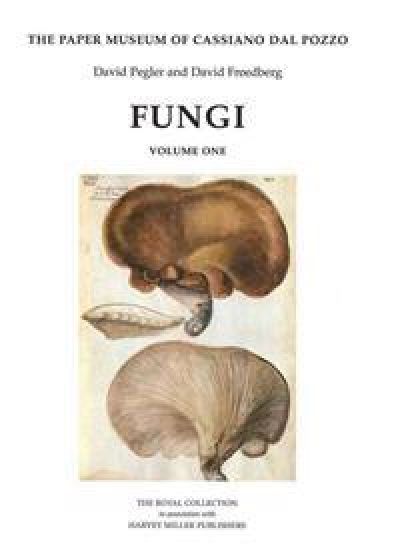
These three volumes catalogue the extensive corpus of mycological drawings in the Paper Museum of Cassiano dal Pozzo. Executed mostly in watercolour between 1625 and 1630 and depicting fungi native to Umbria and the environs of Rome, they constitute the first sustained attempt to survey all the larger fungi of a region, recording in detail the stages of their growth. Laden with notes on colour, smell, taste, weight, season and the locality in which the specimens had been found, the almost six hundred folios were commissioned by Federico Cesi (1585-1630), founder of Europe's first scientific academy, the Accademia dei Lincei. They were acquired by Cassiano dal Pozzo after Cesi's death and were greatly admired by those who saw them in the seventeenth and eighteenth centuries. Thought to have been lost until their rediscovery in 1979 in the library of the Institut de France in Paris, the drawings are also remarkable for their pioneering use of the microscope, a novel instrument given to Cesi in 1624 by Galileo and used throughout the pages of these manuscripts to enhance the direct observation of nature. Also included are drawings of fungi commissioned by Cassiano and his brother Carlo Antonio dal Pozzo now in the Royal Library, Windsor Castle, and an early set of copies of the Cesi originals in the library of the Royal Botanic Gardens at Kew. Each drawing is reproduced in colour with accompanying text, and two introductory essays discuss the scientific investigations and collecting activities of Cesi and Cassiano and the importance of these drawings in the history of science and art. David Pegler retired in 1998 as Head of Mycology at the Royal Botanic Gardens, Kew. His taxonomic research has specialized in tropical and temperate Basidiomycetes, for which he received a Science Research Council individual merit promotion, and he has published 16 books and over 300 scientific papers. He is a Fellow of the Linnean Society, London, of the Norwegian Academy of Science and Letters, and Centenary Fellow of the British Mycological Society. He has held visiting professorships at the Institute of Terrestrial Ecology, Lodz, Poland, the Instituto do Botanica, Sao Paulo, Brazil, and the University of Jilin, China. David Freedberg is Professor in the History of Art at Columbia University, New York, and Director of the Italian Academy for Advanced Studies. He has written extensively on the art and culture of the seventeenth century, including the intersection of art and science in the age of Galileo, most notably in The Eye of the Lynx (Chicago, 2002).
The Eye of the Lynx

The Eye of the Lynx

David Freedberg

University of Chicago Press
2003
nidottu
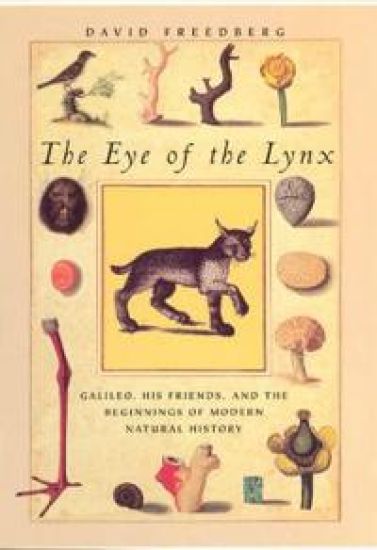
Some years ago, David Freedberg opened a dusty cupboard at Windsor Castle and discovered hundreds of vividly coloured, masterfully precise drawings of all sorts of plants and animals from the Old and New Worlds. Coming upon thousands more drawings like them across Europe, Freedberg finally traced them all back to a little-known scientific organization from 17th-century Italy called the Academy of Linceans (or Lynxes). Founded by Prince Federico Cesi in 1603, the Linceans took as their task nothing less than the documentation and classification of all of nature in pictorial form. In this first book-length study of the Linceans to appear in English, Freedberg focuses especially on their unprecedented use of drawings based on microscopic observation and other new techniques of visualization. Where previous thinkers had classified objects based mainly on similarities of external appearance, the Linceans instead turned increasingly to sectioning, dissection and observation of internal structures. They applied their new research techniques to an incredible variety of subjects, from the objects in the heavens studied by their most famous (and infamous) member, Galileo Galilei - whom they supported at the most critical moments of his career - to the flora and fauna of Mexico, bees, fossils and the reproduction of plants and fungi. But by demonstrating the inadequacy of surface structures for ordering the world, the Linceans unwittingly planted the seeds for the demise of their own favourite method - visual description - as a mode of scientific classification. Profusely illustrated and engagingly written, "The Eye of the Lynx" uncovers a crucial episode n the development of visual representation and natural history. And perhaps as important, it offers readers a dazzling array of early modern drawings, from magnificently depicted birds and flowers to frogs in amber, monstrously misshapen citrus fruits and more.
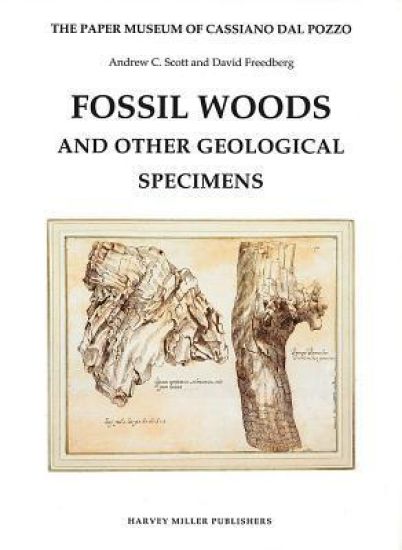
Fossil Woods and Other Geological Specimens

Fossil Woods and Other Geological Specimens

Andrew C. Scott; David Freedberg

Harvey Miller Publishers
2001
sidottu
This new Catalogue Raisonne, Part III in the series on Natural History, is based on the collection originally formed by Prince Federico Cesi in the early 17th century and later acquired by Cassiano. These drawings constitute the first truly scientific study of fossilized woods and are executed with such finesse, skill and detail that they will be of immense interest both to art-historians and to historians of science. The drawings, the majority of which have remained unstudied and unpublished until now, include specimens of wood and animal fossils, ammonites and concretions, pyrits and baked clays, as well as a series of field drawings giving the sites where these specimens were found. The introductory essays discuss the background to Cesi's project as well as the importance of the drawings to the history of seventeenth- century culture and science. 424p, 242 illus with 62 in color (Harvey Miller 2000)
The Power of Images

The Power of Images

David Freedberg

University of Chicago Press
1991
nidottu
"This learned and heavy volume should be placed on the shelves of every art historical library."—E. H. Gombrich, New York Review of Books"This is an engaged and passionate work by a writer with powerful convictions about art, images, aesthetics, the art establishment, and especially the discipline of art history. It is animated by an extraordinary erudition."—Arthur C. Danto, The Art Bulletin"Freedberg's ethnographic and historical range is simply stunning. . . . The Power of Images is an extraordinary critical achievement, exhilarating in its polemic against aesthetic orthodoxy, endlessly fascinating in its details. . . . This is a powerful, disturbing book."—T. J. Jackson Lears, Wilson Quarterly"Freedberg helps us to see that one cannot do justice to the images of art unless one recognizes in them the entire range of human responses, from the lowly impulses prevailing in popular imagery to their refinement in the great visions of the ages."—Rudolf Arnheim, Times Literary Supplement