Kirjojen hintavertailu. Mukana 12 595 353 kirjaa ja 12 kauppaa.

Kirjailija

David G. Embrick

Kirjat ja teokset yhdessä paikassa: 4 kirjaa, julkaisuja vuosilta 2013-2020, suosituimpien joukossa Race and Gender in the Classroom. Vertaile teosten hintoja ja tarkista saatavuus suomalaisista kirjakaupoista.

4 kirjaa

Kirjojen julkaisuhaarukka 2013-2020.

Race and Gender in the Classroom

Race and Gender in the Classroom

Laurie Cooper Stoll; David G. Embrick

Lexington Books
2015
nidottu
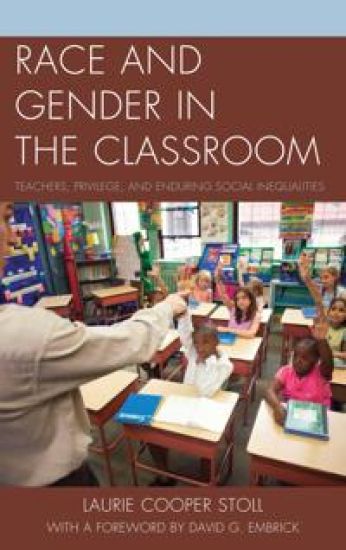
Race and Gender in the Classroom explores the paradoxes of education, race, and gender, as Laurie Cooper Stoll follows eighteen teachers carrying out their roles as educators in an era of “post-racial” and “post-gendered” politics. Because there are a number of contentious issues converging simultaneously in these teachers’ everyday lives, this is a book comprised of several interrelated stories. On the one hand, this is a story about teachers who care deeply about their students but are generally oblivious to the ways in which their words and behaviors reinforce dominant narratives about race and gender, constructing for their students a worldview in which race and gender do not matter despite their students’ lived experiences demonstrating otherwise. This is a story about dedicated, overworked teachers who are trying to keep their heads above water while meeting the myriad demands placed upon them in a climate of high-stakes testing. This is a story about the disconnect between those who mandate educational policy like superintendents and school boards and the teachers who are expected to implement those policies often with little or no input and few resources. This is ultimately a story, however, about how the institution of education itself operates in a “post-racial” and “post-gendered” society.

Race and Gender in the Classroom

Race and Gender in the Classroom

Laurie Cooper Stoll; David G. Embrick

Lexington Books
2013
sidottu
Race and Gender in the Classroom explores the paradoxes of education, race, and gender, as Laurie Cooper Stoll follows eighteen teachers carrying out their roles as educators in an era of “post-racial” and “post-gendered” politics. Because there are a number of contentious issues converging simultaneously in these teachers’ everyday lives, this is a book comprised of several interrelated stories. On the one hand, this is a story about teachers who care deeply about their students but are generally oblivious to the ways in which their words and behaviors reinforce dominant narratives about race and gender, constructing for their students a worldview in which race and gender do not matter despite their students’ lived experiences demonstrating otherwise. This is a story about dedicated, overworked teachers who are trying to keep their heads above water while meeting the myriad demands placed upon them in a climate of high-stakes testing. This is a story about the disconnect between those who mandate educational policy like superintendents and school boards and the teachers who are expected to implement those policies often with little or no input and few resources. This is ultimately a story, however, about how the institution of education itself operates in a “post-racial” and “post-gendered” society.
State Looteries

State Looteries

Kasey Henricks; David G. Embrick

Routledge
2020
nidottu
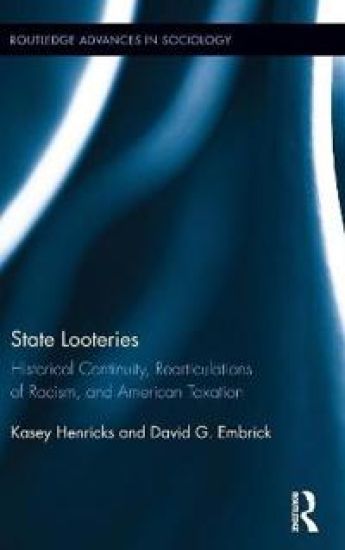
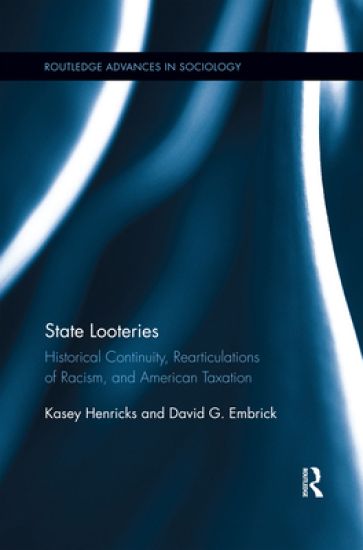
Fifty years ago, familiar images of the lottery would have been strange, as no state lottery existed then. Few researchers have uncovered the obscure role lotteries play in the changing composition of American taxation. Even less is known about what role race plays in this process. More than simply taxing those on the social margins, the emergence of state lotteries in contemporary American history represents something much more fundamental about state fiscal policy. This book not only uncovers the underlying racial factors that contextualize lottery proliferation in the U.S., but also reveals the racial consequences that lotteries have in terms of redistributing tax liability.
State Looteries

State Looteries

Kasey Henricks; David G. Embrick

Routledge
2016
sidottu
Fifty years ago, familiar images of the lottery would have been strange, as no state lottery existed then. Few researchers have uncovered the obscure role lotteries play in the changing composition of American taxation. Even less is known about what role race plays in this process. More than simply taxing those on the social margins, the emergence of state lotteries in contemporary American history represents something much more fundamental about state fiscal policy. This book not only uncovers the underlying racial factors that contextualize lottery proliferation in the U.S., but also reveals the racial consequences that lotteries have in terms of redistributing tax liability.