Kirjojen hintavertailu. Mukana 12 595 353 kirjaa ja 12 kauppaa.

Kirjailija

David G. Hebert

Kirjat ja teokset yhdessä paikassa: 7 kirjaa, julkaisuja vuosilta 2011-2026, suosituimpien joukossa A Philosophy of Music Education for the Era of AI. Vertaile teosten hintoja ja tarkista saatavuus suomalaisista kirjakaupoista.

7 kirjaa

Kirjojen julkaisuhaarukka 2011-2026.

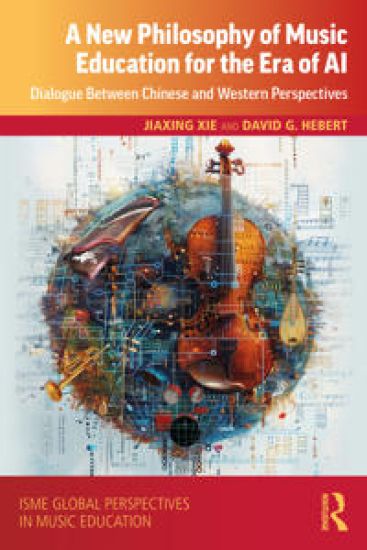
A Philosophy of Music Education for the Era of AI

A Philosophy of Music Education for the Era of AI

Jiaxing Xie; David G. Hebert

TAYLOR FRANCIS LTD
2026
sidottu
This book outlines a philosophy of music education that is responsive to the age of artificial intelligence. Against the background of AI's challenges to human modes of production, the authors demonstrate how music education can become a tool for self-discovery in this transformative era. Taking the approach of a dialogue between Chinese and Western perspectives, the book addresses the relationships between the social functions of music education and individual development in different historical periods, and envisions the potential role of music education in a new environment shaped by AI. Integrating insights from recent research, it establishes a forward-thinking philosophy of music education that is oriented towards self-discovery and grounded in science. Bringing together philosophical perspectives from Chinese and Western scholars, this book shows how integrating these perspectives can clarify the values that shape music education practices, and enable scholars and educators to better address contemporary issues in the teaching of music.
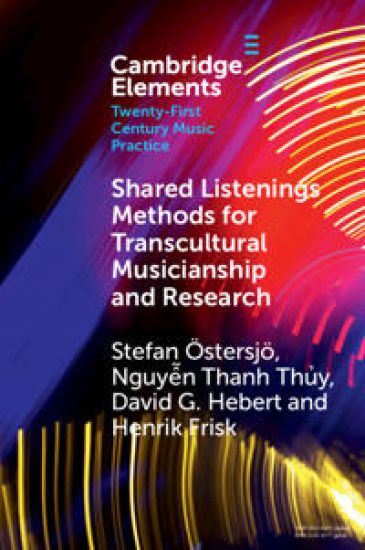
Shared Listenings

Shared Listenings

Stefan Östersjö; Nguy?n Thanh Th?y; David G. Hebert; Henrik Frisk

Cambridge University Press
2023
sidottu
This Element demonstrates how a combination of stimulated recall and collaborative autoethnographic strategies can be applied to artistic and scholarly work at the intersection of ethnomusicology and practice-led-research. The authors relate recently collected material from fieldwork in Vietnam to the long-term method development within the Vietnamese/Swedish group The Six Tones, of which three authors are the founding members. The discussion centers around the inter-subjective forms of stimulated recall analysis, developed through the creative work of this innovative intercultural music ensemble. The aim of this Element is to create a decolonized methodology—for both music performance and research—and it provides a detailed account of this method development starting in 2006. Furthermore, the authors discuss how this practice was successfully shared with three master performers in the south of Vietnam as part of a collaborative project in 2018–2019.
Shared Listenings

Shared Listenings

Stefan Östersjö; Nguy?n Thanh Th?y; David G. Hebert; Henrik Frisk

Cambridge University Press
2023
pokkari
This Element demonstrates how a combination of stimulated recall and collaborative autoethnographic strategies can be applied to artistic and scholarly work at the intersection of ethnomusicology and practice-led-research. The authors relate recently collected material from fieldwork in Vietnam to the long-term method development within the Vietnamese/Swedish group The Six Tones, of which three authors are the founding members. The discussion centers around the inter-subjective forms of stimulated recall analysis, developed through the creative work of this innovative intercultural music ensemble. The aim of this Element is to create a decolonized methodology—for both music performance and research—and it provides a detailed account of this method development starting in 2006. Furthermore, the authors discuss how this practice was successfully shared with three master performers in the south of Vietnam as part of a collaborative project in 2018–2019.
World Music Pedagogy, Volume VII: Teaching World Music in Higher Education

World Music Pedagogy, Volume VII: Teaching World Music in Higher Education

William J. Coppola; David G. Hebert; Patricia Shehan Campbell

Routledge
2020
nidottu
World Music Pedagogy, Volume VII: Teaching World Music in Higher Education addresses a pedagogical pathway of varied strategies for teaching world music in higher education, offering concrete means for diversifying undergraduate studies through world music culture courses. While the first six volumes in this series have detailed theoretical and applied principles of World Music Pedagogy within K-12 public schools and broader communities, this seventh volume is chiefly concerned with infusing culture-rich musical experiences through world music courses at the tertiary level, presenting a compelling argument for the growing need for such perspectives and approaches.These chapters include discussions of the logical trajectories of the framework into world music courses, through which the authors seek to challenge the status quo of lecture-only academic courses in some college and university music programs. Unique to this series, each of these chapters illustrates practical procedures for incorporating the WMP framework into sample classes. However, this volume (like the rest of the series) is not a prescriptive "recipe book" of lesson plans. Rather, it seeks to enrich the conversation surrounding cultural diversity in music through philosophically-rooted, social justice-conscious, and practice-oriented perspectives.
World Music Pedagogy, Volume VII: Teaching World Music in Higher Education

World Music Pedagogy, Volume VII: Teaching World Music in Higher Education

William J. Coppola; David G. Hebert; Patricia Shehan Campbell

Routledge
2020
sidottu
World Music Pedagogy, Volume VII: Teaching World Music in Higher Education addresses a pedagogical pathway of varied strategies for teaching world music in higher education, offering concrete means for diversifying undergraduate studies through world music culture courses. While the first six volumes in this series have detailed theoretical and applied principles of World Music Pedagogy within K-12 public schools and broader communities, this seventh volume is chiefly concerned with infusing culture-rich musical experiences through world music courses at the tertiary level, presenting a compelling argument for the growing need for such perspectives and approaches.These chapters include discussions of the logical trajectories of the framework into world music courses, through which the authors seek to challenge the status quo of lecture-only academic courses in some college and university music programs. Unique to this series, each of these chapters illustrates practical procedures for incorporating the WMP framework into sample classes. However, this volume (like the rest of the series) is not a prescriptive "recipe book" of lesson plans. Rather, it seeks to enrich the conversation surrounding cultural diversity in music through philosophically-rooted, social justice-conscious, and practice-oriented perspectives.
Wind Bands and Cultural Identity in Japanese Schools
This well researched volume tells the story of music education in Japan and of the wind band contest organized by the All-Japan Band Association. Identified here for the first time as the world’s largest musical competition, it attracts 14,000 bands and well over 500,000 competitors. The book’s insightful contribution to our understanding of both music and education chronicles music learning in Japanese schools and communities. It examines the contest from a range of perspectives, including those of policy makers, adjudicators, conductors and young musicians. The book is an illuminating window on the world of Japanese wind bands, a unique hybrid tradition that comingles contemporary western idioms with traditional Japanese influences. In addition to its social history of Japanese school music programs, it shows how participation in Japanese school bands contributes to students’ sense of identity, and sheds new light on the process of learning to play European orchestral instruments.
Wind Bands and Cultural Identity in Japanese Schools
This well researched volume tells the story of music education in Japan and of the wind band contest organized by the All-Japan Band Association. Identified here for the first time as the world’s largest musical competition, it attracts 14,000 bands and well over 500,000 competitors. The book’s insightful contribution to our understanding of both music and education chronicles music learning in Japanese schools and communities. It examines the contest from a range of perspectives, including those of policy makers, adjudicators, conductors and young musicians. The book is an illuminating window on the world of Japanese wind bands, a unique hybrid tradition that comingles contemporary western idioms with traditional Japanese influences. In addition to its social history of Japanese school music programs, it shows how participation in Japanese school bands contributes to students’ sense of identity, and sheds new light on the process of learning to play European orchestral instruments.