Kirjojen hintavertailu. Mukana 12 595 353 kirjaa ja 12 kauppaa.

Kirjailija

David G. Kleinbaum

Kirjat ja teokset yhdessä paikassa: 7 kirjaa, julkaisuja vuosilta 1982-2016, suosituimpien joukossa ActivEpi Companion Textbook. Vertaile teosten hintoja ja tarkista saatavuus suomalaisista kirjakaupoista.

7 kirjaa

Kirjojen julkaisuhaarukka 1982-2016.

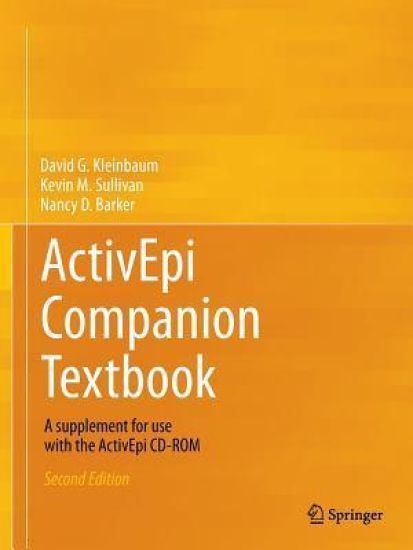
ActivEpi Companion Textbook

ActivEpi Companion Textbook

David G. Kleinbaum; Kevin M. Sullivan; Nancy D. Barker

Springer-Verlag New York Inc.
2013
nidottu
This Companion Textbook supplements the ActivEpi CD-ROM, sold separately. The ActivEpi CD-ROM provides a multimedia presentation of concepts, commonly taught in an introductory epidemiology course. ActivEpi mixes a full array of media to motivate, explain, visualize and apply epidemiological concepts. Virtually all of the material on the ActivEpi CD-ROM is included in the Companion Textbook. Because individuals differ in their learning skills, the ActivEpi CD-ROM and the ActivEpi Companion Textbook offer readers different but related options on how to learn epidemiology. The Textbook can be used as a hardcopy reference of the textual materials contained on the CD-ROM, as a resource for the practice exercises, as a general reference, or even a self-contained textbook. ActivEpi includes 15 lessons and over 50 hours of content via more than 250 launchable activities and homework exercises. It can be used in a variety of teaching formats: distance learning, self-paced learning, on-campus courses, and short courses. For the latest additions to ActivEpi, visit David Kleinbaum's website.
A Pocket Guide to Epidemiology

A Pocket Guide to Epidemiology

David G. Kleinbaum; Kevin M. Sullivan; Nancy D. Barker

Springer-Verlag New York Inc.
2006
nidottu
A Pocket Guide to Epidemiology is a stand-alone introductory text on the basic principles and concepts of epidemiology. The primary audience for this text is the public health student or professional, clinician, health journalist, and anyone else at any age or life experience that is interested in learning what epidemiology is all about in a convenient, easy to understand format with timely, real-world health examples.
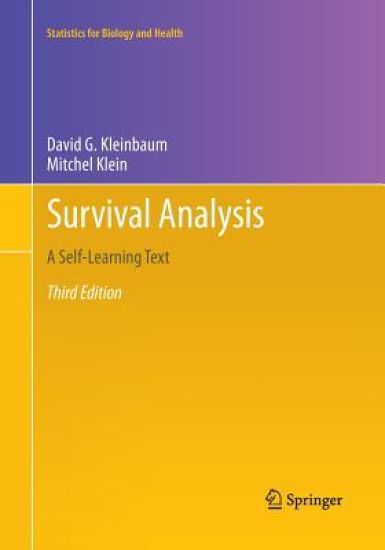
Survival Analysis

Survival Analysis

David G. Kleinbaum; Mitchel Klein

Springer-Verlag New York Inc.
2016
nidottu
This greatly expanded third edition of Survival Analysis- A Self-learning Text provides a highly readable description of state-of-the-art methods of analysis of survival/event-history data. This text is suitable for researchers and statisticians working in the medical and other life sciences as well as statisticians in academia who teach introductory and second-level courses on survival analysis. The third edition continues to use the unique "lecture-book" format of the first two editions with one new chapter, additional sections and clarifications to several chapters, and a revised computer appendix. The Computer Appendix, with step-by-step instructions for using the computer packages STATA, SAS, and SPSS, is expanded this third edition to include the software package R.
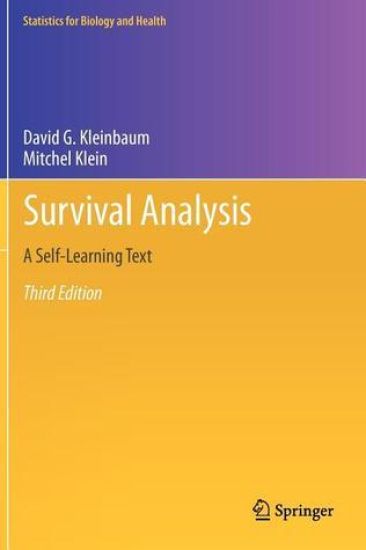
Survival Analysis

Survival Analysis

David G. Kleinbaum; Mitchel Klein

Springer-Verlag New York Inc.
2011
sidottu
This greatly expanded third edition of Survival Analysis- A Self-learning Text provides a highly readable description of state-of-the-art methods of analysis of survival/event-history data. This text is suitable for researchers and statisticians working in the medical and other life sciences as well as statisticians in academia who teach introductory and second-level courses on survival analysis. The third edition continues to use the unique "lecture-book" format of the first two editions with one new chapter, additional sections and clarifications to several chapters, and a revised computer appendix. The Computer Appendix, with step-by-step instructions for using the computer packages STATA, SAS, and SPSS, is expanded this third edition to include the software package R.
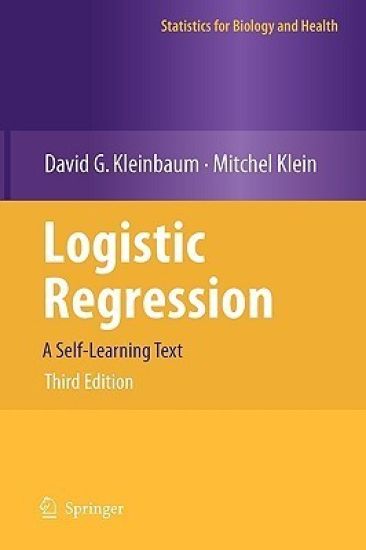
Logistic Regression

Logistic Regression

David G. Kleinbaum; Mitchel Klein

Springer-Verlag New York Inc.
2010
sidottu
This is the third edition of this text on logistic regression methods, originally published in 1994, with its second e- tion published in 2002. As in the first two editions, each chapter contains a pres- tation of its topic in “lecture?book” format together with objectives, an outline, key formulae, practice exercises, and a test. The “lecture book” has a sequence of illust- tions, formulae, or summary statements in the left column of each page and a script (i. e. , text) in the right column. This format allows you to read the script in conjunction with the illustrations and formulae that highlight the main points, formulae, or examples being presented. This third edition has expanded the second edition by adding three new chapters and a modified computer appendix. We have also expanded our overview of mod- ing strategy guidelines in Chap. 6 to consider causal d- grams. The three new chapters are as follows: Chapter 8: Additional Modeling Strategy Issues Chapter 9: Assessing Goodness of Fit for Logistic Regression Chapter 10: Assessing Discriminatory Performance of a Binary Logistic Model: ROC Curves In adding these three chapters, we have moved Chaps. 8 through 13 from the second edition to follow the new chapters, so that these previous chapters have been ren- bered as Chaps. 11–16 in this third edition.
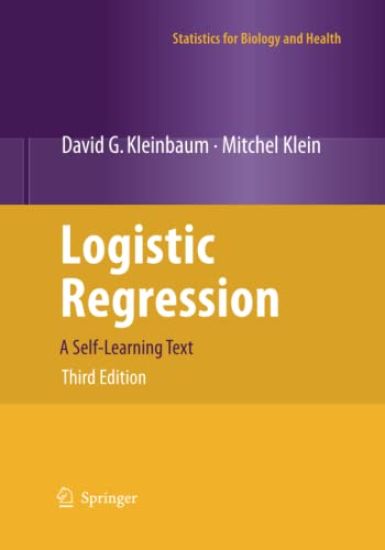
Logistic Regression

Logistic Regression

David G. Kleinbaum; Mitchel Klein

Springer-Verlag New York Inc.
2010
nidottu
This is the third edition of this text on logistic regression methods, originally published in 1994, with its second e- tion published in 2002. As in the first two editions, each chapter contains a pres- tation of its topic in “lecture?book” format together with objectives, an outline, key formulae, practice exercises, and a test. The “lecture book” has a sequence of illust- tions, formulae, or summary statements in the left column of each page and a script (i. e. , text) in the right column. This format allows you to read the script in conjunction with the illustrations and formulae that highlight the main points, formulae, or examples being presented. This third edition has expanded the second edition by adding three new chapters and a modified computer appendix. We have also expanded our overview of mod- ing strategy guidelines in Chap. 6 to consider causal d- grams. The three new chapters are as follows: Chapter 8: Additional Modeling Strategy Issues Chapter 9: Assessing Goodness of Fit for Logistic Regression Chapter 10: Assessing Discriminatory Performance of a Binary Logistic Model: ROC Curves In adding these three chapters, we have moved Chaps. 8 through 13 from the second edition to follow the new chapters, so that these previous chapters have been ren- bered as Chaps. 11–16 in this third edition.
Epidemiologic Research

Epidemiologic Research

David G. Kleinbaum; Lawrence L. Kupper; Hal Morgenstern

John Wiley Sons Inc
1982
sidottu
Epidemiologic Research Principles and Quantitative Methods DavidG. Kleinbaum, Ph.D. Lawrence L. Kupper. Ph.D. Hal Morgenstern,Ph.D. Epidemiologic Research covers the principles and methodsof planning, analysis and interpretation of epidemiologic researchstudies. It supplies the applied researcher with the mostup-to-date methodological thought and practice. Specifically, thebook focuses on quantitative (including statistical) issues arisingfrom epidemiologic investigations, as well as on the questions ofstudy design, measurement and validity. EpidemiologicResearch emphasizes practical techniques, procedures andstrategies. It presents them through a unified approach whichfollows the chronology of issues that arise during theinvestigation of an epidemic. The book's viewpoint ismultidisciplinary and equally useful to the epidemiologicresearcher and to the biostatistician. Theory is supplemented bynumerous examples, exercises and applications. Full solutions aregiven to all exercises in a separate solutions manual. Importantfeatures * Thorough discussion of the methodology of epidemiologicresearch * Stress on validity and hence on reliability * Balanced approach, presenting the most important prevailingviewpoints * Three chapters with applications of mathematical modeling