

Kirjailija
David G. Schwartz
Kirjat ja teokset yhdessä paikassa: 9 kirjaa, julkaisuja vuosilta 1994-2020, suosituimpien joukossa Roll the Bones. Vertaile teosten hintoja ja tarkista saatavuus suomalaisista kirjakaupoista.
Mukana myös kirjoitusasut: David G Schwartz
9 kirjaa
Kirjojen julkaisuhaarukka 1994-2020.

The Queen of the Coast. The World's Playground. The Casino Capital of the East. They can only describe Atlantic City, New Jersey. Beloved, maligned, always-hustling since its 1854 founding, the seaside resort has seen it all: first class hotels, popular amusements on the world famous Boardwalk and its piers, Prohibition, gangsters, speakeasies, conventioneers, celebrities, urban pride, urban decay, a casino revival, a casino collapse-and it hasn't given up yet. Boardwalk Playground shares a hundred stories of Atlantic City's high spots and low points of the past century and a half, with an emphasis on the hospitality business that evolved into casino gaming-and is evolving again. With sections on the city's history, its classic hospitality, personalities, community institutions, and casino resorts, this book is essential reading for anyone who wants to know what gives Atlantic City its unexpected allure. Begun as a monthly series in Casino Connection magazine, the stories in this book chart the rises and falls of Atlantic City through the years, featuring visionaries like Dr. Jonathan Pitney, who first imagined a seaside health resort on Absecon Island; political boss Nucky Johnson, who ran a wide-open town during Prohibition and reaped the benefits; Captain John Young, who built an amusement empire; Mayor Charles White, who called for the legalization of casino gambling in 1936; 500 Club owner Skinny D'Amato, who gave Frank Sinatra an Atlantic City home and first paired Dean Martin and Jerry Lewis; the Hamid family, who kept the "showplace of the nation" going strong; Governor Brendan Byrne, who called for the legalization of casinos to revive the city; and many others. The classic hotels of Atlantic City are no more, but in these pages the Traymore, Ambassador, Shelburne, Marlborough-Blenheim, and Brighton live again. Some hotels are still operating, but often under different names; this book shares the stories behind the buildings that are now Resorts, the Claridge, and Bally's Atlantic City. Much of the fun in Atlantic City happened on the amusement and entertainment piers that extended into the ocean. Steel Pier, Million Dollar Pier, Steeplechase Pier, and Central Pier each have fascinating stories to tell, and each is featured in Boardwalk Playground. Atlantic City always had a lot of little oddities that gave it a unique flavor. Salt water taffy. Rolling chairs on the Boardwalk. Miss America. Jitneys. In Boardwalk Playground, you will learn the story behind each of those, as well as local institutions like the Atlantic City Beach Patrol, Atlantic City High School, the Atlantic City Free Public Library, and the venerable lighthouse. Today, of course, Atlantic City is known for its casinos. Boardwalk Playground charts how each of the city's fifteen casinos came to be (and, in seven cases, ceased to be). There are the current resorts like the Trump Taj Mahal, Borgata, Harrah's, and Tropicana, but also names that have vanished, like the Playboy, Sands, Hilton, and Trump Plaza. The venerable Resorts, which started Atlantic City's casino revival in 1978, and Revel, which shuddered to an end less than two years after its 2012 opening, bookend the casino stories, which are followed by chapters making sense of the recent casino decline and offering hope for the city's future. The hundred stories of Boardwalk Playground show Atlantic City from its awakening as a tourist destination in the 1860s to its lowest point a century later, its gambling-fueled rebirth to its current crossroads. It provides a personal, thoughtful view into a city that continues to fascinate the world.
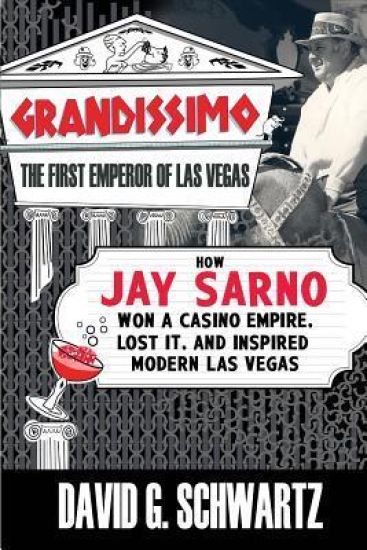
Jay Sarno built two path-breaking Las Vegas casinos, Caesars Palace (1966) and Circus Circus (1968), and planned but did not build a third, the Grandissimo, which would have started the mega-resort era a decade before Steve Wynn built The Mirage. As mobsters and accountants battled for the soul of the last American frontier town, Las Vegas had endless possibilities-if you didn't mind high stakes and stiff odds. Sarno invented the modern Las Vegas casino, but he was part of a dying breed-a back-pocket entrepreneur who'd parlayed a jones for action and a few Teamster loans into a life as a Vegas casino owner.For all of his accomplishments, his empire didn't last. Sarno sold out of Caesars Palace shortly after it opened-partially to get away from the bookies and gangsters who'd taken over the casino-and he was forced to relinquish control of Circus Circus when the federal government indicted him on charges of offering the largest bribe in IRS history-a bribe he freely admitted paying, on the advice of his attorney, Oscar Goodman. Though he ultimately walked out of court a free man, he never got Circus back. And though he guessed the formula that would open up Las Vegas to millions in the 1990s with the design of the Grandissimo, but he wasn't able to secure the financing for the casino, and when he died in 1984, it remained only a frustrating dream.Sarno's casinos--and his ideas about how to build casinos--created the template for Las Vegas today. Before him, Las Vegas meant dealers in string ties and bland, functional architecture. He taught the city how to dress up its hotels in fantasy, putting toga dresses on cocktail waitresses and making sure that even the stationery carried through with the theme. He saw Las Vegas as a place where ordinary people could leave their ordinary lives and have extraordinary adventures. And that remains the template for Las Vegas today.Grandissimo is the story of how Jay Sarno won and lost his casino empire, inventing modern Las Vegas along the way.In Grandissimo, you'll learn Jay's fascinating story, and also plenty of things you never knew about Las Vegas, including: - the true story about how Jimmy Hoffa's Teamsters Union first started funding Sarno projects-how Steve Wynn ended up answering the telephone in Hoffa's suite on the second day Caesars Palace was open- how Sarno, represented by Oscar Goodman, beat a seemingly-airtight case against him when he was accused of offering the largest bribe in IRS history to an undercover agent- how Sarno's unbuilt Grandissimo became the template for the 1990s "mega-resort" era in Las VegasFrom start to finish, it's the story of the man who inspired modern Las Vegas.
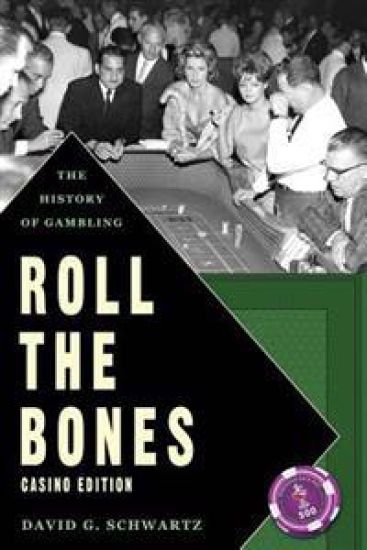
Roll the Bones tells the story of gambling: where it came from, how it has changed, and where it is now. This is the new Casino Edition. which updates and expands the global history of gambling to include a greater focus on casinos, from their development in European spas to their growth in Reno and Las Vegas. New material chronicles in greater depth the development of casino resorts on the Las Vegas Strip and their spread throughout the United States. A new chapter better places Atlantic City's casinos into their correct context, and new material accounts for the rise of casinos in Asia and online gaming.From the first modern casino in Venice (1638), casinos have grown incredibly. During the 18th and 19th century, a series of European spa towns, culminating in Monte Carlo, hosted casinos. In the United States, during those same years, gambling developed both in illegal urban gambling halls and in the wide-open saloons of the western frontier.Those two strands of American gambling came together in Nevada's legal casinos, whose current regime dates from 1931. Developing with a healthy assist from elements affiliated with organized crime, these casinos eventually outgrew their rough-hewn routes, becoming sun-drenched pleasure palaces along the Las Vegas Strip.With Nevada casinos proving successful, other states, beginning with New Jersey in 1976, rolled the dice. From there, casinos have come to America's tribal lands, rivers, and urban centers.In the last decade, gambling has moved online, while Asia--with multi-billion dollar projects in Macau and Singapore--has become a new casino frontier.Reading Roll the Bones, you'll get a better appreciation for how long casinos and gambling have been with us--and what they mean to us today.

Cooperating Heterogeneous Systems provides an in-depth introduction to the issues and techniques surrounding the integration and control of diverse and independent software components. Organizations increasingly rely upon diverse computer systems to perform a variety of knowledge-based tasks. This presents technical issues of interoperability and integration, as well as philosophical issues of how cooperation and interaction between computational entities is to be realized. Cooperating systems are systems that work together towards a common end. The concepts of cooperation must be realized in technically sound system architectures, having a uniform meta-layer between knowledge sources and the rest of the system. The layer consists of a family of interpreters, one for each knowledge source, and meta-knowledge. A system architecture to integrate and control diverse knowledge sources is presented. The architecture is based on the meta-level properties of the logic programming language Prolog. An implementation of the architecture is described, a Framework for Logic Programming Systems with Distributed Execution (FLiPSiDE). Knowledge-based systems play an important role in any up-to-date arsenal of decision support tools. The tremendous growth of computer communications infrastructure has made distributed computing a viable option, and often a necessity in geographically distributed organizations. It has become clear that to take knowledge-based systems to their next useful level, it is necessary to get independent knowledge-based systems to work together, much as we put together ad hoc work groups in our organizations to tackle complex problems. The book is for scientists and software engineers who have experience in knowledge-based systems and/or logic programming and seek a hands-on introduction to cooperating systems. Researchers investigating autonomous agents, distributed computation, and cooperating systems will find fresh ideas and new perspectives on well-established approaches to control, organization, and cooperation.
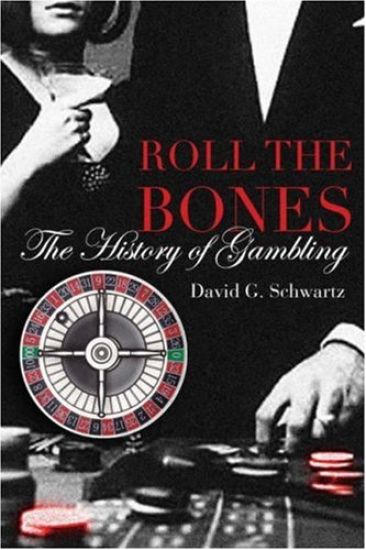
This work is the first narrative history of gambling, spanning the Stone Age to the Internet era, examining how it evolved with - and influenced - human civilization. Historian David G. Schwartz tells the epic story of gambling, beginning with its early emergence from divination rituals and ending with today's global gaming culture. In a sweeping, rollicking narrative, Schwartz looks at the betting games people have played since the dawn of history, and reveals that gambling has always been a crucial part of the human experience. Packed with scandals, schemes, and colourful characters from Julius Caesar to Casanova, George Washington to Steve Wynn, "Roll the Bones" is a sure bet to captivate readers from all backgrounds.
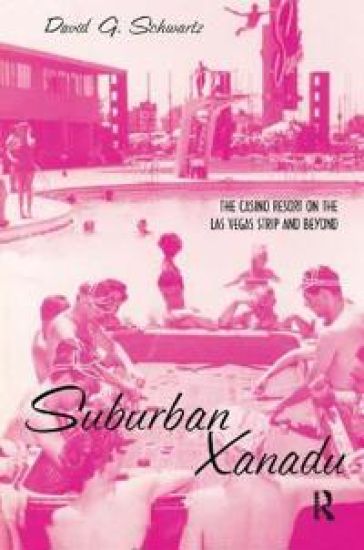
Urban gambling, linked to poverty, crime and corruption, was once considered a blight on US cities. Gambling then followed the exodus of Americans into the suburbs after World War II and now, at the beginning of the 21st century, most Americans live within a four-hour drive of a casino. What explains the success of places like Las Vegas? The self-contained casino resort removes gambling and its social problems from cities and provides Americans with the comfort of gambling in a setting matched to their suburban lifestyle. In a detailed look at the growth of the earliest casino resorts to the "pleasure palaces" and riverboat casinos of today, "Suburban Xanadu" locates the rise of the casino resort in suburbanization and the significance of this development for today.
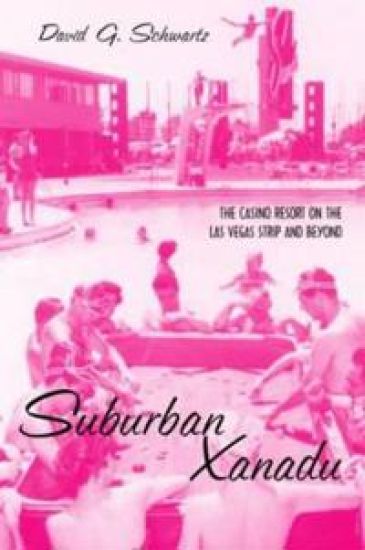
Urban gambling, linked to poverty, crime and corruption, was once considered a blight on US cities. Gambling then followed the exodus of Americans into the suburbs after World War II and now, at the beginning of the 21st century, most Americans live within a four-hour drive of a casino. What explains the success of places like Las Vegas? The self-contained casino resort removes gambling and its social problems from cities and provides Americans with the comfort of gambling in a setting matched to their suburban lifestyle. In a detailed look at the growth of the earliest casino resorts to the "pleasure palaces" and riverboat casinos of today, "Suburban Xanadu" locates the rise of the casino resort in suburbanization and the significance of this development for today.

Cooperating Heterogeneous Systems provides an in-depth introduction to the issues and techniques surrounding the integration and control of diverse and independent software components. Organizations increasingly rely upon diverse computer systems to perform a variety of knowledge-based tasks. This presents technical issues of interoperability and integration, as well as philosophical issues of how cooperation and interaction between computational entities is to be realized. Cooperating systems are systems that work together towards a common end. The concepts of cooperation must be realized in technically sound system architectures, having a uniform meta-layer between knowledge sources and the rest of the system. The layer consists of a family of interpreters, one for each knowledge source, and meta-knowledge. A system architecture to integrate and control diverse knowledge sources is presented. The architecture is based on the meta-level properties of the logic programming language Prolog. An implementation of the architecture is described, a Framework for Logic Programming Systems with Distributed Execution (FLiPSiDE). Knowledge-based systems play an important role in any up-to-date arsenal of decision support tools. The tremendous growth of computer communications infrastructure has made distributed computing a viable option, and often a necessity in geographically distributed organizations. It has become clear that to take knowledge-based systems to their next useful level, it is necessary to get independent knowledge-based systems to work together, much as we put together ad hoc work groups in our organizations to tackle complex problems. The book is for scientists and software engineers who have experience in knowledge-based systems and/or logic programming and seek a hands-on introduction to cooperating systems. Researchers investigating autonomous agents, distributed computation, and cooperating systems will find fresh ideas and new perspectives on well-established approaches to control, organization, and cooperation.