Kirjojen hintavertailu. Mukana 12 592 930 kirjaa ja 12 kauppaa.

Kirjailija

David G Thomas

Kirjat ja teokset yhdessä paikassa: 14 kirjaa, julkaisuja vuosilta 2007-2023, suosituimpien joukossa The Frank W. Angel Report on the Death of John H. Tunstall. Vertaile teosten hintoja ja tarkista saatavuus suomalaisista kirjakaupoista.

Mukana myös kirjoitusasut: David G. Thomas

14 kirjaa

Kirjojen julkaisuhaarukka 2007-2023.

The Frank W. Angel Report on the Death of John H. Tunstall
"In the matter of the cause and circumstances of the death of John H. Tunstall...." So begins the single most important contemporary document recounting the origins of the Lincoln County War. That document is the "Report of Special Agent Frank Warner Angel on the Death of John Henry Tunstall," known today to historians as the "Angel Report." The 395-page, hand-written Report that Angel submitted on October 3, 1878, on Tunstall's unprovoked, sadistic murder is published for the first time in this book. The Report documents the events leading to Tunstall's murder - the testimony of the men present at the brutal killing - including Billy the Kid's eye-witness account - and the violent consequences that followed. It includes sworn accounts by Robert W. Beckwith, Henry N. Brown, James J. Dolan, Pantale n Gallegos, Godfrey Gauss, Florencio Gonzales, John Hurley, Jacob B. Mathews, Alexander A. McSween, John Middletonm Lawrence G. Murphy, John Wallace Olinger, Juan B. Patron, and Robert A. Widenmann. Supplementing the Report are an extensive introduction, notes, contemporary documents, associated letters, biographical details, and a timeline. The book also reveals the brazen attempt by two powerful politicians - Thomas Catron and Stephen Elkins - to destroy the Report, depriving history of its priceless contribution. Forty six images, many never published before.
The Stolen Pinkerton Reports of the Colonel Albert J. Fountain Murder Investigation
The abduction and apparent murder of Colonel Albert J. and Henry Fountain on February 1, 1896, shocked and outraged the citizens of New Mexico.It was not the killing of Colonel Fountain, a Union Civil War veteran and a prominent New Mexico attorney, which roused the physical disgust of the citizenry - after all, it was not unknown for distinguished men to be killed. It was the cold-blooded murder of his eight-year-old son which provoked the public outcry and revulsion.The evidence indicated that although Colonel Albert J. Fountain was killed during the ambush, his son was taken alive, and only killed the next day.The public was left without answers to the questions: Who ambushed and killed Colonel Fountain? Who was willing to kill his young son in cold-blood after holding him captive for 24 hours?The case was never solved. Two men were eventually tried for and acquitted of the crime.The case file for the crime contains almost no information. There are no trial transcripts or witness testimonies. The only reports that exist today of the investigation of the case are these Pinkerton Reports, which were commissioned by the Territorial Governor, and then stolen from his office four months after the murders. These Reports, now recovered, are published here.These Reports are important historical documents, not only for what they reveal about the Fountain murders, but also as a fascinating window into the how the most famous professional detective agency in the United States in the 1890s - the Pinkerton Detective Agency - went about investigating a murder, at a time when scientific forensic evidence was virtually non-existent.The two Pinkerton Operatives sent to investigate the crime were John Conklin Fraser and William C. Sayers, the Agency's most competent detectives. Their investigative methods revolved around taking witness and suspect statements, and then working to verify what they were told, a process that remains at the heart of criminal investigation today. As of the date of this writing, the Dona Ana County Sheriff's Office has reclassified the murders as an Active Case.
"Dirty Dave" Rudabaugh, Billy the Kid's Most Feared Companion
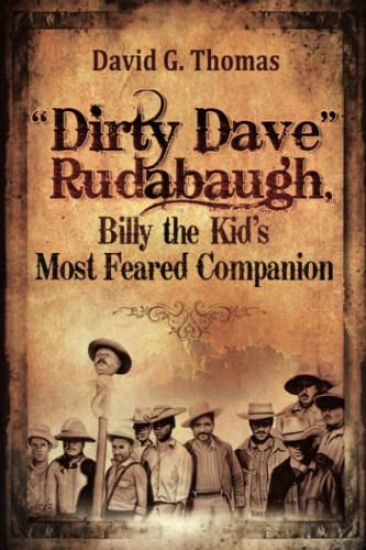
This book is about David Rudabaugh, a man whose life is both obscure and wildly mythologized.One myth about Rudabaugh is that he was a "nasty, treacherous bully" who "stole and killed and brutalized people... Dirty Dave would try anything, as long as it was crooked." Not true. Another fictitious accusation is that Rudabaugh shot a jailer in cold blood. The true account of jailer Antonio Lino Valdez's fatal shooting is presented for the first time in this book, based on the never-before-published trial transcript. The unquestionable trial evidence shows that it was another man who shot the ill-fated jailer, not Rudabaugh.Following the jailer's killing, Rudabaugh fled. Now a wanted man, Rudabaugh teamed up with Billy the Kid and participated prominently in Billy's final gun battles with authorities. Famously, Rudabaugh was captured along with Billy at Stinking Springs by Deputy Sheriff Pat Garrett and his posse.After his capture, Rudabaugh was tried for Valdez's killing and sentenced to death by hanging. He escaped jail and went to Mexico.On February 18, 1886, Rudabaugh was killed by a Winchester rifle shot to the chest in Parral, Mexico, by a grocery man named Jos . Following his killing, Rudabaugh was decapitated by Jos . His head was placed on a pole and paraded around the Parral plaza. Present at Rudabaugh's beheading was Albert W. Lohn, a nineteen-year-old photographer.Lohn took four photographs of Rudabaugh's decapitated head. The two negatives he printed were confiscated by Mexican authorities. The other two negatives remained in Lohn's files for 57 years, entirely forgotten by him. The story of how these two negatives were acquired by an avid collector of Western memorabilia is given in the book.Rudabaugh's life story is mesmerizing. It is as adventurous as that of any Wild West figure. The events of his life include being both a wanted man and a lawman. They include a failed train robbery and two successful stage hold-ups. They include saying nothing when three innocent men were convicted of one of his stage robberies. They include the aforementioned accusation of murder and being sentenced to death by hanging. They include a successful; ingenious jail escape and numerous attempted escapees. They include an eight month association with Billy the Kid, an association that made him almost as famous in Wild West outlaw history as Billy.
"Dirty Dave" Rudabaugh, Billy the Kid's Most Feared Companion
This book is about David Rudabaugh, a man whose life is both obscure and wildly mythologized. One myth about Rudabaugh is that he was a "nasty, treacherous bully" who "stole and killed and brutalized people... Dirty Dave would try anything, as long as it was crooked." Not true. Another fictitious accusation is that Rudabaugh shot a jailer in cold blood. The true account of jailer Antonio Lino Valdez's fatal shooting is presented for the first time in this book, based on the never-before-published trial transcript. The unquestionable trial evidence shows that it was another man who shot the ill-fated jailer, not Rudabaugh. Following the jailer's killing, Rudabaugh fled. Now a wanted man, Rudabaugh teamed up with Billy the Kid and participated prominently in Billy's final gun battles with authorities. Famously, Rudabaugh was captured along with Billy at Stinking Springs by Deputy Sheriff Pat Garrett and his posse. After his capture, Rudabaugh was tried for Valdez's killing and sentenced to death by hanging. He escaped jail and went to Mexico. On February 18, 1886, Rudabaugh was killed by a Winchester rifle shot to the chest in Parral, Mexico, by a grocery man named Jos . Following his killing, Rudabaugh was decapitated by Jos . His head was placed on a pole and paraded around the Parral plaza. Present at Rudabaugh's beheading was Albert W. Lohn, a nineteen-year-old photographer. Lohn took four photographs of Rudabaugh's decapitated head. The two negatives he printed were confiscated by Mexican authorities. The other two negatives remained in Lohn's files for 57 years, entirely forgotten by him. The story of how these two negatives were acquired by an avid collector of Western memorabilia is given in the book. Rudabaugh's life story is mesmerizing. It is as adventurous as that of any Wild West figure. The events of his life include being both a wanted man and a lawman, a failed train robbery, two successful stage hold-ups, being sentenced to death by hanging, an ingenious jail escape, and an eight month association with Billy the Kid - an association that made him almost as famous in Wild West outlaw history as Billy.
The Trial of Billy the Kid

The Trial of Billy the Kid

David G Thomas

Doc45 Publishing
2021
sidottu
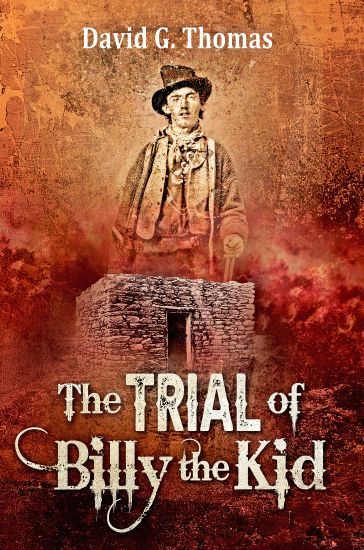
This book is about Billy the Kid's trial for murder, and the events leading to that trial. The result of Billy's trial sealed his fate. And yet Billy's trial is the least written about, and until this book, the least known event of Billy's adult life.Prior biographies have provided extensive - and fascinating - details on Billy's life, but they supply only a few paragraphs on Billy's trial. Just the bare facts: time, place, names, result.Billy's trial the most important event in Billy's life. You may respond that his death is more important - it is in anyone's life That is true, in an existential sense, but the events that lead to one's death at a particular place and time, the cause of one's death, override the importance of one's actual death. Those events are determinative. Without those events, one does not die then and there. If Billy had escaped death on July 14, 1881, and went on to live out more of his life, that escape and not his trial would probably be the most important event of Billy's life.The information presented here has been unknown until now. This book makes it possible to answer these previously unanswerable questions: Where was Billy captured?Where was Billy tried?What were the governing Territorial laws?What were the charges against Billy?Was there a trial transcript and what happened to it?What kind of defense did Billy present?Did Billy testify in his own defense?Did Billy have witnesses standing for him?Who testified against him for the prosecution?What was the jury like?What action by the trial judge virtually guaranteed his conviction?What legal grounds did he have to appeal his verdict?Was the trial fair?Supplementing the text are 132 photos, including many photos never published before.
The Trial of Billy the Kid

The Trial of Billy the Kid

David G Thomas

Doc45 Publishing
2021
pokkari
This book is about Billy the Kid's trial for murder, and the events leading to that trial. The result of Billy's trial sealed his fate. And yet Billy's trial is the least written about, and until this book, the least known event of Billy's adult life.Prior biographies have provided extensive - and fascinating - details on Billy's life, but they supply only a few paragraphs on Billy's trial. Just the bare facts: time, place, names, result.Billy's trial the most important event in Billy's life. You may respond that his death is more important - it is in anyone's life That is true, in an existential sense, but the events that lead to one's death at a particular place and time, the cause of one's death, override the importance of one's actual death. Those events are determinative. Without those events, one does not die then and there. If Billy had escaped death on July 14, 1881, and went on to live out more of his life, that escape and not his trial would probably be the most important event of Billy's life.The information presented here has been unknown until now. This book makes it possible to answer these previously unanswerable questions: Where was Billy captured?Where was Billy tried?What were the governing Territorial laws?What were the charges against Billy?Was there a trial transcript and what happened to it?What kind of defense did Billy present?Did Billy testify in his own defense?Did Billy have witnesses standing for him?Who testified against him for the prosecution?What was the jury like?What action by the trial judge virtually guaranteed his conviction?What legal grounds did he have to appeal his verdict?Was the trial fair?Supplementing the text are 132 photos, including many photos never published before.
Killing Pat Garrett, The Wild West's Most Famous Lawman - Murder or Self-Defense?
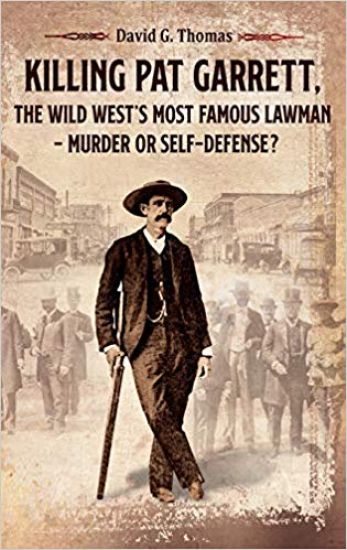
Pat Garrett, the Wild West's most famous lawman - the man who killed Billy the Kid - was himself killed on leap day, February 29, 1908.Who killed him? Was it murder? Was it self-defense?No biographer of Garrett has been able to answer these questions. All have expressed opinions. None have presented evidence that would stand up in a court of law. Here, for the first time, drawing on previously undiscovered information, is the definitive answer to these questions, the Wild West's most famous unsolved killing. The true actions of "Deacon Jim" Miller, a professional killer, who was in Las Cruces the day Garrett was killed. The place on the now abandoned old wagon road in New Mexico where Garrett was killed. The coroner's jury report on Garrett's death, lost for over 100 years Garrett's original burial location. The sworn courtroom testimony of the only witness to Garrett's killing. The policeman who provided the decisive evidence in the trial of the man accused of murdering Garrett. The location of Garrett's Rock House and Home Ranches. The marriage of his confessed killer and the birth of his son. New family details: Garrett had a four-month-old daughter the day he killed Billy the Kid. She died tragically at 15. Another daughter was blinded by a well-intended eye treatment; a son was paralyzed by childhood polio; and Pat Garrett, Jr., named after his father, lost his right leg to amputation at age 12. 102 images, including six of Pat Garrett and his family which have never been published before. Pat Garrett's life was a remarkable adventure, with enormous highs. He met two US presidents: William McKinley Jr. and Theodore Roosevelt. President Roosevelt he met five times, three times in the White House. He brought the law to hardened gunmen. He oversaw hangings. His national fame was so extensive the day he died that newspapers from the East to the West Coast only had to write "Pat Garrett" for readers to know to whom they were referring. He also had devastating lows. He experienced heartbreaking family tragedy. He was blocked for re-appointment as El Paso Customs Collector by unjustified personal animus. He was pursued ruthlessly for a loan that he had co-signed as a favor for a friend. He had his ranches and livestock confiscated and sold on the Las Cruces public square. In spite of his reputation as a gunman, when faced with public humiliation, he responded with commendable dignity. Queried after losing his Custom Collector job, he replied: "I simply take my medicine." This book is written so you experience his life as he did, as it happened, event by event.
Killing Pat Garrett, The Wild West's Most Famous Lawman - Murder or Self-Defense?
Pat Garrett, the Wild West's most famous lawman - the man who killed Billy the Kid - was himself killed on leap day, February 29, 1908.Who killed him?Was it murder?Was it self-defense?No biographer of Garrett has been able to answer these questions. All have expressed opinions. None have presented evidence that would stand up in a court of law. Here, for the first time, drawing on previously undiscovered information, is the definitive answer to these questions, the Wild West's most famous unsolved killing. The true actions of "Deacon Jim" Miller, a professional killer, who was in Las Cruces the day Garrett was killed. The place on the now abandoned old wagon road in New Mexico where Garrett was killed. The coroner's jury report on Garrett's death, lost for over 100 years Garrett's original burial location. The sworn courtroom testimony of the only witness to Garrett's killing. The policeman who provided the decisive evidence in the trial of the man accused of murdering Garrett. The location of Garrett's Rock House and Home Ranches. The marriage of his confessed killer and the birth of his son. New family details: Garrett had a four-month-old daughter the day he killed Billy the Kid. She died tragically at 15. Another daughter was blinded by a well-intended eye treatment; a son was paralyzed by childhood polio; and Pat Garrett, Jr., named after his father, lost his right leg to amputation at age 12. 102 images, including six of Pat Garrett and his family which have never been published before. Pat Garrett's life was a remarkable adventure, with enormous highs. He met two US presidents: William McKinley Jr. and Theodore Roosevelt. President Roosevelt he met five times, three times in the White House. He brought the law to hardened gunmen. He oversaw hangings. His national fame was so extensive the day he died that newspapers from the East to the West Coast only had to write "Pat Garrett" for readers to know to whom they were referring. He also had devastating lows. He experienced heartbreaking family tragedy. He was blocked for re-appointment as El Paso Customs Collector by unjustified personal animus. He was pursued ruthlessly for a loan that he had co-signed as a favor for a friend. He had his ranches and livestock confiscated and sold on the Las Cruces public square. In spite of his reputation as a gunman, when faced with public humiliation, he responded with commendable dignity. Queried after losing his Custom Collector job, he replied: "I simply take my medicine." This book is written so you experience his life as he did, as it happened, event by event.
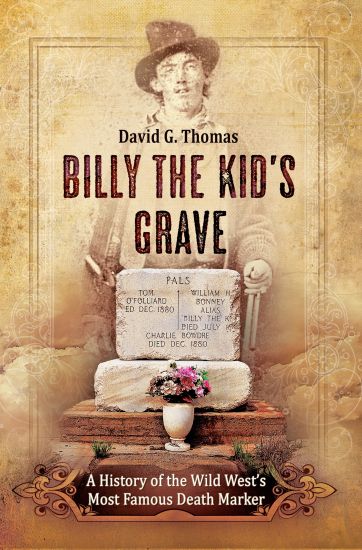
Billy the Kid's Grave - A History of the Wild West's Most Famous Death Marker
"Quien es?"The answer to this incautious question - "Who is it?" - was a bullet to the heart.That bullet -- fired by Lincoln County Sheriff Patrick F. Garrett from a .40-44 caliber single action Colt pistol -- ended the life of Billy the Kid, real name William Henry McCarty.But death - ordinarily so final - only fueled the public's fascination with Billy the Kid. What events led to Billy's killing? Was it inevitable? Was a woman involved? If so, who was she? Why has Billy's gravestone become the most famous - and most visited - Western death marker? Is Billy really buried in his grave? Is the grave in the right location? Is it true that Pat Garrett's first wife is buried in the same cemetery? Is Billy's girlfriend buried there also? The Fort Sumner cemetery where Billy's grave is located was once plowed for cultivation. Why? What town, seeking a profitable tourist attraction, tried to move Billy's body, using a phony relative to justify the action? These questions -- and many others - are answered in this book. Over 60 photos, including many historical photos never previously published.
Billy The Kid's Grave

Billy The Kid's Grave

David G Thomas

Createspace Independent Publishing Platform
2017
pokkari
"Quien es?" The answer to this incautious question - "Who is it?" - was a bullet to the heart. That bullet - fired by Lincoln County Sheriff Patrick F. Garrett from a .40-44 caliber single action Colt pistol - ended the life of Billy the Kid, real name William Henry McCarty. But death - ordinarily so final - only fueled the public's fascination with Billy the Kid. What events led to Billy's killing? Was it inevitable? Was a woman involved? If so, who was she?Why has Billy's gravestone become the most famous - and most visited - Western death marker?Is Billy really buried in his grave?Is the grave in the right location?Is it true that Pat Garrett's first wife is buried in the same cemetery?Is Billy's girlfriend buried there also?The Fort Sumner cemetery where Billy's grave is located was once plowed for cultivation. Why?What town, seeking a profitable tourist attraction, tried to move Billy's body, using a phony relative to justify the action? These questions - and many others - are answered in this book. The book is divided into three sections. The first gives an account of the chain of events that led directly to Billy's death, beginning the singular event that started the sequence, Billy's conviction for murder and his sentencing to hang. As much as possible, these events are related using the actual words of witnesses and contemporaries. The second chapter tells the story of Billy's burial and the many surprising incidents associated with his grave over the years. The third chapter lists the 111 men and women known to be buried along with Billy in the Fort Sumner cemetery, with short biographies. Sixteen of these individuals had very direct connections with Billy. Appendix A supplies Charles W. Dudrow's correspondence regarding the locating and disinterring of the military burials at Fort Sumner. Appendix B reprints the only newspaper interview ever granted by Sheriff Patrick F. Garrett on the killing of Billy the Kid. To supplement this history are 65 photos and illustrations. These include photos of the different memorials that have marked Billy's grave over the years, including a photo of Billy's previously unknown second grave marker; pictures of the men - friends of Billy - who re-located the grave in 1931; pictures of Billy's most likely girlfriend, Paulita Maxwell, and her parents; and a historic 1906 Fort Sumner cemetery map showing the location of Billy's grave.
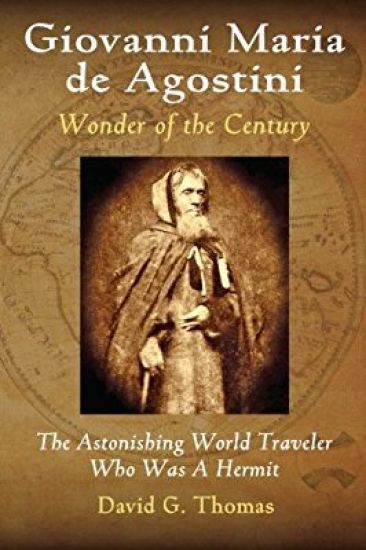
Giovanni Maria de Agostini, Wonder of the Century: The Astonishing World Traveler Who Was a Hermit
This book is about a remarkable man, Giovanni Maria de Agostini, born in Italy in 1801, who combined two seemingly contradictory aspirations: a fervent desire to devote his whole life to "perfect solitude" and an astonishing urge to travel incessantly. As his decisions and actions emerge from the lightless silence - the time-covered past - a unifying purpose becomes evident. Following extensive travel in Europe, Agostini takes vows revocable only by formal dispensation from the Pope. He immediately leaves forever his "beloved Italy" for South America. Twenty-one years he spends traversing that, at the time, greatly unexplored continent, visiting Venezuela, Colombia, Ecuador, Bolivia, Peru, Brazil, Argentina, Paraguay, and Chile - and so doing multiple times. During this spectacular solo Odyssey, he survives a trip down the Amazon River by canoe, crosses the Andes by foot several times, walks vast distances, and endures living alone in scalding deserts and subzero mountains. In spite of oppressive and infuriating obstacles, including death threats, unjust arrest, deportation, jail, and forced confinement in a mental asylum, Agostini persists undeterred in the solemn goal he set for himself when he left Europe. Seeking change and another continent, Agostini leaves South America for Mexico, passing through Panama and Guatemala, and then Mexico for North America, passing through Cuba. In Cuba, he is hailed as an extraordinary adventurer, his photograph is taken, and he is proclaimed "The Wonder of Our Century." After arrival in New York, he walks to Canada, where he spends almost a year, then "goes west," eventually reaching, in the midst of the American Civil War, the Territory of New Mexico, where he meets his merciless fate. Agostini is remembered in many places -- in South America as Monge Jo o Maria, in North America as Ermita o Don Juan Agostini; however his life story is encrusted with myth and false fact. As the veritable events of his life are unveiled, a man of fascinating originality, prodigious endurance, intelligence, self-discipline, and self-sufficiency, infused with an indomitable spirit of adventure, emerges. Today in Argentina, as many as 15,000 people participate in a yearly festival initiated by Agostini at Cerro Monje, "Monk's Hill." In Brazil, at Cerro Campestre, "Campestre Hill," and Santo Cerro do Botucara , "Holy Hill of Botucara ," over 10,000 people celebrate annual events founded by Agostini. In Lapa, Brazil, a national park protects the pilgrimage route to Gruta do Monge, "Monk's Grotto." At Ara oiaba Hill, near Sorocaba, Brazil, the Trilha da Pedra Santa, "Trail of the Holy Rock," is climbed annually by thousands of people desiring to pay respect to the memory of the Monge do Ipanema, the "Monk of Ipanema." These are just a few examples of Agostini's cultural legacy, 145 years after his death. 20 maps and 65 photos, including 2 rare photos of Agostini, one taken in 1857 and one taken in 1861.
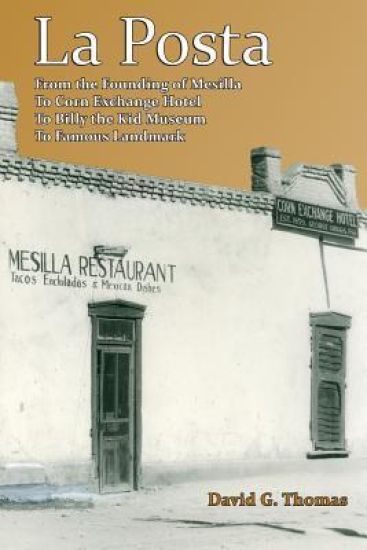
La Posta

La Posta

David G Thomas

Doc45 Publishing
2013
pokkari
The story of a 160-year old building, its people, and its place.The building sits on a lot next to the plaza. The lot is a "terreno de solar," a grant to a Mexican citizen by the state of Chihuahua, Mexico, on which to build a house. By the terms of the grant, the grantee is obliged to own a horse and a gun. Within a year or so the grantee - and his lot - are no longer in Mexico - they are both in the United States.A merchant buys the home, and opens a store. He sells to a partner, who opens Samuel Bean & Co. The Civil War begins and the town is occupied by Confederates. The Confederates are driven out by the Union. Bean is denounced as a "Johnny Reb," and a U. S. Marshal confiscates his store. It is sold for almost nothing on the town plaza. After a fast series of buyers make quick profits, Lola Bennett buys it and builds her dream home. She trades it to John Davis, who establishes the most famous hotel in New Mexico Territory, the Corn Exchange. Davis dies. His widow runs the Corn Exchange as long as she is able. She dies and the church inherits it. The church sells it to the town priest. The priest sells to George Griggs, the impresario of the Billy the Kid Museum. Griggs sells to "Katy" Griggs for $1, who opens the most famous eating place in southern New Mexico - La Posta.The Corn Exchange hosts guest from as far away as London and Hong Kong, and cities like San Francisco, Denver, St. Louis, Chicago, New York, and Washington D. C.Ulysses Simpson Grant, Jr., son of the president, stays at the Exchange. As does John S. Chisum, "Cattle King of the West," just two days after being robbed of $100 and a gold watch in a Silver City stage holdup.Virtually all of the significant people in Billy the Kid's life stay at the Exchange: Sheriff Harvey H. Whitehill, who arrests Billy for his first crime; "Doc" Scurlock, Charles Bowdre, and Richard Brewer, Billy's best friends; Attorneys Albert J. Fountain and John D. Bail, who defend Billy in his trial for murder; William Rynerson, the District Attorney who relentlessly pursues Billy; Simon Newcomb, the prosecuting DA in Billy's trial; and Judge Warren Bristol, who sentences Billy to "be hanged by the neck until his body be dead." Even Billy's implacable enemies James Dolan and John Riley stay at the Exchange.Did Billy stay at the Exchange? Someone signed his name. Was it he?