Kirjojen hintavertailu. Mukana 12 595 353 kirjaa ja 12 kauppaa.

Kirjailija

David Gillespie

Kirjat ja teokset yhdessä paikassa: 24 kirjaa, julkaisuja vuosilta 1993-2026, suosituimpien joukossa Taming Toxic People. Vertaile teosten hintoja ja tarkista saatavuus suomalaisista kirjakaupoista.

24 kirjaa

Kirjojen julkaisuhaarukka 1993-2026.

Modern Guide to GP Consulting

Modern Guide to GP Consulting

Alex Watson; David Gillespie

Radcliffe Publishing Ltd
2005
nidottu
Dr. Alex Watson and actor Dave Gillespie have combined their different areas of expertise to produce a new approach to GP consulting. Modern Guide to GP Consulting is a simple and straightforward guide that any doctor can use to improve the way they communicate with their patients. For many years, General Practitioners have placed great emphasis and importance on consultation skills, especially within their training schemes. Medical Schools are also placing increasing value on these skills, regardless of what specialty a doctor chooses to pursue in the future.Using these six S’s – Status, Story, Summarising, Sharing, Securing, and Sanity – the book provides a structure for the consultation, with the aim of Increasing successful patient-doctor outcomes and satisfaction rates. If you would like to contact the authors, or to find out more about 'Six S for Success' training, seminars and workshops, please email [email protected].
Early Soviet Cinema

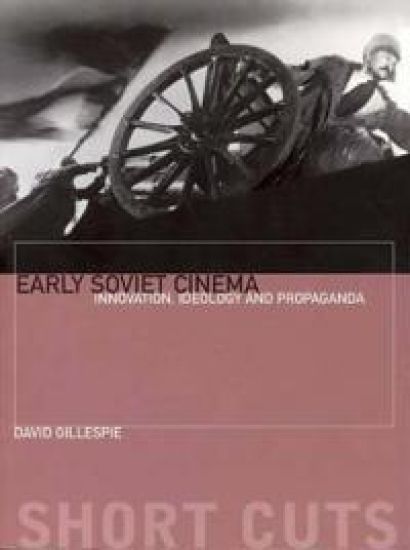
Early Soviet Cinema

David Gillespie

Wallflower Press
2001
nidottu
Early Soviet Cinema: Innovation, Ideology and Propaganda examines the aesthetics of Soviet cinema during its "golden age" of the 1920s, against a background of cultural ferment and the construction of a new socialist society. Separate chapters are devoted to the work of Sergei Eisenstein, Lev Kuleshov, Vsevolod Pudovkin, Dziga Vertov and Alexander Dovzhenko. Other major directors are also discussed at length. David Gillespie places primary focus on the text, with analysis concentrating on the artistic qualities, rather than the political implications, of each film. The result is not only a discussion of each director's contribution to the "golden age" and to world cinema but also an exploration of their own distinctive poetics. Author Biography: David Gillespie teaches Russian language and culture at the University of Bath, England. He has published widely in the field of modern Russian literature and film.
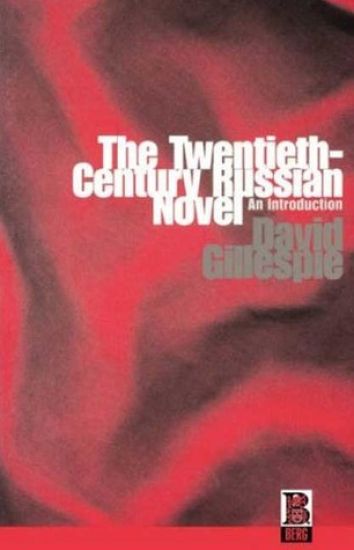
The Twentieth-Century Russian Novel

The Twentieth-Century Russian Novel

David Gillespie

Berg Publishers
1996
nidottu
- A student's guide to the 20th century Russian novelEight of Russia's most popular and significant novels are presented in this important new guide for students. Works include:- "We" by Evgenii Zamiatin- "Red Cavalry" by Isaak Babel- "Envy" by Iurii Olesha- "How the Steel Was Tempered" by Nikolai Ostrovskii- "The Master and Margarita" by Mikhail Bulgakov- "Doctor Zhivago" by Boris Pasternak- "Cancer Ward" by Alexander Solzhenitsyn- "Pushkin House" by Andrei BitovIn each chapter, David Gillespie examines one novel in detail and explores the career of the author and the critical reception of the work. Throughout, considerable reference is made to recently published scholarship and archival materials to provide students and scholars of Russian and Comparative Literature with a guide to these important Russian authors and their place in the world of literature. The book also includes an extensive bibliography of secondary literature and contains textual references in both the original Russian and in English translation.
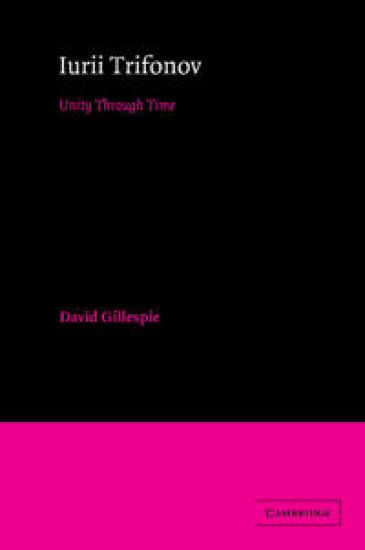
Iurii Trifonov

Iurii Trifonov

David Gillespie

Cambridge University Press
1993
sidottu
Iurii Trifonov (1925–81) has become well known in the West as a writer of Soviet urban life. This study, first published in 1993, concentrates on his exploration of major events in Russian history (such as the assassination of Tsar Alexander II and the Russian Civil War) and their implications and consequences for his time. David Gillespie traces this interest through all of Trifonov's writings, from his earliest, Stalin prize-winning period to the self-consciously modernist later works, in which Trifonov emphasizes the interconnectedness of human life and history, with the individual as 'the nerve' of history; linking epochs, places, civilizations. Trifonov discerns patterns and analogies in history, and develops a language of hints and allusions with which to combat the repressive censorship of his time.