

Kirjailija
David Goldblatt
Kirjat ja teokset yhdessä paikassa: 40 kirjaa, julkaisuja vuosilta 1996-2026, suosituimpien joukossa Sing...You Bald Head. Vertaile teosten hintoja ja tarkista saatavuus suomalaisista kirjakaupoista.
40 kirjaa
Kirjojen julkaisuhaarukka 1996-2026.



‘David Goldblatt is possibly the best football historian there has ever been’. Dominic Sandbrook ‘David Goldblatt is the greatest British sportswriter of the 21st century … Injury Time is an absolute classic.’ James Montague, author of The Billionaires Club and Engulfed Football, history and the state of the nation – and why it matters In 2014, David Goldblatt published The Game of Our Lives, an exhaustive and critically-acclaimed ‘state of the nation’ account of the UK told through the prism of football. A William Hill Award-winner, the book was described by historian David Kynaston as ‘enlightening, enriching and exceptional’, and Goldblatt was consequently heralded by Dominic Sandbrook in the Sunday Times as possibly the greatest football historian there has ever been. Fast forward 10 years and Goldblatt returns with a new state of the nation book that examines British society and culture through football at perhaps the most perilous time in modern history. Split into three parts, Injury Time explores Brexit, Covid and the ‘polycrisis’ of today (a tanking economy, European wars, political uncertainty and climate change) through the prism of football and posits the game as the most illuminating guide to the state of the nation today. Goldblatt’s thesis is that each of these seismic events has its own football corollary, be it the unstoppable dynamic of inequality in the professional game, the threadbare state of grassroots finances and pitches, the disaster capitalism of the European Super League, or the rise and fall of Russian club ownership; or indeed the steady rise in the number of football pitches and matches lost to extreme weather. Simultaneously football’s participants and their words and actions have become central to the country’s public conversations, from Marcus Rashford’s campaign against child hunger at the height of the Covid pandemic to the extraordinary reactions on both sides of the debate to Gary Lineker’s tweet in March 2023 about the government’s anti-migrant rhetoric. Football, in short, is the ultimate bellwether for society – a mirror that reflects back British culture’s attributes and myriad ills.

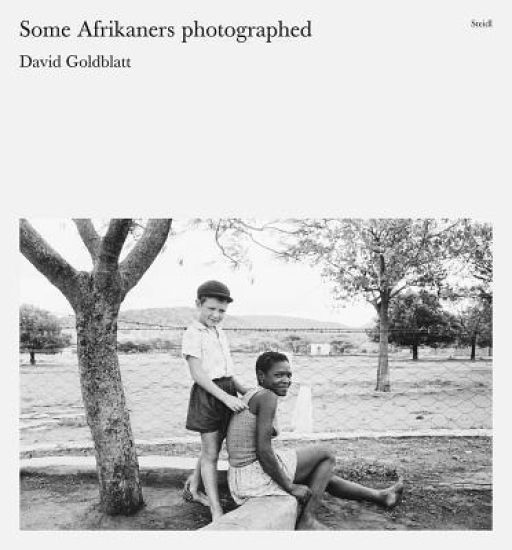
This book presents photos by David Goldblatt (born 1930) of Fietas in Johannesburg, taken between 1952 and 2016, with an emphasis on his 1976-77 images of the suburb's last Indian residents before they were forcibly removed under apartheid.Known affectionately by its inhabitants as Fietas, though officially called Pageview, this was one of the city's few "nonracial" suburbs, where Malay, African, Chinese, Indian and a few white people lived. Composed of narrow streets and small houses, here different races and religions formed a strong, safe community where children played in the streets. There were two mosques, Hindu, Tamil and Muslim schools, cricket, soccer and bridge clubs, and shops. In 1948 the National Party came to power and made the clearance of all "nonwhite" inhabitants of Pageview an immediate objective: some 5,000 Africans and other people of color were evicted or "persuaded" to leave.

The origins of this book lie in David Goldblatt's observation that many of his fellow South Africans, regardless of race or class, are the victims of crime.For this project, begun in 2008, Goldblatt photographed criminal offenders and alleged offenders at the place that was probably life-changing for them and their victims: the scene of the crime or arrest. Each portrait is accompanied by the subject's written story in his or her own words--for many, a cathartic experience and the first opportunity to recount events without being judged. Goldblatt paid each of his subjects 800 rand for permission to photograph and interview them, and any profit from the project will be donated to the rehabilitation of offenders. Ex Offenders also features Goldblatt's portraits and interviews of black subjects in West Bromwich, England, made in collaboration with the community arts project Multistory.


memo Wissen entdecken. Wirtschaft
Johnny Acton; David Goldblatt
Dorling Kindersley Verlag
2021
sidottu

The Age of Football proves that whether you call it football or soccer, you can't make sense of the modern world without understanding its most popular sport. With breathtaking scope and an unparalleled knowledge of the game, David Goldblatt--author of the best-selling The Ball Is Round--charts soccer's global cultural ascent, economic transformation, and deep politicization.
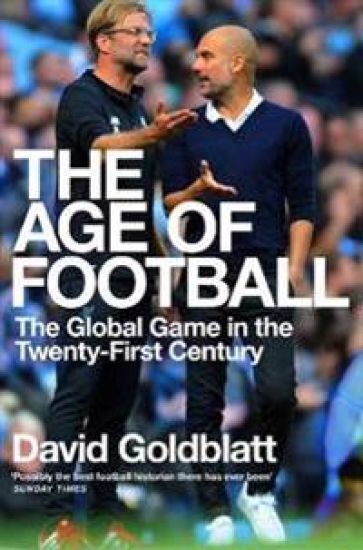
The epic exploration of football in the twenty-first century through the prism of sociology, politics, and economics, by David Goldblatt, the critically acclaimed author of The Ball is Round.'David Goldblatt is not merely the best football historian writing today, he is possibly the best there has ever been' - Dominic Sandbrook, Sunday TimesIn the twenty-first century football is first. First among sports themselves, but it now commands the allegiance, interest and engagement of more people in more places than any other phenomenon. In the three most populous nations on the earth – China, India and the United States where just twenty years ago football existed on the periphery of society – it has now arrived for good. Nations, peoples and neighbourhoods across the globe imagine and invent themselves through playing and following the game.In The Age of Football, David Goldblatt charts football’s global cultural ascent, its economic transformation and deep politicization, taking in prison football in Uganda and amputee football in Angola, the role of football fans in the Arab Spring, the footballing presidencies of Bolivia’s Evo Morales and Turkey’s Recep Erdogan, China’s declared intention to both host and win the World Cup by 2050, and the FIFA corruption scandal. Following the intersection of the game with money, power and identity, like no sports historian before, Goldblatt’s sweeping story is remarkable in its scope, breathtaking in its depth of knowledge, and is a brilliantly original perspective of the twenty-first century. It is the account of how football has come to define every facet of our social, economic and cultural lives and at what cost, shaping who we think we are and who we want to be.

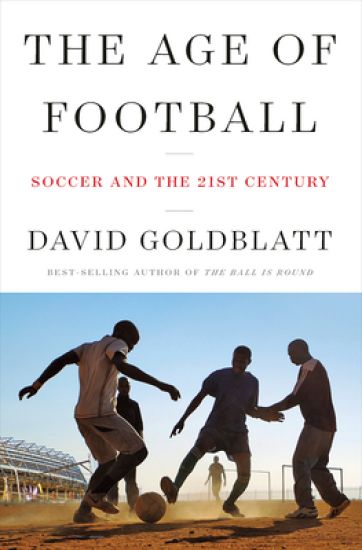
In the twenty-first century, soccer commands the allegiance, interest, and engagement of more people in more places than any other phenomenon in the world. David Goldblatt--author of the acclaimed, best-selling The Ball Is Round--charts the sport's global cultural ascent, economic transformation, and deep politicization.Based on a decade of research and reporting, The Age of Football sheds light on the greatest issues of our time--including globalization, immigration, nationalism--and the role that soccer plays. From soccer's connections to social discord in the Middle East as a site for protest and a tool for dictatorships to the reasons behind its surprising surge in popularity in China, India, and the United States, Goldblatt reveals that this massively popular sport is vital to understanding our social, political, and economic lives. Tracking the rise of interest in women's teams throughout the world and the controversy imbedded in the domestic football associations emerging across nations in Africa, he explores the use (and misuse) of soccer in the global advancement of equality and human rights.With breathtaking scope and unparalleled knowledge of the game, The Age of Football proves that whether you call it football or soccer, you can't make sense of the modern world without understanding its most popular sport


The critically acclaimed global story of football in the twenty-first century.
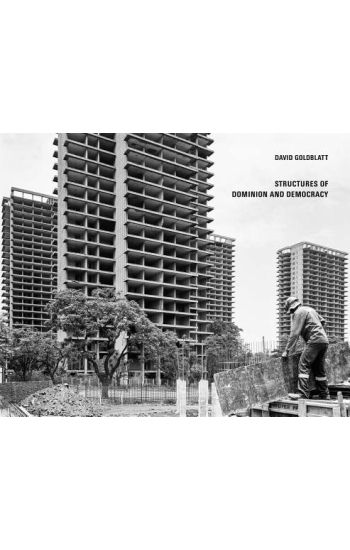
This book is a selective retrospective of David Goldblatt (born 1930), a key figure in 20th-century photography. Starting from his earliest photographic series, it shows the foundations of Goldblatt's critical passion for photography, his social sensitivity and political consciousness. Also presented are his most recent photographs pertaining to the changing situation in his native South Africa. Structures of Dominion and Democracy assembles many of Goldblatt's influential series, including On the Mines, Some Afrikaners and Structures with some less well-known including Kas Maine, and reconstructs the history of their first publication in the international press. Reproducing original handmade dummies and working plates, the process of bookmaking and other diverse applications of these often iconic images are laid bare. In addition to texts by the photographer, essays by Ivor Powell and Karolina Ziebinska-Lewandowska explore Goldblatt's work in the context of South African political and cultural history, as well as his contribution to the wider history of photography.
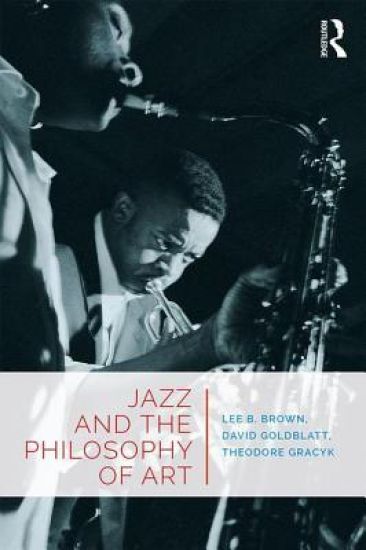
Jazz and the Philosophy of Art
Lee B. Brown; David Goldblatt; Theodore Gracyk
Routledge
2018
nidottu
Co-authored by three prominent philosophers of art, Jazz and the Philosophy of Art is the first book in English to be exclusively devoted to philosophical issues in jazz. It covers such diverse topics as minstrelsy, bebop, Voodoo, social and tap dancing, parades, phonography,musical forgeries, and jazz singing, as well as Goodman’s allographic/autographic distinction, Adorno’s critique of popular music, and what improvisation is and is not. The book is organized into three parts. Drawing on innovative strategies adopted to address challenges that arise for the project of defining art, Part I shows how historical definitions of art provide a blueprint for a historical definition of jazz. Part II extends the book’s commitment to social-historical contextualism by exploring distinctive ways that jazz has shaped, and been shaped by, American culture. It uses the lens of jazz vocals to provide perspective on racial issues previously unaddressed in the work. It then examines the broader premise that jazz was a socially progressive force in American popular culture. Part III concentrates on a topic that has entered into the arguments of each of the previous chapters: what is jazz improvisation? It outlines a pluralistic framework in which distinctive performance intentions distinguish distinctive kinds of jazz improvisation.This book is a comprehensive and valuable resource for any reader interested in the intersections between jazz and philosophy.

Jazz and the Philosophy of Art
Lee B. Brown; David Goldblatt; Theodore Gracyk
Routledge
2018
sidottu
Co-authored by three prominent philosophers of art, Jazz and the Philosophy of Art is the first book in English to be exclusively devoted to philosophical issues in jazz. It covers such diverse topics as minstrelsy, bebop, Voodoo, social and tap dancing, parades, phonography,musical forgeries, and jazz singing, as well as Goodman’s allographic/autographic distinction, Adorno’s critique of popular music, and what improvisation is and is not. The book is organized into three parts. Drawing on innovative strategies adopted to address challenges that arise for the project of defining art, Part I shows how historical definitions of art provide a blueprint for a historical definition of jazz. Part II extends the book’s commitment to social-historical contextualism by exploring distinctive ways that jazz has shaped, and been shaped by, American culture. It uses the lens of jazz vocals to provide perspective on racial issues previously unaddressed in the work. It then examines the broader premise that jazz was a socially progressive force in American popular culture. Part III concentrates on a topic that has entered into the arguments of each of the previous chapters: what is jazz improvisation? It outlines a pluralistic framework in which distinctive performance intentions distinguish distinctive kinds of jazz improvisation.This book is a comprehensive and valuable resource for any reader interested in the intersections between jazz and philosophy.

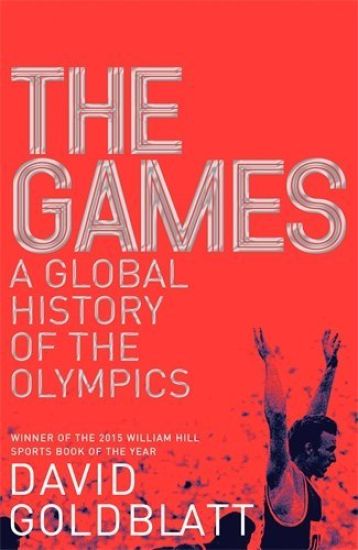
Winner of the William Hill Sports Book of the Year Award.From the ancient Greeks to today’s festival of sponsors – this is the definitive sporting, social and political history of the Olympic Games. 'An excellent, pacy, anecdote-studded history of the modern Games' – The TimesThe Olympic Games have become the greatest show on earth. But how was such a ritual invented? Why did it prosper and how has it been so utterly transformed?In The Games, sports historian David Goldblatt takes on a breathtakingly ambitious search for the answers and brilliantly unravels the complex strands of this history.Beginning with the Olympics as a sporting side show at the great Worlds Fairs of the Belle Epoque and its transformation into a global media spectacular, care of Hollywood and the Nazi party. The Games shows how sport and the Olympics had been a battlefield during the Cold War, a defining moment for social and economic change in host cities and countries, and a theatre of resistance for women and athletes of colour once excluded from the show.Filled with stories from over a century of Olympic competition – this amazingly researched history captures the excitement of sporting brilliance and the kaleidoscopic experience of the Games. It shows us how this sporting spectacle has come to reflect the world we hope to inhabit and the one we actually live in.