
Kirjailija
David Grayson
Kirjat ja teokset yhdessä paikassa: 87 kirjaa, julkaisuja vuosilta 1989-2026, suosituimpien joukossa Hempfield; a novel. By: David Grayson. / Ray Stannard Baker / illustrated By: Thomas Fogarty /. Vertaile teosten hintoja ja tarkista saatavuus suomalaisista kirjakaupoista.
87 kirjaa
Kirjojen julkaisuhaarukka 1989-2026.
Hempfield; a novel. By: David Grayson. / Ray Stannard Baker / illustrated By: Thomas Fogarty /
David Grayson
Createspace Independent Publishing Platform
2018
nidottu
Ray Stannard Baker (April 17, 1870 in Lansing, Michigan - July 12, 1946 in Amherst, Massachusetts) (also known by his pen name David Grayson) was an American journalist, historian, biographer, and author. In 1898 Baker joined the staff of McClure's, a pioneer muckraking magazine, and quickly rose to prominence along with Lincoln Steffens and Ida Tarbell. He also dabbled in fiction, writing children's stories for the magazine Youth's Companion and a 9-volume series of stories about rural living in America, the first of which was titled "Adventures in Contentment" (1910) under his pseudonym David Grayson, which reached millions of readers worldwide.
The Friendly Road: New Adventures in Contentment (1913). By: David Grayson (Ray Stannard Baker), illustrated By: Thomas Fogarty (1873 - 1
Thomas Fogarty; David Grayson
Createspace Independent Publishing Platform
2017
nidottu
Ray Stannard Baker (April 17, 1870 in Lansing, Michigan - July 12, 1946 in Amherst, Massachusetts)(also known by his pen name David Grayson) was an American journalist, historian, biographer, and author.Baker was born in Michigan. After graduating from the State Agricultural College (now Michigan State University), he attended law school at the University of Michigan in 1891 before launching his career as a journalist in 1892 with the Chicago News-Record, where he covered the Pullman Strike and Coxey's Army in 1894. In 1898 Baker joined the staff of McClure's, a pioneer muckraking magazine, and quickly rose to prominence along with Lincoln Steffens and Ida Tarbell. He also dabbled in fiction, writing children's stories for the magazine Youth's Companion and a 9-volume series of stories about rural living in America, the first of which was titled "Adventures in Contentment" (1910) under his pseudonym David Grayson, which reached millions of readers worldwide. In 1907 dissatisfied with the muckraker label, Baker, Steffens, and Tarbell left McClure's and founded The American Magazine. In 1908 after the 1906 Atlanta Race Riot got him involved, Baker published the book Following the Color Line: An Account of Negro Citizenship in the American Democracy, becoming the first prominent journalist to examine America's racial divide; it was extremely successful. Sociologist Rupert Vance says it is: the best account of race relations in the South during the period - one that reads like field notes for the future historian. This account was written during the zenith of Washingtonian movement and shows the optimism that it inspired among both liberals and moderates. The book is also notable for its realistic accounts of Negro town life He followed up that work with numerous articles in the following decade.In 1912 Baker supported the presidential candidacy of Woodrow Wilson, which led to a close relationship between the two men, and in 1918 Wilson sent Baker to Europe to study the war situation. During peace negotiations, Baker served as Wilson's press secretary at Versailles. He eventually published 15 volumes about Wilson and internationalism, including the 6-volume The Public Papers of Woodrow Wilson (1925-1927) with William Edward Dodd, 5] and the 8-volume Woodrow Wilson: Life and Letters (1927-39), the last two volumes of which won the Pulitzer Prize for Biography or Autobiography in 1940. He served as an adviser on Darryl F. Zanuck's 1944 film Wilson. Baker wrote three autobiographies, Native American (1941), American Chronicle (1945) and Turtles (1943) Baker died of a heart attack in Amherst, Massachusetts, and is buried there in Wildwood Cemetery. Buildings have been named in honor of both Ray Stannard Baker and David Grayson (his pen name). A dormitory, Grayson Hall, is at the University of Massachusetts Amherst. The David Grayson Elementary School is in Waterford, Michigan. An academic building, Baker Hall, is at Michigan State University. Baker's brother Hugh Potter Baker was the president of Massachusetts State College that later became the University of Massachusetts.... Biography Thomas Fogarty (1873 - 1938) Illustrator Thomas Fogarty is known for nostalgic pen and ink illustrations depicting an earlier era, especially simple homespun subjects. He worked in many mediums, but was especially noted for pen and ink, o wash and crayon, as exemplified by his interpretive pictures for the David Grayson books, and illustrations for 'Sailing Alone Around the World' by Joshua Slocum. For many years, Thomas Fogarty was a teacher at the Art Students' League; among his pupils were Walter Biggs, McClelland Barclay and Norman Rockwell. Besides Fogarty's instruction in composition, Rockwell is said to recall that his teacher conveyed his "enthusiasm about illustration", and that it was Fogarty who sent him to a publisher, where he got a job illustrating .

Adventures in Contentment (1907).By: David Grayson (Ray Stannard Baker), illustrated By: Thomas Fogarty: Novel
Thomas Fogarty; David Grayson
Createspace Independent Publishing Platform
2017
nidottu
The cheerful philosophizings of a young man who turns to nature and farm life to regain his health. Ray Stannard Baker (April 17, 1870 in Lansing, Michigan - July 12, 1946 in Amherst, Massachusetts)(also known by his pen name David Grayson) was an American journalist, historian, biographer, and author.Baker was born in Michigan. After graduating from the State Agricultural College (now Michigan State University), he attended law school at the University of Michigan in 1891 before launching his career as a journalist in 1892 with the Chicago News-Record, where he covered the Pullman Strike and Coxey's Army in 1894. In 1898 3] Baker joined the staff of McClure's, a pioneer muckraking magazine, and quickly rose to prominence along with Lincoln Steffens and Ida Tarbell. He also dabbled in fiction, writing children's stories for the magazine Youth's Companion and a 9-volume series of stories about rural living in America, the first of which was titled "Adventures in Contentment" (1910) under his pseudonym David Grayson, which reached millions of readers worldwide. In 1907 dissatisfied with the muckraker label, Baker, Steffens, and Tarbell left McClure's and founded The American Magazine. In 1908 after the 1906 Atlanta Race Riot got him involved, Baker published the book Following the Color Line: An Account of Negro Citizenship in the American Democracy, becoming the first prominent journalist to examine America's racial divide; it was extremely successful. Sociologist Rupert Vance says it is: the best account of race relations in the South during the period - one that reads like field notes for the future historian. This account was written during the zenith of Washingtonian movement and shows the optimism that it inspired among both liberals and moderates. The book is also notable for its realistic accounts of Negro town life He followed up that work with numerous articles in the following decade........ Thomas Fogarty (1873 - 1938) Thomas Fogarty was active/lived in New York. Thomas Fogarty is known for illustration, genre-figure, history.Biography Thomas Fogarty Illustrator Thomas Fogarty is known for nostalgic pen and ink illustrations depicting an earlier era, especially simple homespun subjects. He worked in many mediums, but was especially noted for pen and ink, o wash and crayon, as exemplified by his interpretive pictures for the David Grayson books, and illustrations for 'Sailing Alone Around the World' by Joshua Slocum. For many years, Thomas Fogarty was a teacher at the Art Students' League; among his pupils were Walter Biggs, McClelland Barclay and Norman Rockwell. Besides Fogarty's instruction in composition, Rockwell is said to recall that his teacher conveyed his "enthusiasm about illustration", and that it was Fogarty who sent him to a publisher, where he got a job illustrating ...
Adventures in Contentment. (1907) ( NOVEL ) by: David Grayson (Illustrated)
David Grayson
Createspace Independent Publishing Platform
2017
nidottu
The author's Pulitzer Prize was awarded for his work as a journalist reporting facts. This series of books is based on reflections of "the inner man". Grayson wished most to be "a maker of understandings". His books of wisdom and observations have sold more than two million copies. Because his observations are so universal, his messages gently repair and uplift the soul. Ray Stannard Baker (April 17, 1870 in Lansing, Michigan - July 12, 1946 in Amherst, Massachusetts) (also known by his pen name David Grayson) was an American journalist, historian, biographer, and author.Baker was born in Michigan. After graduating from the State Agricultural College (now Michigan State University), he attended law school at the University of Michigan in 1891 before launching his career as a journalist in 1892 with the Chicago News-Record, where he covered the Pullman Strike and Coxey's Army in 1894. In 1898 Baker joined the staff of McClure's, a pioneer muckraking magazine, and quickly rose to prominence along with Lincoln Steffens and Ida Tarbell. He also dabbled in fiction, writing children's stories for the magazine Youth's Companion and a 9-volume series of stories about rural living in America, the first of which was titled "Adventures in Contentment" (1910) under his pseudonym David Grayson, which reached millions of readers worldwide. In 1907 dissatisfied with the muckraker label, Baker, Steffens, and Tarbell left McClure's and founded The American Magazine. In 1908 after the 1906 Atlanta Race Riot got him involved, Baker published the book Following the Color Line: An Account of Negro Citizenship in the American Democracy, becoming the first prominent journalist to examine America's racial divide; it was extremely successful. Sociologist Rupert Vance says it is: the best account of race relations in the South during the period - one that reads like field notes for the future historian. This account was written during the zenith of Washingtonian movement and shows the optimism that it inspired among both liberals and moderates. The book is also notable for its realistic accounts of Negro town life.








"Adventures in Friendship" by David Grayson offers a heartwarming exploration of human connection and the simple joys of life. Through a series of reflective essays, Grayson, writing in a style reminiscent of autobiography, invites readers to share in his experiences and observations. This volume delves into the profound impact of friendship, the restorative power of nature, and the beauty found in everyday moments. Part memoir, part meditation on life's essentials, "Adventures in Friendship" provides a gentle reminder of the importance of cultivating meaningful relationships and appreciating the world around us. A timeless work from David Grayson, this collection appeals to those who cherish introspection and the enduring value of true companionship.This work has been selected by scholars as being culturally important, and is part of the knowledge base of civilization as we know it.This work is in the public domain in the United States of America, and possibly other nations. Within the United States, you may freely copy and distribute this work, as no entity (individual or corporate) has a copyright on the body of the work.Scholars believe, and we concur, that this work is important enough to be preserved, reproduced, and made generally available to the public. We appreciate your support of the preservation process, and thank you for being an important part of keeping this knowledge alive and relevant.

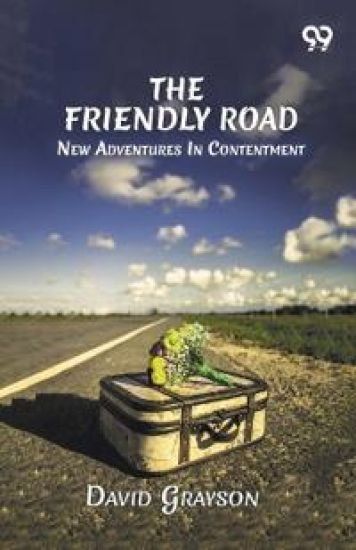
Rediscover the simple joys of country life in David Grayson's "The Friendly Road: New Adventures in Contentment." Penned under the pseudonym of Ray Stannard Baker, this collection of essays invites you on a journey through the American South, celebrating the beauty and tranquility of rural life. More than just nature writing, this volume offers reflections on finding contentment in everyday experiences. Grayson's observations on travel and the human spirit resonate with warmth and wisdom, making it a timeless exploration of simpler living. Whether you are drawn to memoirs, nature essays, or travelogues, "The Friendly Road" offers a charming perspective on the enduring appeal of the American countryside. This meticulously prepared edition brings Grayson's classic work back into print, offering readers a chance to reconnect with a bygone era.This work has been selected by scholars as being culturally important, and is part of the knowledge base of civilization as we know it.This work is in the public domain in the United States of America, and possibly other nations. Within the United States, you may freely copy and distribute this work, as no entity (individual or corporate) has a copyright on the body of the work.Scholars believe, and we concur, that this work is important enough to be preserved, reproduced, and made generally available to the public. We appreciate your support of the preservation process, and thank you for being an important part of keeping this knowledge alive and relevant.