Kirjojen hintavertailu. Mukana 12 390 323 kirjaa ja 12 kauppaa.

Kirjailija

David Greer

Kirjat ja teokset yhdessä paikassa: 5 kirjaa, julkaisuja vuosilta 2004-2020, suosituimpien joukossa Blue Genes. Vertaile teosten hintoja ja tarkista saatavuus suomalaisista kirjakaupoista.

5 kirjaa

Kirjojen julkaisuhaarukka 2004-2020.

Manuscript Inscriptions in Early English Printed Music
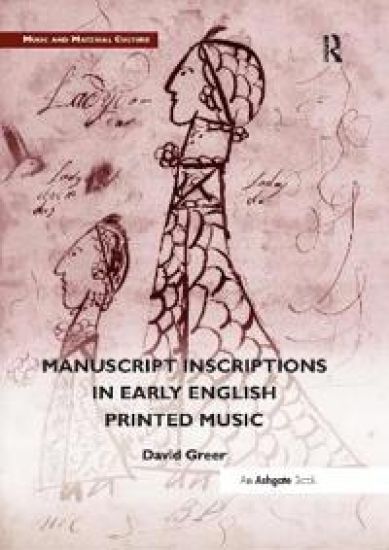
Who were the first owners of the music published in England in the sixteenth and early seventeenth centuries? Who went to ‘the dwelling house of … T. East, by Paules wharfe’ and bought a copy of Byrd’s Psalmes, sonets, & songs when it appeared in 1588? Who purchased a copy of Dowland’s First booke of songes in 1597? What other books formed part of their music library? In this survey of surviving books of music published before 1640, David Greer has gleaned information about the books’ early and subsequent owners by studying the traces they left in the books themselves: handwritten inscriptions, including names and other marks of ownership - even the scribbles and drawings a child of the family might put into a book left lying about. The result is a treasure trove of information about musical culture in early modern England. From inscriptions and marks of ownership Greer has been able to re-assemble early sets of partbooks, as well as collections of books once bound together. The search has also turned up new music. At a time when paper was expensive, new pieces were copied into blank spaces in printed books. In these jottings we find a ‘hidden repertory’ of music, some of it otherwise undiscovered music by known composers. In other cases, we see owners altering the words of songs, to suit new and personal purposes: a love-song in praise of Daphne becomes a heartfelt song to ‘my Jesus’; and ‘Faire Leonilla’ becomes Ophelia (perhaps the first mention of this character in Hamlet outside the play itself). On a more practical level, the users of the music sometimes made corrections to printing errors, and there are indications that some of these were last-minute corrections made in the printing-house (a useful guide for the modern editor). The temptation to ‘scribble in books’ was as irresistible to some Elizabethans as it is to some of us today. In doing so they left us clues to their identity, how they kept their music, how they used it, and the multifarious ways in which it played a part in their lives.
Manuscript Inscriptions in Early English Printed Music
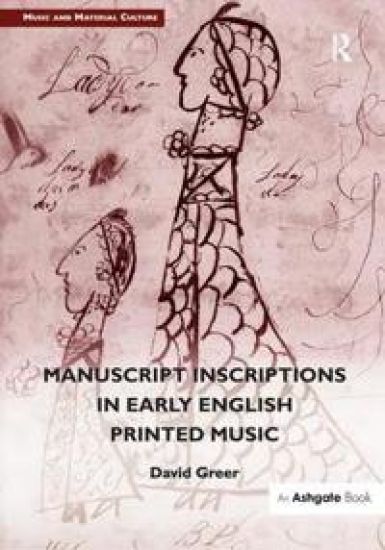
Who were the first owners of the music published in England in the sixteenth and early seventeenth centuries? Who went to ‘the dwelling house of … T. East, by Paules wharfe’ and bought a copy of Byrd’s Psalmes, sonets, & songs when it appeared in 1588? Who purchased a copy of Dowland’s First booke of songes in 1597? What other books formed part of their music library? In this survey of surviving books of music published before 1640, David Greer has gleaned information about the books’ early and subsequent owners by studying the traces they left in the books themselves: handwritten inscriptions, including names and other marks of ownership - even the scribbles and drawings a child of the family might put into a book left lying about. The result is a treasure trove of information about musical culture in early modern England. From inscriptions and marks of ownership Greer has been able to re-assemble early sets of partbooks, as well as collections of books once bound together. The search has also turned up new music. At a time when paper was expensive, new pieces were copied into blank spaces in printed books. In these jottings we find a ‘hidden repertory’ of music, some of it otherwise undiscovered music by known composers. In other cases, we see owners altering the words of songs, to suit new and personal purposes: a love-song in praise of Daphne becomes a heartfelt song to ‘my Jesus’; and ‘Faire Leonilla’ becomes Ophelia (perhaps the first mention of this character in Hamlet outside the play itself). On a more practical level, the users of the music sometimes made corrections to printing errors, and there are indications that some of these were last-minute corrections made in the printing-house (a useful guide for the modern editor). The temptation to ‘scribble in books’ was as irresistible to some Elizabethans as it is to some of us today. In doing so they left us clues to their identity, how they kept their music, how they used it, and the multifarious ways in which it played a part in their lives.

Blue Genes

Blue Genes

David Greer; Brian Harvey

Earthscan Ltd
2004
nidottu
The advance of genetic sciences has led to a 'blue revolution' in the way we use aquatic biodiversity. By 2020, the world will be eating almost as much farmed as wild fish, marine bacteria could yield the cure for cancer and deep-sea bacteria may be exploited to gobble up oil spills. Science is moving ahead at a staggering speed, and the demand for genetic resources is growing rapidly - yet governance and policy lag far behind. This groundbreaking work is the first to look at the ownership, governance and trade in aquatic genetic resources. Blue Genes describes the growing demand for aquatic genetic resources and the desperate need to fill the policy vacuum about the management and conservation of aquatic biodiversity, which would help create a foundation for rules dictating access to, and use of, aquatic genetic resources. Special attention is paid to indigenous and local people having the right to access these resources and their role in managing and conserving aquatic biodiversity. The book concludes with policy recommendations specifically tailored to aquatic resources, with the use of six case studies from four continents to illustrate key issues.
Blue Genes

Blue Genes

David Greer; Brian Harvey

Earthscan Ltd
2004
sidottu
The advance of genetic sciences has led to a 'blue revolution' in the way we use aquatic biodiversity. By 2020, the world will be eating almost as much farmed as wild fish, marine bacteria could yield the cure for cancer and deep-sea bacteria may be exploited to gobble up oil spills. Science is moving ahead at a staggering speed, and the demand for genetic resources is growing rapidly - yet governance and policy lag far behind. This groundbreaking work is the first to look at the ownership, governance and trade in aquatic genetic resources. Blue Genes describes the growing demand for aquatic genetic resources and the desperate need to fill the policy vacuum about the management and conservation of aquatic biodiversity, which would help create a foundation for rules dictating access to, and use of, aquatic genetic resources. Special attention is paid to indigenous and local people having the right to access these resources and their role in managing and conserving aquatic biodiversity. The book concludes with policy recommendations specifically tailored to aquatic resources, with the use of six case studies from four continents to illustrate key issues.