Kirjojen hintavertailu. Mukana 12 595 353 kirjaa ja 12 kauppaa.

Kirjailija

David Griffiths

Kirjat ja teokset yhdessä paikassa: 34 kirjaa, julkaisuja vuosilta 1997-2025, suosituimpien joukossa Vikings of the Irish Sea. Vertaile teosten hintoja ja tarkista saatavuus suomalaisista kirjakaupoista.

34 kirjaa

Kirjojen julkaisuhaarukka 1997-2025.

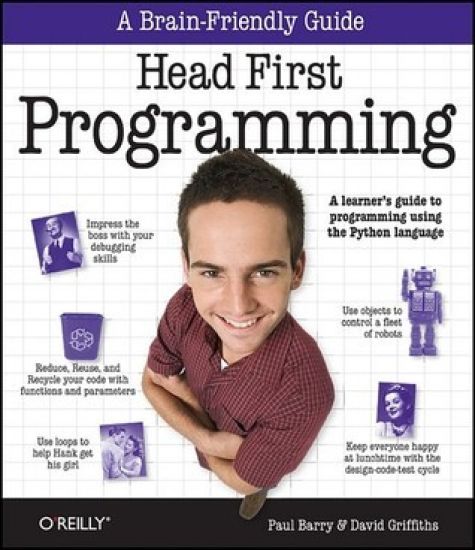
Head First Programming

Head First Programming

David Griffiths

O'Reilly Media, Inc, USA
2009
nidottu
Looking for a reliable way to learn how to program on your own, without being overwhelmed by confusing concepts? "Head First Programming" introduces the core concepts of writing computer programs - variables, decisions, loops, functions, and objects - which apply regardless of the programming language. This book offers concrete examples and exercises in the dynamic and versatile Python language to demonstrate and reinforce these concepts. You can learn the basic tools to start writing the programs that interest you, and get a better understanding of what software can (and cannot) do. When you're finished, you'll have the necessary foundation to learn any programming language or tackle any software project you choose. With a focus on programming concepts, this book teaches you how to: understand the core features of all programming languages, including variables, statements, decisions, loops, expressions, and operators; reuse code with functions; use library code to save time and effort; select the best data structure to manage complex data; write programs that talk to the Web; share your data with other programs; and, write programs that test themselves and help you avoid embarrassing coding errors. We think your time is too valuable to waste struggling with new concepts. Using the latest research in cognitive science and learning theory to craft a multi-sensory learning experience, "Head First Programming" uses a visually rich format designed for the way your brain works, not a text-heavy approach that puts you to sleep.
Introduction to Elementary Particles

Introduction to Elementary Particles

David Griffiths

Wiley-VCH Verlag GmbH
2008
nidottu
In the second, revised edition of a well-established textbook, the author strikes a balance between quantitative rigor and intuitive understanding, using a lively, informal style. The first chapter provides a detailed historical introduction to the subject, while subsequent chapters offer a quantitative presentation of the Standard Model. A simplified introduction to the Feynman rules, based on a "toy" model, helps readers learn the calculational techniques without the complications of spin. It is followed by accessible treatments of quantum electrodynamics, the strong and weak interactions, and gauge theories. New chapters address neutrino oscillations and prospects for physics beyond the Standard Model. The book contains a number of worked examples and many end-of-chapter problems. A complete solution manual is available for instructors.
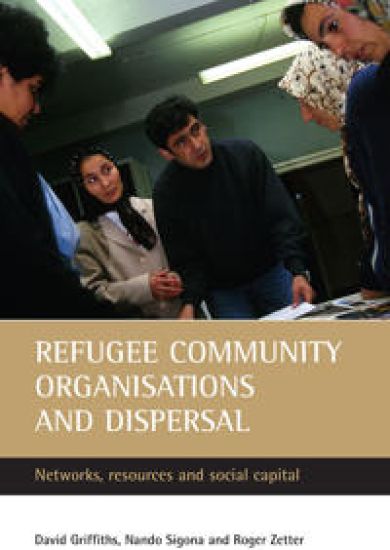
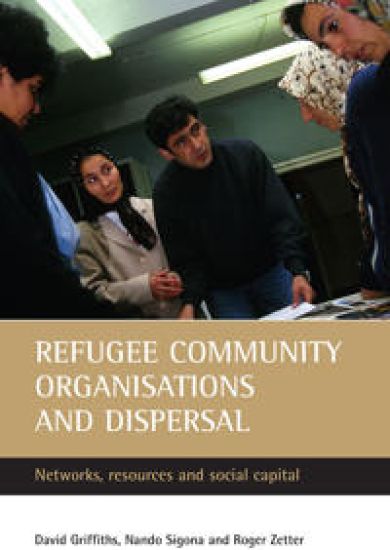
Refugee community organisations and dispersal

Refugee community organisations and dispersal

David Griffiths; Nando Sigona; Roger Zetter

Policy Press
2005
nidottu
The book is distinctive in combining theoretical discussion on the role of networks, resources and social capital with fieldwork evidence and interviews with members of RCOs, non-governmental organisations (NGOs) and statutory authorities. It critically examines the impact of dispersal and current legislative change on refugee communities and RCOs; explores the integrative role of RCOs; assesses the race relations framework in Britain and its effects on refugee organisations and provides a thorough and up-to-date literature review. Refugee community organisations and dispersal is essential reading for practitioners and policy makers, academics, researchers and students of social policy, social geography, sociology and politics. Members of NGOs working with refugees or in local government, community workers and members of refugee communities themselves will also be keenly interested in the book. Comparative issues raised by the research will be of direct interest to readers in other countries.
Refugee community organisations and dispersal

Refugee community organisations and dispersal

David Griffiths; Nando Sigona; Zetter Roger

Policy Press
2005
sidottu
The book is distinctive in combining theoretical discussion on the role of networks, resources and social capital with fieldwork evidence and interviews with members of RCOs, non-governmental organisations (NGOs) and statutory authorities. It critically examines the impact of dispersal and current legislative change on refugee communities and RCOs; explores the integrative role of RCOs; assesses the race relations framework in Britain and its effects on refugee organisations and provides a thorough and up-to-date literature review. Refugee community organisations and dispersal is essential reading for practitioners and policy makers, academics, researchers and students of social policy, social geography, sociology and politics. Members of NGOs working with refugees or in local government, community workers and members of refugee communities themselves will also be keenly interested in the book. Comparative issues raised by the research will be of direct interest to readers in other countries.
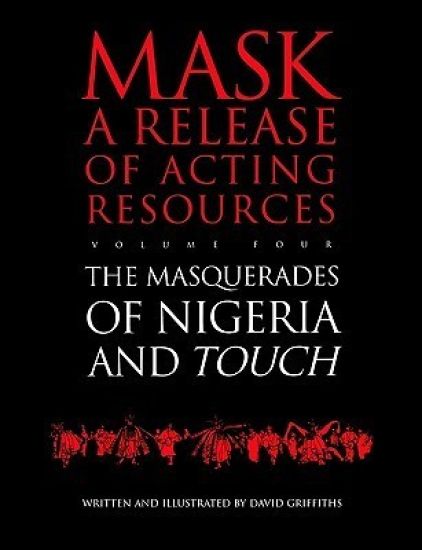
Touch and the Masquerades of Nigeria

Touch and the Masquerades of Nigeria

David Griffiths

Harwood-Academic Publishers
1998
nidottu
First published in 1997. In the 'Masquerades of Nigeria' and 'Touch', the fourth volume of his mask: A Release of Acting Resources, David Griffiths investigates the use of mask in the Masquerade traditions of West Africa, and specially of Nigeria. The author persuasively argues in favour of a common language of masek performance, and focuses particularly on the manner in which the Nigerian dramatist Wole Soyinka explores the theatrical virtuosity and vibrancy of mask in his plays, specially his 'root' play 'A Dance in the Forests'. David Griffiths then presents his short Trilogy of plays, under the title 'Touch' which he created to explore the intricate subtleties of African mask in a manner accessible to Western actors. 'Touch' is based on Soyinka's play and arguably needs that as a point fo reference- but being directed to rad Soykina is to everyone's benefit.
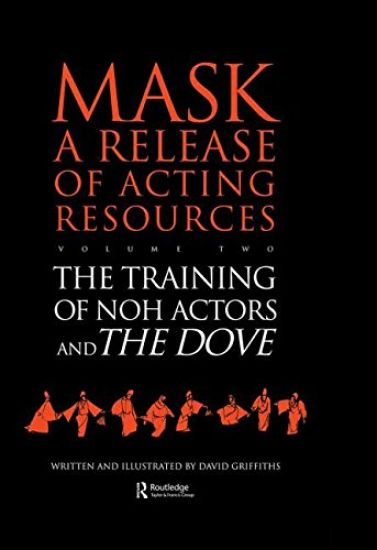
The Training of Noh Actors and The Dove

The Training of Noh Actors and The Dove

David Griffiths

Harwood-Academic Publishers
1998
sidottu
First Published in 1998. This is the second volume of Mask: A Release if Acting Resources, and David Griffiths provides a detailed and sensitive view of the Japanese Noh theatre: historically, philosophically (with an evaluation of Zeami's treatises) and in respect of the rigorous practicalities of Noh training. The latter is given particular authority and insight because of the access Griffiths had to Noh actors in training and performance. Greatly enhanced with the author's illustrations, this volume gives one of the most accessible introductions to Noh that is available in English. Appended to the descriptive and analytic material is a short play, The Dove, written by Griffiths (and subsequently professionally performed) described as 'unashamedly' acknowledging its Noh influence. This one-woman price is a sensitive and evocative drama with subtle references to its cultural source. Is potential as an exercise in mask work is excellent.
The Training of Noh Actors and The Dove

The Training of Noh Actors and The Dove

David Griffiths

Harwood-Academic Publishers
1998
nidottu
First Published in 1998. This is the second volume of Mask: A Release if Acting Resources, and David Griffiths provides a detailed and sensitive view of the Japanese Noh theatre: historically, philosophically (with an evaluation of Zeami's treatises) and in respect of the rigorous practicalities of Noh training. The latter is given particular authority and insight because of the access Griffiths had to Noh actors in training and performance. Greatly enhanced with the author's illustrations, this volume gives one of the most accessible introductions to Noh that is available in English. Appended to the descriptive and analytic material is a short play, The Dove, written by Griffiths (and subsequently professionally performed) described as 'unashamedly' acknowledging its Noh influence. This one-woman price is a sensitive and evocative drama with subtle references to its cultural source. Is potential as an exercise in mask work is excellent.
The Italian Commedia and Please be Gentle

The Italian Commedia and Please be Gentle

David Griffiths

Harwood-Academic Publishers
1998
nidottu
Focusing on Commedia Dell'Arte, this work provides a historical and critical commentary of the Commedia. It highlights common factors between this genre and that of the Japanese Noh theatre. The author proposes six similarities: characters familiar to their audience and masked, minimal properties and scenery with the focus on the actor, the "families" of performers, a sharp mind as well as an agile body, a professional living on these skills and patronage, and a knowledgeable audience. Complementing this book is the play "Please Be Gentle" which explores the various tricks and devices of Commedia Dell'Arte acting.
The Russian Empire in the Eighteenth Century: Tradition and Modernization
Russia's 18th-century drive toward modernity and empire under the two "greats" - Peter I and Catherine II - is captured in this work by one of Russia's outstanding young historians. The author develops three themes: Russia's relationship to the West; the transformation of "Holy Russia" into a multinational empire; and the effects of efforts to modernize Russia selectively along Western lines. Writing in a clear, crisp style, Kamenskii enlivens the narrative with observations from contemporary literary figures and political commentators that point up the lasting significance of the events he describes.
The Russian Empire in the Eighteenth Century: Tradition and Modernization
Russia's 18th-century drive toward modernity and empire under the two "greats" - Peter I and Catherine II - is captured in this work by one of Russia's outstanding young historians. The author develops three themes: Russia's relationship to the West; the transformation of "Holy Russia" into a multinational empire; and the effects of efforts to modernize Russia selectively along Western lines. Writing in a clear, crisp style, Kamenskii enlivens the narrative with observations from contemporary literary figures and political commentators that point up the lasting significance of the events he describes.