Kirjojen hintavertailu. Mukana 12 390 323 kirjaa ja 12 kauppaa.

Kirjailija

David H. Dejong

Kirjat ja teokset yhdessä paikassa: 12 kirjaa, julkaisuja vuosilta 2008-2024, suosituimpien joukossa Paternalism to Partnership. Vertaile teosten hintoja ja tarkista saatavuus suomalaisista kirjakaupoista.

12 kirjaa

Kirjojen julkaisuhaarukka 2008-2024.

Damming the Gila

Damming the Gila

David H. DeJong

University of Arizona Press
2024
sidottu
Unraveling a complex web of tension, distrust, and political maneuvering, Damming the Gila continues the story of the Gila River Indian Community’s struggle for the restoration of its water rights. This volume continues to chronicle the history of water rights and activities on the Gila River Indian Reservation. Centered on the San Carlos Irrigation Project and Coolidge Dam, it details the history and development of the project, including the Gila Decree and the Winters Doctrine. Embedded in the narrative is the underlying tension between tribal growers on the Gila River Indian Reservation and upstream users. Told in seven chapters, the story underscores the idea that the Gila River Indian Community believed the San Carlos Irrigation Project was first and foremost for their benefit and how the project and the Gila Decree fell short of restoring their water and agricultural economy.Damming the Gila is the third in a trio of important documentary works, beginning with DeJong’s Stealing the Gila and followed by Diverting the Gila. It continues the story of the Gila River Indian Community’s fight to regain access to their water.
Diverting the Gila

Diverting the Gila

David H. DeJong

University of Arizona Press
2023
nidottu
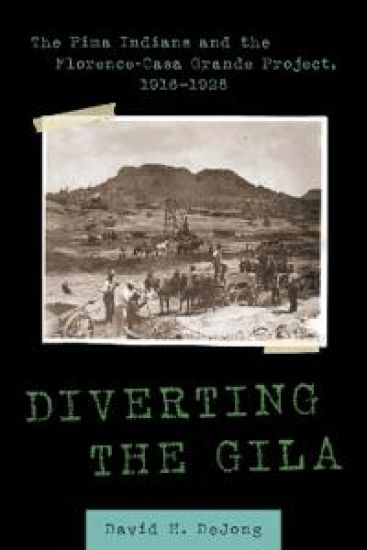
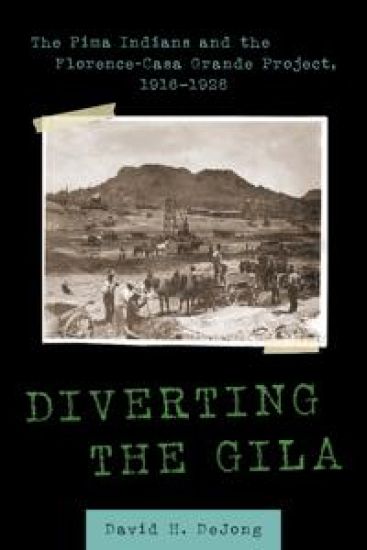
In the late nineteenth and early twentieth centuries, Americans assumed the land and water resources of the West were endless. Water was as vital to newcomers to Arizona’s Florence and Casa Grande valleys as it had always been to the Pima Indians, who had been successfully growing crops along the Gila River for generations when the white settlers moved in.Diverting the Gila explores the complex web of tension, distrust, and political maneuvering to divide and divert the scarce waters of the Gila River. Residents of Florence, Casa Grande, and the Pima Reservation fought for vital access to water rights. Into this political foray stepped Arizona’s freshman congressman Carl Hayden, who not only united the farming communities but also used Pima water deprivation to the advantage of Florence-Casa Grande and Upper Gila Valley growers. The result was the federal Florence-Casa Grande Project that, as legislated, was intended to benefit Pima growers on the Gila River Indian Reservation first and foremost. As was often the case in the West, well-heeled, nontribal political interests manipulated the laws at the expense of the Indigenous community.Diverting the Gila is the sequel to David H. DeJong’s 2009 Stealing the Gila, and it continues to tell the story of the forerunner to the San Carlos Irrigation Project and the Gila River Indian Community’s struggle to regain access to their water.
Paternalism to Partnership

Paternalism to Partnership

David H. Dejong

University of Nebraska Press
2022
sidottu
Paternalism to Partnership examines the administration of Indian affairs from 1786, when the first federal administrator was appointed, through 2021. David H. DeJong examines each administrator through a biographical sketch and excerpts of policy statements defining the administrator’s political philosophy, drawn from official reports or the administrator’s own writings. The Indian Office, as an executive agency under the secretary of war (1789 to 1849) and secretary of the interior (1849 to present), was directed by the president of the United States. The superintendents, chief clerks, commissioners, and assistant secretaries for Indian affairs administered policy as prescribed by Congress and the president. Each was also given a level of discretion in administering this policy. For most of the federal-Indian relationship, administrators were limited in influencing policy. This paternalism continued well into the twentieth century. Beginning in the 1960s Congress and the president ameliorated their views on the federal-Indian relationship and moved away from paternalism. Since 1966 every administrator of the Bureau of Indian Affairs has been Native American, and each has exercised increasing authority in shaping policy. This has given rise to a federal-Indian partnership that has witnessed tribal nations again exercising their inherent rights of self-government. In this documentary history David H. DeJong follows the progression of federal Indian policy over more than two hundred years, providing firsthand accounts of how the federal-Indian relationship has changed over the centuries.
Diverting the Gila

Diverting the Gila

David H. DeJong

University of Arizona Press
2021
sidottu
In the late nineteenth and early twentieth centuries, Americans assumed the land and water resources of the West were endless. Water was as vital to newcomers to Arizona's Florence and Casa Grande Valleys as it had always been to the Pima Indians, who had been successfully growing crops along the Gila River for generations when the settlers moved in. Diverting the Gila explores the complex web of tension, distrust, and political maneuvering to divide and divert the scarce waters of the Gila River. Residents of Florence, Casa Grande, and the Pima Reservation fought for vital access to water rights. Into this political foray stepped Arizona's freshman congressman Carl Hayden, who not only united the farming communities but also used Pima water deprivation to the advantage of Florence-Casa Grande and Upper Gila Valley growers. The result was the federal Florence-Casa Grande Project that, as legislated, was intended to benefit Pima growers on the Gila River Indian Reservation first and foremost. As was often the case in the West, well-heeled, nontribal political interests manipulated the laws at the expense of the Indigenous community. Diverting the Gila is the sequel to David H. DeJong's 2009 Stealing the Gila, and it continues to tell the story of the forerunner to the San Carlos Irrigation Project and the Gila River Indian Community's struggle to regain access to their water.
The Commissioners of Indian Affairs

The Commissioners of Indian Affairs

David H. DeJong

University of Utah Press,U.S.
2020
nidottu
Although federal Indian policies are largely determined by Congress and the executive branch, it is the commissioner and assistant secretary of Indian Affairs who must implement them. Over the past two centuries, the overarching goals of federal Indian policy have been the social and political integration and assimilation of Native Americans and the extinguishment of aboriginal title to Indian lands. These goals have been woven into policies of emigration, assimilation, acculturation, termination, reservations, and consumerism, shifting under the influence of a changing national moral compass. Indian Affairs commissioners have and continue to hold an enormous power to dictate how these policies affect the fate of Indians and their lands, a power that David H. DeJong shows has been used and misused in different ways through the years. By examining the work of the Indian affairs commissioners and their assistant secretaries, DeJong gives new insight into how federal Indian policy has evolved and been shaped by the social, political, and cultural winds of the day.
The Commissioners of Indian Affairs

The Commissioners of Indian Affairs

David H. DeJong

University of Utah Press,U.S.
2020
sidottu
Although federal Indian policies are largely determined by Congress and the executive branch, it is the commissioner and assistant secretary of Indian Affairs who must implement them. Over the past two centuries, the overarching goals of federal Indian policy have been the social and political integration and assimilation of Native Americans and the extinguishment of aboriginal title to Indian lands. These goals have been woven into policies of emigration, assimilation, acculturation, termination, reservations, and consumerism, shifting under the influence of a changing national moral compass. Indian Affairs commissioners have and continue to hold an enormous power to dictate how these policies affect the fate of Indians and their lands, a power that David H. DeJong shows has been used and misused in different ways through the years. By examining the work of the Indian affairs commissioners and their assistant secretaries, DeJong gives new insight into how federal Indian policy has evolved and been shaped by the social, political, and cultural winds of the day.
Stealing the Gila

Stealing the Gila

David H. DeJong

University of Arizona Press
2016
nidottu
By 1850 the Pima Indians of central Arizona had developed a strong and sustainable agricultural economy based on irrigation. As David H. DeJong demonstrates, the Pima were an economic force in the mid-nineteenth century middle Gila River valley, producing food and fiber crops for western military expeditions and immigrants. Moreover, crops from their fields provided an additional source of food for the Mexican military presidio in Tucson, as well as the U.S. mining districts centered near Prescott. For a brief period of about three decades, the Pima were on an equal economic footing with their non-Indian neighbors. This economic vitality did not last, however. As immigrants settled upstream from the Pima villages, they deprived the Indians of the water they needed to sustain their economy. DeJong traces federal, territorial, and state policies that ignored Pima water rights even though some policies appeared to encourage Indian agriculture. This is a particularly egregious example of a common story in the West: the flagrant local rejection of Supreme Court rulings that protected Indian water rights. With plentiful maps, tables, and illustrations, DeJong demonstrates that maintaining the spreading farms and growing towns of the increasingly white population led Congress and other government agencies to willfully deny Pimas their water rights. Had their rights been protected, DeJong argues, Pimas would have had an economy rivaling the local and national economies of the time. Instead of succeeding, the Pima were reduced to cycles of poverty, their lives destroyed by greed and disrespect for the law, as well as legal decisions made for personal gain.
American Indian Treaties

American Indian Treaties

David H. DeJong

University of Utah Press,U.S.
2015
nidottu
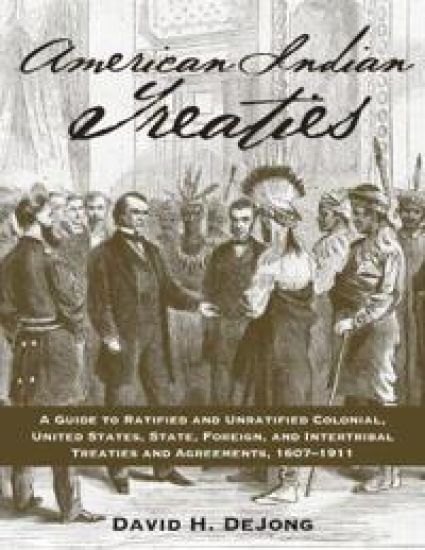
When it comes to American Indian treaties, the American polity too often forgets the realities of history. Prevailing perceptions are often not only inaccurate but also premised on outright falsehoods. Treaty-making was profoundly influenced by tribal conceptions of diplomacy. Colonial and early U.S. treaties especially were clothed in ritual, metaphor, and covenants that emphasized the sacred nature and purpose of diplomacy and represented a time when tribal nations were equal partners. To understand the nature and meaning of tribal treaties one needs to read them and recognize their sacred pledges and meaning, which are still relevant today.This volume examines intertribal treaties and treaty-making and provides understanding of both the agreements and the diplomatic protocols in which they were enmeshed. It summarizes colonial Indian treaty discourse, intertribal treaties and diplomacy, the different eras of ratified and unratified U.S. treaties, foreign and state treaties with Indian nations, and the Indian agreements that followed the cessation of official treaty-making. It provides extensive lists of over 1,500 Indian treaties from all tribal diplomatic eras and includes dates, participants, purposes, and references.
Forced to Abandon Our Fields

Forced to Abandon Our Fields

David H. DeJong

University of Utah Press,U.S.
2011
nidottu
During the nineteenth century, upstream diversions from the Gila River decreased the arable land on the Gila River Indian Reservation to only a few thousand acres. As a result the Pima Indians, primarily an agricultural people, fell into poverty. Many Pima farmers and leaders lamented this suffering and in 1914 the United States Indian Irrigation Service assigned a 33-year-old engineer named Clay ""Charles"" Southworth to oversee the Gila River adjudication. As part of that process, Southworth interviewed 34 Pima elders, thus putting a face on the depth of hardships facing many Indians in the late nineteenth century. Southworth's interviews fell into obscurity until recently, when they were rediscovered by David DeJong. The interviews cover decades of Pima history and reveal the nexus between upstream diversions and Pima economy, agriculture, water use, and water rights. In Forced to Abandon Our Fields, DeJong provides the historical context for these interviews; transcripts of the interviews provide first-hand descriptions of both the once-successful Pima agricultural economy and its decline by the early twentieth century. These interviews suggest that it was not the triumph of Western civilization that displaced the Pima agricultural economy but the application of a philosophy of economic liberalism that prevented the Pima from building on their previous successes.
'If You Knew the Conditions'

'If You Knew the Conditions'

David H. DeJong

Lexington Books
2010
nidottu
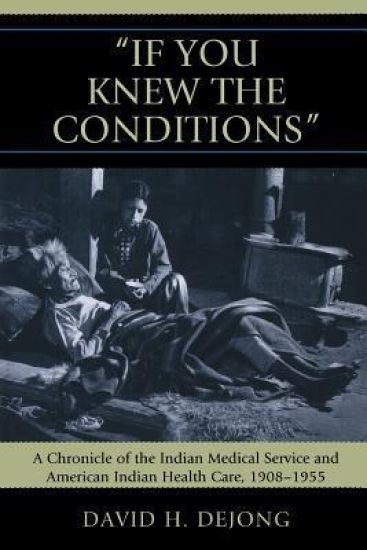
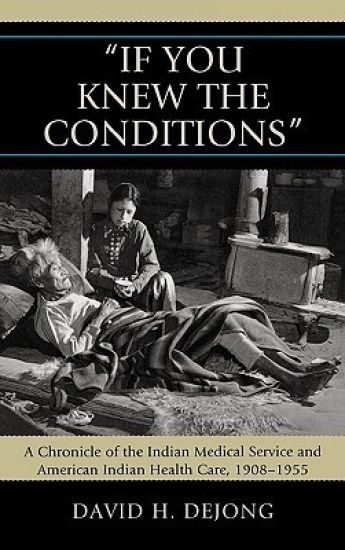
After their sequestering on reservations across the West, American Indians suffered from appalling rates of disease and morbidity. While the United States Indian Service (Bureau of Indian Affairs) provided some services prior to 1908, it was not until then that the Indian Medical Service was established for the purpose of providing services to American Indians. Born in an era of assimilation and myths of vanishing Indians, the Indian Medical Service provided emergency and curative care with little forethought of preventive medicine. DeJong argues that the U.S. Congress provided little more than basic, curative treatment, and that this Congressional parsimony is reflected in the services (or lack thereof) provided by the Indian Medical Service. DeJong considers the mediocre results of the Indian Medical Service from a cultural perspective. He argues that, rather than considering a social conservation model of medicine, the Indian Service focused on curative medicine from a strictly Western perspective. This failure to appreciate the unique American Indian cultural norms and values associated with health and well-being led to a resistance from American Indians which seemingly justified parsimonious Congressional appropriations and initiated a cycle of benign neglect. 'If You Knew the Conditions' examines the impact of the long-standing Congressional mandate of cultural assimilation, combined with the Congressional desire to abolish the Indian Service, on the degree and extent of disease in Indian Country.
Plagues, Politics, and Policy

Plagues, Politics, and Policy

David H. DeJong

Lexington Books
2010
sidottu
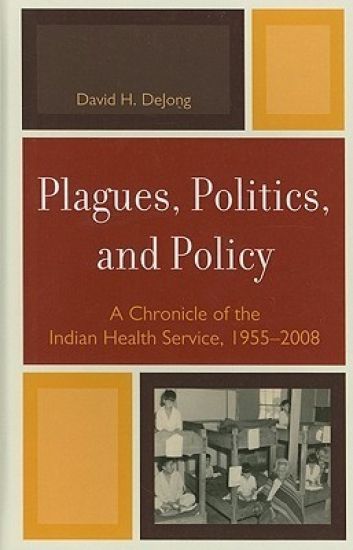
Plagues, Politics, and Policy is an overview of the major health challenges confronting American Indians and Alaska Natives over the past fifty years and is a case study of the federal government's attempt to provide medical services to a categorical group of people in the United States. While it is not a detailed analysis of what socialized healthcare should or should not look like, it does examine the major social and political issues affecting the delivery of health services to American Indians and Alaska Natives. This book addresses broad policy questions, such as whether or not American Indians and Alaska Natives have received better healthcare since the Indian medical service transferred from the Bureau of Indian Affairs to the Public Health Service in 1955. In the initial decades of Public Health Service control of IHS, the problems of infectious diseases were largely eliminated, but they have been replaced by new challenges which will require IHS and tribal leaders to work together to come up with solutions. Many American Indians and Alaska Natives also face public health challenges rooted in the social and political history of the federal Indian relationship. In this book, DeJong provides a path to improving the future of health care for American Indians and Alaska Natives.
'If You Knew the Conditions'

'If You Knew the Conditions'

David H. DeJong

Lexington Books
2008
sidottu
After their sequestering on reservations across the West, American Indians suffered from appalling rates of disease and morbidity. While the United States Indian Service (Bureau of Indian Affairs) provided some services prior to 1908, it was not until then that the Indian Medical Service was established for the purpose of providing services to American Indians. Born in an era of assimilation and myths of vanishing Indians, the Indian Medical Service provided emergency and curative care with little forethought of preventive medicine. DeJong argues that the U.S. Congress provided little more than basic, curative treatment, and that this Congressional parsimony is reflected in the services (or lack thereof) provided by the Indian Medical Service. DeJong considers the mediocre results of the Indian Medical Service from a cultural perspective. He argues that, rather than considering a social conservation model of medicine, the Indian Service focused on curative medicine from a strictly Western perspective. This failure to appreciate the unique American Indian cultural norms and values associated with health and well-being led to a resistance from American Indians which seemingly justified parsimonious Congressional appropriations and initiated a cycle of benign neglect. "If You Knew the Conditions" examines the impact of the long-standing Congressional mandate of cultural assimilation, combined with the Congressional desire to abolish the Indian Service, on the degree and extent of disease in Indian Country.