Kirjojen hintavertailu. Mukana 12 494 950 kirjaa ja 12 kauppaa.

Kirjailija

David H. Fleming

Kirjat ja teokset yhdessä paikassa: 7 kirjaa, julkaisuja vuosilta 2017-2025, suosituimpien joukossa Chinese Urban Shi-nema. Vertaile teosten hintoja ja tarkista saatavuus suomalaisista kirjakaupoista.

7 kirjaa

Kirjojen julkaisuhaarukka 2017-2025.

Infinite Ontologies of the Chthulustream

Infinite Ontologies of the Chthulustream

William Brown; David H. Fleming

EDINBURGH UNIVERSITY PRESS
2025
sidottu
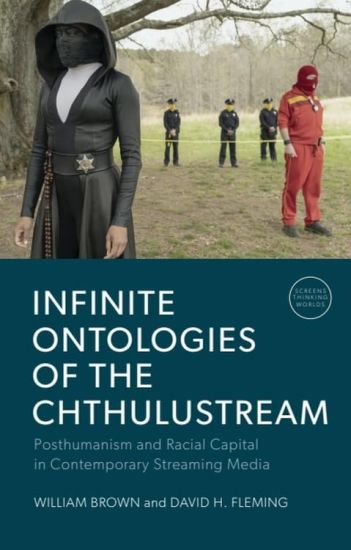
Brown and Fleming employ the twin discourses of critical race theory and posthumanism in order to expose how multinational platforms like Netflix play a role in both problematising and perpetuating deeply entrenched violences lurking within the intersections of racism, capitalism, and technology. The authors dive into the racialised world-building of shows like Stranger Things, Watchmen, Lovecraft Country, Sense8, The Twilight Zone, The O.A., Ad Vitam and DEVS, and through their groundbreaking media philosophy diagnose and confront the oppressive and racialising nature of streaming media at the end of the world, in the so-called Chthulucene (or 'Chthulustream'). As Brown and Fleming demonstrate, streaming media can, at their best, liberate thought to confront overlapping infinite ontologies (O) that themselves offer a timely panacea and corrective to Object-Oriented-Ontology (OOO).
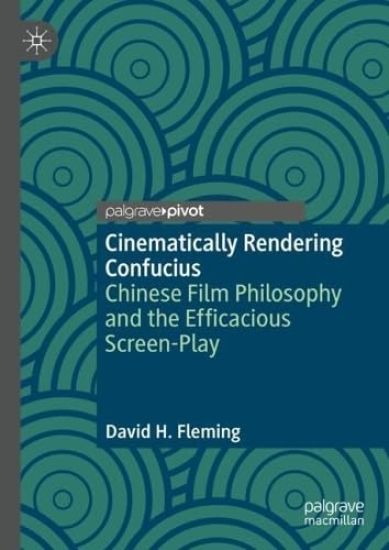
Cinematically Rendering Confucius

Cinematically Rendering Confucius

David H. Fleming

Springer International Publishing AG
2025
sidottu
Cinematically Rendering Confucius marks the first book-length enquiry into China’s first two big screen treatments of arguably the best-known and most influential thinker in world history: Confucius. By interweaving methods drawn from Film Studies, Comparative Philosophy, and Media Archaeology in response to broader calls to deepen and thicken the scope and purview of film philosophical enquiry, this trailblazing book grounds Fei Mu’s 1940 patriotic art film Kong Fuzi and Hu Mei's 2010 “Huallywood” blockbuster Kongzi as pre- and postsocialist examples of Chinese politico-philosophical filmmaking that straddle the PRC’s revolutionary Marxist socio-political experiment. After exploring the geopolitics surrounding why Confucius has been historically included and excluded from the European classification of “philosopher” and addressing the difficulties that entering into “Chinese Thought” presents to non-natives, the book’s first half undertakes a deep dive into the history of (re)mediating the Confucian image-imagination. Arguing that Confucius might be a form of film philosopher avant la lettre, we thereafter explore repetitions and differences surrounding the ever-changing treatment and representation of Confucius on-screen—concluding with a look at the latest AI-infused theory-film When Marx Met Confucius (2023).
Chinese Urban Shi-nema

Chinese Urban Shi-nema

David H. Fleming; Simon Harrison

Springer Nature Switzerland AG
2021
nidottu
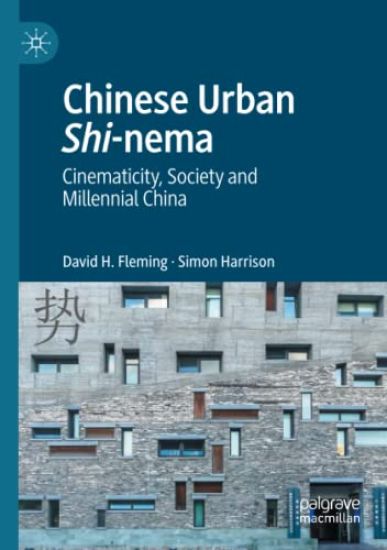
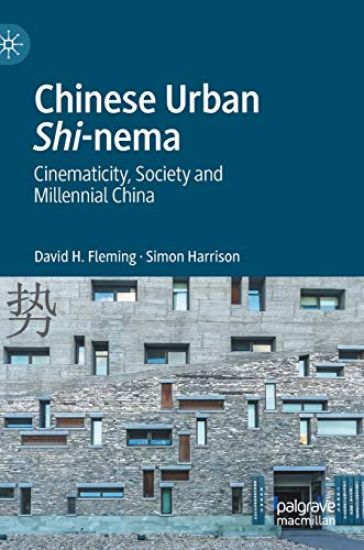
This book dives into the mise-en-scène of contemporary China to explore the “becoming cinema” of Chinese cities, societies, and subjectivities. Set in the wake of China’s radical and rapid period of urbanization and infrastructural transformation, and situating itself in the processual city of Ningbo, the book combines empirical, ficto-critical, and philosophical methods to generate a dynamic account of everyday life as new forms of consumer culture bed in. Harnessing a Realist approach that allows for different scales of analysis, the book zooms in on five architectural assemblages including: surreal real estate showrooms; a fragmented history museum; China’s “first and best” Sino-foreign university; a new “Old town”; and weird gamified “any-now(here)-spaces.” Together these modern arrangements and machines for living cast light upon the broader picture sweeping up greater China.
Chinese Urban Shi-nema

Chinese Urban Shi-nema

David H. Fleming; Simon Harrison

Springer Nature Switzerland AG
2020
sidottu
This book dives into the mise-en-scène of contemporary China to explore the “becoming cinema” of Chinese cities, societies, and subjectivities. Set in the wake of China’s radical and rapid period of urbanization and infrastructural transformation, and situating itself in the processual city of Ningbo, the book combines empirical, ficto-critical, and philosophical methods to generate a dynamic account of everyday life as new forms of consumer culture bed in. Harnessing a Realist approach that allows for different scales of analysis, the book zooms in on five architectural assemblages including: surreal real estate showrooms; a fragmented history museum; China’s “first and best” Sino-foreign university; a new “Old town”; and weird gamified “any-now(here)-spaces.” Together these modern arrangements and machines for living cast light upon the broader picture sweeping up greater China.
Squid Cinema from Hell

Squid Cinema from Hell

William Brown; David H. Fleming

Edinburgh University Press
2020
nidottu
Here be Kraken! The Squid Cinema From Hell draws upon writers like Vilem Flusser, Donna J. Haraway, Graham Harman and Eugene Thacker to offer up a critical analysis of cephalopods and other tentacular creatures in contemporary media, while also speculating that digital media might themselves constitute a weird, intelligent alien. If this were not enough to shiver ye timbers, the book engages with contemporary discourses of posthumanism, speculative realism, object-oriented ontology and animal studies to suggest that humans are the products of media rather than media being the products of humans. Including case studies of films by Denis Villeneuve, Park Chan-wook and Celine Sciamma, The Squid Cinema From Hell also provides a daring engagement with various media beyond cinema, including literature, music videos, 4DX, advertising, websites, YouTube, Artificial Intelligence and more. Zounds! This unique and Lovecraftian book will change the way you think about, and with, our contemporary, media-saturated world. For as we contemplate the abyss, the abyss looks back at us and chthulumedia, or media at the end of human times, begin to emerge.
Squid Cinema from Hell

Squid Cinema from Hell

William Brown; David H. Fleming

Edinburgh University Press
2020
sidottu
Here be Kraken! The Squid Cinema From Hell draws upon writers like Vilem Flusser, Donna J. Haraway, Graham Harman and Eugene Thacker to offer up a critical analysis of cephalopods and other tentacular creatures in contemporary media, while also speculating that digital media might themselves constitute a weird, intelligent alien. If this were not enough to shiver ye timbers, the book engages with contemporary discourses of posthumanism, speculative realism, object-oriented ontology and animal studies to suggest that humans are the products of media rather than media being the products of humans. Including case studies of films by Denis Villeneuve, Park Chan-wook and Celine Sciamma, The Squid Cinema From Hell also provides a daring engagement with various media beyond cinema, including literature, music videos, 4DX, advertising, websites, YouTube, Artificial Intelligence and more. Zounds! This unique and Lovecraftian book will change the way you think about, and with, our contemporary, media-saturated world. For as we contemplate the abyss, the abyss looks back at us and chthulumedia, or media at the end of human times, begin to emerge.
Unbecoming Cinema

Unbecoming Cinema

David H. Fleming

Intellect Books
2017
sidottu
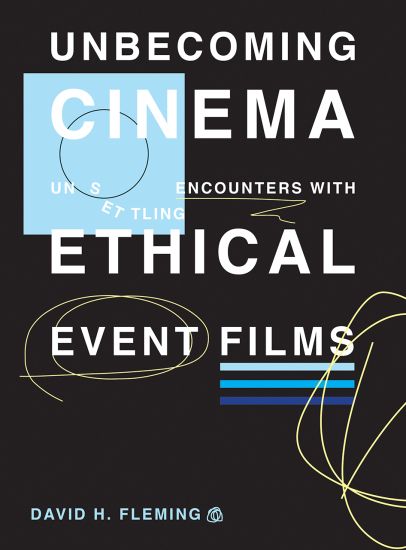
Unbecoming Cinema explores the notion of cinema as a living, active agent, capable of unsettling and reconfiguring a person’s thoughts, senses, and ethics. Film, according to David H. Fleming, is a dynamic force, arming audiences with the ability to see and make a difference in the world. Drawing heavily on Deleuze’s philosophical insights, as well as those of Guattari and Badiou, the book critically examines unsettling and taboo footage, from suicide documentaries to art therapy films, from portrayals of mental health and autism to torture porn. In investigating the effect of film on the mind and body, Fleming’s shrewd analysis unites transgressive cinema with metaphysical concepts of the body and mind. A PDF version of this book is available for free in open access via the OAPEN Library platform, Unbecoming Cinema. It has been made available under a Creative Commons Attribution 4.0 International Public License and is part of Knowledge Unlatched.