Kirjojen hintavertailu. Mukana 12 152 606 kirjaa ja 12 kauppaa.

Kirjailija

David H. Levy

Kirjat ja teokset yhdessä paikassa: 17 kirjaa, julkaisuja vuosilta 1992-2025, suosituimpien joukossa David Levy's Guide to the Night Sky. Vertaile teosten hintoja ja tarkista saatavuus suomalaisista kirjakaupoista.

17 kirjaa

Kirjojen julkaisuhaarukka 1992-2025.

The Starlight Night

The Starlight Night

David H. Levy

Springer International Publishing AG
2016
nidottu
In this updated second edition renowned amateur comet-searcher David H. Levy expands on his work about the intricate relationship between the night sky and the works of English Literature. This revised and expanded text includes new sections on Alfred Lord Tennyson and Gerald Manley Hopkins (both amateur astronomers), extending the time period analyzed in the first edition from early modern literature to encompass the Victorian age. Although the sky enters into much of literature through the ages, British authors offer an especially fertile connection to the heavens, and Levy links the works of seminal authors from Shakespeare on to specific celestial events and scientific advances. From the impact of comets and supernovae to eclipses, Levy’s ultimate goal in this book is to inspire his readers to do the same thing as their ancestors did so long ago—look up and appreciate the stars. His insights in this revised book spread farther and wider than ever before in this learned and enchanting tour of the skies.
The Starlight Night

The Starlight Night

David H. Levy

Springer International Publishing AG
2015
sidottu
In this updated second edition renowned amateur comet-searcher David H. Levy expands on his work about the intricate relationship between the night sky and the works of English Literature. This revised and expanded text includes new sections on Alfred Lord Tennyson and Gerald Manley Hopkins (both amateur astronomers), extending the time period analyzed in the first edition from early modern literature to encompass the Victorian age. Although the sky enters into much of literature through the ages, British authors offer an especially fertile connection to the heavens, and Levy links the works of seminal authors from Shakespeare on to specific celestial events and scientific advances. From the impact of comets and supernovae to eclipses, Levy’s ultimate goal in this book is to inspire his readers to do the same thing as their ancestors did so long ago—look up and appreciate the stars. His insights in this revised book spread farther and wider than ever before in this learned and enchanting tour of the skies.
David Levy's Guide to Eclipses, Transits, and Occultations

David Levy's Guide to Eclipses, Transits, and Occultations

David H. Levy

Cambridge University Press
2010
pokkari
In this simple guide, David Levy inspires readers to experience the wonder of eclipses and other transient astronomical events for themselves. Covering both solar and lunar eclipses, he gives step-by-step instructions on how to observe and photograph eclipses. As well as explaining the science behind eclipses, the book also gives their historical background, discussing how they were observed in the past and what we have learned from them. This personal account contains examples from the 77 eclipses the author has witnessed himself. The guide also includes chapters on occultations of stars and planets by the Moon and of asteroids by stars, and the transits of Mercury and Venus. Tables of future eclipses make this invaluable for anyone, from beginners to practised observers, wanting to learn more about these fascinating events.
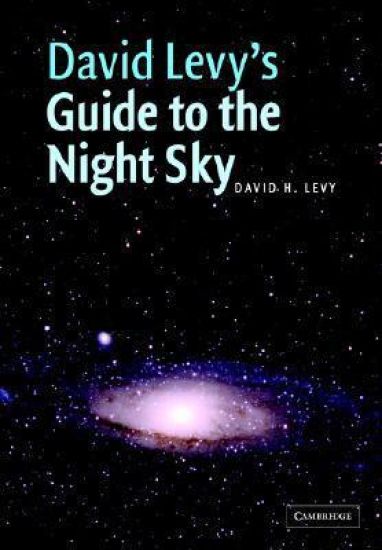
David Levy's Guide to the Night Sky

David Levy's Guide to the Night Sky

David H. Levy

Cambridge University Press
2001
pokkari
The perfect introduction for the novice astronomer, this book stirs the imagination and puts observation in a framework of social activity and personal adventure. Written by an award-winning astronomer, it is a technical guide to the sky, full of helpful practical hints. The author's lively style engages, entertains, and informs. Newcomers will learn how to enjoy the Moon, planets, comets, meteors, and distant galaxies observable through a small telescope. Levy describes the features of the Moon from night to night; how to observe constellations; how best to view the stars, nebulae, and galaxies; how to follow the planets on their annual trek among the constellations; how to map the sky; how to find a new comet; how to buy or even make a telescope; what to see in a month of lunar observations or a year of stellar observation; and much more.
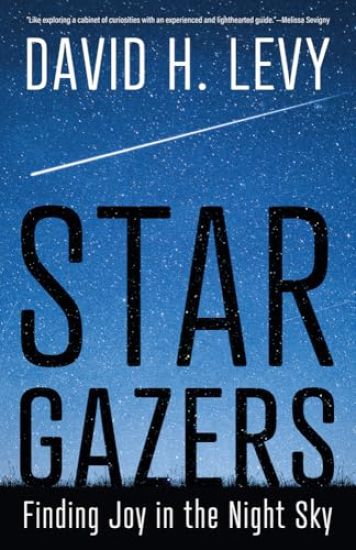
Star Gazers

Star Gazers

David H. Levy

University of Arizona Press
2025
nidottu
A flash, a single streak of light, is what sparked David Levy’s passion for astronomy more than sixty years ago. In this delightful collection of essays, Levy shares not only his love for the sky and stars, but also his love for language and literature. With the voice of a poet and the eye of a skilled, albeit amateur, astronomer, Levy takes us on a glorious adventure as large as the universe. Bringing together writing from across two decades of stargazing, Levy explores the different aspects of the night sky, from the simple star-studded vault that appears every clear night, to insight into how some amateur astronomers use advanced equipment to image details of the night sky. He writes about the James Webb Space Telescope and the Northern Lights, offering commentary on astronomical events and the profound questions they inspire. While there are books that describe how to observe the sky, this book explains why. Star Gazers is a celebration of the joy and mystery found in the stars, with the author’s personal experiences serving as a continuous thread throughout. Whether you are a seasoned astronomer or a curious newcomer, Star Gazers will inspire you to look up and embrace the night sky with renewed passion and curiosity.
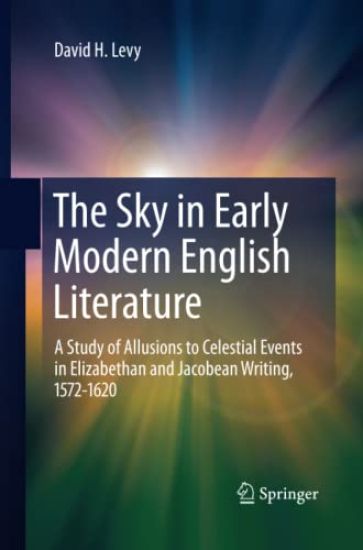
The Sky in Early Modern English Literature

The Sky in Early Modern English Literature

David H. Levy

Springer-Verlag New York Inc.
2014
nidottu
Astronomy is not just a subject unto itself. We all look at the sky, and it has always been a fertile source of guidance and inspiration in art, music, and literature. This book explores the sky’s appearances in music and art, but focuses most on the sky’s enormous presence in early modern English literature. The author concentrates on William Shakespeare, whose references to the sky far exceed the combined total of all his contemporaries. Venturing into the historical context of these references, the book teaches about the Supernovae of 1572 and 1604, the abundant comets of this period, eclipses, astrology and its relation to the night sky at the time, and the early years of the telescope and how the literature of the time relates to it. This book promises to open doors between two great fields of study by inspiring readers to look for their own connections between astronomy and literature, and by helping them to enjoy the night sky itself more completely.
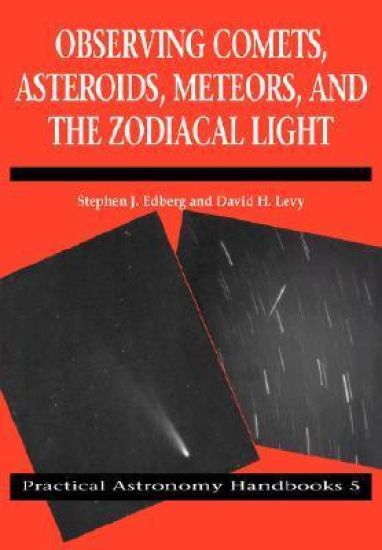
Observing Comets, Asteroids, Meteors, and the Zodiacal Light

Observing Comets, Asteroids, Meteors, and the Zodiacal Light

Stephen J. Edberg; David H. Levy

Cambridge University Press
2008
pokkari
When can you see fireballs and who should you contact if you spot one? When is it best to hunt for comets and meteors and whereabouts? How do you gauge the size of the coma in the head of a comet and estimate its degree of condensation? Clear and easy to use, this guide shows you how to make successful and valuable observations and records of comets, asteroids, meteors and the zodiacal light. For each topic the historical background and current scientific understanding support a wealth of observational techniques. Comet observers are shown techniques for search and discovery. They can learn how to make visual estimates of brightness and size, and how to make photographic studies of cometary heads and tails. Asteroid hunters will find a 'life list' of quarry and guidelines on how to search for these objects and then how to photograph or electronically image them. Fruitful photographic and electronic methods for studying meteors and meteor showers are provided. Visual and photographic techniques show you how to examine the often elusive zodiacal light.
Deep Sky Objects

Deep Sky Objects

David H. Levy

Prometheus Books
2005
pokkari
Veteran comet hunter and eloquent popular astronomy writer David H. Levy takes amateur sky-watchers on a fascinating journey into deep space in this enthusiastic and informative survey of the many far distant yet observable objects in the night sky. Light years beyond our solar system, deep sky objects include such intriguing phenomena as double and triple stars, nebulae, galaxies, and quasars. Designed to be accessible for even beginners, Levy's clear, elegant descriptions will guide astronomy buffs in any hemisphere and locale (light-polluted cities as well as dark countryside) to the wonders of our enormous universe. As the discoverer or codiscoverer of twenty-one comets, including the famous Shoemaker-Levy 9 that crashed into Jupiter in 1994, Levy has devoted many decades of experience to observing the night sky. Over the years he has located over 300 deep sky objects, of which more than 100 "best and brightest" are featured in this book. Levy offers a physical description and a discussion of each object's history and beauty, as well as a star atlas to aid in finding the objects. Proceeding from objects closest to our solar system to those farthest away, Levy gives readers an awe-inspiring glimpse into the structure of the cosmos. Complete with both color and black-and-white photos, plus many helpful illustrations, Deep Sky Objects is the ideal guide to the wonders of the universe for both experienced and novice star gazers.
Shoemaker by Levy

Shoemaker by Levy

David H. Levy

Princeton University Press
2002
pokkari
It was a lucky twist of fate when in the early1980s David Levy, a writer and amateur astronomer, joined up with the famous scientist Eugene Shoemaker and his wife, Carolyn, to search for comets from an observation post on Palomar Mountain in Southern California. Their collaboration would lead to the 1993 discovery of the most remarkable comet ever recorded, Shoemaker-Levy 9, with its several nuclei, five tails, and two sheets of debris spread out in its orbit plane. A year later, Levy would be by the Shoemakers' side again when their comet ended its four-billion-year-long journey through the solar system and collided with Jupiter in the most stunning astronomical display of the century. Not only did this collision revolutionize our understanding of the history of the solar system, but it also offered a spectacular confirmation of one scientist's life work. As a close friend and colleague of Shoemaker (who died in 1997 at the age of 69), Levy offers a uniquely insightful account of his life and the way it has shaped our thinking about the universe. Early in his training as a geologist, Shoemaker suspected that it wasn't volcanic activity but rather collisions with comets and asteroids that created most of the craters on the moon and most other bodies in the solar system. Convincing the scientific community of the plausibility of "impact theory," and revealing its power for penetrating mysteries such as the extinction of the dinosaurs and the timing of the Earth's eventual demise, became Shoemaker's mission. Through conversations with Shoemaker and his family, Levy reconstructs the journey that began with a young geologist's serious desire to go to the moon in the late1940s. Sent by the government to find a way to harvest plutonium, Shoemaker instead found evidence in desert craters for what became his impact theory. While he never became an astronaut, he did become the first geologist hired by NASA and subsequently set the research agenda for the first manned lunar landing. After a series of victories and setbacks for Shoemaker, the collision of Shoemaker-Levy 9 with Jupiter provided the most convincing proof to date of the role of impacts in our solar system. Levy's explanation of the scientific reasoning that guided Shoemaker in his career up to this dramatic point--as well as his personal portrait of a man who found white-water rafting to be an easy way to relax--sets these fascinating events in a human scale. This biography shows what Shoemaker's legacy will be for our understanding of the story of the Earth well into the twenty-first century.
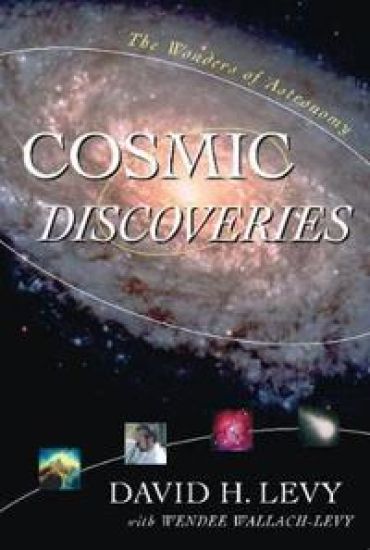
Cosmic Discoveries

Cosmic Discoveries

David H. Levy; Wendee Wallach Levy

Prometheus Books
2001
sidottu
For many millennia the starry night sky has been a source of wonder and awe to men and women who have tried to unravel the mystery of the billion distant lights that fill the heavens after dark. The story of the great discoverers who succeeded in explaining part of the mystery is told here with the joy and infectious enthusiasm that only a fellow discoverer can convey. David Levy, codiscoverer of Comet Shoemaker-Levy 9, with his wife, Wendee Wallach-Levy, evokes that marvelous moment of "Eureka!" as he masterfully relates each story. He gives the reader a glimpse of the enthralling adventure of cosmic discovery through stories of the most famous and brilliant astronomers. Beyond their personal accomplishments, these scientists expanded all of humanity's understanding of the universe and our place within it. Through Levy's unique perspective on cosmic discovery, he is able to connect his own personal life story with that of astronomers of the past and by extension with the history of the whole universe. As the codiscoverer of the spectacular comet that crashed into Jupiter, Levy formulated a whole new range of exciting questions about the universe: Do comets serve to transport the elements of life from one planet to the next? What is the evidence that a large comet once hit the earth? Will the earth someday be in danger of colliding with another such comet and will we have the technology to stop it? This fascinating book will excite any of us who have stared at the night sky in awe and amazement.
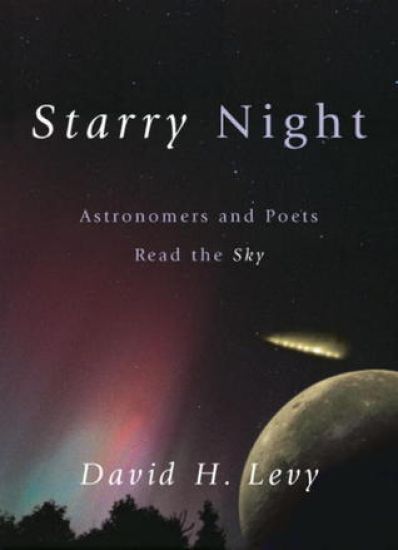
Starry Night

Starry Night

David H. Levy

Prometheus Books
2000
pokkari
Over the centuries the starry night sky has inspired poets and scientists alike, and though the fruits of these inspirations take very different forms, they often enrich each other. Acclaimed science writer David Levy, the co-discoverer of Comet Shoemaker-Levy 9, has written this wonderful jewel of a book to celebrate the complementary visions of human wonder and curiosity that are expressed in the separate disciplines of poetry and astronomy. Levy, known for his infectious enthusiasm, traces the works of the greatest poets-Shakespeare, Milton, Keats, Shelley, and others-to show how they were influenced not only by the beauty of the heavens but by their times, celestial events, and moreover by the discoveries of such great scientists as Copernicus, Galileo, and Newton.How strong is the connection between literature and science? Levy says, "To think that science and poetry are two disciplines that are properly divorced from each other is to lose sight of what each is about and what their common goal is. In their highest forms, both are avenues of inquiry into the human condition and its relationship to the Universe.Knowing what that Universe is and how it is structured is fundamental to each."
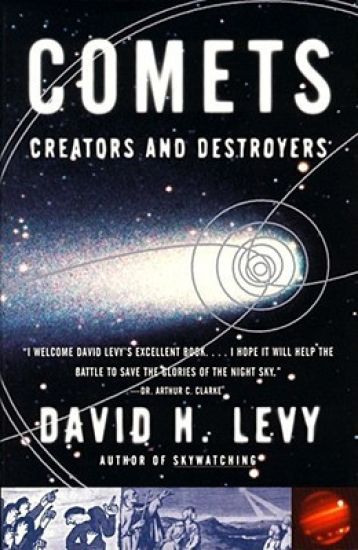
Comets

Comets

David H. Levy

Touchstone
1998
pokkari
A guide to comets, which explores their history, recent discoveries and the belief that comets inspire everything from psychotic behaviour and suicide, to the actions of world leaders. The author also contemplates the possibility of a comet colliding with Earth.
Observing Variable Stars

Observing Variable Stars

David H. Levy; Janet A. Mattei

Cambridge University Press
1998
pokkari
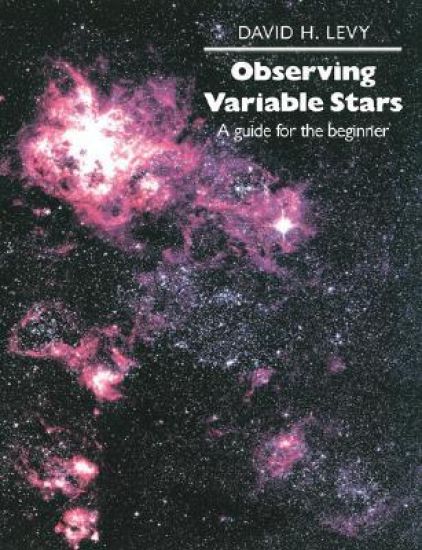
David Levy’s entertaining, well-researched book is aimed at the amateur enthusiast who likes to learn enjoyably. Beginning with advice on binoculars and telescopes, and how to observe the night sky effectively, the author goes on to describe thoroughly the field of variable star observation, a field in which amateurs have made important contributions. He shows how to interpret variations in light output in terms of the life of a star, from birth through to sometimes violent death. All of the major variable stars are described and classified, as well as other variable objects such as active galaxies, asteroids, comets and the sun. The book also contains a guide to the seasonal night sky. Throughout, practical observations serve to complement the text, producing an exciting, very readable introduction to this fascinating subject.
Sharing the Sky

Sharing the Sky

David H. Levy; Larry A. Lebofsky; Nancy R. Lebofsky

Kluwer Academic/Plenum Publishers
1997
nidottu
This is the perfect guide for the parent or teacher who wishes to introduce to young people the awesome delights of the universe. Contrary to popular wisdom, the daytime sky, as well as the nighttime sky, contains riches to explore. Sharing the Sky engagingly shows us how to "observe" the sun safely, how to "star-hop" - as in jumping from the Big Dipper to Scorpius, how to search for mysteries amid the deep craters of the moon, how to explore the magnificence of our neighboring planets, how to answer the science questions most often asked by children and how to explain why the history of comets, meteors, and asteroids is so enmeshed with the saga of dinosaurs and human evolution. A special, handsomely illustrated section devoted to the colorful legends of the zodiac and the constellations will enchant children and adults alike.