Kirjojen hintavertailu. Mukana 12 152 606 kirjaa ja 12 kauppaa.

Kirjailija

David H. McIntyre

Kirjat ja teokset yhdessä paikassa: 5 kirjaa, julkaisuja vuosilta 2019-2022, suosituimpien joukossa How to Think about Homeland Security. Vertaile teosten hintoja ja tarkista saatavuus suomalaisista kirjakaupoista.

5 kirjaa

Kirjojen julkaisuhaarukka 2019-2022.

Quantum Mechanics

Quantum Mechanics

David H. McIntyre

Cambridge University Press
2022
sidottu
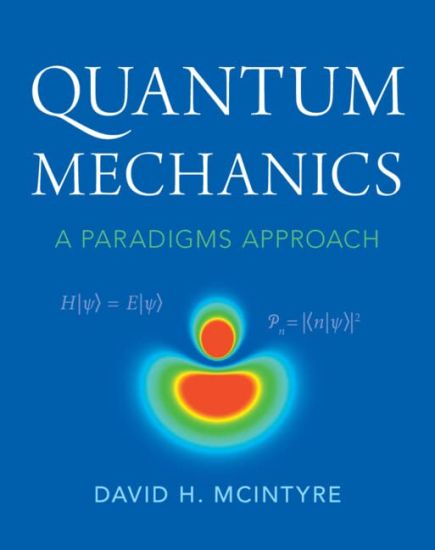
This popular undergraduate quantum mechanics textbook is now available in a more affordable printing from Cambridge University Press. Unlike many other books on quantum mechanics, this text begins by examining experimental quantum phenomena such as the Stern-Gerlach experiment and spin measurements, using them as the basis for developing the theoretical principles of quantum mechanics. Dirac notation is developed from the outset, offering an intuitive and powerful mathematical toolset for calculation, and familiarizing students with this important notational system. This non-traditional approach is designed to deepen students' conceptual understanding of the subject, and has been extensively class tested. Suitable for undergraduate physics students, worked examples are included throughout and end of chapter problems act to reinforce and extend important concepts. Additional activities for students are provided online, including interactive simulations of Stern-Gerlach experiments, and a fully worked solutions manual is available for instructors.
How to Think about Homeland Security

How to Think about Homeland Security

David H. McIntyre

Rowman Littlefield
2019
sidottu
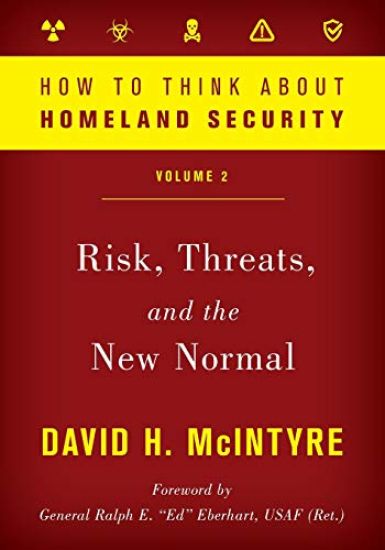
Risk, Threats and the New Normal explains the new political and technological developments that created new domestic national security threats against the nation and the people of the United States.The book traces the development of and competition between national preparedness (focused on people and property), and civil defense / security (focused on the defense of systems and infrastructure) since the latter days of World War I. While Homeland Security was created to meet national security threats in the domestic arena, most of the duties have devolved to public safety personnel and organizations. The result is a clash of cultures, jurisdictions, and perspectives that produces “less than optimal” results from the many bureaucracies involved. The second of four volumes in McIntyre’s How to Think About Homeland Security series offers suggestions for how these issues might be addressed by Homeland Security.
How to Think about Homeland Security

How to Think about Homeland Security

David H. McIntyre

Rowman Littlefield
2019
nidottu
Risk, Threats and the New Normal explains the new political and technological developments that created new domestic national security threats against the nation and the people of the United States.The book traces the development of and competition between national preparedness (focused on people and property), and civil defense / security (focused on the defense of systems and infrastructure) since the latter days of World War I. While Homeland Security was created to meet national security threats in the domestic arena, most of the duties have devolved to public safety personnel and organizations. The result is a clash of cultures, jurisdictions, and perspectives that produces “less than optimal” results from the many bureaucracies involved. The second of four volumes in McIntyre’s How to Think About Homeland Security series offers suggestions for how these issues might be addressed by Homeland Security.
How to Think about Homeland Security

How to Think about Homeland Security

David H. McIntyre

Rowman Littlefield
2019
nidottu
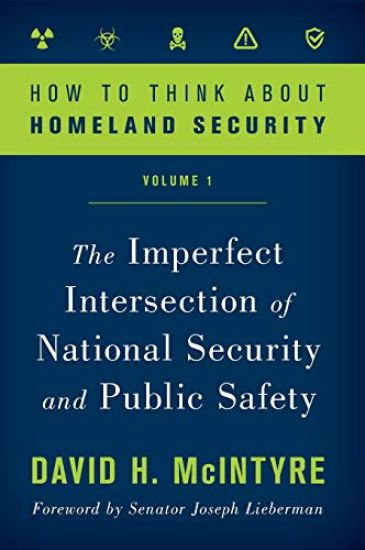
Volume 1: The Imperfect Intersection of National Security and Public Safety explains homeland security as a struggle to meet new national security threats with traditional public safety practitioners. It offers a new solution that reaches beyond training and equipment to change practitioner culture through education. This first volume represents a major new contribution to the literature by recognizing that homeland security is not based on theories of nuclear response or countering terrorism, but on making bureaucracy work. The next evolution in improving homeland security is to analyze and evaluate various theories of bureaucratic change against the national-level catastrophic threats we are most likely to face. This synthesis provides the bridge between volume 1 (understanding homeland security) and the next in the series (understanding the risk and threats to domestic security). All four volumes could be used in an introductory course at the graduate or undergraduate level. Volumes 2 and 3 are most likely to be adopted in a risk management (RM) course which generally focus on threats, vulnerabilities, and consequences, while volume 4 will get picked up in courses on emergency management (EM).
How to Think about Homeland Security

How to Think about Homeland Security

David H. McIntyre

Rowman Littlefield
2019
sidottu
Volume 1: The Imperfect Intersection of National Security and Public Safety explains homeland security as a struggle to meet new national security threats with traditional public safety practitioners. It offers a new solution that reaches beyond training and equipment to change practitioner culture through education. This first volume represents a major new contribution to the literature by recognizing that homeland security is not based on theories of nuclear response or countering terrorism, but on making bureaucracy work. The next evolution in improving homeland security is to analyze and evaluate various theories of bureaucratic change against the national-level catastrophic threats we are most likely to face. This synthesis provides the bridge between volume 1 (understanding homeland security) and the next in the series (understanding the risk and threats to domestic security). All four volumes could be used in an introductory course at the graduate or undergraduate level. Volumes 2 and 3 are most likely to be adopted in a risk management (RM) course which generally focus on threats, vulnerabilities, and consequences, while volume 4 will get picked up in courses on emergency management (EM).